


Translate

Thursday, 25 July 2024

The Alphagram: Applications will open in two weeks! Get ready to apply for Chevening


Get ready to apply for Chevening

We are pleased to announce that applications for the next Chevening cohort will open on 6 August 2024.

Successful applicants will receive a fully funded scholarship to study for a master's degree at a leading UK university in 2025.

With just two weeks to go until applications open, it's time to start getting your Chevening application ready. Click below for our tips on how to prepare.


Why study in the UK?

Chevening Scholars get the chance to explore everything the UK has to offer, from cultural events and fun day trips, to exclusive networking opportunities with like-minded future leaders.

Discover what 2023/24 scholars found most surprising about British culture.
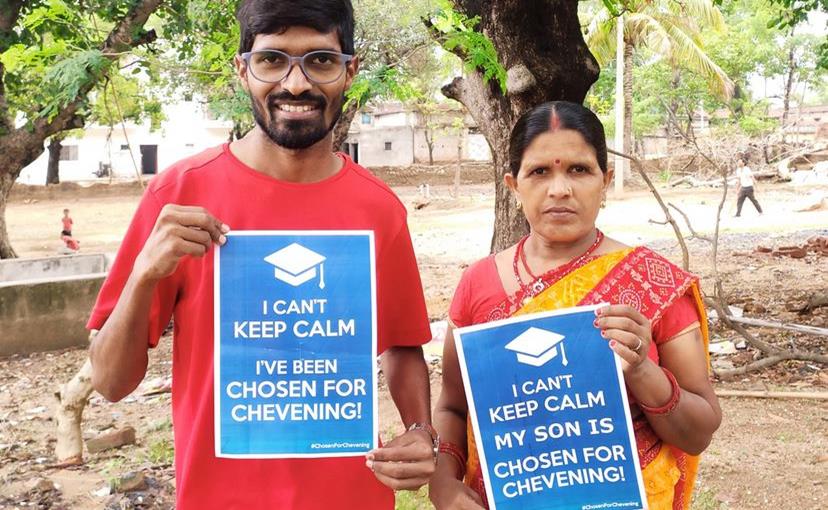
 

Chosen for Chevening

Congratulations to all of our successful candidates who have already been selected for the 2024 Chevening cohort.

Shishu Ranjan shares what it means to him to be #ChosenForChevening:

‘As a first generation learner from a remote village of India, I see Chevening as a platform to inspire meritorious students of marginalised communities to dream of making inclusive education policies for their country.’

 

Choosing your master's subject

There is plenty of advice on choosing the right postgraduate course but once you have decided on your subject area, how do you narrow it down into the right specialism or even the right type of master's degree? Do you want to specialise in a niche field or study a broader course?

The article below will guide you through what to consider when choosing a course.

For the latest postgraduate news, events, and essential advice make sure you are following @postgrad_com on Instagram.

And don’t forget to check if your chosen course is eligible for a Chevening Scholarship in our course finder.
 

Fast-track your Chevening application with the Chevening Resource Hub

We are delighted to introduce brand new guidance on our website to help you navigate each step in the Chevening application process with confidence. Head to the application guidance section of the new Chevening Resource Hub to check if you’re ready to apply to Chevening, find step-by-step guidance on Chevening’s new application system, and lots more resources to help you prepare your Chevening application and your UK university application.

 

Top application tips

Chevening Scholar Iqbal Aziz Romadhon shares his advice for Chevening applicants in 2024:

Be genuine

Showcasing yourself is essential in telling who you are, your story, vision, and mission.

Be concise

The STAR (situation, task, action, result) approach can provide a clear and reality-based structure to your answer.



Tuesday, 23 July 2024

Donald Trump says he would rather die from electrocution than shark attack in bizarre election rant

 Donald Trump has said he'd prefer to be electrocuted than devoured by a shark, in an odd moment during a campaign rally. The ex-president, aged 78, took the stage in Grand Rapids, Michigan - his first rally since narrowly escaping an assassination attempt last weekend in Pennsylvania.


His speech, delivered to a cheering crowd, touched on everything from the economy to immigration and electric vehicles. One of the most peculiar moments occurred when Trump started discussing electric boats. He said: "If I'm in a boat and it's all-electric and it starts to sink... I asked the guy 'do you get electrocuted sitting over this? '".

"And then I say - and I don't think there's anything wrong with this because it's an analogy - if there's a shark about 10 yards away, 'do I get electrocuted or do I go with the shark? ' I would take electrocution all day long.", reports the Express US.

Trump also brought up the Project 2025 agenda - a conservative wishlist of policies to implement during his second term. It includes plans to dismiss thousands of civil servants, dissolve the Department of Education and prohibit abortion pills.

Monday, 22 July 2024

Do you consider yourself to be part of a minority group?

Women as a Minority

Women are considered a minority group, because they do not share the same power, privileges, rights, and opportunities as men.

My name is Sofonie Dala. I am a black woman, my mother tongue is Portuguese, and my culture is African. Yes, I consider myself to be part of a minority group. Being a black African woman who speaks Portuguese, I navigate multiple layers of minority status in various contexts, especially in global and multicultural settings.

Examples of minority groups include12:

  • Ethnic minorities
  • Racial minorities
  • Religious minorities
  • Sexual orientation minorities
  • People with disabilities


American sociologist Louis Wirth (1945, p. 347) defined minority groups as “a group of people who, because of their physical or cultural characteristics, are singled out from the others in the society in which they live for differential and unequal treatment, and who therefore regard themselves as objects of collective discrimination”.


Women as a Minority

Women are considered a minority group, because they do not share the same power, privileges, rights, and opportunities as men.

Learning Objectives

Criticize the notion that sexism does not exist in the contemporary United States based on the text

Key Points

  • Sexism is discrimination or prejudice based on sex. In a patriarchal society, sexism is discrimination against women specifically.
  • Women’s rights encompasses the entitlements and freedoms for women and girls of all ages in many societies around the world.
  • Although women have made great strides in gaining access to education and employment, to this day they continue to face significant hurdles that men generally do not confront.

Key Terms

  • women’s rights: Entitlements and freedoms claimed by women and girls of all ages in many societies in the pursuit of equality with men.
  • patriarchal: relating to a system run by males, rather than females

Women are not a statistical minority, as in most societies — they are roughly equal in number to men — but they do qualify as a minority group because they tend to have less power and fewer privileges than men. Underlying this unequal treatment of women is sexism, which is discrimination based on sex — in the context of a patriarchal society, discrimination against women in particular. Discrimination against women is evident in a number of different spheres of society, whether political, legal, economic, or familial. It must, however, be noted that the issue is rarely as simple as that of men versus women. Societies today are home to a variety of different classes, ethnicities, races, and nationalities, and some groups of women may enjoy a higher status and more power relative to select groups of men, depending on factors, such as what racial and ethnic groups they are associated with.

It should be noted that gender discrimination also ties in with race and class discrimination — a concept known as ” intersectionality,” first named by feminist sociologist Kimberlé Crenshaw. For example, the intersectionality of race and gender has been shown to have a visible impact on the labor market. “Sociological research clearly shows that accounting for education, experience, and skill does not fully explain significant differences in labor market outcomes. ” The three main domains on which we see the impact of intersectionality are wages, discrimination, and domestic labor. Most studies have shown that people who fall into the bottom of the social hierarchy in terms of race or gender are more likely to receive lower wages, to be subjected to stereotypes and discriminated against, or be hired for exploitive domestic positions. Through the study of the labor market and intersectionality we gain a better understanding of economic inequalities and the implications of the multidimensional impact of race and gender on social status within society.

Sexism

Sexism can refer to three subtly different beliefs or attitudes:

  • The belief that one sex is superior to the other
  • The belief that men and women are very different and that this should be strongly reflected in society, language, the right to have sex, and the law
  • It can also refer to simple hatred of men (misandry) or women (misogyny)

There a number of examples, both historical and contemporary, of women not being granted the same rights and access as men, both historically and in the present day. For instance, U.S. and English law, until the twentieth century, subscribed to the system of coverture, where “by marriage, the husband and wife are one person in law; that is the very being or legal existence of the woman is suspended during the marriage. ” Not until 1875 were women in the United States legally defined as persons (Minor v Happersett, 88 U.S. 162).

In the United States, women were treated as second-class citizens and not given the right to vote until 1920, when the passage of the Nineteenth Amendment to the U.S. Constitution provided: “The right of citizens of the United States to vote shall not be denied or abridged by the United States or by any State on account of sex. ”

Although women have made great strides in gaining access to education and employment, to this day they continue to face significant hurdles that men generally do not confront. In economics, the term ” glass ceiling ” refers to institutional barriers that prevent minorities and women from advancing beyond a certain point in the corporate world, despite their qualifications and successes. The existence of a glass ceiling indicates that women, even today, do not enjoy the same opportunities as men.

Women’s Rights

Women’s rights are entitlements and freedoms claimed for women and girls of all ages in many societies. In some places, these rights are institutionalized or supported by law, local custom, and behavior, whereas in others, they may be ignored or suppressed. They differ from broader notions of human rights through claims of an inherent historical and traditional bias against the exercise of rights by women and girls in favor of men and boys.

Issues commonly associated with notions of women’s rights include, though are not limited to, the rights to: bodily integrity and autonomy; vote (suffrage); hold public office; work; fair wages or equal pay; own property; be educated; serve in the military or be conscripted; enter into legal contracts; and to have marital, parental, and religious rights.

The Universal Declaration of Human Rights, adopted in 1948, advocates “the equal rights of men and women,” and addresses issues of equality. In 1979, the United Nations General Assembly adopted the Convention on the Elimination of All Forms of Discrimination against Women (CEDAW) for legal implementation of the Declaration on the Elimination of Discrimination against Women. Described as an international bill of rights for women, it went into effect on September 3, 1981. The UN member states that have not ratified the convention are Iran, Nauru, Palau, Somalia, Sudan, Tonga, and the United States. Niue and the Vatican City, which are non-member states, also have not ratified it.

The Convention defines discrimination against women as follows:

Any distinction, exclusion or restriction made on the basis of sex which has the effect or purpose of impairing or nullifying the recognition, enjoyment, or exercise by women, irrespective of their marital status, on a basis of equality of men and women, of human rights and fundamental freedoms in the political, economic, social, cultural, civil, or any other field.

The Origins of Patriarchy

Patriarchy is a social structure in which men are considered to have a monopoly on power and women are expected to submit.

Learning Objectives

Argue in favor of either a sociobiological or social constructionist explanation of patriarchy

Key Points

  • There are both sociobiological and social constructionist explanations of patriarchy.
  • Sociobiological explanations use human biology and genetics to explain male control, while social constructionist explanations say that individuals, male and female, actively construct gender roles.
  • According to social constructionist theories, gender roles are created by individuals within a society who choose to imbue a particular structure with meaning.

Key Terms

  • gender roles: Sets of social and behavioral norms that are generally considered appropriate for either a man or a woman in a social or interpersonal relationship.
  • social constructionism: The idea that social institutions and knowledge are created by actors within the system, rather than having any inherent truth on their own.
  • patriarchy: The dominance of men in social or cultural systems.

The origins of patriarchy are closely related to the concept of gender roles, or the set of social and behavioral norms that are considered to be socially appropriate for individuals of a specific sex. Much work has been devoted to understanding why women are typically thought to inhabit a domestic role while men are expected to seek professional satisfaction outside of the home. This division of labor is frequently mapped onto a social hierarchy in which males’ freedom to venture outside of the home and presumed control over women is perceived as superior and dominant. As such, rather than working to destablize the historical notion of patriarchy, much literature assess the origins of patriarchy, or a social system in which the male gender role acts as the primary authority figure central to social organization, and where fathers hold authority over women, children, and property. It implies the institutions of male rule and privilege and entails female subordination.

Though less popular in modern academic circles, there has been a traditional search for biological explanations of gender roles. Before the nineteenth century, this conversation was primarily theological and deemed patriarchy to be the “natural order. ” This took on a biological trope with Charles Darwin’s ideas about evolution in The Origin of Species. In this work, Darwin explained evolution from the biological understanding that is now the accepted scientific theory. Biologists such as Alfred Russel Wallace quickly applied his theory to mankind. To be clear, though, the line of thought called Social Darwinism, or the application of evolutionary principles to the development of human beings and our social practices, was never promoted by Darwin himself. With the popularization of the idea of human evolution, what had previously been explained as a “natural order” for the world morphed into a “biological order. ”

The modern term for using biological explanations to explain social phenomena is sociobiology. Sociobiologists use genetics to explain social life, including gender roles. According to the sociobiologists, patriarchy arises more as a result of inherent biology than social conditioning. One such contemporary sociobiologist is Steven Goldberg, who, until retirement, was a sociologist at the City College of New York. In 1973, Goldberg published The Inevitability of Patriarchy, which advanced a biological interpretation of male dominance. Goldberg argued that male dominance is a human universal as a result of our biological makeup. One evolutionary sociobiological theory for the origin of patriarchy begins with the view that females almost always invest more energy into producing offspring than males and, as a result, females are a resource over which males compete. This theory is called Bateman’s principle. One important female preference in selecting a mate is which males control more resources to assist her and her offspring. This, in turn, causes a selection pressure on men to be competitive and succeed in gaining resources in order to compete with other men.


These sociobiological theories of patriarchy are counterbalanced by social constructionist theories that emphasize how certain cultures manufacture and perpetuate gender roles. According to social constructionist theories, gender roles are created by individuals within a society who choose to imbue a particular structure with meaning. Gender roles are constantly toyed with and negotiated by actors subscribing to and questioning them. Since the feminist movement in the 1970s and the flood of women into the workforce, social constructionism has gained even greater traction.

11.4: Women as a Minority - Social Sci LibreTexts

Introducing the New Me To The World: Join Me on My 21-Day Challenge Journey! 🌟


Introducing the New Me To The World

Join Me on My 21-Day Challenge Journey! ðŸŒŸ


Dear friends, family,
 community members, partners, followers and stakeholders

I hope you’re doing well!

As part of my 21-Day Challenge to BECOME a BETTER version of ME, I am excited to share with you a declaration of who I am BECOMING and to invite you to be one of my accountability partners.


“TO BE LIST” DECLARATION

My name is Sofonie Dala and I AM a confident, supportive, proactive leader who commits to empowering communities through sustainable development and social innovation and will create meaningful and lasting positive change for all.

This is the new me, and I would be grateful if you could support me on this journey by holding me accountable to this declaration. Your encouragement and support will mean a lot to me as I work towards these goals.

Additionally, I’m thrilled to invite you to the graduation ceremony of my 21-Day Challenge, where I will celebrate this milestone along with other participants. I would be honored to have you join me!


HEAR OTHER GRADUATES’ TESTIMONIALS: https://www.youtube.com/watch?v=P8ohVhXFM3g&feature=youtu.be


YOU TOO CAN BECOME A BETTER YOU, REGISTER
https://www.mipad.org/connectology

Thank you for being a part of this special moment in my life. I look forward to celebrating with you and sharing the journey ahead!

Yours Truly,
Sofonie Dala
July 2024

Explainer: Biden will step aside in the 2024 race. What happens next?


WASHINGTON, July 21 (Reuters) - President Joe Biden said on Sunday he would withdraw from the 2024 presidential election race, putting the United States into uncharted territory.

Biden endorsed Vice President Kamala Harris to be the Democratic nominee.
Before Biden's decision was made, Reuters spoke to Elaine Kamarck, a senior fellow at the Brookings Institution think-tank, a Democratic National Committee member and author of the book "Primary Politics" about the presidential nominating process, who explained how the process could work. Reuters also spoke to legal experts and Democratic Party officials.


Who will replace Joe Biden? Top Democrats tipped to win 2024 election nomination


President Joe Biden dropped out of the 2024 race for the White House on Sunday, ending his bid for reelection following a disastrous debate with Donald Trump that raised doubts about his fitness for office just four months before the election.

The decision comes after escalating pressure from Biden's Democratic allies to step aside following the June 27 debate, in which the 81-year-old president trailed off, often gave nonsensical answers and failed to call out the former president's many falsehoods.


President Biden: "I am endorsing Kamala Harris to be our next President of the United States"

"It has been the greatest honor of my life to serve as your President. And while it has been my intention to seek reelection, I believe it is in the best interest of my party and the country for me to stand down and to focus solely on fulfilling my duties as President for the remainder of my term.


For my part: my very first decision as the party nominee in 2020 was to pick Kamala Harris as my Vice President. And it’s been the best decision I’ve made.


Today I want to offer my full support and endorsement for Kamala to be the nominee of our party this year. Democrats — it’s time to come together and beat Trump." 


Friday, 19 July 2024

Nelson Mandela International Day 18 July: It is still in our hands to combat poverty and inequity

2024 theme: It is still in our hands to combat poverty and inequity


Inspiring Speech of Sofonie Dala on Nelson Mandela Day

My name is Sofonie Dala, the founder of this incredible platform. I am a confident, supportive, and proactive leader dedicated to empowering communities through sustainable development and social innovation, striving to create meaningful and lasting positive change for all.


Today, we gather to renew our commitment to the values that Nelson Mandela so passionately embodied. His unwavering determination, deep commitment to justice, human rights, and fundamental freedoms, and his profound belief in the equality and dignity of every individual inspire us all. Mandela's relentless pursuit of dialogue and solidarity across all divisions made him a remarkable statesman, a fierce advocate for equality, and the founding father of peace in South Africa.

In times of turbulence, Nelson Mandela's legacy teaches us the power of resisting oppression, upholding justice over inequality, dignity over humiliation, and forgiveness over hatred. As we advance the 2030 Agenda for Sustainable Development and strive to overcome new challenges, let us remember Mandela’s essential humanism: “For to be free is not merely to cast off one's chains, but to live in a way that respects and enhances the freedom of others.”

This year, we unite under the theme: "It is still in our hands to combat poverty and inequity." Let this theme guide our actions and inspire us to take concrete steps towards a more equitable world. #ItsInYourHands

Last year, we honored Mandela's legacy by visiting rural communities on July 23, 2023, to raise awareness about his work and enduring impact. We engaged with these communities to discuss climate change, sustainable food systems, and Mandela’s vision.


Sharing Mandela's legacy with rural communities: Climate, Food and Solidarity


We are training children because they are the future. Our visit included a seminar on Mandela's legacy, climate change, and sustainable food systems. We used this day to unite the world in taking decisive action against global climate change, which leads to food insecurity.

We aspire to see a hundred Mandelas in the coming years. We want to inspire children, women, and young people to lead in the spirit of Nelson Mandela, a man of vision, integrity, perseverance, resilience, discipline, humility, and a deep sense of public service. True leadership is about serving the community, not being the best.

Join us in our mission and relive last year's event by clicking here: Sharing Mandela's Legacy with Rural Communities.


Sharing Mandela's legacy with rural communities: Climate, Food and Solidarity (afronutri-online-angola.blogspot.com)

https://afronutri-online-angola.blogspot.com/2023/07/sharing-mandelas-legacy-with-rural.html

When Telecommunications Collapse: What Angola's Mobile Network Crisis Teaches Us About Governance, Justice, and National Security

  The recent disruption of Angola's mobile networks has affected banking, digital payments, businesses, emergency communications, and mi...