Translate

Tuesday, 25 October 2022

WhatsApp down for users across the UK and world

 The messaging platform WhatsApp has gone down for users across the UK and around the world.


Users of the platform, owned by Meta, began reporting issues just before 08:00 BST on Tuesday.

More than 12,000 reports were posted within half an hour, according to the service status website Down Detector.

Many people have complained on social media that they cannot send or receive messages. WhatsApp has about two billion active users globally.

It is one of the most popular messaging platforms in the UK.

Many users who tried to use the app on Tuesday morning were faced with a "connecting" message.


A spokesperson for Meta said "We're aware that some people are currently having trouble sending messages and we're working to restore WhatsApp for everyone as quickly as possible."

The outage is likely to cause significant disruption. The app, which offers end-to-end encryption for messages, is a popular method of group communication for social, work and parenting activities.

It has even been used, controversially, by government ministers.

According to internet monitoring organisation NetBlocks the outage is affecting users both in the UK and around the world.

The outage appears to have global reach, with BBC journalists in Australia and Ukraine reporting problems

The BBC is not responsible for the content of external sites.View original tweet on Twitter

Last year WhatsApp went down as part of of a six-hour outage which also hit Facebook, Oculus and Instagram.

Facebook later said the global problem was caused by a configuration change.

Philippines: Student ‘Anti-Cheating’ Exam Hats Go Viral

 Images of students wearing so-called “anti-cheating hats” during college exams have gone viral on social media in the Philippines, sparking amusement.


Students at one college in Legazpi City were asked to wear headgear that would prevent them from peeking at others’ papers. Many responded by creating homemade contraptions out of cardboard, egg boxes and other recycled materials.

Their tutor said, she had been looking for a “fun way” to ensure “integrity and honesty” in her classes. Mary Joy Mandane-Ortiz, a professor of mechanical engineering at Bicol University College of Engineering, said the idea had been “really effective”.

It was implemented for recent mid-term exams, which were sat by hundreds of students at the college in the third week of October.

……………………………………………………………

Rishi Sunak makes history as first non-white UK Prime Minister

 THIS JUST IN – The United Kingdom, long seen as symbolizing racism and colonialism, has waded into uncharted territory with the colonial power’s first ever non-white prime minister.


Member of Parliament for Richmond (York), Rishi Sunak with all his strong Indian features, has finally cracked the strongest glass ceiling to become prime minister of the United Kingdom.

King Charles III will have to make the official announcement, but Rishi Sunak has scaled all the marks required to become prime minister.

Many saw this day coming when Sunak waded through a crowded field to pull runner-up to Liz Truss in the fight to succeed Boris Johnson.

After Truss’ short-live tenure at 10 Downing Street, Johnson aborted his Caribbean vacation and rushed back to the UK in a comeback bid that was also short-lived although he momentarily occupied the lead position with the support of 58 MPs.

But with fellow Tory MPs threatening to quit if Johnson returned to 10 Downing Street, Sunak overtook Johnson in the MP count after declining an olive branch from Johnson to partner him. Boris Johnson has since quit the race.

Penny Mordaunt, leader of the House of Commons remained the next possible impediment to Sunak’s walk into the prime minister’s position. But she struggled to reach 38 MPs when Sunak had far traversed the minimum of 100 MPs required.

Mordaunt dropped out a few minutes before deadline of 2pm today without reaching 100. That made Sunak the leader of the majority Conservative Party, and by extension, the new Prime Minister of the United Kingdom.

Had Mordaunt reached 100 MPs, it would have kicked the process to the conservative voters who would have possibly voted for her over Sunak for what many believe would have been driven by racism.

Indeed, one caller to the popular British talk show Leading Britain’s Conversation (LBC) insisted that Sunak, who was born in the UK, is not “British, and could not be prime minister.”

His reason was that if a white guy was born in Uganda, it doesn’t make him “Ugandan enough” to be president of the east African country.

DNT News, with correspondent reports from Linda Wayoe, London

LINDA WAYOE – DNT

……………………………………………………………

Liz Truss congratulates new PM Rishi Sunak

 The immediate past prime minister of the United Kingdom, Liz Truss just tweeted a congratulatory message to new Prime Minister Rishi Sunak.


Sunak in just over an hour ago, was catapulted into the tory leadership and by default Prime Minister of the UK. after Penny Mordaunt dropped out of the race shortly before the 2pm deadline to obtain the support of 100 MPs.

Here are more congratulatory messages:

……………………………………………………

Monday, 24 October 2022

THE KIGALI GENOCIDE MEMORIAL, 28 YEARS LATER - SILENT REFLECTION. "Sofonie Dala visits the Kigali Genocide Memorial - A place of remembrance and learning"

  Kigali Genocide Memorial - a place of remembrance and learning

Ladies and gentlemen,

Welcome to our platform. Our program for today leads us to reflect on the Kigali Genocide Memorial.


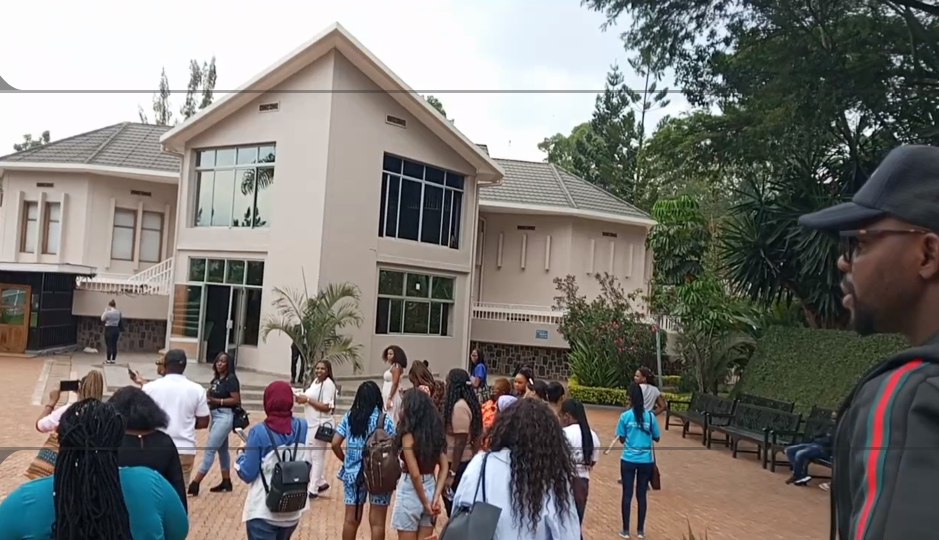
My name is Sofonie Dala, Angolan delegate at the Youth connekt Africa Summit, for socio-economic transformation. The event took place in Kigali, Rwanda from October 13 to 15, 2022.
After the summit we decided to visit the Kigali Genocide Memorial, a very important place not only for Rwanda but for all of Africa and the world in general.
The elegance of its simplicity allows people to both focus on the history of the 1994 genocide as well as grieve.

The memorial is a place of remembrance and learning where more than 250,000 victims of the Genocide have been laid to rest. Many people who lost loved ones in the Genocide visit to remember and grieve. There is no entrance fee and donations are gratefully accepted.


Our visit to the Kigali Genocide Memorial - A place for learning


“For the international community, the Kigali Genocide Memorial is a crucial place to see when they visit Rwanda,” says Gatera. “If you come to Rwanda to travel through the ‘land of a thousand hills’, explore the beauty of our nation and meet its people, it is important to understand where they are coming from. If you don’t understand the genocide then you won’t understand the population.”


The Kigali Genocide Memorial museum includes three permanent exhibitions, the largest documents the 1994 genocide against the Tutsi. There is also a children’s memorial, dedicated to the children who were killed during the genocide and an exhibition on the history of genocidal violence around the world. “This part of the exhibition shows that this kind of tragedy is not a phenomenon only in Rwanda.” It is an international issue – and this is a place for humanity to think deeply about who we are as human beings.

Nobody remained indifferent after visiting the children's room people left in tears, we learned each child’s favourite foods and activities. It was like viewing a family album — except it abruptly ends with how the youngster’s life was violently snuffed out.


Opened a decade after the genocide, the memorial is a solemn, tear-inducing museum. With giant wall displays, archival documents, photos, video footage and weapons encased in glass, the indoor exhibit sheds light on the Rwandan genocide, as well as its pre-colonial, colonial and post-colonial roots. The room filled with human skulls and bones was chilling but most heart-wrenching was the children’s memorial.


Surrounding the center are peaceful gardens for quiet reflection, created as if the developers knew visitors would need to recompose themselves after such a core-rattling experience.

We inhaled and exhaled with intention and a sense of relief until we came upon the tombs. Covered by giant plates of concrete, mass graves for over 250,000 victims serves as a place for visitors to honor those lost, and for the loved ones of the victims to grieve and remember.


“It is important to take the time to visit the Kigali Genocide Memorial to learn about the background of the country.

The memorial not only offers a place for remembrance and reflection, but also the opportunity to better understand this tragedy and the impact it had – and continues to have – on the country and its people. It is possible to understand the efforts the country has made to bring people together, and to educate people not to hate but to love. 


Rwanda has transformed into one of the safest and most eco-aware countries in Africa. It's capital, Kigali, is a creative hub home to a vibrant art scene and a thriving fashion industry – but it's just as important that visitors engage with the devastating events in the country's recent history to understand how they have shaped Rwanda and ensure that they don 't happen again.


Remarkably though, Rwanda today is a country rebuilt. Kigali, is a clean, developed city (Rwanda is one of the cleanest countries in Africa) with a strong infrastructure, modern buildings and well-paved roads — the very streets where Tutsis were openly maimed and killed just 28 years ago.


The history

In 1994, the devastating mass slaughter of the Tutsi people of Rwanda took place. The Rwandan Genocide lasted from 7 April to mid-July, and more than 1 million Tutsis were killed, many of them in their own towns by neighbors and fellow villagers.

“The genocide against the Tutsi was an effect of the seeds of hatred sown in colonial times and the three decades that Rwanda was under very oppressive leadership,” says Honoré Gatera, Director of the Kigali Genocide Memorial. “There was an ideology of hatred spread against the Tutsis, and people were learning to hate rather than to love one another. If you teach people this hatred, this is the result.”

In 2001, in collaboration with Rwanda’s National Commission for the Fight Against Genocide (CNLG), the Aegis Trust raised the $2 million required to build the Kigali Genocide Memorial. The center was officially opened on 7 April 2004 to mark the tenth commemoration of the 1994 genocide against the Tutsi in Rwanda. The memorial is the final resting place for up to 259,000 victims of the genocide and serves as a place where people can grieve for their lost loved ones and remember them. It also serves as a museum where both local and international visitors can learn about the history, implementation and consequences of the genocide.


The Kigali Genocide Memorial is an important place of remembrance and learning about the Genocide against the Tutsi. It is through education that we can prevent mass atrocities from occurring in our communities. A number of education programmes are run by the memorial, both onsite and in communities across Rwanda.

Zimbabwe: US Official Blames Zimbabwe’s Economic Decline On Corruption, Not Sanctions

 Harare — Poor governance and corruption in Zimbabwe are responsible for the country’s economic decline, not U.S. and other Western sanctions imposed after reports of election rigging and human rights abuses, a top U.S. official said Wednesday. The country’s capital, Zimbabwe has scoffed at the claims, while some pro-government citizens protest the sanctions at the U.S. embassy in Harare.


James O’Brien, the U.S. State Department’s sanctions coordinator, he said. that U.S. sanctions are not hurting Zimbabwe’s economy, as they do not affect banks, pointing to billions of dollars in reported annual illegitimate, illegal cross-border transactions as examples of what is hurting the country’s economy.

“Those cost the citizens of Zimbabwe a lot of their chance at having a more prosperous and free life. And so, we’d like our sanctions to be part of a policy answer that begins to improve the management of public services and public resources and makes things possible for the people of Zimbabwe to improve,” he said.

O’Brien said Washington is aware of concerns regional leaders have raised over the impact of the sanctions, including the Southern African Development Community and the African Union, saying that the impact of the sanctions is felt regionally and throughout the continent.

O’Brien said the U.S. would continue reviewing the sanctions list imposed in the early 2000s following reports of human rights abuses and election rigging by the current administration in Zimbabwe.

“We are not engaged in a comprehensive effort to close the Zimbabwean economy. We’re aware that because of the depth of the problems and the duration of this program, there probably are a lot of companies who believe that doing business in Zimbabwe is just too difficult. And that does cost opportunities for the people of Zimbabwe. Whether that’s the result of the underlying mismanagement and corruption, or whether our sanctions add to it. That’s something we are willing to talk about. We are focused on the people who benefit from corruption and human rights abuses in Zimbabwe. That’s the behavior we are attempting to change. Our sanctions are only one part of a policy to improve the situation there,” he said. Some Zimbabweans disagree.

The chants are coming from pro-government members known as the Broad Alliance Against Sanctions. They are singing outside the U. S. embassy in Harare and ask, why do you hate Zimbabwe?

They have been camping here for months and continue to demand the removal of the sanctions.

Calvern Chitsunge, a member of the organization, told protesters and fellow government supporters the only thing we can do is demand that America remove sanctions it imposed on us today or yesterday.

He said as the Broad Alliance Against Sanctions, we sat down and agreed to write the Patriotic Act and we petitioned parliament. We appeared before the committee on foreign affairs and we said this law must prosecute those [Zimbabweans] who go abroad calling for sanctions, people who write lies. That’s what we are doing today: to correct mistakes made by the Americans and the British. Zimbabwe will never be a colony again. We are here to defend it, he said.

Zimbabwe officials refused to comment on O’Brien’s comments to journalists, saying President Emmerson Mnangagwa would address the nation Tuesday as the country marks what is known as “Anti-Sanctions Day,” when there will be government-organized protests in Harare.

Mnangagwa’s government called for the protests, alleging Zimbabwe is being punished for the land reform program under the late President Robert Mugabe in 2000, which forcefully displaced white commercial farmers and gave land to Black citizens.

……………………………………………………………

Moody’s downgrades outlook on UK from “stable” to “negative”

 Moody’s last night downgraded its outlook on the UK’s rating to negative, warning that the country was at risk of permanently losing credibility over economic policy after the mini-budget.


In a late ratings update, the agency revised down its outlook on the UK from “stable” to “negative” but maintained its overall Aa3 rating. Moody’s became the third of the big three raters, alongside Fitch and S&P, to revise down the UK’s borrowing outlook in the past month.

Moody’s said its revision was driven by risks to the UK’s rising debt servicing costs, caused by higher interest rates, growing government borrowing and “risk of a sustained weakening in policy credibility”. Moody’s also revised down its outlook for the Bank of England to “negative”.

Source: The Times of UK

…………………………………………………………

World Teachers’ Day 2026 - Dia Mundial dos Professores 2026

Standing with teachers: 60 years of protecting the profession, advancing its status and shaping our futures     On 5 October, we observed Wo...