Translate

Thursday, 17 March 2022

Anti-slavery campaigners unite for Mauritania talks


More than 1,000 anti-slavery campaigners from across West Africa are meeting in Mauritania at a time when there is a renewed effort to eradicate the practice.


In a rare public comment on the issue, Mauritania’s human rights commissioner told delegates that fighting the practice was a constant and irreversible priority for the authorities.

The subject is rarely discussed publicly in Mauritania so for an anti-slavery conference to be hosted in the capital Nouakchott is a breakthrough.

It was the last country in the world to abolish the practice in 1981.

But it has remained rooted in Mauritanian society with thousands of women and children from the Haratin ethnic group still living in slave-like conditions – as bonded labourers for Arab-Berber families.

Under successive governments more anti-slavery campaigners were being locked up than slave owners.

Now the human rights commissioner, Cheikh Ahmedou Ould Sidi, has said very publicly that the government is determined to eliminate slavery and end discrimination.

………………………………………………………………

Diébédo Francis Kéré: The first African to win architecture’s top award


Burkino Faso-born architect, Diébédo Francis Kéré, has become the first African to win the prestigious Pritzker Prize, which is often referred to as the Nobel Prize of architecture. His highly esteemed work, including permanent and temporary structures, has been erected in his country of birth, but also across Africa, Europe and the United States.

Mr Kéré, 56, was elated to receive what is considered architecture’s most renowned award, describing himself as the “happiest man on the planet”.

But his decades-long journey to the top of his field was far from straightforward, with limited opportunities in his village.

“I grew up in a community where there was no kindergarten, but where community was your family,” he told the pritzker prize.

“I remember the room where my grandmother would sit and tell stories with a little light, while we would huddle close to each other and her voice inside the room enclosed us, summoning us to come closer and form a safe place. This was my first sense of architecture,” he continued.

At the age of seven, Mr Kéré found himself crammed into an extremely hot classroom with more than 100 other students.

As the first child in his community to have attended school, this experience of poor building facilities was his earliest inspiration to improve the educational lives of Burkina Faso’s children, using architecture.

Years later and after studies in Germany, the dream became a reality, with Mr Kéré designing a primary school in his home village of Gando as his first building in 2001.

It was built with significant input from local people, who contributed to the workforce and resources, according to the prize’s website.

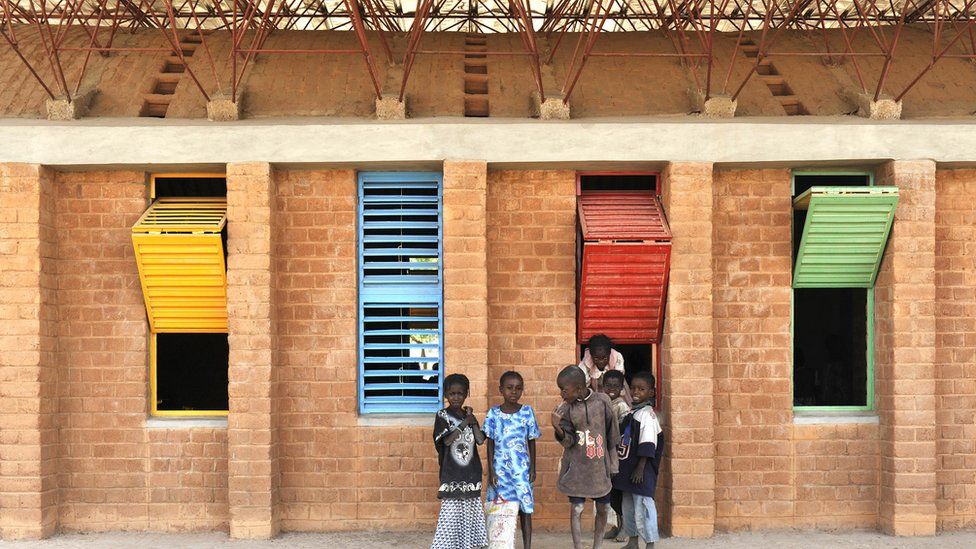
Gandp Primary School. There are 6 children in the photo. There are colourful shutters behind them.

“Architecture is an instrument we can use to create better cities, to create space to inspire people, to create classrooms which inspire the best generation,” he told BBC Afrique.

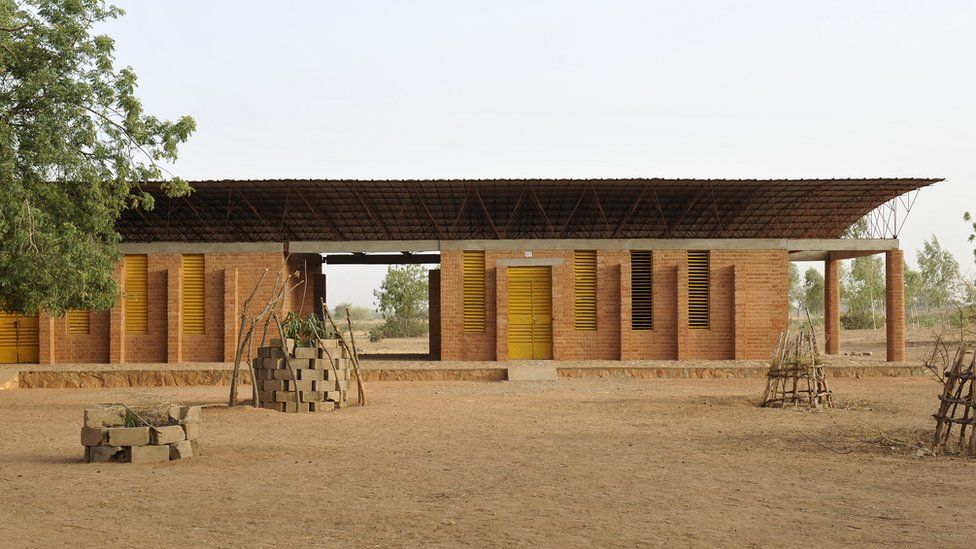
Gando Primary school. The building has many windows and yellow shutters. it has a flat roof.
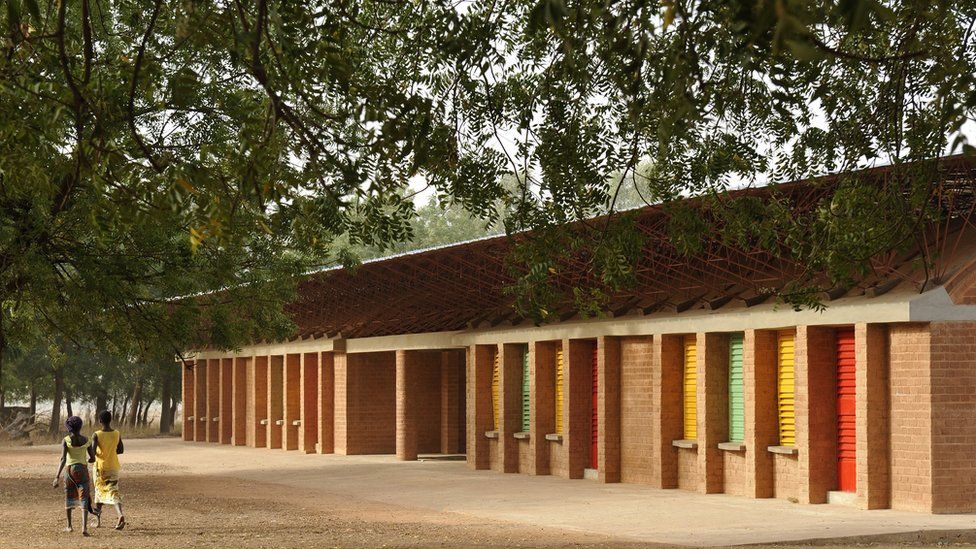
Gando Primary School. There are colourful shutters and trees in the background. There are two girls walking past it.

The success of the primary school earnt Mr Kéré the Aga Khan Award in 2004, which is awarded every three years to identify building projects that address the needs of societies with a large Muslim population.

The renown of the Gando school later paved the way for him to design more educational establishments, like Lycée Schorge, also in Burkina Faso.

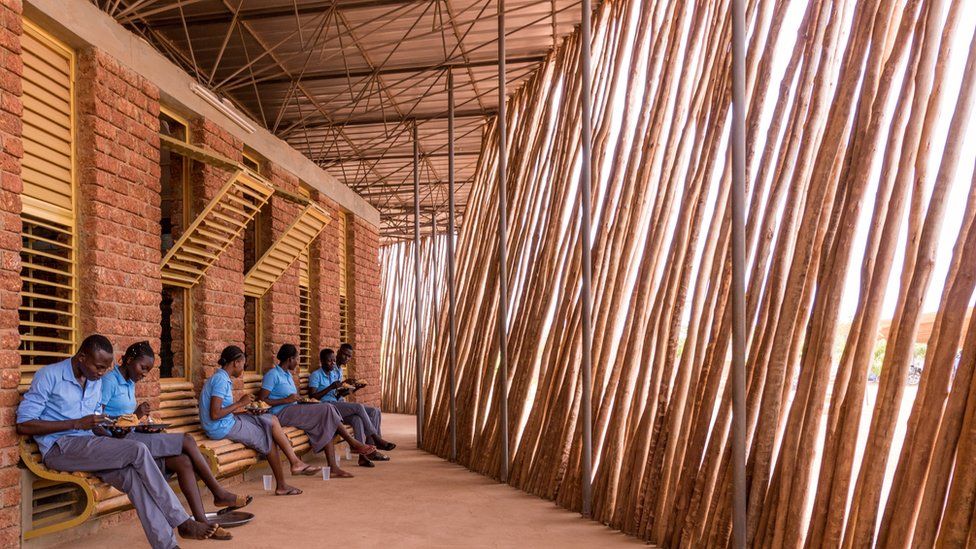
Students in Lycée Schorge secondary school. Beams of light are entering the building.

One of the distinguishing markers of Mr Kéré’s work is his use of light, which Pritzker Prize facilitators noted in their announcement: “A poetic expression of light is consistent throughout Kéré’s works. Rays of sun filter into buildings, courtyards and intermediary spaces, overcoming harsh midday conditions to offer places of serenity or gathering.”

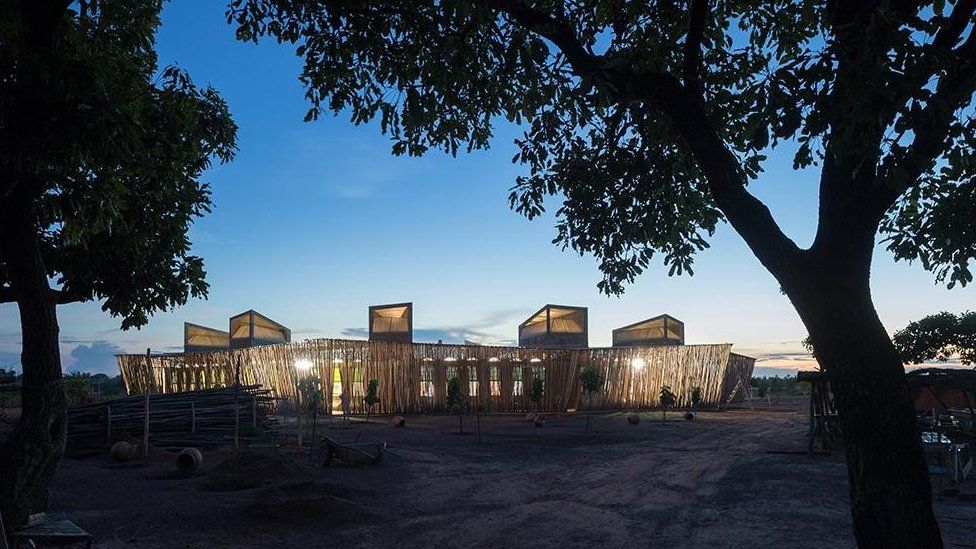
Lycée Schorge Secondary School at night. There are light on in the building and trees in the forefront of the picture.
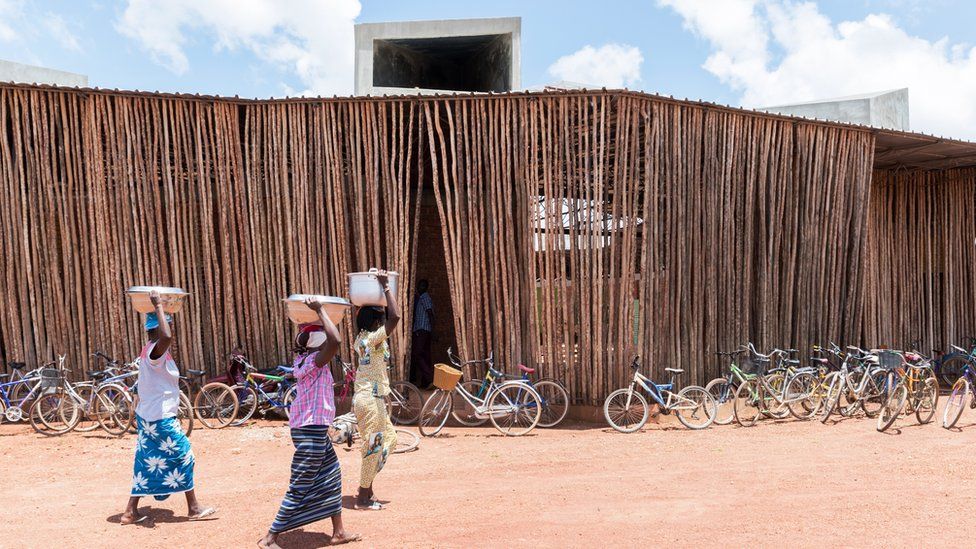
Women walking outside Lycée Schorge Secondary School. There are bikes in the background. The building is made up of tall brown sticks.

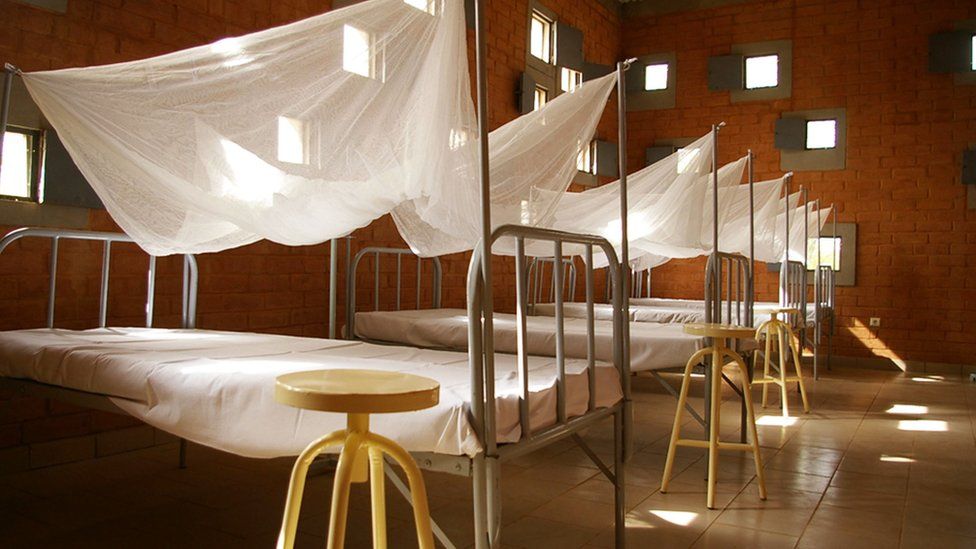
Mr Kéré’s signature use of light is also evident in his design of healthcare facilities, such as the Centre for Health and Social Welfare in Burkina Faso’s Opera Village, which is still under construction, according to architect’s website.

Centre for Health and Social Welfare. There are beds lines up with white nets covering them. The walls are brick and there is light entering from small windows.

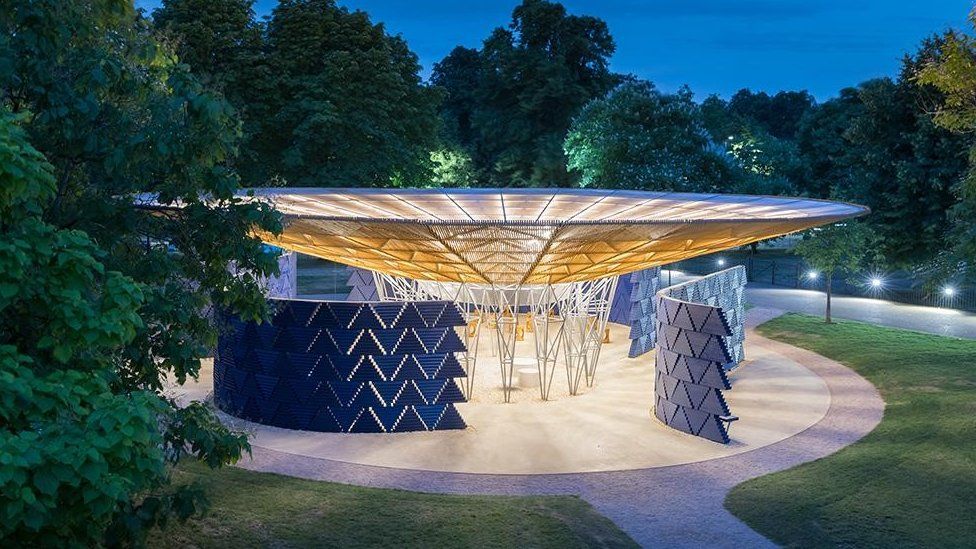
Beyond his designs in Burkina Faso, the award-winning architect has also designed permanent and temporary structures across Europe and the United States, such as London’s 2017 Serpentine Pavilion.

Each year, the Serpentine Gallery invites an international architect to build their first ever London edifice on its grounds.

His inspiration for the design was the trees in his home village of Gando, with structures that sought to connect the visitors with the surrounding nature.

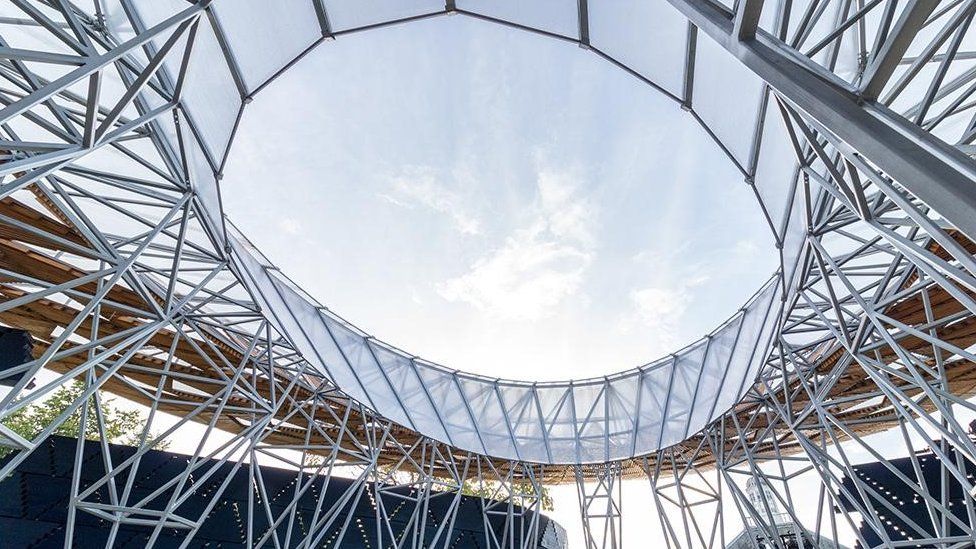
Serpentine 2017 structure. It is of a round shape with blue panels around it. It is an open structure.
Serpentine 2017 pavillion with a view of the open roof.

Mr Kéré has also done designs for the famous Coachella Valley Music and Arts Festival, which runs each year in California and attracts celebrities and big names in the entertainment industry with Billie Eilish, Swedish House Mafia and Kanye West among those set to perform this year.

Mr Kéré’s design for the 2019 festival was named Sarbalé Ke, which means House of Celebration. His inspiration for the structure was the Baobaob tree, which has a hollow interior bark.

Sarbalé Ke structures with hollow interior and colourful patterns on them. There are people sitting inside the hollow interior.

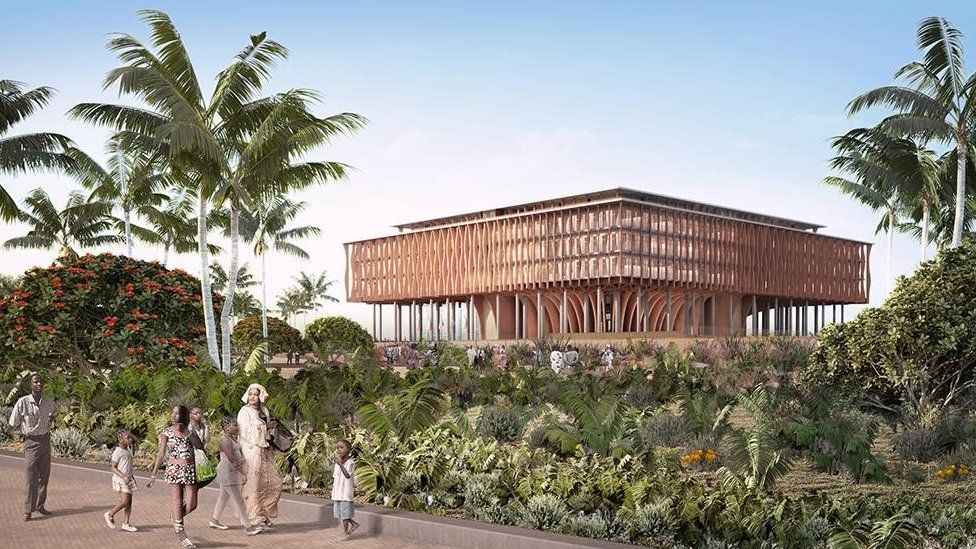
Mr Kéré’s ongoing architectural works include parliament buildings in both Burkina Faso and Benin. Although unfinished, the designs once again demonstrate his signature use of light.

A rendered picture of Burkina Faso National Assembly. There is plenty of light entering from the ceiling.
Rendered image of Benin National Assembly.

………………………………………………………………

Wednesday, 16 March 2022

Joe Biden, other top officials banned from entering Russia


Russia says it has put Joe Biden, U.S President, Justin Trudeau, Canadian Prime Minister and a dozen top US officials on a “stop List” that bars them from entering Russia.


Alongside Biden, US officials on list included Defense Secretary, Lloyd Austin, CIA chief William Burns and National Security Advisor, Jake Sullivan.

The ban was in response to sanctions imposed by Washington on Russian officials, amid Russian invasion of Ukraine.

The Russian Foreign Ministry said it was maintaining official relations and if necessary, would make sure that high level contacts with people on the list could take place.

Others on the list included Deputy National Security Advisor, Daleep Singh, US agency for International Development Chief, Samantha Power, Deputy Treasury Secretary Adewale Adeyemo and US Export Import Bank chief, Reta Jo Lewis.

Russia also banned from entry, Biden’s son Hunter, and former Secretary of State and democratic Presidential Candidate, Hilary Clinton.

The Foreign Ministry warned Moscow will soon announce additional sanctions against a range of “Russophobix” US officials, military officers, legislators, businessmen and media personalities.

Earlier, the US Treasury Department announced sanctions on four Russian individuals and one entity it accused of playing a role in concealing events around the death of whistle blower, Sergei Magnitsky, of being connected to human rights violations against rights advocate, Oyub Titiev.

The Treasury statement also imposed fresh sanctions on Belarus President, Alexander Lukashenko and his wife, increasing pressure on Moscow and its close ally.

“We condemn Russia’s attacks on humanitarian corridors in Ukraine, and call on Russia to cease its unprovoked and brutal war against Ukraine,” the Head of the US Treasury’s Office of Foreign Assets Control, Andrea Gacki, said in a statement.

Canada has also imposed sanctions on 15 Russian officials, who enabled and supported the war in Ukraine.

…………………………………………………………


Russia’s military forces blasted Ukraine’s capital region and other major cities as they tried to crush a Ukrainian defense that has frustrated their progress after invading.


Russia’s military forces blasted Ukraine’s capital region and other major cities Wednesday as they tried to crush a Ukrainian defense that has frustrated their progress nearly three weeks after invading.


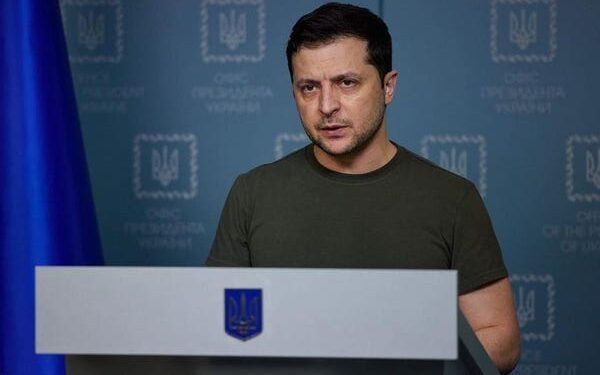
With Russia’s ground advance on Kyiv stalled despite the sustained bombardment, a glimmer of optimism emerged that talks between the two sides could make progress. Ukrainian President Volodymyr Zelenskyy said negotiations would continue and Russia’s demands for ending the war were becoming “more realistic.”

Russia rained shells on areas around Kyiv and within the city, where a 12-story apartment building erupted in flames after being hit by shrapnel.

Zelenskyy said Russian forces had been unable to move deeper into Ukrainian territory but had continued their heavy shelling of cities. British and U.S. intelligence assessments supported the Ukrainian leader’s view of the fighting.

“Efforts are still needed, patience is needed,” he said in his video address to the nation. “Any war ends with an agreement.”

A senior U.S. defense official, speaking on the condition of anonymity to discuss the Pentagon’s assessment, said the Russians were using long-range fire to hit civilian targets inside Kyiv with increasing frequency but that their ground forces were making little to no progress around the country. The official said Russian troops were still about 15 kilometers (9 miles) from the center of the capital.

Zelenskyy was preparing to make a direct appeal for more help Wednesday in a rare speech by a foreign leader to the U.S. Congress. Meanwhile, defense ministers from NATO member nations planned to meet in Brussels on Wednesday.

Developments on the diplomatic front and on the ground occurred as the number of people fleeing Ukraine amid Europe’s heaviest fighting since World War II passed 3 million.

Shrapnel from an artillery shell slammed into a 12-story apartment building in central Kyiv on Wednesday, obliterating the top floor and igniting a fire that sent plumes of smoke over the area, according to a statement and images released by the Kyiv emergencies agency. The neighboring building was also damaged. The agency reported two victims, without saying if they were injured or killed.

Russian forces have intensified fighting in the Kyiv suburbs, notably around the town of Bucha in the northwest and the highway leading west toward Zhytomyr, Kyiv region head Oleksiy Kuleba said.

………………………………………………………

New Zealand border to reopen from next month, PM Ardern says


New Zealand has brought forward plans to reopen its borders to international travellers after a Covid lockout of more than two years.

Australians will be allowed to enter the country without needing to quarantine or isolate from 13 April.

Fully vaccinated travellers from about 60 countries on a visa-waiver list will be able to arrive from 2 May. Those nations include the UK and US. All arrivals will have to show a negative Covid test. New Zealand shut its borders in March 2020 as the pandemic spread. They have remained closed, except for a short-lived travel bubble with Australia.

Currently only New Zealand citizens are allowed in and out. Prime Minister Jacinda Ardern said New Zealand was “ready to welcome the world back”.

“We have now received guidance that it is safe to significantly bring forward the next stage of border reopening work, bringing back our tourists,” she said on Wednesday.

People who already have a visa – but are from outside the visa waiver list – will be eligible to enter the country on 1 May.

While tough lockdowns and virtual isolation helped the country get a reputation as a Covid success story, transmission rates have soared recently.

Many Kiwis are struggling to grasp how their country has gone from fewer than 1,000 cases a day to more than 20,000 daily infections in just a couple of weeks. Ms Ardern had pursued an elimination strategy until October last year.

But New Zealand now has a 95% vaccination rate in the eligible population. It has recorded only 115 Covid deaths since the pandemic began.

Despite some easing of isolation requirements for Covid patients, the country remains in its highest level of restrictions with limits on gatherings and mask mandates in many settings.

Mandates have left unvaccinated people in some sectors without jobs, leading to three weeks of protests in the capital Wellington.

………………………………………………………………

Zelenskyy to deliver virtual address to US Congress


Ukraine introduces temporary visa-free for foreigners who wants to help fight Russia


Ukrainian President Volodymyr Zelenskyy will deliver a virtual address this week to the U.S. Congress, part of a series of high-profile speeches from a leader working to rally support as the Russian invasion of his country intensifies.


Zelenskyy will speak Wednesday to members of the House and Senate, an event that will be livestreamed for the public. It follows an address he delivered last week to the U.K. Parliament that carried echoes of Winston Churchill’s stirring words during World War II. On Tuesday, Zelenskyy is scheduled to deliver a speech to Canada’s parliament.

“It’s such a privilege to have this leader of this country, where these people are fighting for their democracy and our democracy,” House Speaker Nancy Pelosi said Monday during an event at the Brooklyn Bridge with New York lawmakers.

Pelosi said Zelenskyy asked for the meeting when they spoke at the end of last week, and lawmakers are “thrilled” to have him address Congress.

The talk comes as the Ukrainians are fighting for their country’s survival in the escalating war as Russian President Vladimir Putin intensifies his assault, including airstrikes on the capital, Kyiv. Zelenskyy has pleaded with the U.S. for more air support, including the transfer of planes from neighboring Poland. Civilians in Ukraine are taking up arms to hold back Putin’s regime, but the war has launched a mass exodus of more then 2.8 million people from Ukraine.

“The Congress, our country and the world are in awe of the people of Ukraine,” said Pelosi and Senate Majority Leader Chuck Schumer in a statement Monday announcing the address.

They said all lawmakers are invited to the talk that will be delivered via video at the U.S. Capitol. It comes after Congress recently approved $13.6 billion in emergency military and humanitarian aid for Ukraine.

Biden is expected to sign a big spending bill containing Ukraine aid into law on Tuesday, but lawmakers expect to hear more from Zelenskyy about his country’s immediate needs. During Pelosi’s call last week, Zelenskyy said his country would need help rebuilding from the war.

“We have to do more in terms of meeting the needs of some of the 2.7 million refugees,” she said.

She said of the Ukrainians, “They’re fighting for democracy writ large.”

In their statement Monday, the congressional leaders said Congress “remains unwavering in our commitment to supporting Ukraine as they face Putin’s cruel and diabolical aggression.”

Earlier this month, Zelenskyy spoke by video with House and Senate lawmakers, delivering a desperate plea for more military aid.

The Ukrainian president has specifically sought air support to battle the Russians, including the transfer of Soviet-era MiGs from Poland, but the Pentagon has closed the door on that idea for now, worried it could escalate U.S. involvement.

Schumer said Monday that it’s among the highest honors of any Congress to welcome foreign heads of state, “but it is nearly unheard of in modern times that we hear from a leader fighting for his life, fighting for his country’s survival, and fighting to preserve the very idea of democracy.”

………………………………………………………

Tuesday, 15 March 2022

Jihadists strike again in Burkina Faso killing 13 soldiers


DNT Burkina Faso – Jihadists in Burkina Faso yesterday struck again this time killing 13 soldiers and injuring dozens others near the town of Namentenga in the center northern part of the country.


The soldiers were ambushed while rushing to provide first aid to passengers of a bus that had run aground after driving over land mines.


The Burkinabe military has launched what it calls a “Mopping up” exercise in response to this latest of a long string of Jihadist attacks on soldiers.

Attacks by jihadists linked to al Qaeda and the Islamic State group have killed thousands and displaced an estimated 1.5 million people in Burkina Faso since 2015.

Islamist militants now move freely across entire swaths of the country and have forced inhabitants of some regions to conform to a strict version of Islamic law. Meanwhile, the army’s continuing fight against the Islamists has depleted the country’s already meagre resources.

A timeline of jihadist violence in Burkina Faso 

On January 15, 2016, 30 people were killed in a double terrorist attack perpetrated by al Qaeda in the Islamic Maghreb on the Splendid Hotel and the Cappuccino restaurant in Ouagadougou. Many of the victims were Western expatriates.

On March 2, 2018, eight deaths among the security forces were reported after attacks targeting the French embassy and the Burkinabe Armed Forces.

On January 1, 2019, the Fulani ethnic group, accused of collaborating with jihadist groups, was targeted by the Mossi, another ethnic group, in an attack that left 72 people dead, according to official estimates. Another 6,000 were forced to flee.

On August 19, 2019, 24 soldiers were killed in an attack on an army base in Koutougou in the north of the country. The army was targeted again in December in a new attack by heavily armed jihadists on and around Arabinda, a city near the border with Mali.

On January 25, 2020, 39 civilians were massacred in the village market of Silgadji in the north of the country. Around 40 civilians were killed the week before in villages close to Nagraogo and Alamou.

From March to June 2021, a series of mutinies shook the Burkinabe capital: 566 soldiers were decommissioned and a new army chief was nominated by the president.

On June 5, 2021, at least 160 people were killed in a new massacre. Many victims were members of the Volunteers for the Defence of the Homeland army auxiliary group.
On November 14, 2021, 57 people were killed in an attack on the police station in Inata, 54 of whom were police officers. They had alerted authorities about a lack of resources two weeks before the attack.

On December 10, 2021, Lassina Zerbo was nominated prime minister after the resignation of his predecessor following criticism that he had been incapable of stopping terrorist violence.

On January 11, 2022, eight soldiers accused of planning “a project to destabilise the institutions of the republic” were arrested.

DNT News with Correspondence reports from Julius Ouya

………………………………………………………………

World Teachers’ Day 2026 - Dia Mundial dos Professores 2026

Standing with teachers: 60 years of protecting the profession, advancing its status and shaping our futures     On 5 October, we observed Wo...