Translate

Wednesday, 15 December 2021

A woman who murdered her partner’s 16-month-old daughter has been jailed


A woman who murdered her partner’s 16-month-old daughter has been jailed for a minimum of 25 years.

Savannah Brockhill caused “catastrophic” injuries to Star Hobson, whose mother Frankie Smith was sentenced to eight years for causing or allowing the toddler’s death.

Judge Mrs Justice Lambert said Star’s “short life was marked by neglect, cruelty and injury”.

Family members spoke of their “devastating loss” prior to sentencing.

Sentencing Brockhill, Mrs Justice Lambert said she had “shown no remorse” for Star’s killing, which she had denied.

The judge told Smith she had played “a significant role” in her child’s death and said: “This is something you have to live with for the rest of your life.”

She told the pair they had “both behaved in a cruel and callous way” towards the toddler, who became “caught up in the crossfire” of the women’s tempestuous, violent relationship.

Mrs Justice Lambert said a “fatal punch or kick” from Brockhill on 22 September 2020 had caused damage to internal organs including the liver, pancreas and kidneys and effectively caused Star to bleed to death.

She said the violent attack was “not an isolated event” and “numerous other injuries were identified on Star’s body” after her death.

“Those injuries included two brain injuries; numerous rib fractures; a longitudinal fracture and then re-fracture of Star’s tibia and a fracture to the back of Star’s skull,” she said.
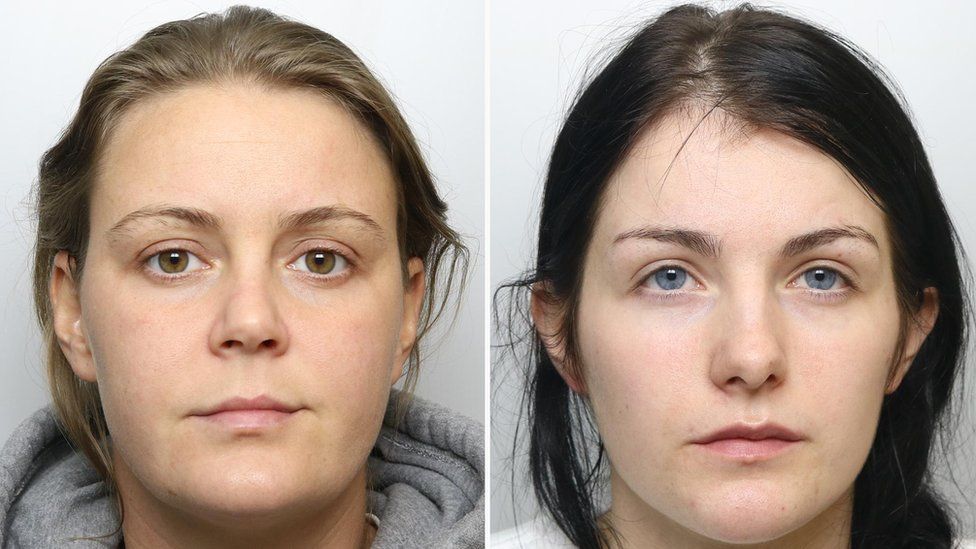
Savannah Brockhill and Frankie SmithIMAGE SOURCE,WEST YORKSHIRE POLICE
Image caption,

Savannah Brockhill (left) and Frankie Smith had both denied murder and causing or allowing the death of a child

During a seven-week trial, jurors heard how Brockhill, a 28-year-old security guard, delivered a total of 21 blows to the infant in a car over a period of nearly three hours just weeks before her death.

Brockhill and Smith had filmed their “callous” and “frank cruelty” in the run-up to Star’s death on mobile phones, with hours of footage shown in court.

One clip showed the toddler, who was “clearly desperately in need of sleep”, falling off a plastic chair while dozing and hitting the floor – edited with visual effects and comical background music by Brockhill, who sent it to friends with the words, “I’ve laughed so hard.”

Other clips included that of Star’s face falling into a bowl of food because she was too tired.

‘Jealous fights’

Mrs Justice Lambert told the couple, who were both in the dock at Bradford Crown Court: “The question which those who have watched the evidence in this trial unfold will be asking is why anyone would, or could, behave in such a way towards a young and vulnerable child who should be cherished and protected rather than abused and neglected.”

Messages sent between the two women portrayed a relationship of “petty squabbles and jealous fights” which, often fuelled by alcohol, escalated into “violent threats and ultimatums”, she added.

“Star was, however, the victim of these pointless and self-absorbed rows. You, Savannah Brockhill, took your anger out on Star by punching and slapping her. Frankie, you were cruel towards Star, punishing her pointlessly for perceived bad behaviour,” Mrs Justice Lambert said.
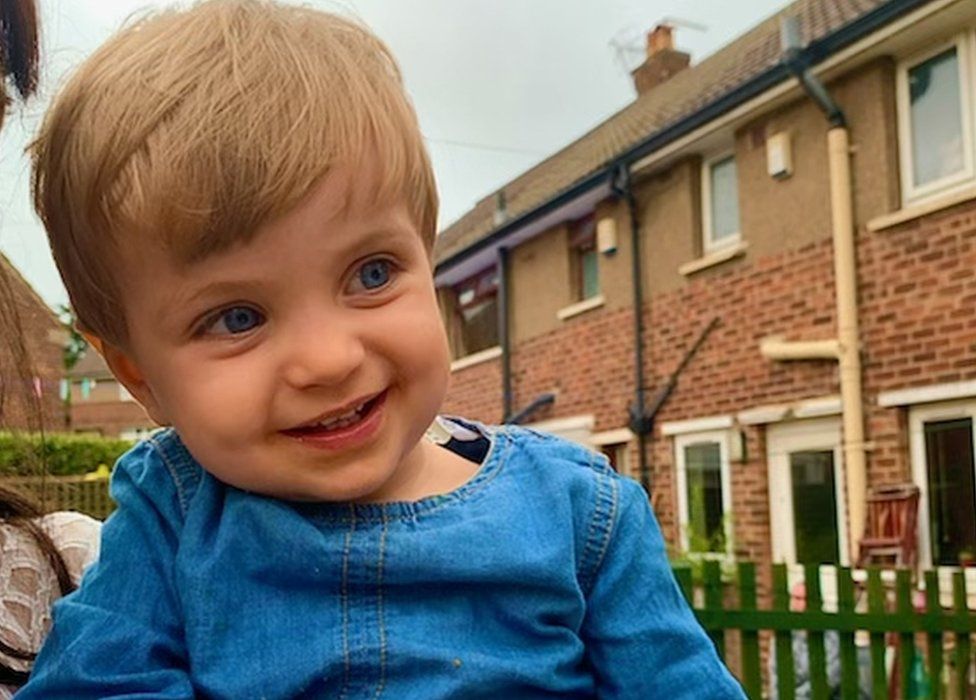
Star HobsonIMAGE SOURCE,DAVID FAWCETT
Image caption,

Star’s family say they feel let down by social services and her death could have been prevented

In her sentencing remarks, Mrs Justice Lambert described Smith as having a “low IQ of only 70” and as being “unusually compliant”.

She said Smith was a neglectful parent who “thought only of her own interests” even before her relationship with Brockhill began, and said the older woman would “lash out at Star when in a jealous rage”.

The judge said Smith had “failed” to contact police, authorities or family when the abuse had become apparent from bruises and marks appearing on Star’s face and body.

“Instead, you continued your relationship with her for your own ends. You allowed Savannah Brockhill into your flat on 22 September. You gave her unsupervised access to Star, with fatal consequences,” Mrs Justice Lambert told Smith.

‘No remorse’

During the Bradford Crown Court hearing, Star’s paternal grandfather Bernard Hobson read an emotional victim impact statement describing the effect of the murder on her family.

He paused numerous times as he told the court their lives had been “forever blighted” by the loss of their “beautiful baby girl”.

The judge also paid tribute to Smith’s friend Hollie Jones, who was the first person to raise concerns to social services and had “tried to protect Star”.

She further thanked members of Star’s family for the care they had provided the toddler during her short life.

The court heard how Brockhill’s family had suffered a spate of attacks in the wake of the charges, with the judge telling her: “You brought this on yourself and upon them.

“You have shown no remorse during the trial or even following your conviction.”

…………………………………………………………


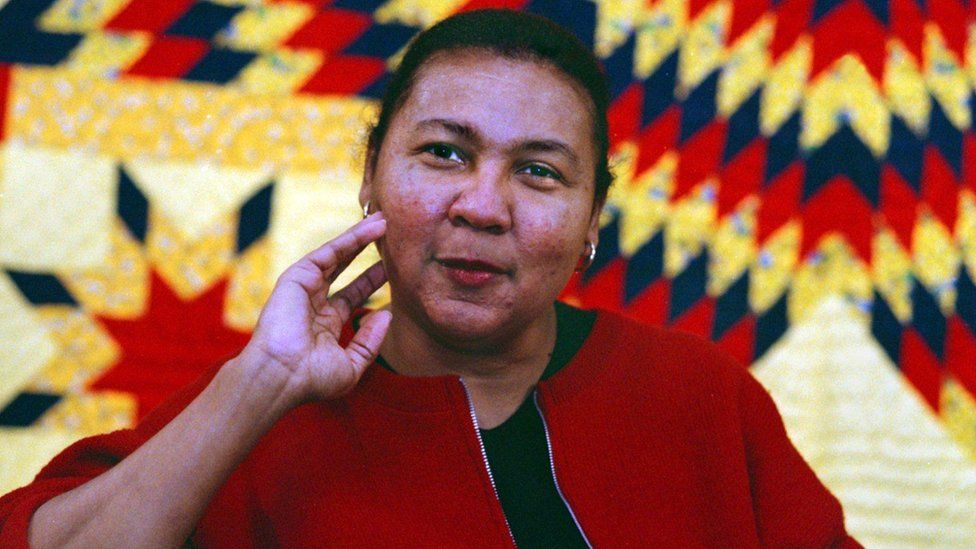
bell hooks; Author and feminist dies aged 69


Author bell hooks has died at the age of 69, her family has confirmed.

She died on Wednesday at her home in Kentucky “surrounded by her family and friends”, according to a statement posted on social media.

Her real name was Gloria Jean Watkins but she adopted her great-grandmother’s name Bell Blair Hooks for her writing.

However, hooks deliberately styled her own name with lower case letters to focus attention on her message rather than herself.

She said she wanted readers to focus on the “substance of books, not who I am”.

The writer’s niece, Ebony Motley, posted a statement on Twitter confirming the news of her death.

hooks was born on 25 September 1952 in Hopkinsville, Kentucky and was the fourth of seven siblings.

She attended segregated schools in Christian County before going on to Stanford University in California. She earned a master’s in English at the University of Wisconsin and a doctorate in literature at the University of California at Santa Cruz.

Her first book, Ain’t I a Woman? Black Women and Feminism, was published in 1981.

hooks went on to release more than 40 books, ranging from essays and poetry to children’s books.

“My work is so eclectic; it spans such a broad spectrum,” she said in a 2009 interview.

bell hooksIMAGE SOURCE,GETTY IMAGES
Image caption,

hooks was considered a trailblazer within the intersectional feminism movement

hooks wrote regularly about feminism, racism, culture, capitalism, politics, gender roles, love, and spirituality.

In particular, hooks wrote about how a person’s race, gender and social class were interconnected.

“We [cannot] see gains for feminism distinct and separate from other struggles,” said hooks, who was considered a trailblazer within the intersectional feminism movement.

From 2004, hooks worked as a teacher at Berea College and in 2010 the school opened the bell hooks Institute at Berea College.

hooks was inducted into the Kentucky Writers’ Hall of Fame in 2018.

“I want my work to be about healing,” she said. “I am a fortunate writer because every day of my life practically I get a letter, a phone call from someone who tells me how my work has transformed their life.”Following the news of her death, hooks’ friend Linda Strong-Leek said: “She was one of my dearest friends and the world is a lesser place today without her.”

………………………………………………………

UN ignoring Tigray rebel destruction – Ethiopia government


UN ignoring Tigray rebel destruction – Ethiopia government

Ethiopia has accused the United Nations’ human rights commission, Unesco and the World Health Organization (WHO) of overlooking destruction in areas in the northern part of the country, that were recently recaptured by the army and its allied forces from Tigray rebels.


It said the UN agencies were silent about alleged abuses and the destruction of schools and health facilities.

Thousands of health facilities have been destroyed, Deputy Communication Minister Kebede Desissa told journalists in Addis Ababa on Wednesday.

The BBC has not been able to independently confirm the allegations and the UN has not yet reacted to the accusations.

Addis Ababa’s relations with the UN has been fraught since the beginning of the conflict in November last year, which started in the country’s northern region of Tigray.

The war has unleashed a massive humanitarian crisis, and as fighting expanded to the neighbouring regions of Afar and Amhara, so has the tragedy and destruction.

Read more: Ethiopia’s Tigray war: The short, medium and long story – BBC News

………………………………………………………

Tuesday, 14 December 2021

Ugandan opposition leader ‘under house arrest’


Ugandan opposition leader Bobi Wine said today that police had surrounded his residence and put him under house arrest ahead of a planned campaign rally for a local by-election.


Wine, whose real name is Robert Kyagulanyi, said police and military officers, deployed overnight, had barred him from leaving his home in Magere, north of the capital Kampala.

“The military has increased deployment around my home. No one is allowed to leave or enter,” Wine said on Twitter, accusing President Yoweri Museveni of placing him “under house arrest”.

The popstar-turned-politician came second in a tense January election that returned Museveni to power for a sixth term.

Wine was set to campaign for an opposition candidate in the central district of Kayunga where Museveni is also expected to hold a rally.

“Our security guard and gardener have been violently arrested and beaten,” Wine said, adding that they had been “bundled” into a police vehicle outside his gate and their phones confiscated.

Following the January vote, which was marked by a crackdown on opposition figures, soldiers and police surrounded Wine’s property, stopping members of his household including his wife from leaving.

A court ordered his release after 11 days.

Wine’s National Unity Platform party has alleged that hundreds of his supporters were abducted by security forces in the run-up to the election — some were killed while others re-emerged weeks later showing signs of torture.

Last week, two members of the armed forces were handed lengthy jail terms for their part in violence against protesters last year that left more than 50 dead.

The United States had announced days earlier sanctions against the military intelligence chief Major General Abel Kandiho, citing his involvement in serious human rights abuses including beatings, sexual assault and electrocution.

In March, Wine was arrested for leading a protest in Kampala demanding the release of his supporters.

Museveni has ruled Uganda without pause since seizing control in 1986, when he helped to end years of tyranny under Idi Amin and Milton Obote.

Once hailed for his commitment to good governance, the former rebel leader has crushed any opposition and tweaked the constitution to allow himself to run again and again.

………………………………………………………

Cyril Ramaphosa: South Africa president being treated for Covid


South Africa President Cyril Ramaphosa is receiving treatment after testing positive for Covid-19, his office says.

In a statement, it says the 69-year-old has mild symptoms and is isolating in Cape Town.

South Africa has seen a surge of infections since the new Omicron variant was first detected in November.

Despite Omicron being more transmissible than previous strains, including Delta, risk of severe disease and death is lower, a study has found.

South Africa’s presidency says Mr Ramaphosa tested positive on Sunday, and has already delegated all responsibilities to Deputy President David Mabuza “for the next week”.

The statement says the president started feeling unwell after attending the funeral of former President FW de Klerk early on Sunday.

It adds that Mr Ramaphosa is in “good spirits” – but is being monitored by doctors.

The statement provided no further details about Mr Ramaphosa’s infection. People who have recently been in close contact with him have been asked to watch for symptoms or get tested.

South Africa battles Omicron fear and vaccine myths
Africa Live: More on this and other stories from the continent
Mr Ramaphosa had recently returned from a seven-day tour of Nigeria, Ivory Coast, Ghana and Senegal.

Some members of his delegation had tested positive in Nigeria and returned directly to South Africa, reports the BBC’s Nomsa Maseko in Johannesburg.

The presidency says Mr Ramaphosa, who was vaccinated in February, and members of his team were tested for Covid in all countries they visited.

The president says his own infection should serve as a caution to people to observe public health measures as well as get vaccinated.

Despite very public pleas from the authorities, fewer than 30% of South Africans are fully vaccinated because of what the country’s health authorities describe as a mass “vaccine hesitancy”.

South African scientists alerted the World Health Organization about the new Omicron variant on 24 November.

The UN public health body later classed Omicron as “a variant of concern”, warning that vaccines against it may be less effective.

A number of countries around the world have since introduced travel bans against South Africa and several neighbouring countries – but this has failed to stop the new variant spreading.

Mr Ramaphosa has been critical of Western nations’ blanket travel bans
A recent study has found people who have been vaccinated or previously been infected were still susceptible to catching the Omicron variant, but were less likely to fall seriously ill or die.

“We are seeing a large number of breakthrough infections… but those infections are not progressing to severe disease or death in any sort of meaningful large numbers,” said Shabir Madhi, vaccinology professor at Johannesburg’s University of the Witwatersrand.

“As an example yesterday [Sunday] there were about 20,000 cases reported and about 25 people who died of Covid-19,” he told the BBC’s Newsday programme.

“During the course of the Delta variant wave, when there were 20,000 cases in South Africa the number of those dying each day was between 200 and 300,” Prof Madhi said.

He added that even though the rate of testing was low in South Africa, experts did not expect the number of deaths to come “anywhere close” to the fatalities recorded in the previous three waves.

………………………………………………………

Covid in Scotland: More ambulance calls to lockdown home drinking


Drink-related ambulance callouts initially fell during lockdown but then rose again as home drinking became a problem, a study has found.

Stirling University researchers found the closure of pubs and nightclubs in April and May 2020 led to a dramatic decline in “mass public intoxication”

However, drink-related callouts soon returned to pre-pandemic levels as home drinking increased.

The researchers call for long-term action to address problem drinking.

One suggestion they make is to increase the minimum unit price of shop-purchased alcohol unit to reduce consumption within the home. Other possibilities discussed were restrictions on online sales and licensing changes.

Minimum alcohol price had ‘minimal crime impact’
Minimum unit alcohol price has ‘lasting impact’
‘Notable’ fall in Scotland’s alcohol death rate
Prof Niamh Fitzgerald, director of the Institute for Social Marketing and Health at Stirling University, who led the study, said lockdown did have some positive outcomes for the NHS and emergency services, and policy makers should reflect on how these might be sustained in future.

While ambulance callouts generally fell at the start of lockdown, the decrease in drink-related incidents was most dramatic at weekends, especially at night with incidents down 48.9% on the previous year.

One paramedic said during this time there had been “nowhere near the same amount of public intoxication or mass intoxication”. He said there had been fewer assaults involving alcohol, fewer unconscious people and fewer falls.

“This was a situation that paramedics described as a ‘welcome break’ from the hostile, alcohol-fuelled scenes experienced in towns and cities on weekend nights pre-pandemic,” Prof Fitzgerald said.


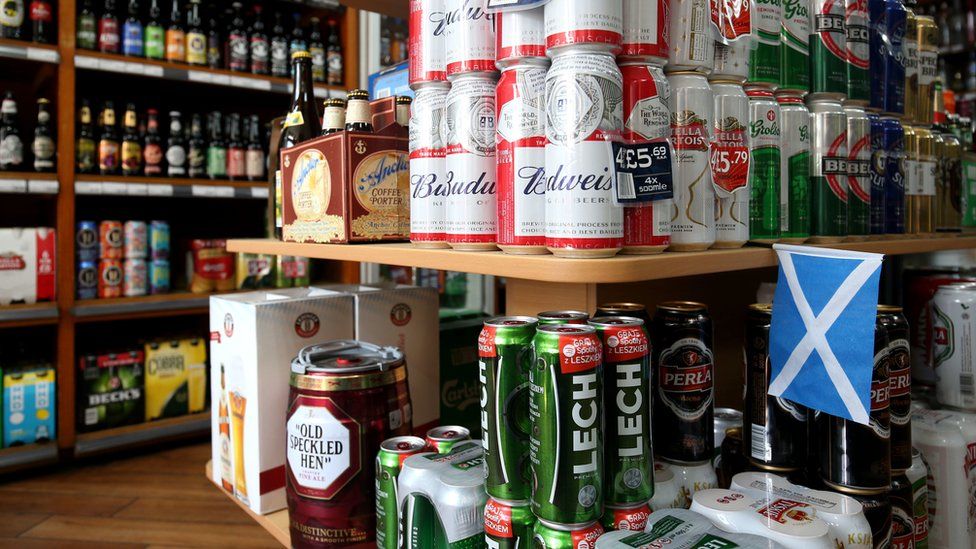
Cans of beer stacked up in an off licenceIMAGE SOURCE,PA MEDIA
Image caption,

Minimum unit pricing for alcohol came into force in Scotland in May 2018

However, ambulance crews found that after April, despite licensed premises remaining closed, the number of calls increased again, with these calls spread throughout the week rather than concentrated at weekends

At the height of the pandemic, from April to June 2020, there were 18,832 alcohol-related callouts – 16% of all callouts.

“During the pandemic, both in the UK and abroad, licensed premises – including bars, restaurants and nightclubs – faced significant restrictions, including closures and curfews, which helped to reduce spread of the virus,” Prof Fitzgerald said.

“However, we know that these restrictions also led to many people drinking more alcohol at home.”

2px presentational grey line

‘People were pouring bigger measures’

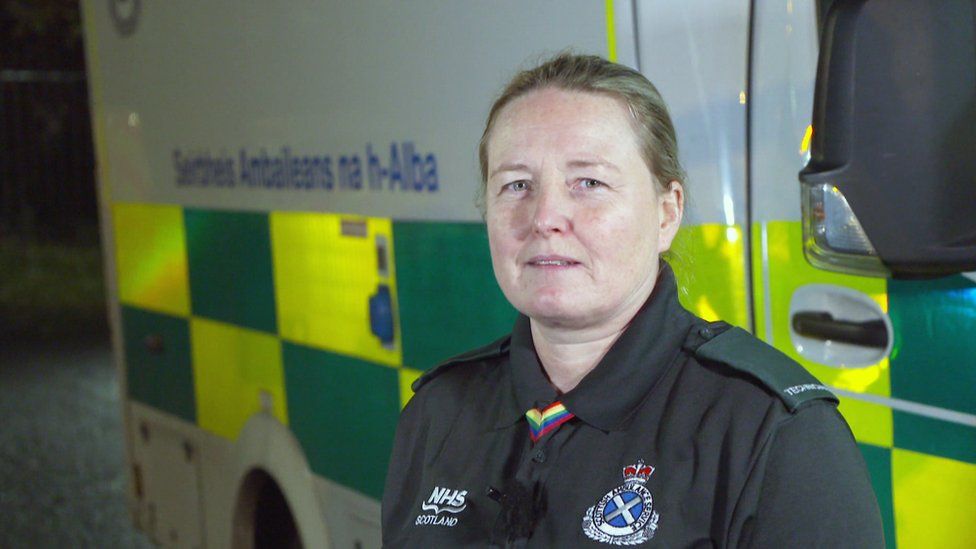
Gail Macfarlane

Gail Macfarlane has been an ambulance technician with the Scottish Ambulance Service in Glasgow for the last five years.

She said: “Almost every day we get an alcohol-related job, people on the street who are alcohol dependent or – at this moment in time – we get a lot of social drinkers who have overdone it.

“When people are enjoying themselves they get carried away. They have falls, get into fights, and that means jobs for us to do. It can mean we don’t get to elderly people who had a fall, because we’re dealing with others because of their social drinking and intoxication.”

She said people drinking at home during lockdown could bring its own problems.

“When the pubs and clubs were closed more people were drinking in the house, and at home people were pouring bigger measures than you get in a bar,” she added.

2px presentational grey line

Prof Fitzgerald said: “The views expressed by paramedics are powerful and give pause for thought about whether business recovery post-Covid has to mean a return to the ‘mass intoxication’ described.

“This is surely an opportunity for politicians and clinicians to show leadership in pushing for better alcohol policies that protect the NHS and frontline services. At a time when policymakers want to support the hospitality sector, but also wish to protect health services, there is an opportunity to put in place win-win policies that can do both.”

‘Reinforces previous findings’

Alison Douglas, chief executive of Alcohol Focus Scotland said, “Whether it’s weekend nights out or weekdays at home, these findings show the impact of alcohol on the Scottish Ambulance Service is unacceptable and unsustainable.

“Paramedics should not have to dread working a Friday or a Saturday night shift. The increase in callouts related to home drinking during the pandemic is concerning and reinforces previous findings that some of us, particularly heavier drinkers, have increased our drinking.

“With a sixth of all callouts being alcohol-related in 2020, we agree that further action needs to be taken to change Scotland’s unhealthy relationship with alcohol.”

The Scottish government has been contacted for comment.

……………………………………………………………

The 2026 AFRICA EDUCATES HER CAMPAIGN REPORT - ANGOLA 6th Anniversary | 2020–2026

      AFRICA EDUCATES HER CAMPAIGN REPORT — ANGOLA 6th Anniversary | 2020–2026 Education, protection, and permanence of girls in schoo...