Translate

Tuesday, 28 September 2021

High street £100 voucher site opens amid ‘huge demand’


Online applications for Northern Ireland’s high street voucher scheme have opened but some people complained that they could not access the website used for the process.

Everyone aged 18 and over can apply for a £100 “spend local” card to use in shops before the end of November.

There were problems with the application page on the NI Direct site after it opened on Monday morning.

Economy Minister Gordon Lyons said “not everybody has to rush at once” to it.

Some people complained on social media that the website had crashed on them while others said they had not received a verification message after entering their email address.

Speaking to BBC News NI, Mr Lyons acknowledged there was “huge demand”.

He said the verification messages were being sent “in a staged process just to make sure the website isn’t overwhelmed all at once”.

“There is a card available for everyone that is eligible so I would encourage people to apply for that over the coming weeks,” he said.
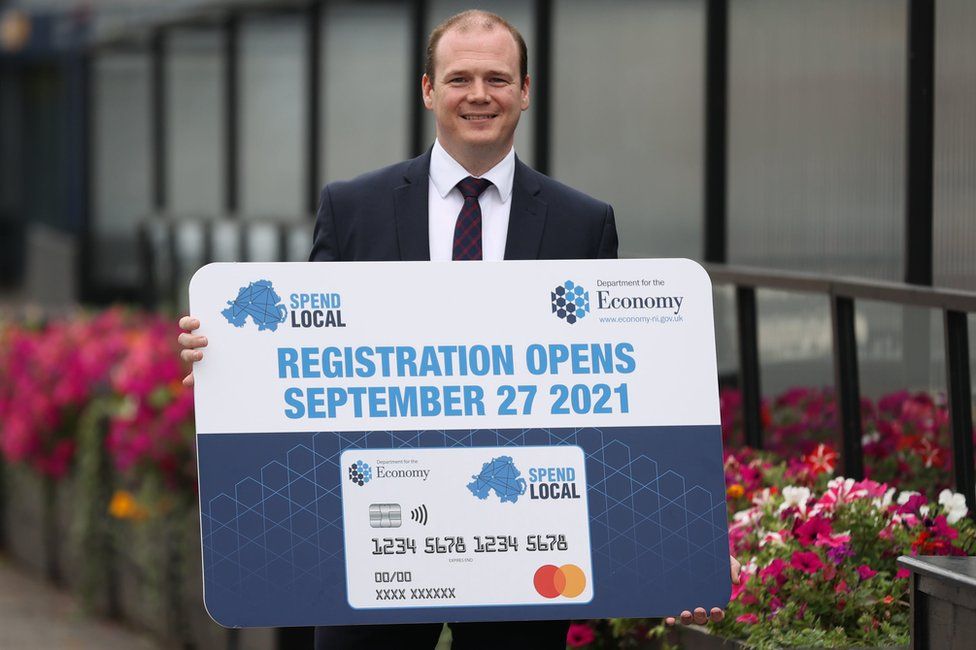
Economy Minister Gordon Lyons promoting StormontIMAGE SOURCE,PA MEDIA
image captionEconomy Minister Gordon Lyons has been promoting the voucher scheme in recent weeks

The cards are expected to arrive between seven and 10 days after you apply.

They can be used in any shop with a card machine but cannot be used online or for gambling or legal services like penalties.

A phone application service will open on 11 October for anyone who does not have access to the internet.

The online and phone application processes will remain open until 25 October.

The £145m scheme is designed to boost activity in businesses hit hardest by the coronavirus pandemic, like non-essential retail and hospitality.

High streets and town centres were already facing a tough time before the pandemic began with the rise in online shopping.

It is hoped the voucher scheme will encourage more people to go out to shops, which could help the economic recovery.

Analysis box by Clodagh Rice, NI business correspondent

It’s finally here after almost a year – the high street voucher scheme was first suggested last November.

Timing is key for this policy in order to make sure it has the maximum economic impact.

But as we head into this winter, the wider economic conditions mean consumers are facing a “cost-of-living crunch”.

Things like rising energy bills as well as an end to both the furlough scheme and uplift in universal credit mean many consumers won’t be able to afford to spend their £100 on a treat.

They may instead be forced to spend it on essentials, for example a weekly grocery shop in one of the big supermarkets which were never forced to close.

The scheme’s success will depend on how and where shoppers choose to spend their £100.

Linda McHenry, who owns a women’s clothes shop in Ballymoney, County Antrim, said she hoped people would think of the card as a bonus.

“Support your local independent shops – this is their dream, it’s their livelihood,” she said.

“Come out and experience again what it’s like to physically shop for the day.”

Some businesses are already working on incentives and offers to try to encourage people to choose to spend with them.
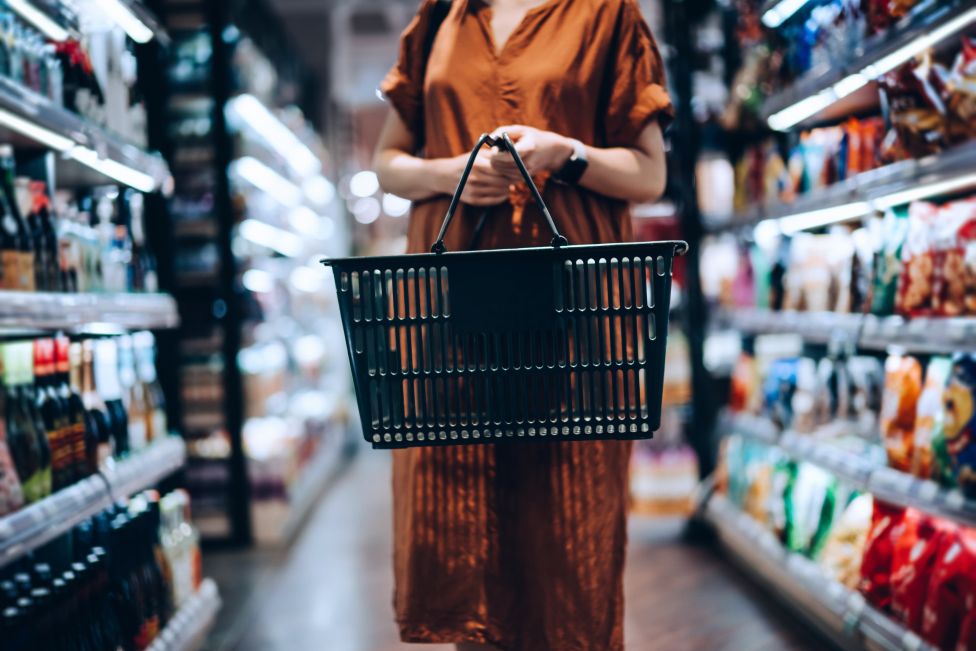
Woman with a shopping basket stands in supermarket aisleIMAGE SOURCE,D3SIGN
image caption One shop owner said: “If they don’t come and support independents, there won’t be any.”

For example, one electronics retailer is already offering customers an additional 10% discount.

Shop owner Andy Kilpatrick said: “We want to help shoppers make their voucher go that little bit further.

“We appreciate it’s also tough times for people out there looking for Christmas presents and things so by giving an extra 10% that could help improve people’s shopping budgets.”

‘Everybody loves a wee bit of shopping’

President of Ballymoney Chamber of Commerce Winifred Mellett said the town’s independent retailers were providing “brilliant promotions”.

“I’m not going to tell you what they are at the moment because we are going to wait for a few days and then surprise everybody,” she said.

Ms Mellett also owns a women’s clothes shop in the town, and has worked on the shop floor for decades.

“We felt that shoppers were drifting away from independent shops and now, all of a sudden, they are coming back and that’s a feeling that’s come from Covid,” she said.

“If they don’t come and support independents there won’t be any and what would the high street be like?

“Everybody loves a wee bit of shopping.”

Two women walking with shopping bagsIMAGE SOURCE,DOUGAL WATERS
image caption Some businesses are working on offers to try to encourage people to choose to spend with them

The trade organisation Retail NI has urged shoppers to spend their voucher cards in locally-owned, independent shops.

Its chief executive Glyn Roberts also expressed some concern that the online portal could be overwhelmed if everyone tries to apply as soon as it opens to the public.

“With a scheme of this ambition and size we are bound to experience some problems and would urge shoppers to be patient,” he said.

“If people can wait a few days before making their application, hopefully we can avoid any delays or problems with a rush on the online portal and they will receive their voucher on a timely basis.”

Mr Roberts also said that 70p in every £1 spent with an independent retailer “is recycled around the economy, supporting local producers and manufacturers”.

“As the scheme opens and consumers are thinking about how to spend their voucher, we would strongly encourage them to use with local independent retailers,” he added.

Aodhán Connolly, director of the Northern Ireland Retail Consortium, said the voucher scheme would provide a “welcome boost” during a “lull time in retail and hospitality”.

“For me, the main thing about this is to get people back on the high streets, to get them to rediscover the high streets and actually one of the knock-ons from this is that people can see it is safe and welcoming to return to high streets across Northern Ireland,” he told BBC News NI.

“As long as they are spending it on bricks and mortar retail, that’s all that we can ask.”

……………………………………………………

Victims’ commissioner: Recruitment process begins to fill post


The Northern Ireland Executive has moved to fill the vacant victims’ commissioner post.

Ms Thompson’s term as the commissioner for victims and survivors ended after her contract was not extended, despite her wish to stay on.

The first and deputy first ministers launched a recruitment competition to fill the post on Monday.

The appointment will be for four years and comes with a salary of almost £75,000 a year.

Judith ThompsonIMAGE SOURCE,PACEMAKER
image caption Judith Thompson was the last person to hold the victims’ commissioner post

“This is a key and pivotal role in ensuring that the voices of victims and survivors are heard and that services are in place to meet their needs,” said First Minister Paul Givan.

Deputy First Minister Michelle O’Neill said it was vital that the needs and concerns of victims and survivors are met.

“The commissioner will have an important role in ensuring that victims and survivors are supported,” she said.

The executive has been criticised over the delay in filling the post of victims commissioner.

The move by the government has been criticised by all Stormont parties.

…………………………………………………………

R Kelly found guilty of racketeering and trafficking in sex abuse trial


R Kelly has been found guilty of racketeering and trafficking in his sex abuse trial in Brooklyn, New York.


The R&B singer was accused of exploiting his fame to lure women and underage girls for sex.

The 54-year-old had pleaded not guilty to racketeering and eight counts of violating a federal law making it illegal to transport people across state lines for prostitution.

A jury of seven men and five women found Kelly guilty on all counts after just their second day of deliberations.

Witnesses said Kelly subjected them to perverse and sadistic whims when they were underage, believing “the music, the fame and the celebrity meant he could do whatever he wanted”, assistant US attorney Nadia Shihata said.

She added that his alleged victims “aren’t groupies or gold diggers, they’re human beings”.

Prosecutors argued that his entourage of managers and staff who helped Kelly meet girls and keep them under control amounted to a criminal enterprise.

Despite the abuse, the singer continued to tour and make music – even after it came to light that he had married R&B star Aliyah when she was just 15.

The court heard that he had ordered a former manager to fake documents in order for the marriage to be conducted.

………………………………………………………………

Fuel crisis: Government expected to mobilise army ‘as a precaution’ amid fuel crisis

Amid the fuel shortages, there are calls for healthcare staff and other key workers to have priority access to fill up their vehicles.


The government is expected to mobilise the army as a precaution amid the ongoing queues at petrol stations around the country, according to a Whitehall source.


Petrol retailers had been hoping for a return to normal after motorists drained pumps over the weekend.

But there was little sign of the panic-buying diminishing on Monday, with consumers apparently ignoring pleas to stop.

Earlier a joint statement from BP, Shell UK, Esso Petroleum/ExxonMobil, Wincanton, Certas Energy UK, Hoyer Petrolog UK, Greenergy, Fuels Transport & Logistics, Downstream Fuel and Suckling Transport urged drivers to buy fuel as they normally would.

They said: “There is plenty of fuel at UK refineries and terminals, and as an industry we are working closely with the government to help ensure fuel is available to be delivered to stations across the country.

“As many cars are now holding more fuel than usual, we expect that demand will return to its normal levels in the coming days, easing pressures on fuel station forecourts. We would encourage everyone to buy fuel as they usually would.

“We remain enormously grateful to all forecourt staff and HGV drivers for working tirelessly to maintain supplies during this time.”

The panic buying has led to industries from taxi drivers to the meat processing sector – and even non-league football – facing difficulties and prompted calls for healthcare workers to be given priority access to fuel.

The British Medical Association said there was a real risk that some would not be able to get to work.

And Unison called on ministers to use emergency powers to “designate fuel stations for the sole use of key workers” – and call backed by the Royal College of Nursing.

The Government has to take control. It’s no good ministers wasting time on a pointless blame game or pretending there’s no problem,” Unison’s general secretary Christina McAnea.

“Essential staff must be able to get to their jobs so they can continue to provide the services so many rely upon.”

But the Petrol Retailers’ Association (PRA), representing two-thirds of all UK forecourts, said that with many drivers’ tanks now full after the weekend it was watching for an “easing of demand”.

The crisis mushroomed after the disclosure last week that a few petrol stations had seen supply disrupted, due to the nationwide shortage of HGV drivers, prompting widespread panic-buying.

It was still in evidence for a fourth day on Monday, with roads gridlocked as motorists queued for more than an hour in some cases, with lines of cars trailing out of forecourts onto the public highway.

Some petrol retailers – Asda and EG group – have been restricting fuel sales to £30 a time.

Even if the buying frenzy does abate, motorists face a further headache as the price of Brent crude on international oil markets continued to climb, reaching a three-year high of just under $80 a barrel – likely to result in higher prices at the pumps to come.

……………………………………………………………

Covid: What will happen when furlough ends?


The furlough scheme, which protected millions of jobs during the pandemic, is being wound up at the end of September.

How did furlough work?

The government has been paying towards the wages of people who couldn’t work, or whose employers could no longer afford to pay them, up to a monthly limit of £2,500.

At first it paid 80% of the wages, but in August and September it paid 60%, with employers paying 20%.

How many people are still on it?

The most recent figures show 1.6 million people were on furlough at the end of July – the lowest level since the start of the pandemic and 340,000 fewer than a month earlier.

The numbers have dropped as the economy has reopened. In May 2020, nearly nine million people were on furlough.

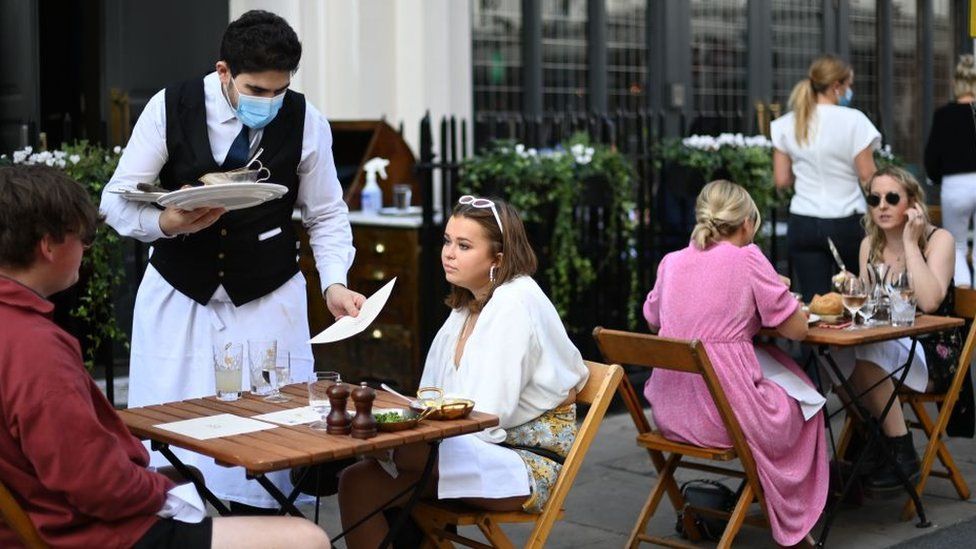
Man in mask serves diners outdoorsIMAGE SOURCE,GETTY IMAGES
image caption High numbers of workers in restaurants and hotels were furloughed

Will unemployment rise when it ends?

Some employers with workers on furlough may find they cannot afford to keep them on when furlough ends.

International travel – and other businesses which depend on it, are still seriously disrupted. Some furloughed workers in these areas may lose their jobs.

Many forecasters, including the Bank of England, are expecting a small rise in unemployment after furlough ends.

What if I’m made redundant?

If you are facing redundancy it’s important to apply for any support schemes as soon as possible.

The main benefit for anyone losing their job after a period in work is jobseeker’s allowance (JSA).

This is worth £59.20 a week, if you are under 25, or £74.70 a week if you are 25 or over.

If you need help with money matters, there is a host of free guidance and advice available, including:

In the wider jobs market, the number of vacancies is at a record high – so there are lots of employers looking to hire new workers.

What has furlough cost?

The government says 11.6 million jobs have been supported since the scheme began.

From March 2020 to the end of September 2021, the cost of furlough will come to about £66bn, according to estimates from the Office for Budget Responsibility.

That’s a huge sum, around one fifth of the money the government has spent on the response to Covid.

Chancellor Rishi SunakIMAGE SOURCE,GETTY IMAGES
image caption The Chancellor, Rishi Sunak, launched the furlough scheme in March 2020

However, the scheme has undoubtedly helped to save millions of jobs.

At the start of the pandemic it was feared that more than one in 10 workers would become unemployed.

Instead the unemployment rate is currently less than one in 20.

……………………………………………………

World Teachers’ Day 2026 - Dia Mundial dos Professores 2026

Standing with teachers: 60 years of protecting the profession, advancing its status and shaping our futures     On 5 October, we observed Wo...