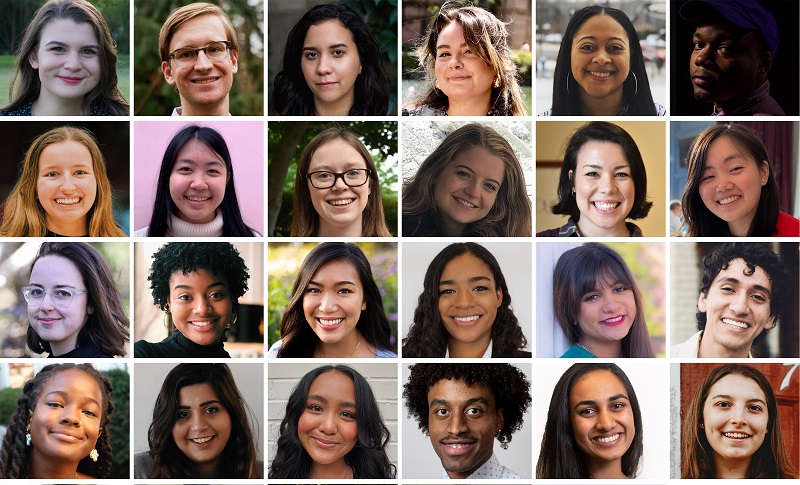
The Washington Post invites college junior, senior or graduate student to come be a reporter, photographer, videographer, multiplatform editor or producer, news or digital designer, graphics reporter or developer, social media producers and audio producers.
Angolan Government approved Thursday the legal regime of mandatory social protection of hired workers, as part of the economic activities that generate low income.
The information is expressed in the press release from the Economic Commission of Cabinet Council.
The legal regime covers workers who, under the subordinate authority of a single or collective employer, provide services on farms organised in agricultural, fisheries and commercial companies, without prejudice to others.
According to the document, the monthly average of the total wage bill of the workers involved does not exceed twenty national minimum wages, with reference to the agriculture sector.
The 9th Ordinary Session of Economic Commission, chaired by President João Lourenço, also approved a legal document that defines the Rules for the Management of Technical and Asset Reserves of the National Institute of Social Security (INSS).
The diploma aims to better manage the available financial assets, in order to guarantee the payment of social benefits in the medium and long term and the financial sustainability of mandatory social protection.
The approval of this document will enable the Government to manage the INSS 'technical reserves and assets, obeying objective and clear criteria.
The session also approved a legal instrument that institutionalises the Social Security Mediation Activity, in order to define and regulate the exercise of the activity in the country aimed at allowing the raising awareness of taxpayers and insured persons for the Mandatory Social Protection System.
Still, under the Mandatory Social Protection, the Economic Commission approved the Legal Protection Regime in old Age.
In the field of Public Administration, Labor and Social Security, the meeting approved the Regulation of Professional Internships, a document that establishes the rules, modalities and criteria that regulate the access and exercise of professional internships, aimed at covering young people aged between 18 and 25 years.
On National Development Plan, the Economic Commission also approved the Balance Sheet Report of the National Development Plan 2018-2022, with reference to the first half of 2020.
In relation to Public-Private Partnerships, the session approved, on the other hand, the Operational Plan for Structuring Public-Private Partnerships, until December 2021.
At least 115 new infections, five deaths and 51 recoveries is the statistical balance sheet, for the last 24 hours, released this Friday by the Angolan health authorities.
According to the Secretary of State for Public Health, Franco Mufinda, at the usual updating session on the Covid-19 pandemic in Angola, the table includes 10 cases diagnosed in Huambo, four in Benguela, one in Zaire, one in Cuando Cubango and 99 in Luanda.
According to Franco Mufinda, of the new cases, whose ages range from 4 to 88 years, 77 are male and 38 female.
In relation to the deaths, Mufinda said that four had been registered in Luanda and one in Cuando Cubango, three of them male and two female.
Four hundred and sixty-one patients are under follow-up in treatment centres throughout the country.
Angola has 4,590 positive cases, with 167 deaths, 1,554 recoveries and 2,869 active patients.
Of the active, 17 are in critical condition with invasive mechanical ventilation, 20 severe, 35 moderate, 84 with mild symptoms and 2,713 asymptomatic.
Schools have been closed since early March for 15 million students. The African continent has taken the first tentative steps out of its Covid-19 measures but there is uncertainty about when classrooms will be able to reopen safely. That has led to fears of increased numbers of girls dropping out of education.
For this reason we are running this amazing campaign in order to get girls back to school.
Today we have Ivete José in our program. We found her in the street, it was nice to talk to her. She will share with us her experiences during lock-down.
Ivete is a 9-year-old girl. She says that coronavirus affected her negatively. She misses school, classmates and teacher.
Despite the circumstances, she doesn't give up. In her free time she solves the fascicle exercises that the school is offering for students to study at home.
According to her, the government and education agents must create strict biosecurity measures, control social distancing, divide the class into small groups, put buckets of water for hand washing. Victoria told us that her classroom is composed of 60 students, at this time the teachers must compulsorily divide the class into small groups.
"When girls are in school, they are busy and their minds are doing something. But this pandemic has delayed the girls studying and acquiring knowledge."
Distribution of school material
What schools can do?
To stay safe, there are a number of steps schools should take to help prevent the spread of COVID-19. They include:
Physical distancing. The goal for students and adults is to stay at least 6 feet apart to help prevent the spread of the virus. However, research has found that spacing desks at least 3 feet apart and avoiding close contact may have similar benefits--especially if students wear cloth face coverings and do not have symptoms of illness. Teachers and staff should stay 6 feet apart from other adults and from students when possible. Teachers and staff should also wear cloth face coverings, limit in-person meetings with other adults and avoid areas such as staff lounges.
When possible, schools should use outdoor spaces and unused spaces for instruction and meals to help with distancing. For example, activities like singing, band and exercising are safest outdoors and spread out.
Classroom changes. To help limit student interaction outside the classroom, schools should consider:
Having teachers move between classrooms, rather than having students fill the hallways during passing periods.
Allowing students to eat lunches at their desks or in small groups outdoors instead of in crowded lunchrooms.
Leaving classroom doors open to help reduce high touch surfaces such as doorknobs.
Testing & temperature checks. The CDC currently does not recommend COVID testing of students and staff. Testing only shows whether a person is infected at that specific moment in time and may not be useful in preventing outbreaks in school communities. Taking students' temperatures at school may also not be feasible, but you can monitor your children's health at home and keep them home if they are not feeling well. Schools should frequently remind students, teachers, and staff to stay home if they have a fever of 100.4 degrees F or greater or have any signs of illness.
Why students should go back to school–when it is safe
Schools provide more than just academics to children and adolescents. In addition to reading, writing and math, students learn social and emotional skills, get exercise, and have access to mental health support and other services that cannot be provided with online learning. For many children and adolescents, schools are safe places to be while parents or guardians are working. For many families, schools are where kids get healthy meals, access to the internet and other vital services.
In partnership with the Mastercard Foundation, Arizona State University will provide graduate scholarships to train 25 Mastercard Foundation alumni at the Master’s level for various programs over the next 5 years (2021 - 2025). This scholarship program is situated within EdPlus, a central enterprise unit for ASU, focused on the design and scalable delivery of digital teaching and learning models to increase student success and reduce barriers to achievement in higher education.
This is a fully immersive and traditional on-campus 2-year Master’s program with a focus on training EdTech experts for Africa. While classes are in session, Scholars will work part-time with the Baobab team to gain hands-on experience implementing the strategic objectives of the Baobab Platform. The Baobab Platform consists of the implementation of an online learning community that serves over 8,000 users and is expanding to support 100,000 young Africans globally over the next five years. Between the first and second year, Scholars will be supported to participate in a 2-month Africa-based internship that aligns with their program of study.
The Youth Silencing the Guns Award was created by the AU Office of the Youth Envoy to celebrate, recognize and support young Africans behind impactful peacebuilding initiatives that are building a culture of peace. A total of Six Awards will be issued six categories
The award seeks to:
Identify six young peacebuilders at the forefront of impactful Silencing the Guns initiatives.
Raise awareness of and celebrate their initiatives
Directly support their initiatives with grants of $ 2000 up to $ 5,000
Award Winners will receive:
Recognition for their work
$ 2000 up to $ 5,000 grant funding to support their existing peacebuilding projects
Featured at the African Union and partners platforms
Global airlines are calling for airport coronavirus tests for all departing international passengers to replace the quarantines they blame for exacerbating the travel slump.
Rapid and affordable antigen tests that look for pieces of the coronavirus in swab samples from people's noses and throats - and that can be administered by non-medical staff - are expected to become available in the “coming weeks” and should be rolled out under globally agreed standards, the head of the International Air Transport Association (IATA) said during an online media briefing.
“We don’t see any alternative solution that would be less challenging or more effective,” IATA Director General Alexandre de Juniac said.
Airlines hammered by the coronavirus pandemic are pressing governments to embrace alternatives to blanket travel restrictions that are still hampering a traffic recovery - and that are now tightening again in Europe amid resurgent case numbers.
With rapid antigen tests becoming available for as little as $ 7 each, by Juniac said, airlines will push for their use to be endorsed by the International Civil Aviation Organization, the United Nations agency that oversees global aviation rules.
IATA believes production could be quickly increased to millions per day and the tests phased in between late October and the end of the year, “helping to save a part of the winter season”, by Juniac told Reuters television.
A global agreement is needed to ensure predeparture test results are uniformly accepted by the destination country, he said, adding, “It will also boost passenger confidence that everybody on the aircraft has been tested.”
Evolving position
The airlines ’position has evolved alongside testing technology. IATA argued a month ago for new rules to recognize laboratory-based polymerase chain reaction (PCR) tests - which also look for virus fragments - conducted 48 hours before departure.
Last-minute airport screening is more effective because it “seals off the system” against forged certificates or infections contracted just before travel, by Juniac said on Tuesday.
Antigen tests are faster but less sensitive and therefore slightly more likely to miss positive cases than the PCR alternatives, although the accuracy gap has narrowed.
Among companies marketing the new tests, German diagnostics specialist Qiagen said earlier this month that it planned to launch a COVID-19 antigen test that provided results in 15 minutes and could be deployed in airports or stadiums.