Translate

Thursday, 15 August 2024

Reflecting on the Success of the "Ladies Without Plastic" Campaign || First fruits, results and prizes

 Reflecting on the Success of the "Ladies Without Plastic" Campaign


Ladies without plastic


Ladies and gentlemen,

Welcome to this wonderful event! 

Deservedly our founder Sofonie Dala won, and today the applause is all for her!

What we have achieved today is a small part of what we can still achieve with our talents.

Congratulations!

As we look back on the successful completion of the "Ladies Without Plastic" campaign at the end of 2021, we want to share with our followers what has transpired since then. Several months later, in July 2022, the founder of the digital startup "Talentos Multiplus" achieved a significant milestone by winning the 1st Edition of the Young Innovator Award “The Angola We Want by 2030,” in the Innovation and Entrepreneurship category. This award was funded by the Royal Norwegian Embassy, and we received one million kwanza, approximately one thousand dollars.

The "Ladies Without Plastic" project was conceived to advocate for behavioral change in reducing the earth's vulnerability to climate change and global warming, particularly by addressing the environmental impact of disposable sanitary pads. Our work focuses on women's liberation from harmful restrictions surrounding menstruation by producing washable and reusable menstrual pads that help protect the environment.

As of 2024, the project continues to thrive and remains highly attractive. Our goal is to establish the largest and first factory in Angola dedicated to producing eco-friendly, reusable products for women, children, youth, and elders. We are constantly seeking sponsors to help us achieve this vision, as this project will not only contribute to saving the planet but will also significantly reduce unemployment rates in Angola. It will create thousands of jobs for women and youth, empower women, reduce inequality, drive economic growth, and attract tourists to the country.
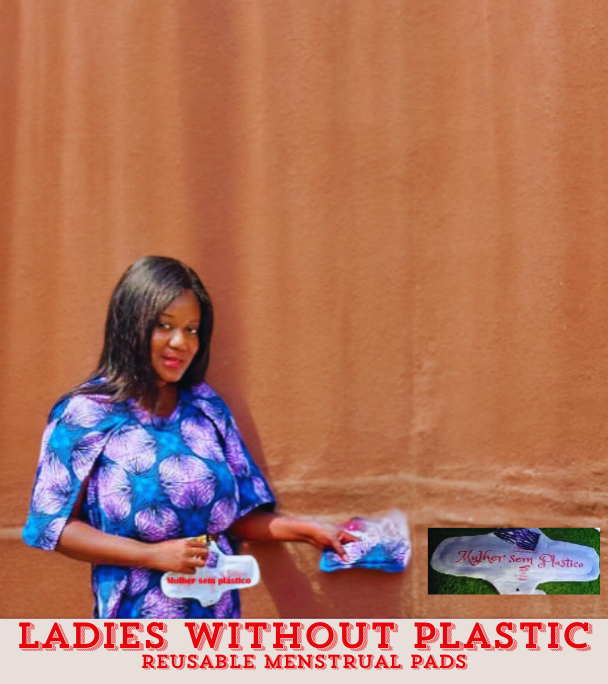


 Fashion and Art in defence of the environment


Ladies and Gentlemen.

Welcome everyone to our Startup Talentos Multiplus. My name is Sofonie Dala, I'm the founder of this non-profit digital startup that creates awareness on the sustainable development goals (SDGs).

Today we are here to talk about one of our most successful projects "Ladies without Plastic".


What is "Ladies Without Plastic"?


"Ladies Without Plastic" is a reusable menstrual pad made of cotton and cloth that aims to mobilize women to change plastic pads that pollute the environment causing climate change. We strongly recommend women to start using our reusable sanitary pads, which do not pollute the environment but reduce the pollution and is also much more cost effective..

This project aims to help reduce the high levels of unemployment in our country, by producing reusable products on a large scale so that more women can have access to these products, and together we can end the period of poverty.  We seek to create partnerships with governments, private organizations and other institutions in order to receive financial support.

Through our projects we fight against climate change and environmental pollution, empowering, mobilizing youth, women and girls with non-formal sustainable development training.

This business model, in addition to being educational, also has a very beautiful fashion style. This style intrigues women and makes them very thoughtful. By reading Ladies Without Plastics, they will be learning that plastics pollute the environment.

Learn more: Ladies Without Plastic - Mulher Sem Plástico. By Sofonie Dala, Angola: Advancing Climate Justice Through the SDGs - The Transformation of Education Begins with Teachers. By Sofonie Dala, Angola (ladies-without-plastic.blogspot.com)

https://ladies-without-plastic.blogspot.com/2022/10/advancing-climate-justice-through-sdgs.html

In 2022 we won the third place in the Young Innovator Award competition. We were happy with the prize of a 1000.000, 00 Angolan kwanzas, which helped us to buy at least one sewing machine.


 Unfortunately, it was not enough for us to reach all project goals.


The project needs more support and sponsorships to move up to the next stage which is the implementation and expansion of the project. We have at the top of our agenda the recruitment of some girls and women, since this project not only aims to reduce environmental pollution but also to reduce poverty and unemployment among girls and women.


Learn more: https://ladies-without-plastic.blogspot.com/2022/07/congratulations-we-won-1st-edition-of.html


Therefore, we need more financial resources to support those women and girls who will be producing these menstrual pads. We will also be offering capacity building trainings to equip them with the skills needed for them to get ahead and not be totally dependent on the company. These trainings will help them produce and distribute pads in their communities and neighborhoods that will allow them to generate income for themselves.


We also continue organizing community campaigns to make people aware of the importance of achieving the 17 sustainable goals of the United Nations.

For this project we have already bought a machine, but we have not been able to buy other necessary equipment to continue our project.


These plastic pads that are sold in supermarkets are very expensive and not every woman has the possibility to buy them. It has been a great challenge for a poor mothers with many daughters.


As a solution, we developed Ladies Without Plastic menstrual pad, which is more durable and cheaper. Some women will be able to resell and earn their income.


The United Nations General Assembly passed a resolution to proclaim March 30 as International Day of Zero Waste every year, and 105 countries have adopted it so far. During this time, UN member states, civil society, the private sector, academia, the youth and other stakeholders are invited to raise awareness of all available zero-waste and waste-management initiatives in the hope that we could come together to eliminate the problem entirely.

In order to make a change, we need to promote circular consumption systems, where the resources at each step of the product's life cycle are reused and recovered. This can significantly minimise damage to our air, land and water. 


Industries should contribute by making products more durable and costing fewer low-impact materials. Manufacturers could also opt for less resource-intensive production and transportation methods.


"Zero-waste initiatives can foster sound waste management and minimise and prevent waste, helping to address the triple planetary crisis, protect the environment, enhance food security and improve human health and well-being," the UN note outlines.


We support the SDG4 - quality education and will be keeping offering capacity building training to equip young women with skills to face climate change, especially those living in the most affected areas.


INTERVIEW


Hello!

Hello.

How are you?

I am fine. And you?

Great!

What is your name?

Edvania.

Pleasure to meet you.

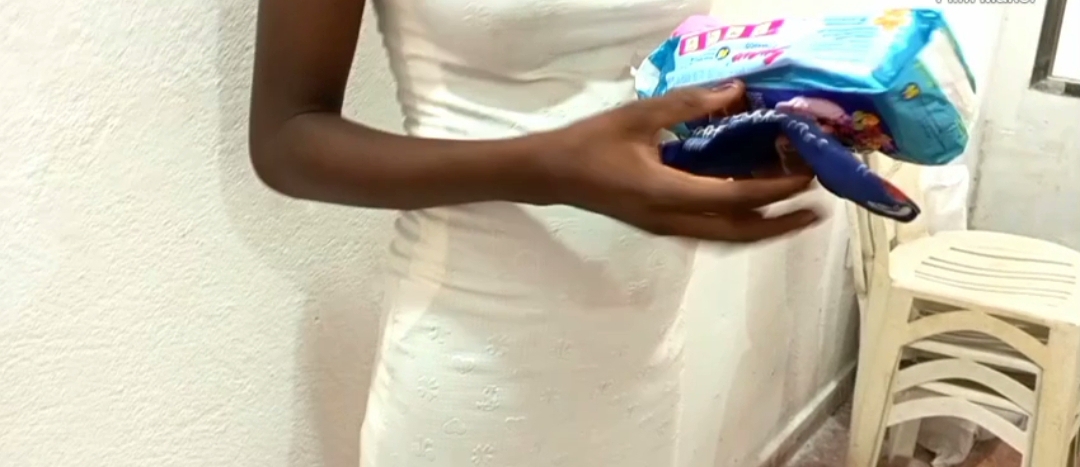
Edvania, what do you have in your hands?

I have 2 types of sanitary pads.

Do you always use these pads?

Yes.

Which one do you use the most?

I always use the plastic sanitary pad, but the cloth one I've used a few times.

How have you been using them?

Well, the cloth one is reusable, I can use it several times, but the plastic one is disposable, it is used only once.

What was your experience with the cloth pad?

It has been more economical for me, but the plastic one you always will need money to buy it.


Sustainable music

Let's use the reusable one, plastic-free ladies

Let's use the reusable one, plastic-free girls

Protect the environment, limit pollution,

Let's use the reusable pad, ladies without plastic!


We, as startups, will start promoting environmental awareness campaigns even more strongly in order to educate and help people reduce their carbon footprint on the environment.


BACK IN 2021

  Congratulations!

The grand finale - Green Menstruation

 Ladies without plastic - Key to reduce our carbon footprints


The first edition of our challenge - Ladies Without Plastic - Mulher sem plastico, came to an end. This is the first and only climate change show in Angola where women and girls are challenged to switch from disposable menstrual pads to reusable ones in favor of the environment.


Project presentation

As prepared for delivery

Good evening, everyone, and thank you for always being here with us!

My name is Sofonie Dala, I'm pleased to be celebrating with all of you the successful completion of our Women Without Plastic – Green Menstruation Campaign!

The main objective of this movement is to help end period poverty in Angola by empowering women and girls in making reusable pads. We advocate for behavioural change to reduce earth vulnerability to climate change and global warming from disposable sanitary pads, at the  same time mobilizing women and girls to switch back to the use of reusable sanitary pads and napkins than disposable sanitary pads that have local ecosystem vulnerable to climate change and global warming.


Creative innovation - Sewing reusable sanitary pads to boost income

We conquered Vanessa, she is one of the local women taking part in our campaign to create eco-friendly, reusable cloth pads. We will be sewing several fabric and organic cotton sanitary pads a day on her machine and distribute them at national level.


Moreover, we started supporting communities  with a life-changing skill and helping to protect the environment at the same time. 


We provide interactive training in how to make safe, washable and reusable sanitary pads, so people always have access to safe menstrual protection, can help protect the environment, and can create a small income for themselves and their families by selling their extra products at the market. 


Interview with Catiana Lueji - Environmental Engineer

Our today's guest is Catiana Lueji, she is an environmental engineer and expert at RNT Angola.


Catiana is a 27 years old environmental engineer and works hard to protect the environment. Some time ago when she became aware that disposable absorbents pollute the environment, she stopped using them immediately and opted to use silicone menstrual cups.


According to her, plastic absorbents have been  causing a lot of damage and pollution in the environment, so she recommends women to look for other alternatives such as menstrual cups and washable absorbents as a solution to this problem, which is also more economical and sustainable.


She also explained that women should not be afraid of these objects because the menstrual cup is made of silicone and not plastic, it does not change the size of the vagina and does not cause urinary infection and can last up to 15 years when properly treated.
How to use:

The menstrual cup is one product that’s been gaining in popularity. Usually made of medical-grade silicone and last 10 years leaving very little waste, menstrual cups are inserted into the vagina, where they collect blood during menstruation.They are also safe and easy-to-use, as they can be sterilised using boiling water. 


Campaign Report

Plastic pollution is a serious problem and not one that should be treated lightly.  Disposable pads and tampons create a lot of waste that goes to the landfill. Much of it is non-biodegradable. They also create pollution of the land and water from the cotton growing process, as well as the manufacturing process. Safe, affordable menstrual products are essential for anyone who menstruates. But around the world, millions of women, girls and people who menstruate can’t afford to buy or don’t have reliable access to the safe menstrual products they need.


With an estimated 200 million adolescent girls living on the frontlines of the climate crises, the link between girls´ education and climate change deserves urgent attention.

In this challenge we explored the powerful role that girls education can play in tackling climate change. Our campaign ended up collecting several stories from girls and women. We conducted in-depth interviews with girls and women aged 12 to 35 years old to explore the acceptability of reusable menstrual products interventions in our communities and aslo to explore implementation issues and their views regarding the effect of menstrual products interventions on the environment.


Common menstrual products being promoted in Angola include commercially made disposable pads and menstrual cups. This large-scale plastic production releases vast amounts of greenhouse gases, which cause air pollution and global warming.


Unfortunately, we have never seen  in supermarkets, nor in traditional and digital media promoting or selling washable pads.


According to our research, overall, adult women preferred reusable pads and young girls preferred disposable pads. Most girls highlighted that they are not prepared to use reusable pads simply because they do not want to have contact with menstrual blood and others because they do not want to wash it because they are too lazy to do this several times.


Angola is a country where most women live in extreme poverty. Many women and girls face several challenges including affordability, poor disposal methods, lack of attention on sanitation facilities, lack of equal access to education and the lack of knowledge about the negative impact of human actions on the environment. 70% of the girls interviewed knew nothing about climate change and the damage that their plastic pads have been causing to our environment, others simply never heard about other sustainable alternatives like reusable pads and silicone menstrual cups.


We also talked to some girls who are close to their 15 years old and are still not menstruating, the symptoms they show are similar to the symptom of amenorrhea. Incredibly they are not concerned about contacting a doctor, according to them late menstruation is hereditary because in general, girls in their family start menstruating when they are 16 or 18 years old.


Angola is currently facing the worst drought emergency in the last 38 years as a result of climate change. The effects of the drought include: shortages of food, lack of potable water, cattle dying from disease and malnourished children (among other things).

Angola also has been struggling to manage municipal waste: the capital Luanda alone produces 6,000 tons of solid waste every day, which the city has struggled to manage. Meanwhile, storm runoffs and sewer overflows, mean that a lot of waste ends up in the ocean. At the same time, waste from the oil and gas sector and other industrial activities may pose a serious environmental concern.

Luanda is the capital and largest city in Angola. It is Angola’s primary port, and its major industrial, cultural and urban center. Located on Angola’s northern Atlantic coast, Luanda is Angola’s administrative center, its chief seaport, and also the capital of the Luanda Province.


We strongly recommend women and girls switch to reusable feminine hygiene products. By reusables, I mean a menstrual cup, reusable cloth menstrual pad, or a pair of period panties.


The end of the campaign is not the end of the movement, thanks to all  of you who believes and supports our work, we hope to see you soon!


Here’s a glimpse of what living without plastic in order to reduce climate change looks like for women and girls in Angola.

Please click the link below to watch all the series, from 1 to 14:


1. Campaign introduction by Sofonie Dala

2. Day 2 -  the story of Luquenya

3. Day 3 - the story of Luisa

4. Day 4 - the story of Helena Julha 

5. The story of Suzana and Isabel 

6. Day 6 - the story of Laudy 

7. Day 7- the story of Engracia

8. Day 8 - the story of Isabel Marques 

9. Day 9 - the story of Marcia -Marcelina

10. Day 10 - the story of Georgina and Vilcya -late menstruation 

11. Day 11 - the story of Viviane 

12. Day 12 - the story of Isabel-Branca 

13. Day 13 - the story of Deolinda

14. The grand finale - webisode 14


One in 10 girls in Africa miss school because they don’t have access to sanitary products, or because there aren’t safe, private toilets to use at school. 

There is no doubt that our initiative will help keep girls in school and create a future for themsleves.


Pads are used when money is available and pieces of cloths or blanket are used when there is no money”.


KEY TAKEAWAYS

Ditch Disposables - Avoiding single-use items. Sustainable lifestyle challenge by Sofonie Dala - Angola

It’s time to #DitchDisposables and refuse everyday products which cannot be reused! 

Swap single use items for reusable alternatives. If the current trend continues there will be more plastic than fish in the oceans by 2050!

Shifting consumer behavior away from disposable products to reusable ones


We mean, instead of using disposable pads and tampons that are discarded after just one use, consider using reusable products instead.

Femenine pads and tampons can harm the environment. What’s the alternative?

Over 50% of the world’s population menstruates, and yet conversations about feminine hygiene and the ecological impact of product choices woman make in the space, wasn’t spoken about. Menstruation can be an unpleasant, emotional and painful experience. That time of the month can also be costly — and wasteful.


Menstrual pads are made up of up to 90 per cent plastic and nearly all tampons contain some plastic. “Single-use plastic has a big footprint, both when it’s made and when you throw it away”.

“There’s a huge carbon footprint that goes into making these products, and then they get thrown on the ground, washed into rivers, eaten by fish.” Furthermore, when they become litter, they do immense harm. They take a long time to break down and in the meantime, they’re ugly, they choke fish, they block waterways.


Over 100 billion sanitary napkins, tampons and applicators are dumped into landfills every year. When wrapped in plastic bags, feminine hygiene waste can take centuries to biodegrade. The average woman uses over 11,000 tampons over her lifetime, leaving behind residue far beyond her lifespan. 


What are the Alternative Options for everybody?


Not flushing tampons and pads down the toilet is one thing that everyone can do immediately to help enact change. Educating parents about more sustainable period products is important, as it encourages both parent and child to seek reusable options.

Here are some other steps you could take to make your period more sustainable (and potentially healthier):

1) Choose reusable menstrual hygiene products like menstrual cups, period underwear and reusable sanitary napkins.
2) choose organic cotton if you can ― and support transparent brands.
3) Demand that corporations make plastic-free sanitary products.
4) Help make menstruation a bigger public policy priority.


The menstrual cup is one product that’s been gaining in popularity. Usually made of medical-grade silicone, menstrual cups are inserted into the vagina, where they collect blood during menstruation.


Interesting that menstrual cups, reusable pads and sponges are readily available but haven’t gained much traction so far.

“The reality is the products that are more environmentally friendly … are going to be more expensive.” It’s also possible that some people with physical disability are unable to “reach their cervix to insert a menstrual cup.”


There is an urgent need to innovate and find sustainable and yet practical solutions to feminine hygiene challenges. 

The problem with stigma is that it often denies women a vocabulary to deal with the issues around menstrual health and hygiene. Open dialogue is the first step in changing the way women deal with menstruation and can create awareness around the need make a switch.


Moreover, the manufacturing of disposable menstrual hygiene products (an almost $6 billion industry) generates a total carbon footprint of about 15 million tons of greenhouse gas emissions annually. That’s the equivalent of burning about 35 million barrels of oil.


#AnatomyOfAction
#ActNow
#GlobalGoals
#ProteinSwaps


By reshaping our needs and wants, we can collectively make the difference in reaching Sustainable Development Goal 12, to ensure responsible consumption and production. 


Tuesday, 13 August 2024

The grand finale|| Congratulations! We are celebrating the successful completion of "Ladies Without Plastic - Environmental challenge" by Sofonie Dala, Angola. Webisode 14


Congratulations!

The grand finale - Green Menstruation

 Ladies without plastic - Key to reduce our carbon footprints


The first edition of our challenge - Ladies Without Plastic - Mulher sem plastico, came to an end. This is the first and only climate change show in Angola where women and girls are challenged to switch from disposable menstrual pads to reusable ones in favor of the environment.


Project presentation

As prepared for delivery

Good evening, everyone, and thank you for always being here with us!

My name is Sofonie Dala, I'm pleased to be celebrating with all of you the successful completion of our Women Without Plastic – Green Menstruation Campaign!

The main objective of this movement is to help end period poverty in Angola by empowering women and girls in making reusable pads. We advocate for behavioural change to reduce earth vulnerability to climate change and global warming from disposable sanitary pads, at the  same time mobilizing women and girls to switch back to the use of reusable sanitary pads and napkins than disposable sanitary pads that have local ecosystem vulnerable to climate change and global warming.


Creative innovation - Sewing reusable sanitary pads to boost income

We conquered Vanessa, she is one of the local women taking part in our campaign to create eco-friendly, reusable cloth pads. We will be sewing several fabric and organic cotton sanitary pads a day on her machine and distribute them at national level.


Moreover, we started supporting communities  with a life-changing skill and helping to protect the environment at the same time. 


We provide interactive training in how to make safe, washable and reusable sanitary pads, so people always have access to safe menstrual protection, can help protect the environment, and can create a small income for themselves and their families by selling their extra products at the market. 


Interview with Catiana Lueji - Environmental Engineer

Our today's guest is Catiana Lueji, she is an environmental engineer and expert at RNT Angola.


Catiana is a 27 years old environmental engineer and works hard to protect the environment. Some time ago when she became aware that disposable absorbents pollute the environment, she stopped using them immediately and opted to use silicone menstrual cups.


According to her, plastic absorbents have been  causing a lot of damage and pollution in the environment, so she recommends women to look for other alternatives such as menstrual cups and washable absorbents as a solution to this problem, which is also more economical and sustainable.


She also explained that women should not be afraid of these objects because the menstrual cup is made of silicone and not plastic, it does not change the size of the vagina and does not cause urinary infection and can last up to 15 years when properly treated.
How to use:

The menstrual cup is one product that’s been gaining in popularity. Usually made of medical-grade silicone and last 10 years leaving very little waste, menstrual cups are inserted into the vagina, where they collect blood during menstruation.They are also safe and easy-to-use, as they can be sterilised using boiling water. 


Campaign Report

Plastic pollution is a serious problem and not one that should be treated lightly.  Disposable pads and tampons create a lot of waste that goes to the landfill. Much of it is non-biodegradable. They also create pollution of the land and water from the cotton growing process, as well as the manufacturing process. Safe, affordable menstrual products are essential for anyone who menstruates. But around the world, millions of women, girls and people who menstruate can’t afford to buy or don’t have reliable access to the safe menstrual products they need.


With an estimated 200 million adolescent girls living on the frontlines of the climate crises, the link between girls´ education and climate change deserves urgent attention.

In this challenge we explored the powerful role that girls education can play in tackling climate change. Our campaign ended up collecting several stories from girls and women. We conducted in-depth interviews with girls and women aged 12 to 35 years old to explore the acceptability of reusable menstrual products interventions in our communities and aslo to explore implementation issues and their views regarding the effect of menstrual products interventions on the environment.


Common menstrual products being promoted in Angola include commercially made disposable pads and menstrual cups. This large-scale plastic production releases vast amounts of greenhouse gases, which cause air pollution and global warming.


Unfortunately, we have never seen  in supermarkets, nor in traditional and digital media promoting or selling washable pads.


According to our research, overall, adult women preferred reusable pads and young girls preferred disposable pads. Most girls highlighted that they are not prepared to use reusable pads simply because they do not want to have contact with menstrual blood and others because they do not want to wash it because they are too lazy to do this several times.


Angola is a country where most women live in extreme poverty. Many women and girls face several challenges including affordability, poor disposal methods, lack of attention on sanitation facilities, lack of equal access to education and the lack of knowledge about the negative impact of human actions on the environment. 70% of the girls interviewed knew nothing about climate change and the damage that their plastic pads have been causing to our environment, others simply never heard about other sustainable alternatives like reusable pads and silicone menstrual cups.


We also talked to some girls who are close to their 15 years old and are still not menstruating, the symptoms they show are similar to the symptom of amenorrhea. Incredibly they are not concerned about contacting a doctor, according to them late menstruation is hereditary because in general, girls in their family start menstruating when they are 16 or 18 years old.


Angola is currently facing the worst drought emergency in the last 38 years as a result of climate change. The effects of the drought include: shortages of food, lack of potable water, cattle dying from disease and malnourished children (among other things).

Angola also has been struggling to manage municipal waste: the capital Luanda alone produces 6,000 tons of solid waste every day, which the city has struggled to manage. Meanwhile, storm runoffs and sewer overflows, mean that a lot of waste ends up in the ocean. At the same time, waste from the oil and gas sector and other industrial activities may pose a serious environmental concern.

Luanda is the capital and largest city in Angola. It is Angola’s primary port, and its major industrial, cultural and urban center. Located on Angola’s northern Atlantic coast, Luanda is Angola’s administrative center, its chief seaport, and also the capital of the Luanda Province.


We strongly recommend women and girls switch to reusable feminine hygiene products. By reusables, I mean a menstrual cup, reusable cloth menstrual pad, or a pair of period panties.


The end of the campaign is not the end of the movement, thanks to all  of you who believes and supports our work, we hope to see you soon!


Here’s a glimpse of what living without plastic in order to reduce climate change looks like for women and girls in Angola.

Please click the link below to watch all the series, from 1 to 14:


1. Campaign introduction by Sofonie Dala

2. Day 2 -  the story of Luquenya

3. Day 3 - the story of Luisa

4. Day 4 - the story of Helena Julha 

5. The story of Suzana and Isabel 

6. Day 6 - the story of Laudy 

7. Day 7- the story of Engracia

8. Day 8 - the story of Isabel Marques 

9. Day 9 - the story of Marcia -Marcelina

10. Day 10 - the story of Georgina and Vilcya -late menstruation 

11. Day 11 - the story of Viviane 

12. Day 12 - the story of Isabel-Branca 

13. Day 13 - the story of Deolinda

14. The grand finale - webisode 14


One in 10 girls in Africa miss school because they don’t have access to sanitary products, or because there aren’t safe, private toilets to use at school. 

There is no doubt that our initiative will help keep girls in school and create a future for themsleves.


Pads are used when money is available and pieces of cloths or blanket are used when there is no money”.


KEY TAKEAWAYS

Ditch Disposables - Avoiding single-use items. Sustainable lifestyle challenge by Sofonie Dala - Angola

It’s time to #DitchDisposables and refuse everyday products which cannot be reused! 

Swap single use items for reusable alternatives. If the current trend continues there will be more plastic than fish in the oceans by 2050!

Shifting consumer behavior away from disposable products to reusable ones


We mean, instead of using disposable pads and tampons that are discarded after just one use, consider using reusable products instead.

Femenine pads and tampons can harm the environment. What’s the alternative?

Over 50% of the world’s population menstruates, and yet conversations about feminine hygiene and the ecological impact of product choices woman make in the space, wasn’t spoken about. Menstruation can be an unpleasant, emotional and painful experience. That time of the month can also be costly — and wasteful.


Menstrual pads are made up of up to 90 per cent plastic and nearly all tampons contain some plastic. “Single-use plastic has a big footprint, both when it’s made and when you throw it away”.

“There’s a huge carbon footprint that goes into making these products, and then they get thrown on the ground, washed into rivers, eaten by fish.” Furthermore, when they become litter, they do immense harm. They take a long time to break down and in the meantime, they’re ugly, they choke fish, they block waterways.


Over 100 billion sanitary napkins, tampons and applicators are dumped into landfills every year. When wrapped in plastic bags, feminine hygiene waste can take centuries to biodegrade. The average woman uses over 11,000 tampons over her lifetime, leaving behind residue far beyond her lifespan. 


What are the Alternative Options for everybody?


Not flushing tampons and pads down the toilet is one thing that everyone can do immediately to help enact change. Educating parents about more sustainable period products is important, as it encourages both parent and child to seek reusable options.

Here are some other steps you could take to make your period more sustainable (and potentially healthier):

1) Choose reusable menstrual hygiene products like menstrual cups, period underwear and reusable sanitary napkins.
2) choose organic cotton if you can ― and support transparent brands.
3) Demand that corporations make plastic-free sanitary products.
4) Help make menstruation a bigger public policy priority.


The menstrual cup is one product that’s been gaining in popularity. Usually made of medical-grade silicone, menstrual cups are inserted into the vagina, where they collect blood during menstruation.


Interesting that menstrual cups, reusable pads and sponges are readily available but haven’t gained much traction so far.

“The reality is the products that are more environmentally friendly … are going to be more expensive.” It’s also possible that some people with physical disability are unable to “reach their cervix to insert a menstrual cup.”


There is an urgent need to innovate and find sustainable and yet practical solutions to feminine hygiene challenges. 

The problem with stigma is that it often denies women a vocabulary to deal with the issues around menstrual health and hygiene. Open dialogue is the first step in changing the way women deal with menstruation and can create awareness around the need make a switch.


Moreover, the manufacturing of disposable menstrual hygiene products (an almost $6 billion industry) generates a total carbon footprint of about 15 million tons of greenhouse gas emissions annually. That’s the equivalent of burning about 35 million barrels of oil.


#AnatomyOfAction
#ActNow
#GlobalGoals
#ProteinSwaps


By reshaping our needs and wants, we can collectively make the difference in reaching Sustainable Development Goal 12, to ensure responsible consumption and production. 


International Youth Day 2024: "From Clicks to Progress"


2024 Theme: "From Clicks to Progress"

August 12, 2024 – This date marks International Youth Day, an occasion dedicated to celebrating the vital contributions of young people in shaping our world and addressing the challenges they face. Observed annually on August 12, this day also serves as a platform for raising awareness about the socio-economic and socio-political issues that impact youth across the globe.


While challenges such as digital divide persist, young people are often considered 'digital natives', being at the forefront of adopting and innovating with new technologies. They form the largest demographic of users and developers shaping digital trends globally. As the 2030 deadline for the SDGs approaches, youth remain an essential demographic group in leveraging the transformative power of technologies to address global challenges.

In 2024, International Youth Day aims to honor the role of youth in the digital world and foster collaboration to advance sustainable development goals. Through various awareness campaigns, community events, and concerts, the day celebrates how young people can harness digital tools to contribute to a more sustainable and equitable future.


Leaving No One Behind in a Digital World


Africa has the lowest implementation of appropriate capacity development aspects with only 25% of citizens having access to basic ICT skills.” 


Africa's Mobile Gender Gap: Millions of African women still offline.


Ma'am good afternoon!

Good afternoon!

What's your name?

My name is Luisa!

How old are you?

I am 36 years old.

Why are you using this old model phone?

I'm using this phone, because life is very difficult, I can't buy a digital phone that I would like to have, due to lack of financial resources I only managed to get an old phone like this one.

Have you ever used a digital phone?

I've never used it.

Why?

I don't have the economic empowerment that would allow me to buy a digital phone.

Don't you have someone who can offer you a smartphone?

I don't have. I ask for help to acquire a digital phone.

Would you like to use one?

Yes, I would love to use it.

Do you have a computer?

I don't and have never owned a computer.

And how do you see yourself living in a world so developed in n technology, without a computer and a digital telephone? Don't you feel a little limited?

I feel very limited, I sometimes feel the need to find out about the things that happen around the world but I can't because of the lack of a digital phone and a computer.

OK thank you.


It is worrying to see thousands of Angolans behind the digital world contributing to climate change due to lack of knowledge and access to communication and information technologies.  Incomes in Africa are low and the price of mobile prices are generally quite high, if people express that in a ratio, the difference becomes  even bigger.

In Africa many regions are difficult to access — it is particularly expensive to set up infrastructure there." The costs are a challenge for most Africans, prices here are thus much higher than in other parts of the world, and especially compared to industrialized countries, mobile internet is many times more expensive than would be appropriate in view of the country's economic power.


What is the digital divide?


The digital divide refers to the gap between those able to benefit from the digital age and those who are not. 

There are various types of digital exclusion that exists, we have outlined some below to help you understand the spectrum of where an individual or community may sit within it: 

● Internet access refers to those who are able to access the internet by whatever means (including via a smartphone or through a connection in their homes). 

● Internet non-users refers to those who have never used the internet or last used it more than 3 months ago. 

● Digital skills refer to those skills that are needed to safely and competently use the internet. 

There are many reasons why digital exclusion exists reflecting socio-economic inequalities. Some variables being but not limited to: 

● Income inequality 

● Rural and remote access

 ● Gender discrimination 

● Education 

● Housing

 ● Age


 Accelerating Investments in Youth

“Resilient Youth, Resilient Africa”

 How can technology improve sustainable production, consumption, and management of resources, reduce pollution creation, and protect biodiversity to create a greener future?


Proposed Solutions:

  • Developing hybrid learning platforms (web-based apps) and chatbots tailored for out-of-school women, girls, and children with disabilities.

  • Creating healthy, inclusive digital environments that empower individuals and foster community growth.

  • Offering non-formal training in rural areas to promote climate justice in alignment with the SDGs.


“Thinking equal, building smart, innovating for change”

This is a dynamic online community of young leaders committed to developing innovative solutions to the world’s most pressing challenges.


WHO ARE WE?

We are relentless innovators, chosen to develop, test, and implement solutions to some of the world’s most pressing challenges in six focus areas: education, environment and climate change, gender equality and human rights, zero hunger, poverty alleviation, and public health.


  • Enhance the capacity to measure, analyze, and act decisively on carbon emissions.

  • Decrease the volume and demand for materials with the highest waste impact (plastics, electronics, food, textiles) while promoting opportunities for reuse and recycling.

  • Develop effective and measurable strategies to promote, preserve, and protect biodiversity.

  • Alleviate global food insecurity through improved distribution methods and sustainable farming practices.

  • Ensure equitable access to sustainability solutions, education, and employment opportunities.


  • International Youth Day 2023 

     Green Skills for Youth: Towards a Sustainable World


    International Youth Day, observed annually on 12 August, shines a spotlight on youth issues and celebrates the potential of young people as key partners in today’s global society.

    The theme for International Youth Day 2023, "Green Skills for Youth: Towards a Sustainable World," underscores the critical need to equip young people with the skills necessary to help shape a sustainable future.


    INTERVIEW

    Interviewer: Hello, and Happy International Youth Day!

    Joana: Hello! I'm Joana, 22 years old, and today we’re discussing green business.

    Interviewer: Good afternoon, Joana!

    Joana: Good afternoon.

    Interviewer: Are you involved in the green business?

    Joana: Yes, I am. My mom and I run a plant-selling business.

    Interviewer: That’s great! Can you tell us more about your business? How do you sell the plants, who are your customers, and what are the prices like?

    Joana: Sure! Many of our customers are Chinese businessmen and emigrants. When they visit us, they pick out the plants they like, and we discuss the price. We typically sell each plant for 2000 to 3000 kwanzas. If a customer asks for a discount, we negotiate and can lower the price to 2000 kz for a plant that’s originally priced at 3000 kz.

    We take care of the plants by washing, watering, decorating, and packaging them nicely before selling them. Our customers appreciate this effort and often return because they’re satisfied with the service.

    Interviewer: Do you also sell plants door-to-door in your neighborhood?

    Joana: Yes, we do! Our neighbors frequently come to our door to buy plants. When they’re looking for a specific plant, they tell us the name, and my mom checks if we have it in the yard. If we do, we quote a price of 3000 kz, but if that’s too high for the customer, we can offer a discount down to 2000 kz.

    Interviewer: Is this business profitable and sustainable?

    Joana: Absolutely! The plant business is very profitable and sustainable. There’s a good margin of profit.

    Interviewer: What advice would you give to young people who might not be interested in selling?

    Joana: My advice is simple: if I, as a young person, can sell plants to make a living in this challenging world, so can you! Don’t just stand by waiting for your dream job to fall into your lap. Life is tough, and you can’t afford to do nothing.

    Be proactive, like me, and start selling something. Selling plants is a great green business—it’s beautiful, profitable, and it can make your home look lovely.

    Interviewer: Thank you, Joana.

    Joana: You’re welcome! Bye, take care!


    A Brief History

    International Youth Day was established by the United Nations in 1999 following a proposal from the World Conference of Ministers Responsible for Youth, which took place in Lisbon on December 17, 1999. The first celebration occurred on August 12, 2000, and since then, the day has been used to educate the public and advocate for youth-related issues.

    The United Nations General Assembly began its efforts to engage and inspire young people in 1965 by promoting values such as peace, respect for others, and intercultural understanding.

    Monday, 12 August 2024

    REMEMBERING|| Ladies Without Plastic - Green Menstruation. Environmental challenge by Sofonie Dala, Angola. Webisode 13

    Our Africa Educates her Campaign season 5 is on going

    Green Menstruation - Day 13


    Good afternoon ladies and gentlemen, 

    Welcome to our environmental challenge Women Without Plastic - Key to reduce our carbon footprints! 

    This initiative will help limit the ecological damage caused by disposable pads being thrown into rivers and on the streets in rural areas where there is no municipal trash collection.


    Our guests for today are mothers who prefer to use washable pads. Please meet Suzana and Isabel.


    Interview with Suzana


    Hi, which of these two pads do you prefer?

    I prefer this one, made of cloth.

    Why?

    Because I'm allergic and that disposable pad causes me an infection. But as I am already used to the normal washable pad, I feel more comfortable with this.

    In addition, the disposable absorbent contains many chemicals, these chemicals could cause different reactions to each user depending on the person's blood.

    Some people react well and feel comfortable using disposable pads, with other people it happens the opposite.

    I recommend women to use the washable pad, because we grew up using reusable pads.

    Very well said. In addition to what you said, these waste menstrual products also cause ecological damage to our planet such as global warming.


    Interview with Isabel


    Madam Isabel good evening!

    Good evening thanks.

    Can you tell us which of these pads you prefer?

    I prefer to use this fabric one.

    Why?

    Because with this fabric I feel more comfortable.

    Have you ever used this disposable absorbent?

    this one I don't use. I don't like it.

    Don't you like this?

    No.

    OK. Thanks


    We have underprivileged girls and young women are struggling with their menstruation cycles. Many are too poor to afford hygiene products each month. There is also the environmental factor of non-reusable pads being thrown into the rivers and land.


    Reusable pads will have a long operational use, therefore it will cut down on discarded disposable pads as non-recyclable, and hazardous, waste in the community. Moreover, It will have a cost-saving effect for local young women and girls by eliminating the monthly expense of sanitary pads and tampons. 

    When Telecommunications Collapse: What Angola's Mobile Network Crisis Teaches Us About Governance, Justice, and National Security

      The recent disruption of Angola's mobile networks has affected banking, digital payments, businesses, emergency communications, and mi...