Translate

Wednesday, 16 February 2022

Rooney not allowed to bring case against Vardy agent


Coleen Rooney has been refused permission to bring a High Court claim against Rebekah Vardy’s agent.

It’s part of an ongoing legal battle between the footballers’ wives over an online post.

Mrs Rooney was trying to bring a claim against Caroline Watt for misuse of private information.

The “Wagatha Christie” row broke out in 2019 after Mrs Rooney said fake stories were leaked to newspapers that had only been seen by Mrs Vardy’s Instagram.

Mrs Vardy denies the accusations and is suing Mrs Rooney for libel.

‘Additional claim’

During a two-day hearing last week, the court heard the content of some WhatsApp messages exchanged between Mrs Vardy and her PR and friend Caroline Watt.

Mrs Rooney’s lawyers previously claimed that Mrs Vardy had leaked information to The Sun newspaper either directly or through her agent Caroline Watt “acting on her instruction or with her knowing approval”.

Mrs Rooney asked for permission to bring an “additional claim” against Ms Watt for misuse of private information and wanted it to be heard alongside the libel case.

Her lawyer David Sherborne told the court Coleen Rooney would be left without “vindication” unless that could happen.

Mrs Vardy’s lawyers opposed the application to add the claim against Ms Watt to the libel case.

In a ruling on Monday, the judge, Mrs Justice Steyn refused permission for the additional claim against Ms Watt and refused permission for it to be heard alongside the libel trial.

However, the judge gave the go-ahead for Mrs Rooney to amend her defence case, to include an allegation that Rebekah Vardy, through Ms Watt, provided information to The Sun about an unnamed professional footballer.

She also gave permission for disclosure of WhatsApp messages between Mrs Vardy and Ms Watt during the relevant period, and allowed Mrs Rooney’s application for an order that both parties make a joint request for information to Instagram.

The trial of the libel claim is due to take place in May, but may be delayed.

……………………………………………………………

Russian MPs ask Putin to recognise rebel regions

 Ukrainians have been at war in the east for almost eight years, after Russian-backed rebels seized big areas of two key regions – Luhansk and Donetsk. Back in 2014 the separatists declared those areas as independent, so-called people’s republics.


Russia has never recognised them as independent. But now Russia’s parliament has voted to appeal to President Vladimir Putin to recognise those two separatist-run areas as “sovereign and independent states”.

If he did, that would be the end of any kind of peace process with Ukraine. There are two accords known as the Minsk agreements from 2014 and 2015. They just haven’t been implemented yet and one way out of the current crisis would be to make progress on the Minsk deal.

Under those accords the two rebel-run regions would remain part of Ukraine, but they’d keep a special status of autonomy. Russia and Ukraine have very differing views on what that status means.

This vote by MPs isn’t binding and Kremlin spokesman Dmitry Peskov has been careful to point out that no decision had been made.

Russia has already handed out some 720,000 passports to people living in the rebel regions so they’re already close to Moscow. But recognizing independence would be a dramatic decision ending any hope of reaching peace with Kyiv.

……………………………………………………………

Split as some Zimbabwe teachers end pay strike

 Zimbabwe’s largest teachers’ union, Zimta, says most of its members are returning to work after it called off a strike over poor wages.


Teachers are demanding salaries of $540 (£400) – two to three times more than what many earn now. The government has offered a 20% rise as well as a one-off bonus of $100, among other incentives.

Other teachers’ unions have vowed to continue the work stoppage until all their demands are met.

Among them are the Amalgamated Rural Teachers’ Union of Zimbabwe which continues to strike, it called the government’s three-month suspension on all striking workers “illegal” and is challenging it in court.

All of Zimbabwe’s civil servants have been offered a wage increase, following years of stagnating salaries.

The teachers’ strike began last Monday, as schools opened after a long delay caused by Covid-19 lock-down measures which caused widespread disruption to learning.

……………………………………………………………

Westminster Abbey to host thanksgiving service

 Westminster Abbey will host a thanksgiving service celebrating the life and work of the late Dame Vera Lynn.


The singer, who lived in Ditchling, East Sussex, passed away in June 2020 aged 103.

The hour-long service will be held at 12:00 GMT on 21 March to honour the Force’s Sweetheart’s 90 year career as a singer and entertainer.

Dame Vera sold more than a million records by the age of 22.

Among her most loved songs were The White Cliffs Of Dover, There’ll Always Be An England, I’ll Be Seeing You, Wishing and If Only I Had Wings.

Dame Vera Lynn with troops
The Force’s Sweetheart was best known for performing hit songs to troops to boost morale during wartime

Dame Vera discovered her talent for singing at an early age and performed in local clubs when she was seven. By the time she was 11, she had abandoned school for a full-time career as a dancer and singer in a touring music hall revue.

The singer, who became a Dame in 1975, was best known for performing hits to troops on the front line in countries including India and Egypt.

Her successful career continued long after the war, with her cover of the song My Son, My Son reaching number one on the UK single charts in 1954.

In the weeks before her death she became the oldest artist to get a top 40 album in the UK, beating her own record when her greatest hits album re-entered the charts at number 30.

……………………………………………………………

‘I don’t trust anybody anymore’

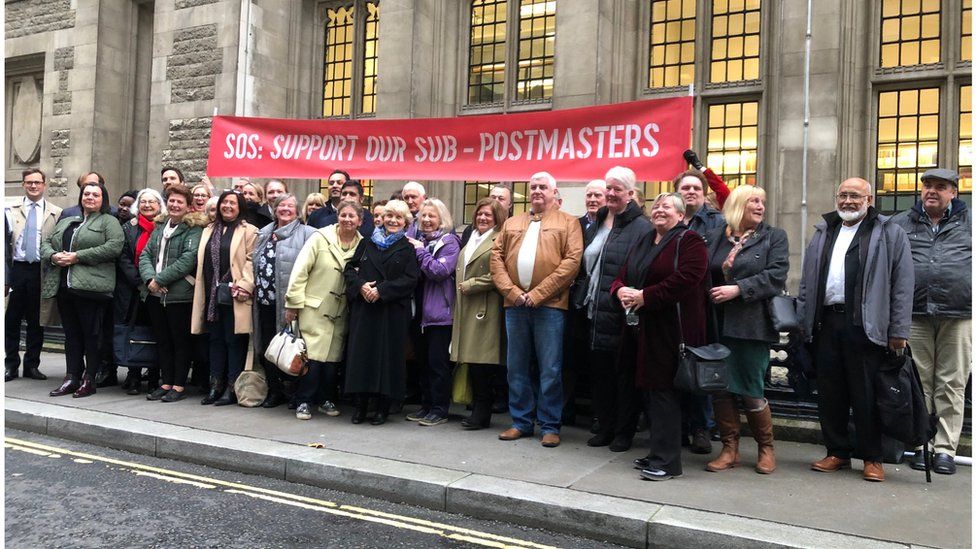
 A former postmistress has told the inquiry into the Post Office scandal that being falsely accused of fraud has had a long-lasting impact on her health.


Speaking on the second day of the inquiry into the wrongful convictions of hundreds of sub-postmasters and mistresses, Lorraine Williams said both her mental and physical health have suffered.

It was more than 10 years ago when Mrs Williams first discovered a shortfall in the accounts at the post office branch near Llangefni on Anglesey, where she was postmistress.

She tried to make up the missing £14,000 with her own money, but in the end, she was charged with fraud. She lost her job and her home as a result.

“I wouldn’t go out. I still don’t feel I’m the same person and I do get angry at times,” she said. “I don’t trust anybody anymore.”

“I’ve got type two diabetes now, scarring alopecia, which means the hair is gone and won’t be replaced,” she said.

A new IT system was to blame for the accounting error, not only at Mrs Williams’ post office but at hundreds of branches across the country.

Between 2000 and 2014, more than 700 sub-postmasters were wrongly accused of theft, fraud and false accounting.

The inquiry – which is expected to run for the rest of this year – will look at whether the Post Office knew about faults in a newly installed IT system, called Horizon, and will also ask how staff were left to shoulder the blame.

Mrs Williams’ daughter was only 10 years old at the time the error came to light, so she decided to plead guilty to avoid a jail-term. She told the inquiry she has suffered a decade of deep shame and humiliation.

She is one of 72 of the wrongly accused who had their convictions quashed in April. Mrs Williams said she had received an interim compensation payment but felt “too scared” to spend it in case the Post Office asked for it back.

The inquiry is being led by the retired High Court judge, Sir Wyn Williams, currently conducting proceedings remotely from his home in south Wales. Over the next six weeks, the inquiry will hear how it felt for many of the hundreds of former Post Office staff who were falsely accused in the most widespread miscarriage of justice in British legal history.

workers
Last year 72 sub-postmasters had their convictions overturned

The second witness to give his evidence on the second day of the inquiry was Damian Owen, who managed a branch in Bangor.

Reliving his experiences was clearly painful for Mr Owen, who said he had still not been able to tell his 11-year-old daughter what happened. His relationship with his brother had completely broken down some years ago, he added.

Mr Owen’s previous connection with the Post Office was strong. His mother had ran branches in Wales since he was a teenager, and he’d worked in the shop and as a paperboy.

Mr Owen was accused of stealing just under £25,000 – just two weeks after the new Horizon system was installed.

The accusation seemed ridiculous to Mr Owen, who said that the branch was quiet.

“There wasn’t a massive cash holding. The most we had ever was £13,000,” he explained.

He was told by his first legal team there was “no hope” of being found not guilty and was advised to “just take four or five years on the chin”.

Mr Owen was sentence to eight months in prison just before Christmas.

“It wasn’t good. I was in there 10 weeks and I lost over four stone,” he said.

His baby daughter, who is now 11, was less than a year old when he was put behind bars.

But it was the reputational damage that has taken the greatest toll on his well-being. Local newspapers ran damaging accounts of his guilt at the time, and Mr Owen felt he needed to move away.

He’s had to take menial jobs despite being well-educated. “Who is going to employ someone with a criminal record?” he asked the inquiry.

Mr Owen, doesn’t feel the compensation he has received so far is adequate.

“I want some decent money and a decent apology,” he told the inquiry.

Holding up a letter from the Post Office, he said: “It is the most feeble apology I’ve received for anything in my life.”

The Post Office has said it is “sincerely sorry for the impact of the Horizon scandal on the lives of victims and their families and we are in no doubt about the human cost.”

“In addressing the past, our first priority is that full, fair and final compensation is provided and we are making good progress,” the spokesperson added.

……………………………………………………………

Norfolk and Suffolk flooding project gets £6.4m funding boost

 A project designed to tackle flooding in rural communities across two counties has been awarded £6.4m.


Norfolk and Suffolk’s Reclaim the Rain scheme was one of 25 projects chosen to take part in the government’s six-year Flood and Coastal Resilience Innovation Programme.

It aims to work with at least six rural communities to find ways to manage and reuse flood water.

The funding was welcomed by the two county councils.

Norfolk and Suffolk both face considerable surface water flood risk, while also being part of the driest region in the UK.

The councils said the project would deliver beneficial flood water reuse by agriculture, industry, communities and the environment, combined with nature-based flood management solutions.

Paul West, Suffolk County Council’s Conservative cabinet member for flooding, said: “Flooding is a very real and challenging issue across many areas and there is much we are doing to minimise the plight [of] our residents.

“This project will take our efforts to the next level by working with communities to capture that excess water and put it to good use.

“We live in the driest part of the UK, so every drop that falls on it is precious – any way that we can find a more sustainable use for this water will benefit us now and in years to come.”

flooding disruption
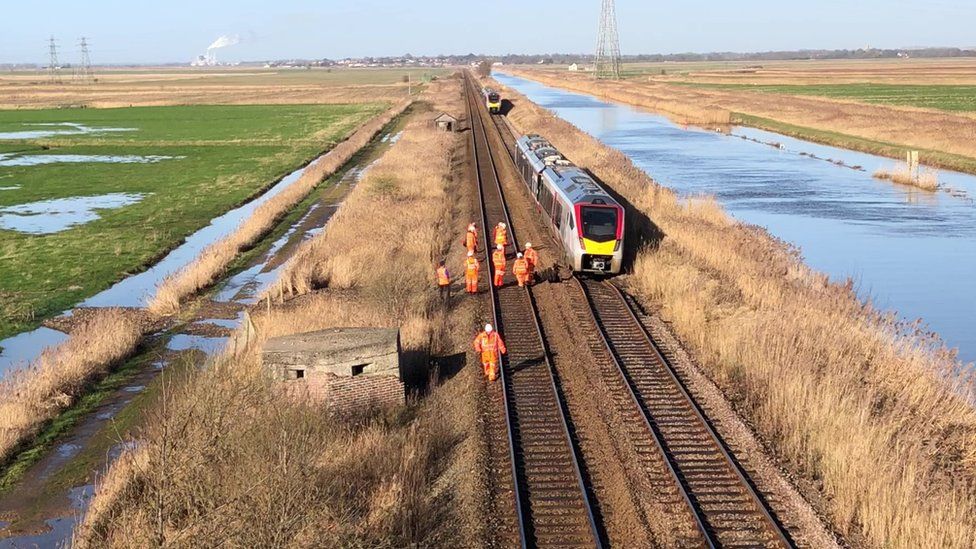
The 07:25 Norwich to Lowestoft train became stranded when tracks flooded on 30 January

The councils said the project could result in the provision of habitat creation and restoration and encourage the building of rain gardens.

Martin Wilby, Norfolk County Council’s Conservative cabinet member for highways, infrastructure and transport, urged people to find out more about the Reclaim the Rain project and let them know what would help manage and reuse water in their area.

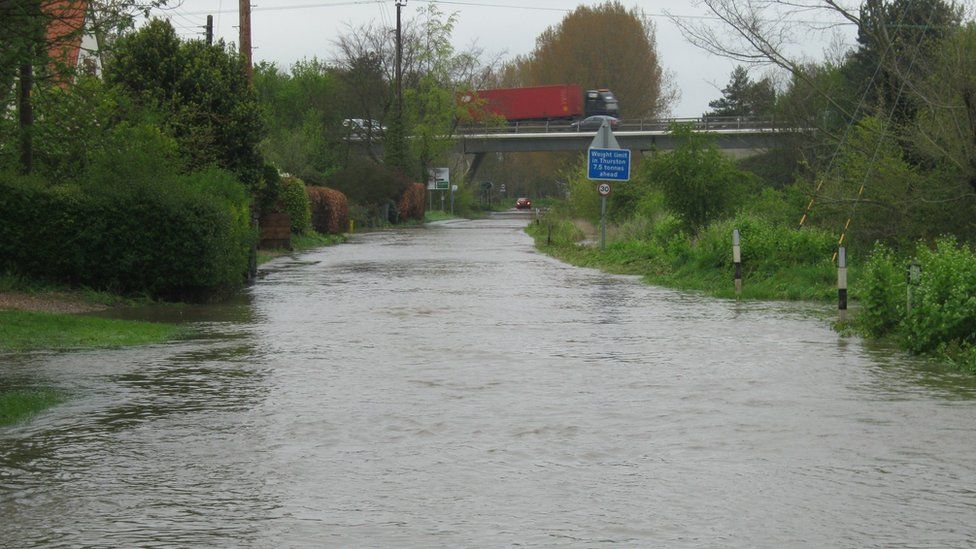
Flooded road between Beyton and Thurston in Suffolk
Flooding on the road under the A14 in Beyton in Suffolk in 2012

Other areas to benefit from the Department for Environment, Food and Rural Affairs (Defra) funding include Central Bedfordshire and Southend-On-Sea in Essex.

Defra said the 25 projects would help “inform future approaches to prepare communities for flooding and coastal change”.

……………………………………………………………

World Teachers’ Day 2026 - Dia Mundial dos Professores 2026

Standing with teachers: 60 years of protecting the profession, advancing its status and shaping our futures     On 5 October, we observed Wo...