Translate

Wednesday, 3 November 2021

South Africa hails deal to end reliance on coal


South Africa is set to receive $8.5bn (£6.2bn) to help end its reliance on coal in a deal announced at the COP26 climate summit.

President Cyril Ramaphosa has called it a “watershed moment”.

The country is currently a major emitter of greenhouse gases as a result of its addiction to coal, which it uses to generate electricity.

This deal, funded by wealthier nations, could have both global and local implications.

The vast scale of the coal operation run by the country’s state power company Eskom makes South Africa the 12th biggest carbon dioxide emitter in the world, according to the Global Carbon Atlas.

Some of those at the heart of South Africa’s coal country hope that the latest deal could ease the environmental and health impacts of the power sector.

Last month, driving into Emalahleni in Mpumalanga province, I saw a thick layer of smog hanging over the town. It stretched for kilometres, a dusty putrid haze that I could smell while still in the car.

During winter the occasional stench of sulphur even reaches the country’s commercial hub Johannesburg, which is more than 100km (62 miles) away.

Emalahleni means “The Place of Coals” in the isiZulu language, and the town is where most of the country’s coal is mined.

It supplies a vast network of 12 power stations that dot the countryside of this inland province.
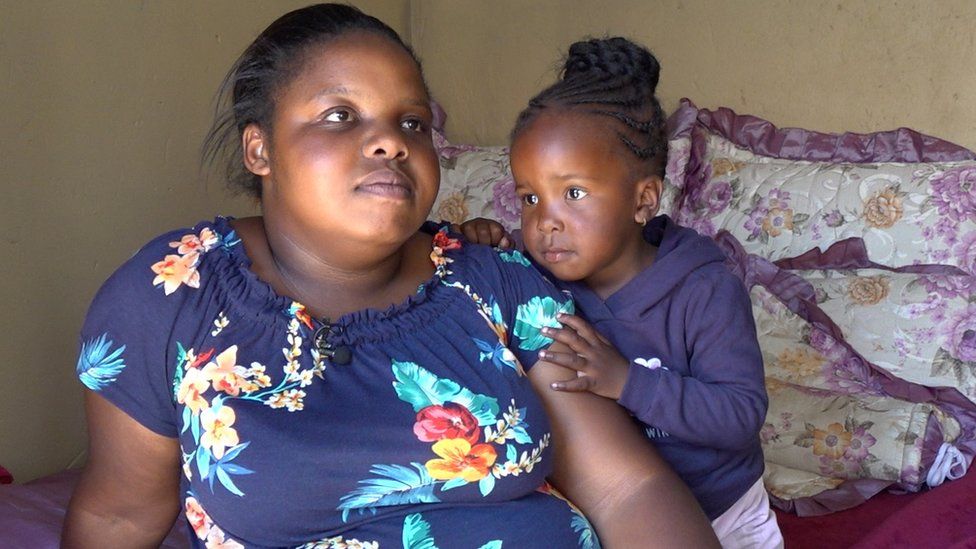
A mother and her child
Image caption,Mbali Mathebula has had to quit her job because of her child’s breathing problems

Even more alarming for the people of this province, according to the Centre for Research on Energy and Clean Air, is that South Africa is the world’s biggest emitter of sulphur dioxide.

Many there suffer from a host of breathing problems caused by the extreme proximity to the mines and the power stations.

Young mother of two Mbali Mathebula lives in Vosman, an Emalahleni township that sits opposite a coal mine.

‘People are sick’

She has had to quit her job to look after her children. Her eldest has severe asthma and does not go to school during the bitterly cold winter months.

“His life isn’t the same as other kids. Because even when he plays, he only goes out for a short time then he has to rest,” Ms Mathebula said.

“We have told the mines that there are houses where people are sick, they say they will come but they never do.”

Environmental activist Promise Mabilo added that people’s homes are damaged as well. “When they blast sometimes the bricks and debris fall on top of these houses,” she said.
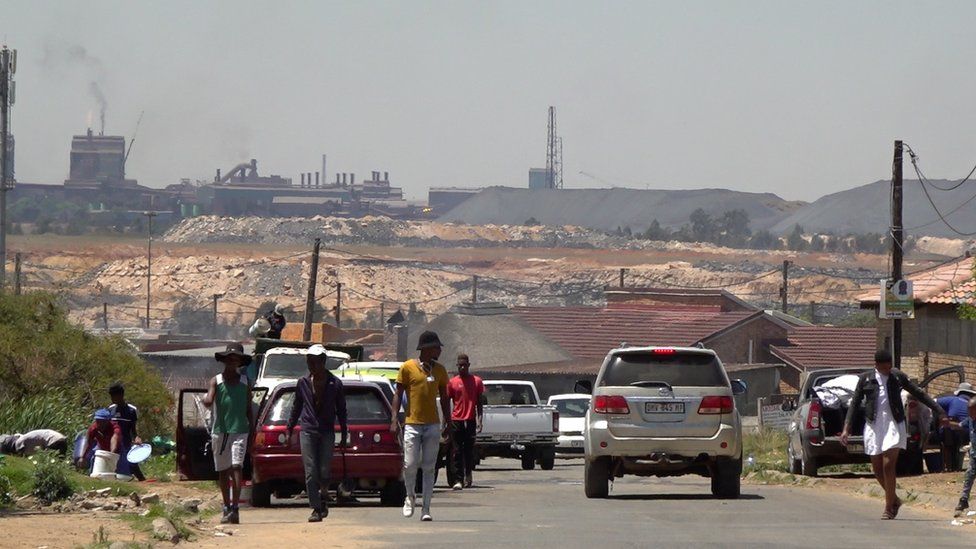
Township with mine opposite
Image caption,Vosman township sits right opposite a coal mine

Local government official Erald Nkabinde blames the national authorities for allowing mines to operate so close to people’s homes.

He argued that the Department of Mineral Resources allows them to be opened without consultation with the people on the ground.

“Some of these environmental authorisation applications don’t come to us, then the following day you wake up and find a mine right inside a settlement at the door step of a shack or a house,” he told the BBC.

But, on a national level, while there is a recognition of the need to end the reliance on coal, South Africa is desperate for the electricity it produces.

Currently, 80% of its power comes from coal but what it generates is still not enough to satisfy demand.

For more than a decade, South Africa has experienced periods of planned blackouts, intended to ease the pressure on the electricity grid.

The power problems have stifled economic growth in a country beset by high unemployment.

Nevertheless, even before the deal was announced at the summit in Glasgow, the government had planned to shrink coal’s contribution to the energy mix to less than 60% by 2030.

Wind and solar power were expected to provide 25% by that point.

With the money pledged by the US, UK, France, Germany and the EU, South Africa could now move much faster.
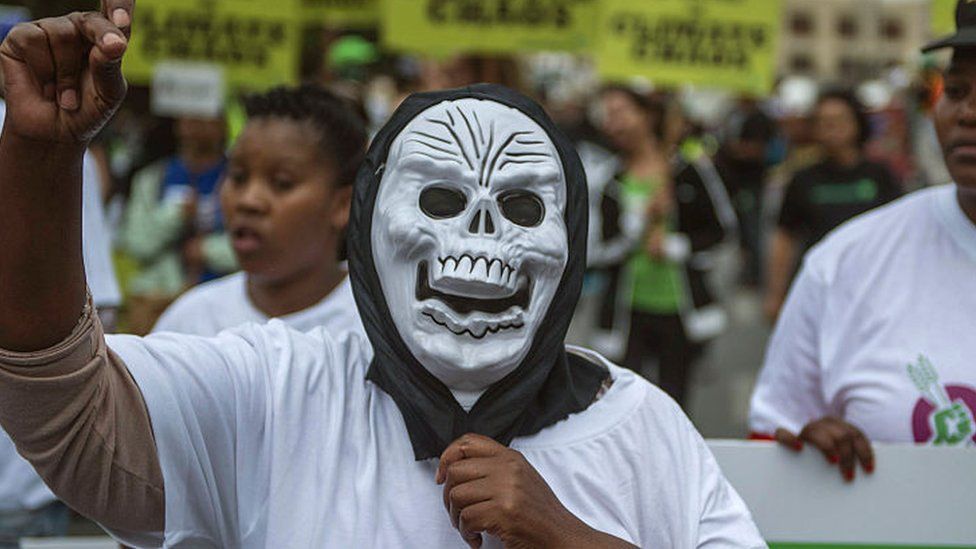
Protester in South Africa wearing a skull maskIMAGE SOURCE,AFP
Image caption,Environmentalists in South Africa have been protesting against the coal plants for several years

“It is proof that we can take ambitious climate action while increasing our energy security, creating jobs and harnessing new opportunities for investment, with support from developed economies,” President Ramaphosa said.

But like leaders elsewhere in the world who are promising new green jobs, the president is faced by powerful groups worried about their economic future if the country turns away from coal.

The mines in Mpumalanga may cause environmental problems but they provide vital jobs.

‘What about our jobs?’

The metal workers’ union cites research saying that 100,000 jobs in mining and the associated industries could be at stake.

“No social plans, as far as we know, have been developed to assist all those communities who are going to be affected by that,” National Union of Metal Workers spokesman Phakamile Hlubi told the BBC.

“If you’re not going to replace those jobs with something, you’re going to turn that entire province into a ghost town.”

This sentiment may have been at the heart of what was before COP26 seen as a slow approach taken by some in government.

Mining Minister Gwede Mantashe favoured a gradual change, urging people not to be “emotional” about demanding transition.

But now the 2050 deadline to close most of the country’s coal plants can be brought forward.

When I called her up in Emalahleni, activist Ms Mabilo was excited to hear the news from Glasgow.

But she sounded a word of caution, saying local people now needed to be consulted.

“As communities, as environmental activists, we need to be part and parcel of the whole process so that we can all benefit from the transition,” she said.

………………………………………………………

Tuesday, 2 November 2021

The COP26 time on the occasion of Africa Youth Day. Sustainable and Unsustainable lifestyles, Mangrove - Blue Carbon. An article by Sofonie Dala

 This is a collection of hybrid doc-series and stories covering sustainable lifestyle trends around Africa, Angola 

COP26: Wheelchair using minister unable to attend summit

 An Israeli minister has said she could not attend the COP26 summit on Monday because it was not wheelchair accessible.

COP26: Wheelchair using minister unable to attend summit

An Israeli minister has said she could not attend the COP26 summit on Monday because it was not wheelchair accessible.


Karine Elharrar tweeted that it was “sad” the UN “does not provide accessibility to its events”.

An official in Israeli Prime Minister Naftali Bennett’s delegation said they had formally complained to organisers.

Mr Bennett said he would not attend on Tuesday if Ms Elharrar could not access the summit, the official added.

UK ambassador to Israel Neil Wigan tweeted that he had apologised “deeply and sincerely” to the minister.

“We want a COP Summit that is welcoming and inclusive to everyone,” he wrote.

Ms Elharrar reportedly told Israel’s Channel 12 that she could not get onto the grounds of the conference because the only options were to either walk or take a shuttle that was not suitable for a wheelchair.

Her office told the Times of Israel she waited outside the venue in Glasgow for two hours, and she was eventually forced to return to her hotel in the Scottish capital Edinburgh 80km (50 miles) away.

James Cleverly, a UK foreign office minister, said he was “deeply disappointed and frustrated” Ms Elharrar could not access the summit.

“The COP venue is designed to be accessible for all. I have spoken to the Minister about this and I look forward to meeting her tomorrow,” he tweeted.

An official in the Israeli PM’s delegation said Mr Bennett had told UK Prime Minister Boris Johnson about the incident, and Mr Johnson had invited Ms Elharrar to join a meeting between the two prime ministers on Tuesday.

…………………………………………………………

Climate change: Can India meet its targets?

 India’s Prime Narendra Modi has set his country a target of net zero greenhouse gas emissions by 2070, a significantly later deadline than many other countries attending the Glasgow climate summit.

Climate change: Can India meet its targets?

India is the world’s third largest emitter of carbon dioxide (CO2), after China and the United States.

With its rapidly growing population and an economy heavily dependent on coal and oil, its emissions are set on a steep upward trajectory unless radical action is taken to curb them.

What emission cuts has India promised so far?

India has resisted setting a target for an overall reduction, saying industrialised nations should bear a much greater share of the burden as they have contributed far more to emissions over time.

It says an “emissions-intensity” target, which reflects a country’s economic growth, is a fairer way to compare it with other countries, it says.

By 2030 India will reduce the carbon intensity of its economy by 45%, says Mr Modi – a more ambitious target than the previous goal of a of a 33-35% cut in its emissions intensity from the 2005 level by 2030..

However, a fall in carbon intensity does not necessarily mean a reduction in overall emissions.

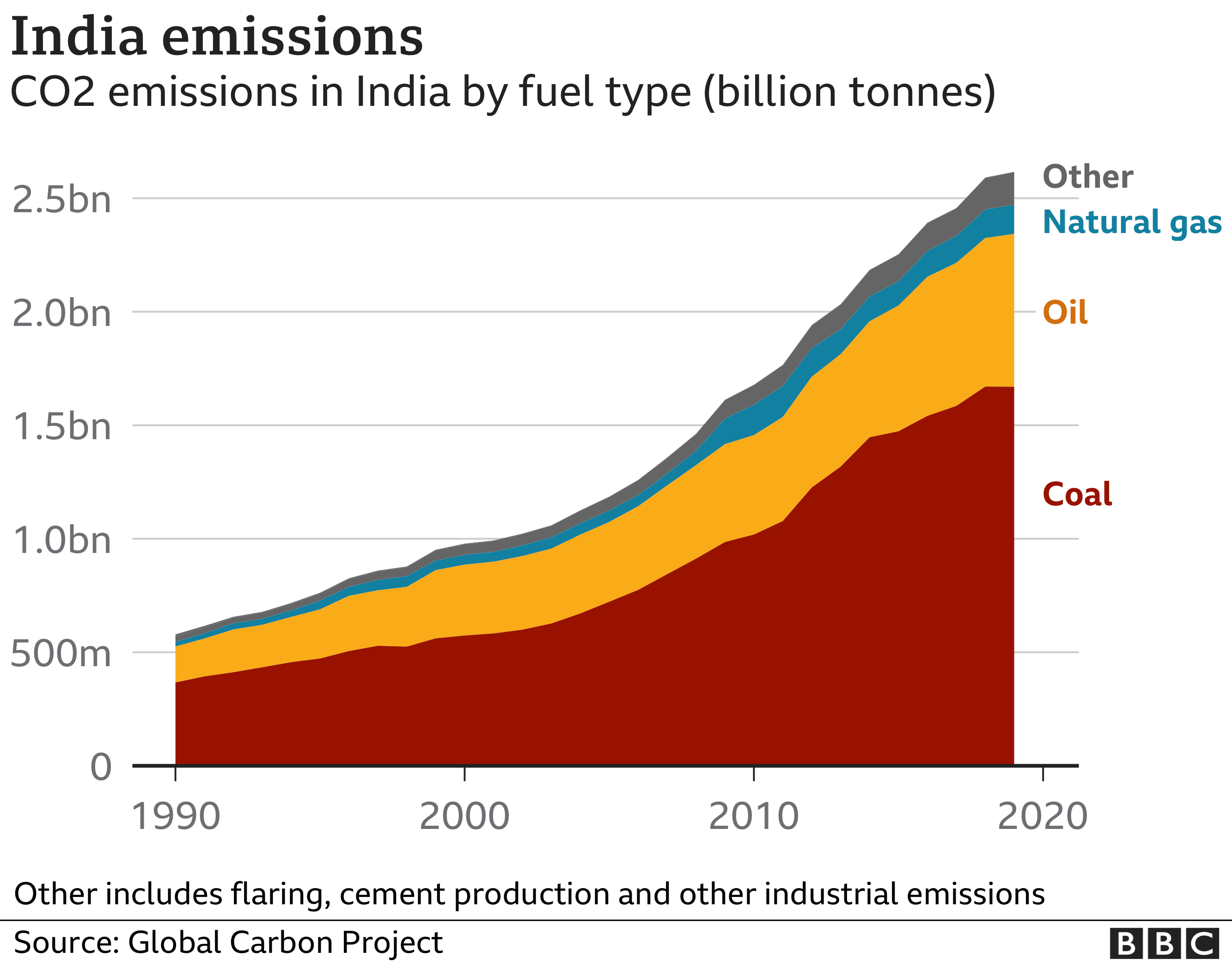
And India’s relatively rapid economic growth in recent years has been driven by its reliance on fossil fuels – accounting for most of the country’s greenhouse-gas emissions.

Chart showing CO2 emissions by fuel type in India

The Inter-governmental Panel on Climate Change (IPCC) says a target of global net zero – where a country is not adding to the overall amount of greenhouse gases in the atmosphere – by 2050 is the minimum needed to keep the temperature rise to 1.5C.

And more than 130 countries have publicly promised to meet this.

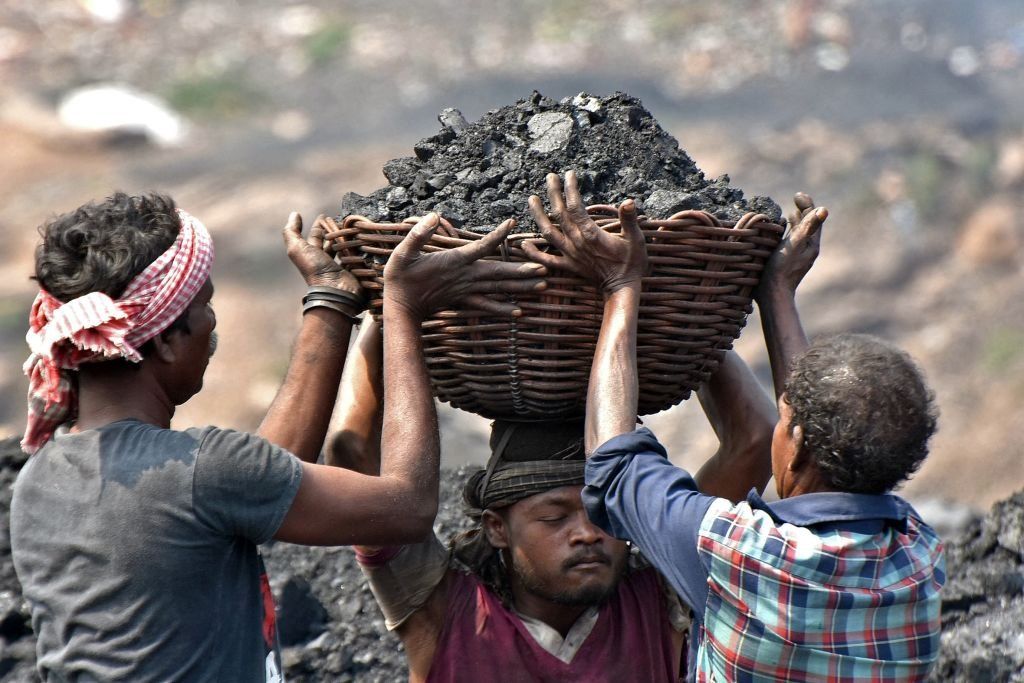
Coal supplies power to around 70% of India's electric gridIMAGE SOURCE,GETTY IMAGES
Image caption,Coal supplies power to about 70% of India’s electric grid

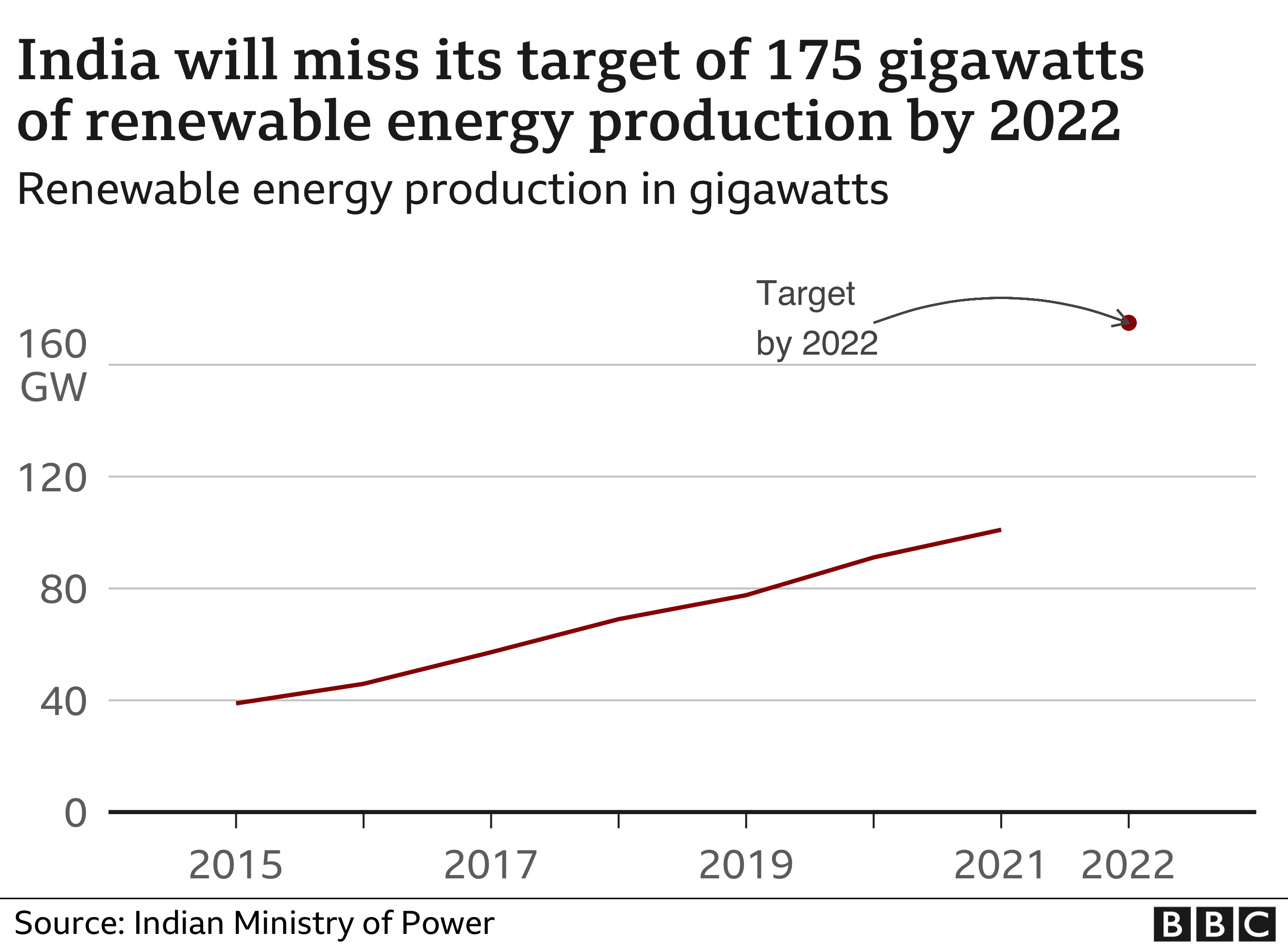
India’s prime minister has pledged that it will increase its non-fossil fuel energy capacity to 500 gigawatts (GW) by 2030.

This is an ambitious target given that it currently has a capacity of around 100GW and had previously set itself a target of 175GW by next year.

Chart on India's renewable energy target and what's achieved so far

Also in 2015, India promised to provide 40% of all electric power from non-fossil fuel sources by 2030. Mr Modi has now increased this figure to a significantly more ambitious 50%.

According to the International Energy Agency (IEA), in 2019 this figure stood at 23%.

Cindy Baxter, of CAT, says developing countries such as India, need international support to decarbonise their economies and limit the temperature increase to 1.5C in line with the Paris Agreement.

“India has no plan to decarbonise,” Ms Baxter said.

“Nor does it have a conditional target that identifies where it needs support or indeed how much support it needs.”

Are India’s forests expanding?

India has highlighted many times it wants to bring a third of its land area under forest cover.

But it has not given a timescale for this – and progress has been patchy.

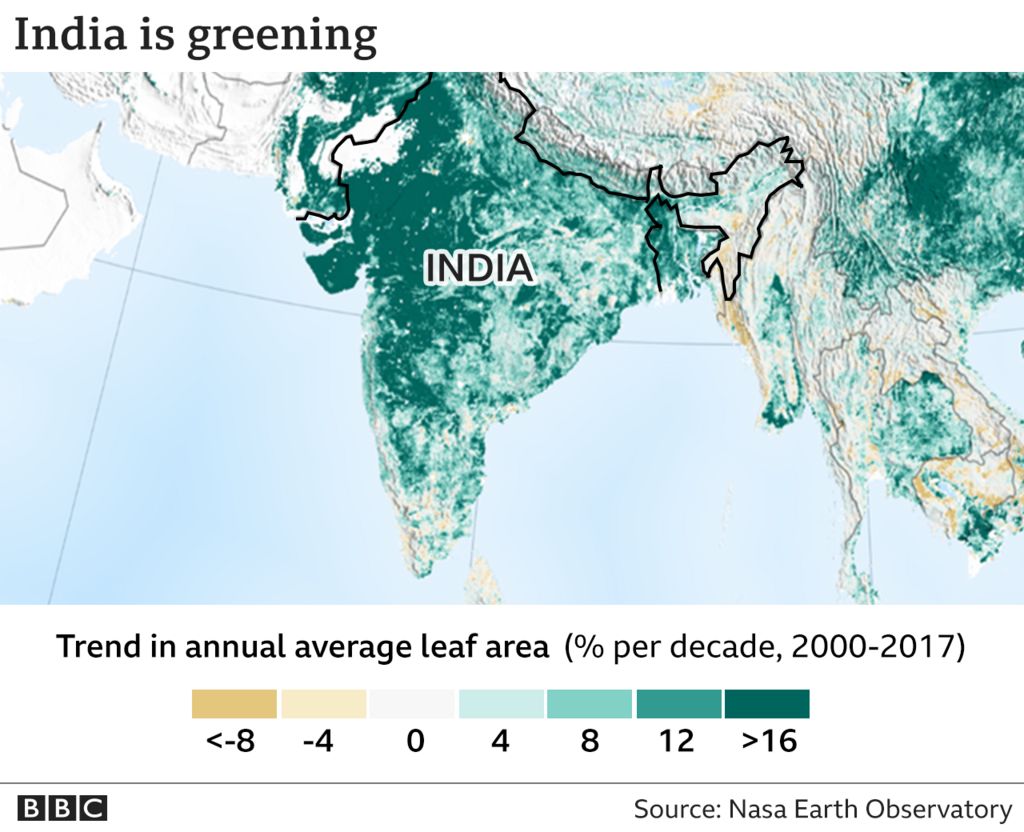
Although there have been replanting initiatives in the southern parts of India, the north-eastern region has lost forest cover recently.

The expansion of green cover acts a carbon sink.

And India plans to plant enough trees by 2030 to absorb an additional 2.5-3 billion tonnes of CO2 from the atmosphere.

Satellite image showing India's green cover

Global Forest Watch – a collaboration between the University of Maryland, Google, the United States Geological Survey and National Aeronautics and Space Administration (Nasa) – estimates India lost 18% of its primary forests and 5% of its tree cover between 2001 and 2020.

But the Indian government’s own survey data indicates a 5.2% increase in forest cover between 2001 and 2019.

This is because the GFW report includes only vegetation taller than 5m (16ft), whereas India’s official calculation is based on tree density over a given area of land.

Additional research by David Brown

More on climate summit top strapline

The Cop26 global summit, in Glasgow, in November, is seen as crucial if climate change is to be brought under control. Almost 200 countries are being asked for their plans to cut emissions – and it could lead to major changes to everyday lives.

…………………………………………………………

COP26: World leaders promise to end deforestation by 2030

More than 100 world leaders will promise to end and reverse deforestation by 2030, in the COP26 climate summit's first major deal.

COP26: World leaders promise to end deforestation by 2030

Brazil – where stretches of the Amazon rainforest have been cut down – will be among the signatories on Tuesday.

The pledge includes almost £14bn ($19.2bn) of public and private funds.

Experts welcomed the move, but warned a previous deal in 2014 had “failed to slow deforestation at all” and commitments needed to be delivered on.

Felling trees contributes to climate change because it depletes forests that absorb vast amounts of the warming gas CO2.

UK Prime Minister Boris Johnson, who is hosting the global meeting in Glasgow, will call Tuesday’s deal a “landmark agreement to protect and restore the Earth’s forests”.

“These great teeming ecosystems – these cathedrals of nature – are the lungs of our planet,” he will say at a COP26 event later where world leaders are meeting to discuss forests and land use.

The two-week summit in Glasgow is seen as crucial if climate change is to be brought under control.

The countries who say they will sign the pledge – including Canada, Brazil, Russia, China, Indonesia and the Democratic Republic of the Congo, the US and the UK (the full list is here) – cover around 85% of the world’s forests.

Some of the funding will go to developing countries to restore damaged land, tackle wildfires and support indigenous communities.

Governments of 28 countries will also commit to remove deforestation from the global trade of food and other agricultural products such as palm oil, soya and cocoa.

These industries drive forest loss by cutting down trees to make space for animals to graze or crops to grow.

More than 30 of the world’s biggest financial companies – including Aviva, Schroders and Axa – will also commit to end investment in activities linked to deforestation.

And a £1.1bn fund will be established to protect the world’s second largest tropical rainforest – in the Congo Basin.

Prof Simon Lewis, an expert on climate and forests at University College London, said: “It is good news to have a political commitment to end deforestation from so many countries, and significant funding to move forward on that journey.”

But he told the BBC the world “has been here before” with a declaration in 2014 in New York “which failed to slow deforestation at all”.

He added that this new deal did not tackle growing demand for products such as meat grown on rainforest land – which would require high levels of meat consumption in countries like the US and UK to be addressed.

…………………………………………………………

Few vote so far in South Africa’s local elections

 About 3.5 million voters had cast their ballots by noon local time (10:00 GMT) in South Africa’s local government elections, the Independent Electoral Commission has said.

Few vote so far in South Africa’s local elections

Just over 26 million people had registered to vote in an election that will decide who controls cities and towns across South Africa – including Johannesburg, Pretoria and Nelson Mandela Bay.

Some glitches have already been reported, with 19 polling stations in Eastern Cape province and 20 others in KwaZulu Natal failing to open on time because of community protests.

An electoral commission presiding officer has also been arrested in KwaZulu-Natal for allegedly stuffing marked ballot papers at a polling station.

Polls are due to close at 21:00 local time.

…………………………………………………………

AFRICAN YOUTH DAY | 1 NOVEMBER 2026

    20 YEARS OF THE AFRICAN YOUTH CHARTER AFRICAN YOUTH: IDENTITY, PARTICIPATION AND TRANSFORMATION 420 MILLION+ YOUNG PEOPLE | AGED 15–35 A...