Translate

Thursday, 19 August 2021

Lithuania says Belarus officers illegally pushed migrants over border

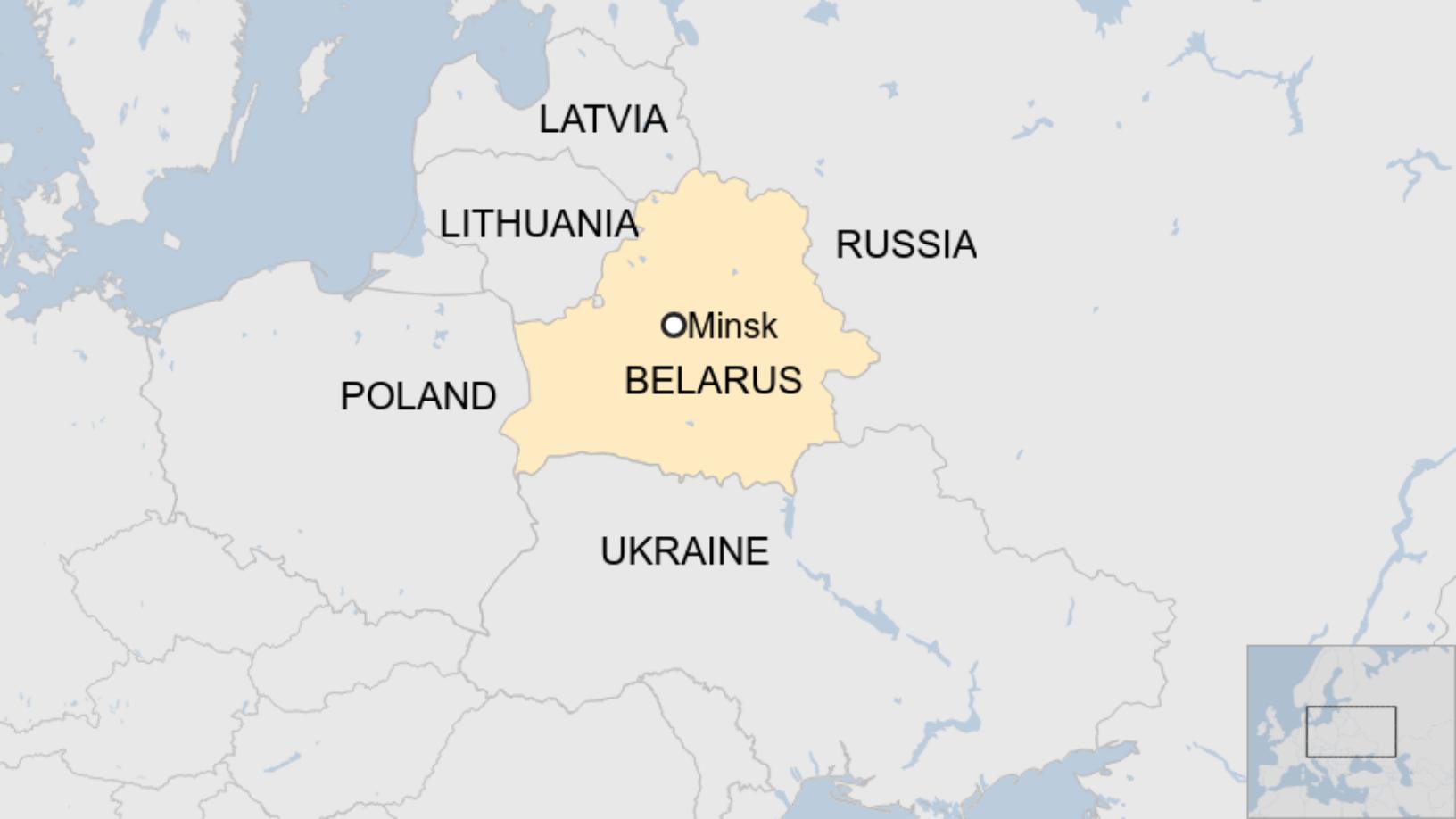
Lithuania has accused 12 Belarusian officers in riot gear of illegally entering its territory to push a group of migrants over the border.

Lithuania’s border service said the Belarusians were repeatedly told they had violated the border during the tense incident on Tuesday.

But Belarus disputed this and accused Lithuanian guards of violence towards migrants.

EU ministers will meet later to discuss a recent migrant influx from Belarus.

More than 4,100 mostly Iraqi migrants have entered EU member Lithuania illegally from neighbouring Belarus so far this year.

The rise in illegal crossings started in June after the EU imposed sanctions on long-time Belarusian President President Alexander Lukashenko.

Lithuania and its allies have accused Belarus of flying in migrants from the Middle East to send across the border, in retaliation for EU sanctions. Belarus has denied this claim.

Tuesday’s incident on the border is the latest rupture in Lithuania-Belarus relations, which have soured considerably in recent months.

Lithuania’s border service released a video of the incident, which showed 12 Belarusian officers armed with shields and riot gear standing in formation as migrants scrambled towards Lithuanian territory in a ditch below.

Later in the video, the Belarusians appear to enter the ditch which the Lithuanian border guards say marks the border.

Lithuania’s interior ministry said 35 migrants had been “forcibly pushed” by the Belarusians.

Interior Minister AgnÄ— BilotaitÄ— said Lithuanian border guards would step up patrols in response to the “provocation”.

Earlier, Belarus’s border service released its own video, which does not show the 12 officers in riot gear, nor the alleged crossing into Lithuanian territory.

A video showing migrants trying to enter Lithuanian territory as border guards push them back
image caption Lithuanian border guards were filmed pushing the migrants back as they tried to enter the country

In the video, Lithuanian border guards can be seen grappling with migrants, some of whom are pushed to the floor.

The Belarusian border service accused Lithuanian guards of deliberately ignoring “all requests for asylum”.

Map

Mr Lukashenko has repeatedly warned that Belarusian authorities will no longer stop an influx of illegal migrants from abroad to EU members.

On Tuesday Lithuanian border guard chief Rustamas Liubajevas said tensions remained high on the Belarus-Lithuania border, where Lithuania’s parliament last week voted to build a fence.

In the meantime, dozens of arrivals have been turned away under Lithuania’s controversial policy to push back migrants. But Mr Liubavas said Belarus border guards were “actively pushing irregular migrants to the Lithuanian side”.

German Chancellor Angela Merkel has condemned President Lukashenko for using refugees to “undermine security” and put pressure on the EU.

…………………………………………………………

Outrage as J&J exports tens of millions of vaccine doses from Africa to EU


The J&J vaccine was supposed to be one of Africa’s most important weapons against Covid. Instead, at least 32 million doses have been shipped out of South Africa to the E.U. as millions suffer and die’


THE US-based pharmaceutical giant Johnson & Johnson has recently exported tens of millions of coronavirus vaccine doses from South Africa to rich European Union countries under an ‘unusual’ contract clause, a revelation that came as the African continent struggles to inoculate even a small percentage of its population against the surging Delta variant.


In an op-ed for The Guardian on Monday, former UK Prime Minster Gordon Brown wrote that ‘millions of Covid vaccines manufactured in Africa that should have saved the lives of Africans have been shipped to Europe in recent weeks.’

Citing unnamed African leaders, Brown added that ‘this month and next, about 10 million single-shot Johnson & Johnson (J&J) vaccines filled and finished at the Aspen factory in South Africa will be exported to Europe, at the very time that Africa is grappling with its deadliest wave of Covid-19 infections yet.’

‘Compared with the swift development of the pathbreaking Covid vaccines, getting shots into all the world’s arms should be straightforward,’ Brown continued. ‘But vaccine nationalism—and Europe’s neocolonial approach to global health—is dividing the world into rich and protected people, who live, and those who are poor, unprotected and at risk of dying.’

The People’s Vaccine Alliance, a international coalition of advocacy groups campaigning for equitable vaccine distribution, reacted with outrage to Brown’s column, calling the export of much-needed vaccines out of Africa ‘disgusting.’

Brown’s allegation that millions of J&J vaccine doses have been shipped out of Africa—where less than 2 percent of the population is fully vaccinated—was confirmed by the New York Times (NYT), which reported Monday that the pharmaceutical giant ‘had shipped 32 million doses in recent months, although that does not capture the full number that have left South Africa.’

‘This is further proof that the world cannot trust a handful of pharmaceutical companies to fairly allocate vaccines across the world,’ said Mohga Kamal-Yanni the People’s Vaccine Alliance’s senior health policy adviser.

Last year, the South African pharmaceutical company Aspen—the largest drug company in Africa—reached a deal with J&J under which Aspen is tasked with carrying out the ‘fill and finish’ stage of vaccine production

‘The J&J vaccine was supposed to be one of Africa’s most important weapons against Covid,’ said the People’s Vaccine Alliance. ‘Instead, at least 32 million doses have been shipped out of South Africa to the E.U. as millions suffer and die.’

The NYT noted that while ‘many Western countries have kept domestically manufactured doses for themselves,’ that ‘wasn’t possible in South Africa because of an unusual stipulation in the contract the government signed this year with Johnson & Johnson.’

‘The confidential contract, reviewed by the NYT, required South Africa to waive its right to impose export restrictions on vaccine doses,’ the newspaper reported. ‘Johnson & Johnson had always planned for some vaccines produced by Aspen to leave Africa, but it has never disclosed how many doses it was actually exporting.’

‘South Africa is still waiting to receive the overwhelming majority of the 31 million vaccine doses it ordered from Johnson & Johnson,’ the NYT observed.

Popo Maja, a spokesperson for the South African health ministry, told the NYT in a statement that the government had no leverage to reject the stipulation of the contract, under which the African continent is supposed to receive a percentage of the finished vaccine doses. Originally that percentage was just 10 percent, but it was later revised so that 40 percent of the vaccine doses finished by Aspen would go to Europe and 60 percent to Africa through the end of September.

;The government was not given any choice,’ Maja said. ‘Sign contract or no vaccine.’

South Africa is currently reeling from a third coronavirus wave that was driven largely by the highly transmissible Delta mutation, which overwhelmed the country’s healthcare system and pushed the nation’s total Covid-19 death toll over 77,000. The country has officially recorded more than 2.6 million coronavirus cases.

The African continent as a whole has been battered by the coronavirus as governments there have struggled to launch vaccination programs due in large part to inadequate supplies—shortages that experts have attributed to the pharmaceutical industry’s monopoly control over vaccine production and critical technology.

In an effort to boost the global vaccine supply, South Africa joined India last year in proposing a temporary suspension of patent protections to allow for the manufacturing of generic alternatives in low-income nations. Rich members of the World Trade Organisation, including Germany and the U.K., have stonewalled the proposal.

Germany is one of the EU countries that has received J&J vaccine doses finished in South Africa.

Fatima Hassan, founder and director of the South Africa-based Health Justice Initiative, said the arrangement that J&J reportedly forced on South Africa is ‘the sickening result of the free market in a pandemic—while Africa waits for supplies and gets a drip feed, more vaccine stock is diverted to Europe.’

‘This is grotesque,’ Hassan added. ‘This is why the vaccine contracts must be disclosed—now. It is in the public interest to know what other rights have been waived, for whose benefit, and why we are being drip fed.’

In a statement Monday, Mohga Kamal-Yanni said that ‘while South Africa was experiencing one of the worst humanitarian crises to arise from Covid-19, J&J diverted desperately needed vaccines to wealthy countries.’

‘It’s utterly abhorrent and shows a total disregard for African life,’ said Kamal-Yann. ‘This is further proof that the world cannot trust a handful of pharmaceutical companies to fairly allocate vaccines across the world. Pharma executives seem all too happy to write off African deaths to line their own pockets.’

‘Without urgent action, more of these tragedies could be around the corner,’ Kamal-Yann added. “It is time for governments to break pharmaceutical companies’ monopolies on knowledge and technology of vaccines and other tools to deal with Covid-19. We should develop domestic manufacturing in low-and-middle-income countries, not siphon off doses to the rich world.”

…………………………………………………

Teenage pilot Zara Rutherford begins solo round-world record bid

 Teenage pilot Zara Rutherford begins solo round-world record bid


A teenage pilot has set off on an attempt to become the youngest woman to fly solo around the world.

Zara Rutherford, 19, took off on her three-month adventure from Kortrijk in Belgium just before 10:00 BST – half an hour late due to the weather.

She made her first stop at Popham Airfield in Hampshire at 11:30.

The former pupil of St Swithun’s School, Winchester, aims to fly over 52 countries and cross the equator twice during her trip.

The current female record holder is American Shaesta Waiz, who was 30 at the time of her challenge in 2017. The youngest male record holder was 18.

Miss Rutherford’s preparation has included dunker training – practising how to get out of an aircraft under water – as well as maintenance of her plane.

The circumnavigation includes 70 planned stops with 19 rest days and is due to conclude back in Kortrijk on 4 November.

Zara Rutherford in the cockpit of her airborne plane
image caption Zara Rutherford is flying a Shark UL ultralight sport aircraft

Miss Rutherford, who lives in Belgium, said the “greatest challenge” would be remote places like northern Russia or Greenland.

“There aren’t many people who live there so if anything were to go wrong I would be in a bit of an awkward situation,” she said.

The teenager, who comes from a family of pilots, began training when she was 14 and gained her pilot’s licence in 2020.

She is flying a Shark UL – an ultralight sport aircraft which holds a number of speed records.

She will fly to Wick, via Aberdeen, before heading across the Atlantic Ocean to Iceland, Greenland then Canada.

Her itinerary will then take her down the east coast of the US to South America before heading up the west coast back to Alaska, crossing to Russia, East and Central Asia, before returning to Europe via the Middle East.

Miss Rutherford spent five years at St Swithun’s School, which is one of the sponsors of the challenge.

The route has been chosen to fulfil Guinness World Records’ requirements to be an “around-the-world flight”.

………………………………………

Wednesday, 18 August 2021

Several killed in attack at Shell facility in Nigeria’s southeast

 Southeast Nigeria has seen a wave of deadly violence targeting security personnel and government facilities since the beginning of the year

Several killed in attack at Shell facility in Nigeria’s southeast


SEVEN people have been killed in an attack on a convoy transporting workers to a Shell oil and gas project in Nigeria’s southeast, police say.


No group claimed responsibility for Monday’s attack, but southeast Nigeria has seen a wave of deadly violence targeting security personnel and government facilities since the beginning of the year.

Police have previously blamed the violence on the Indigenous People of Biafra or IPOB, an outlawed movement seeking independence for ethnic Igbo people of the region, but the group has denied the accusation.

Imo state police spokesman Michael Abatan told AFP news agency on Wednesday that gunmen opened fire on a convoy of buses heading to a Shell gas plant in the area.

‘We lost one policeman and six oil workers in the attack by the gunmen,’ he said.

He said an investigation was under way ‘to arrest the gunmen and determine the motive for the attack.’

SPDC, the Nigerian subsidiary of Shell, confirmed the attack ‘by unknown gunmen, on a convoy of buses taking staff of its contractor’ to a project site in the Ohaji area.

‘We have since shut down the project site while the incident has been reported to the police for investigation,’ the company said in a statement.

Attacks on oil and gas facilities by armed groups seeking a larger share of Nigeria’s oil wealth for the people of the Niger delta used to be common until an amnesty deal in the 2000s helped to restore peace.

Monday’s attack came on the same day President Muhammadu Buhari signed into law a new energy bill that aims to provide oil companies with a clearer framework for investing and working in Nigeria.

The law also seeks to address the demands of local communities in crude-producing areas, though some community leaders say it has not gone far enough to provide them with a share of revenue from oil extracted from their land.

Nigeria is currently battling several security challenges, including a 12-year-long armed rebellion in the northeast, kidnappings for ransom and banditry in the northwest, herder-farmer violence in northern and central states, and separatist agitations in the southeast.

Buhari, a retired general and former military leader first elected in 2015, is under fire for his government’s inability to stem the violence.

……………………………………………………

Uganda scraps controversial anti-pornography ‘miniskirt’ law

 Constitutional court throws out a controversial law whose provisions included a ban on wearing miniskirts in public

Uganda scraps controversial anti-pornography ‘miniskirt’ law

UGANDA’S constitutional court is scrapping a controversial anti-pornography law whose provisions included a ban on wearing miniskirts in public, in a decision hailed by women’s rights campaigners.


The judgement on Tuesday said that the 2014 legislation, which had been dubbed the ‘anti-miniskirt law,’ was ‘inconsistent with or in contravention of the constitution of the republic of Uganda.’

‘Sections … of the Anti-Pornography Act are hereby declared null and void,’ Justice Frederick Egonda-Ntende said in Monday’s ruling, which also struck down the powers of a nine-member committee tasked with enforcing the law.

The legislation criminalised any activity deemed pornographic, from wearing short skirts to writing risque songs, and led to increased public harassment of women who wore clothing considered too revealing.

In 2014, Ugandan pop star Jemimah Kansiime was arrested for performing in a music video that showed her in her underwear. Currently on trial, she faces up to 10 years in jail, although the future of the case is unclear because of the new ruling.

Women’s rights activists welcomed the verdict, which followed street protests by campaigners calling for the legislation to be dropped.

‘This has been a bitter struggle and we are grateful [that] those who believe in the rights of women have emerged victors,’ Lillian Drabo, one of the nine petitioners who challenged the law, told the AFP news agency on Tuesday.

The petitioners said the legislation encouraged the harassment and mistreatment of women in public and denied them control over their bodies, as well as access to public spaces.

The government’s lead counsel Imelda Adong told AFP they were ‘studying the ruling’ and would respond in due course.

Uganda’s former minister for ethics and integrity, Simon Lokodo, was a longtime champion of the law, threatening to close a prestigious private school in 2016 for stocking copies of a British children’s book which was deemed too sexual.

In the past, Lokodo ordered police to arrest men who have sex with prostitutes and described a popular local television dating show as prostitution.

Local media reported that he also confronted Proscovia Alengot Oromait, then Uganda’s youngest member of parliament, when she wore a short skirt in parliament.

…………………………………………………


Your anger, your life

 Accra, Aug.17, GNA – It is a cozy Saturday morning. All is calm and one can hear the beautiful birds chirping happily. But suddenly, another sound interrupts the calmness.

Your anger, your life

Scenario
Mr Opoku and his wife are involved in a heated argument. Mrs Opoku has caught her husband flirting with another woman on a phone call, a confirmation of her recent suspicions, regarding her husband’s sudden change in attitude-lateness to home after work and refusal to eat dinner.

Mr Opoku, a church elder, is a respected figure in the community and so pleaded with his wife to keep the issue between them.

Mrs Opoku, still angry over the incident, reluctantly accepts the apology.

A few days later, she cuts off her husband’s head with cutlass while he was bathing, out of anger.

Mrs Opoku, though regretted the deed, is still serving her life imprisonment sentence.

Anger is a normal healthy human feeling unless one fails to manage it properly.

The Oxford English Dictionary defines “anger” as a strong feeling of annoyance, displeasure, or hostility.

Consequences of anger

Unbridled anger can lead to loss of respect, divorces, relationship break ups, loss of years of valuable friendships, loss of job opportunities or promotion, generational environmental transfer (raising a generation of timid or aggressive children), among others.

Out of anger, people have verbally and emotionally abused those they once upon a time claimed to dearly love.

To the extreme, just like in Mrs Opoku’s case, some have physically abused or even murdered others and ended up spending majority or almost the rest of their lives in imprisonment.

Health wise, anger increases one’s heart rate and puts them at risk of heart attack or stroke due to hypertension.

Anger can raise one’s blood sugar level through the release of cortisol into the blood stream, cause a general agitation of the nervous system, indigestion, sexual dysfunction, delays in healing, headaches, insomnia and aggravation of ulcers.

CAUSES OF ANGER

Epictetus, a Greek Stoic Philosopher said, “it is not the event or situation that causes anxiety, but the individual’s evaluation, appraisal or interpretation of the event or situation that causes anxiety”.

Thus, whether or not one becomes angry is a matter of perception (what might create anger in one person may not trigger anger in another).

People get angry when they feel attacked, powerless, being treated unfairly or when they experience physical pain or threat.

IS ANGER AN EMOTION OR BEHAVIOUR?

Reverend Albright Asiwome Banibensu, a licensed Psychologist says anger, though an emotion or feeling, forms part of three interlinked stages (Thinking, Feeling and Behaviour) of influence that humans experienced.

He says there are four stages involved in the cycle of violence namely; tension build up, explosion, reconciliation and calm or honeymoon stage.

“The way you think, affects the way you feel. The way you feel affects the way you behave. If you behave in a certain way too often it becomes a habit. So anger can become a behaviour. A person can be motivated to be belligerent habitually if that gets him rewarding results,” he said.

POSITIVE SIDES OF ANGER

Rev Banibensu, also the National Vice President, Ghana Psychological Association (GPA) says anyone who does not experience or show some amount of anger may actually be suffering from a psychological disorder.

“Anger is reasonable and has many positive sides. A number of people who got angry because others looked down on them, have been provoked to move from their comfort zones and achieve successes. Ephesians 4:26 says, ‘Be ye angry, and sin not: let not the sun go down upon your wrath.’ In short, you are permitted to be angry but don’t misbehave if you are,” he said.

HOW TO PROPERLY HANDLE YOURSELF WHEN ANGRY

“Any person capable of angering you becomes your master; he can only anger you when you permit yourself to be disturbed by him.”— Epictetus

Rev Banibensu says there are three communication channels usually used by angry people.

Thus, Passive (holds anger in), Aggressive (shows or explodes with anger) and Assertive (expresses anger in a healthy way).

The Psychologist says in order to communicate healthily when angry, one has to first work on his or her belief system.

One can also ask questions such as whether or not it is really a sign of weakness expressing anger or a sign of hypocrisy not expressing it.

Also, does the object or subject of one’s anger really intend to make them angry?

“You have to also know your rights. You have the right to say ‘no’ or to offer no reasons or excuses for justifying your behaviour. You have the right to judge if you are responsible for finding solutions to other people’s problems. You have the right to change your mind and to disagree with someone’s opinion. You have the right to make mistakes and be responsible for them.”

“Communicate your feelings gracefully and honestly. You may use the sandwich method by saying something truthfully nice first. For example, you can say something like, ‘I am glad you are my friend, but I felt sad that you recently spoke ill about me. We need to discuss that. This shouldn’t destroy our friendship because you are still a great friend,’” he added.

He recommends the Biblical method of reconciliation in Matthew 18:15 which says, “If your brother sins against you, go and show him his fault, just between the two of you. If he listens to you, you have won your brother over.”

Rev Banibensu says it is totally impossible to prevent anger. He says avoiding trouble spots only shuts down communication.

As such, they should rather open up about their displeasures and talk about them.

He says people should know why they are angry, think through to see if it is really necessary, face the situation, be assertive and learn to let go.

“Exercise regularly and stay fit, because when you are in peak physical condition, you will get less angry easily. Work with the less privileged. It can make you dissipate the energy needed to be angry,” he added.

Finally, Rev Banibensu suggests an appointment with a Licensed Psychologist or a Counsellor, regularly.

GNA

………………………………………………

Across Africa in Five Minutes


Across Africa in Five Minutes

 Nigeria


Nigeria’s state-owned oil company is to be disbanded under a new law which came into effect on Tuesday. The government said the Nigerian National Petroleum Corporation would be replaced by an independent company.

President Muhammadu Buhari said the Petroleum Industry Law, which was nearly 20 years in the making, marked the end of decades of uncertainty and under-investment in the energy sector.

Egypt

The office of the Israeli Prime Minister Naftali Bennett says he has received an invitation from the Egyptian President Abdul Fattah al-Sisi for an official visit in the next few weeks.

A statement from Mr Bennett’s office said the invitation was conveyed by the Egyptian intelligence minister during a meeting with the Israeli leader in Jerusalem.

Kenya

A Kenyan man is reported to have been allowed to leave Qatar after earlier being detained on charges of receiving money to spread misinformation.

A migrant rights group says that Malcolm Bidali – a security guard who blogged critically about the conditions of foreign workers in Qatar – paid a hefty fine before leaving the country on Monday.

Ghana

Accra, Aug. 18, GNA – An Accra Circuit Court has sentenced a land guard to four years imprisonment in hard labour for defrauding the Member of Parliament for Komenda-Edina-Eguafo-Abrem Constituency in the Central Region of four plots of land.

Nii Amoo Dodoo denied the offence but was found guilty after the trial.
In sentencing Dodoo, the Court presided over by Madam Evelyn Asamoah said it considered the seriousness of the crime and the fact that it was premeditated.

………………………………………………………………

AFRICAN YOUTH DAY | 1 NOVEMBER 2026

    20 YEARS OF THE AFRICAN YOUTH CHARTER AFRICAN YOUTH: IDENTITY, PARTICIPATION AND TRANSFORMATION 420 MILLION+ YOUNG PEOPLE | AGED 15–35 A...