Translate

Wednesday, 9 June 2021

Harry and Meghan did not ask Queen to use Lilibet name – Palace source


The Queen was not asked by the Duke and Duchess of Sussex about naming their daughter Lilibet, a Palace source has told the BBC.

The source disputed reports in the wake of the announcement of the name that Prince Harry and Meghan had spoken to the Queen before the birth.

But a Sussexes’ spokesperson insisted they would not have used the name had the Queen not been supportive.

They said the monarch was the first family member the duke had called.

The spokesperson said: “The duke spoke with his family in advance of the announcement – in fact his grandmother was the first family member he called.

“During that conversation, he shared their hope of naming their daughter Lilibet in her honour. Had she not been supportive, they would not have used the name.”

The relationship between the couple and the Royal Family has made headlines in recent months.

Earlier this year, while the couple were expecting their daughter, they aired criticisms of the Royal Family and made an allegation of racism in an explosive interview with Oprah Winfrey.

And although Harry spoke about difficulties between him and his father, he said that he had a “really good” relationship with the Queen and they spoke regularly over video call.

At the weekend, the couple announced that Lilibet “Lili” Diana Mountbatten-Windsor had been born at a hospital in Santa Barbara in California on Friday morning.

The name “Lilibet” is heavy with personal history for Her Majesty.

The nickname was coined when then-Princess Elizabeth was just a toddler and couldn’t pronounce her own name properly. Her grandfather King George V would affectionately call her Lilibet, imitating her attempts to say her name. It stuck and came to be used by close relatives.

She signed her name as Lilibet on the funeral wreath for one of her closest friends Earl Mountbatten. The Queen’s late husband, the Duke of Edinburgh, also called her by the nickname.
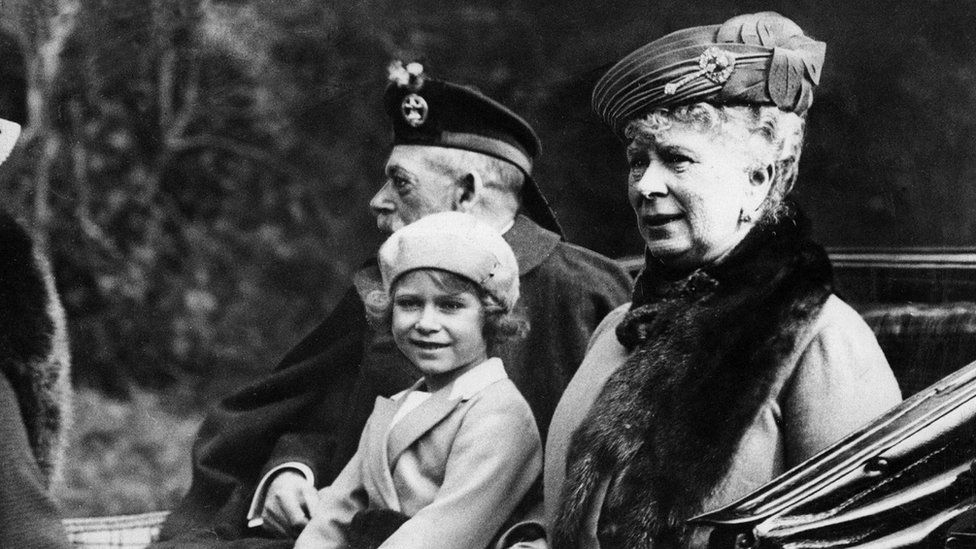
Princess Elizabeth sitting in the horse drawn carriage with her grandparents King George V and Queen Mary in 1932IMAGE COPYRIGHT GETTY IMAGES
image captionThe Queen, pictured here with her grandparents in 1932, was called Lilibet by her grandfather King George V

Following Lilibet’s birth, it was widely presumed that Harry and Meghan had first spoken to the Queen about the choice of name.

There were subsequent stories in the press quoting “friends” of the couple who strongly suggested that Harry had sought permission from his grandmother.

The Times also reported that it understood the Queen had been informed by Harry about the name.

And a source close to the Sussexes also told the BBC that Harry had spoken to the Queen before the birth and “would have mentioned the name” – claims a Palace source has since disputed.
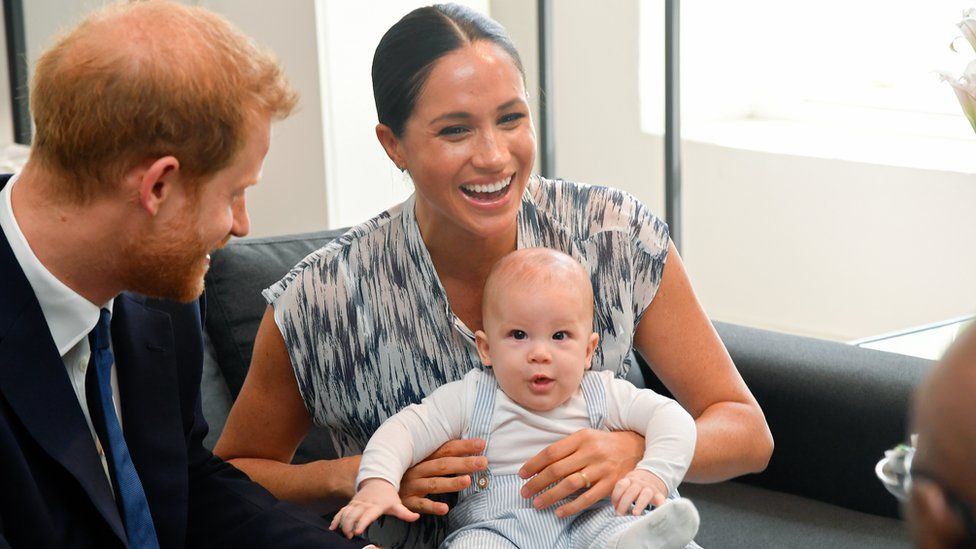
Prince Harry, Duke of Sussex, Meghan, Duchess of Sussex and their baby son Archie Mountbatten-Windsor meet Archbishop Desmond Tutu and his daughter Thandeka Tutu-Gxashe at the Desmond & Leah Tutu Legacy Foundation during their royal tour of South Africa on September 25, 2019IMAGE COPYRIGHTGETTY IMAGES
image captionThe couple’s first son, Archie, was born in the UK before they moved across the Atlantic

Lilibet is the Queen’s 11th great-grandchild and younger sister to Archie, who is now two years old.

Her middle name, Diana, is a tribute to Prince Harry’s late mother. Princess Charlotte, the daughter of Prince William and Catherine, also has Diana as one of her middle names, as well as Elizabeth.

After her birth, Buckingham Palace said the Queen and other senior royals had been informed and were “delighted with the news”.

During the interview with Oprah in March, the couple said they would be done after baby number two – meaning they were not planning to have any more children.

………………………………………………………………

ANOM: Hundreds arrested in massive global crime sting using messaging app


More than 800 suspected criminals have been arrested worldwide after being tricked into using an FBI-run encrypted messaging app, officials say.

The operation, jointly conceived by Australia and the FBI, saw devices with the ANOM app secretly distributed among criminals, allowing police to monitor their chats about drug smuggling, money laundering and even murder plots.

Officials called it a watershed moment.

Targets included drug gangs and people with links to the mafia.

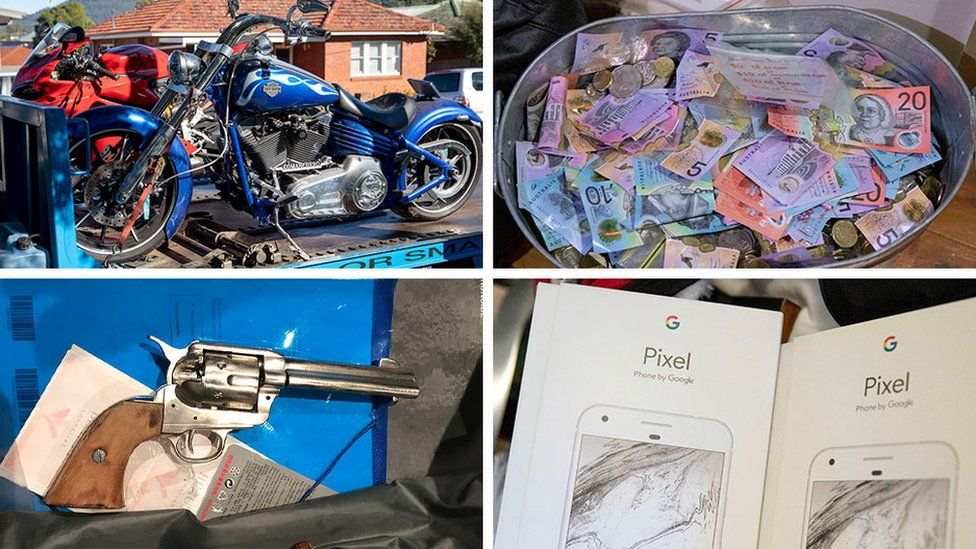
Drugs, weapons, luxury vehicles and cash were also seized in the operation, which was conducted across more than a dozen countries. This included eight tons of cocaine, 250 guns and more than $48m (£34m) in various worldwide currencies and cryptocurrencies.

Australian Prime Minister Scott Morrison said the operation had “struck a heavy blow against organised crime” around the world.

European Union police agency Europol described Operation Trojan Shield/Greenlight as the “biggest ever law enforcement operation against encrypted communication”.

How did the ANOM sting work?

The FBI began operating its own encrypted device company called ANOM, and covertly distributed devices with the chat app among the criminal underworld via informants.

The idea for the operation came after two other encrypted platforms were taken down by law enforcement agencies, leaving criminal gangs in the market for new secure phones.

The devices were initially used by alleged senior crime figures, giving other criminals the confidence to use the platform.

“You had to know a criminal to get hold of one of these customised phones. The phones couldn’t ring or email. You could only communicate with someone on the same platform,” the Australian police explained.

Composite photo shows items seized in the sting, including cash and a motorbike
image caption Items seized in the sting included motorbikes and money

Australian fugitive and alleged drug trafficker Hakan Ayik was key to the sting, having unwittingly recommended the app to criminal associates after being given a handset by undercover officers, police said.

Dubbed the “Facebook gangster” by Australian media outlets, Ayik is seen in social media photographs with large tattoos and a muscular physique. Local outlets say he has been living in Turkey since evading arrest, living a luxury lifestyle with a Dutch wife.

Police said he was “best off handing himself into us” as soon as possible, as he may be in danger himself, having unwittingly helped the FBI with their sting.

In total, some 12,000 encrypted devices were used by around 300 criminal syndicates in more than 100 countries.

What did the authorities uncover?

Officers were able to read millions of messages in “real time” describing murder plots, mass drug import plans and other schemes.

“All they talk about is drugs, violence, hits on each other, innocent people who are going to be murdered, a whole range of things,” said Australian Federal Police commissioner Reece Kershaw.

In total, some 9,000 police officers around the world were involved in the sting.

Calvin Shivers of the FBI’s Criminal Investigative Division said the operation had enabled police agencies to “turn the tables on criminal organisations”, with intelligence gathered preventing murders and a number of other crimes.

“We were actually able to see photographs of hundreds of tons of cocaine that were concealed in shipments of fruit,” he said.

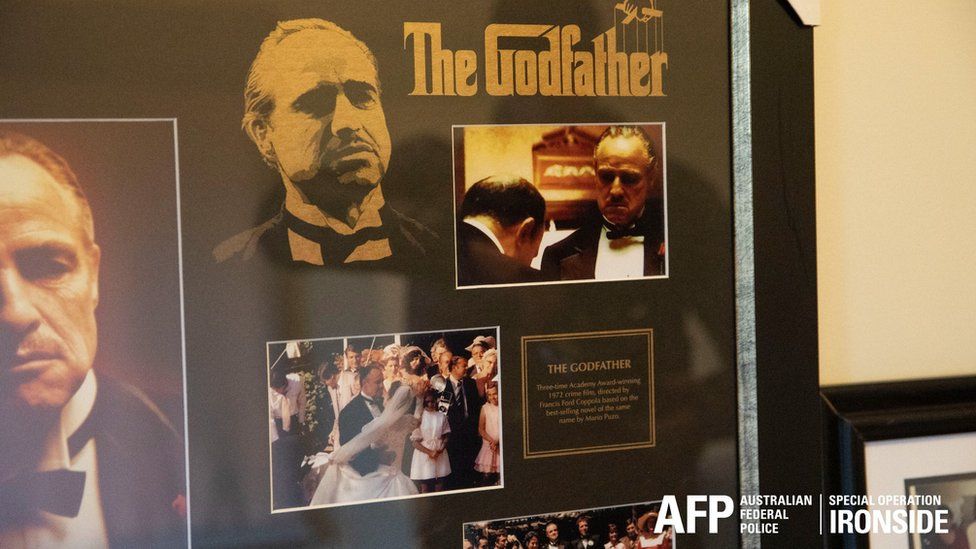
A photo of Godfather posters
image caption Among the items seized was memorabilia from The Godfather

Statements from law enforcement agencies did not name any of those arrested in the sting.

In Australia, 224 people were arrested including members of outlaw motorcycle gangs, mafia groups, Asian crime syndicates, and serious and organised crime groups.

Police said they also seized three tonnes of drugs and A$45m (£25m; $35m) in cash and assets, and acted on 20 “threats to kill”, potentially saving the lives of a “significant number of innocent bystanders”.

Mr Morrison said the sting, which was called Operation Ironside, was “a watershed moment in Australian law enforcement history”.

New Zealand police said 35 people in the country had been arrested, and about NZ$3.7m (£1.9m, $2.7m) of assets seized.

“We believe the termination of these operations will have a significant impact on New Zealand’s organised crime scene,” National Organised Crime Group Director Detective Superintendent Greg Williams said.

Europol’s deputy executive director Jean-Philippe Lecouffe described the operation as an “exceptional success”.

The agency did not break down the arrests in each country, but local officials said they included 70 people in Sweden and 49 in the Netherlands, according to Reuters news agency.

Linda Staaf, the Swedish police’s head of intelligence, said the operation had prevented 10 murders, Reuters reported.

The FBI is expected to present more details later on Tuesday.

………………………………………………………………

French President Macron slapped in face on public walkabout


Two people have been arrested in southeast France after French President Emmanuel Macron was slapped in the face by a man in the crowd in Tain-l’Hermitage, BFM TV and RMC radio reported.

A video clip circulating on Twitter shows a man in a green T-shirt and glasses shout “Down with Macaroni” in French before slapping Macron’s face.

Security for Macron quickly tackled the man to the ground, and moved the president away to safety.

French Prime Minister Jean Castex has called the incident an affront to democracy. Shortly after the incident, he told the National Assembly that while democracy meant debate and legitimate disagreement, “it must never in any case mean violence, verbal aggression and physical attack”.

The presidential administration said there had been an attempt to strike Macron, but did not comment further.

ean-Luc Mélenchon, leader of the far-left La France Insoumise party, and member of the National Assembly, has tweeted his “solidarity with the President”.

Far-right leader, Marine Le Pen also tweeted her condemnation of the attack. “While democratic debate can be bitter, it can never tolerate physical violence. I strongly condemn the intolerable physical aggression which targeted the President of the Republic.”

The former president of France, François Hollande, tweeted: “Attacking the President of the Republic is an unbearable and intolerable blow to our institutions. In the face of this unspeakable act, the whole nation must show solidarity with the Head of State. In these circumstances, I send my full support to @EmmanuelMacron”.

Mr Macron is currently visiting the Drome region in southeastern France to speak with students, restaurateurs and small business owners about the return to normal life after the pandemic. The president had just come out of a professional high school that trains students to work in the hospitality industry when the incident took place.

The identity of the man who slapped the French president remains unknown, as do his motives. While slapping Mr Macron, he could also be heard shouting “Montjoie Saint Denis,” the battle cry of the French armies when the country was still a monarchy.

………………………………………………………………

UK police is making Muslim mental health a terrorism flag

A mental health project run by counterterrorism forces is criminalising mental health problems among Muslims.


The perception and representation of Muslims as a “suspect community” when it comes to national security and counterterrorism in the United Kingdom is well-established. But a more recent turn within these operations towards mental health is creating new, dangerous practices.


Last month, Medact released a report in which it exposed a mental health project run by UK counterterrorism police called “Vulnerability Support Hubs”. Despite the name, these hubs are not about care. Instead, they enable police to surveil, manage perceived risk, and access confidential health information more easily.

The hubs were established in 2016 because police noticed that approximately half of the people reported to its counter-extremism programme, Prevent, appeared to have a mental health condition. Racialised groups, especially Muslims, are also referred at a grossly disproportionate rate.

As a pre-crime programme, referrals to Prevent are made on the basis of suspicion and speculation alone. Yet police refuse to see these statistics for what they almost certainly reflect: widespread Islamophobia which associates Muslims with terrorism, combined with a longstanding stigma that portrays people with mental health problems as dangerous.

Instead, police interpreted these statistics as supporting evidence of a presumed – but never robustly evidenced – link between poor mental health and terrorism. Not just anyone with poor mental health is suspect, however. Muslims with mental health problems, in particular, fall under the scrutiny of this programme.

This means that these so-called “Vulnerability Support Hubs” – which operated in near-total secrecy for five years – may be harming people with genuine mental health conditions, and criminalising, or rendering suspect, poor mental health among Muslims.

This happens because, at the hubs, people who have been referred to Prevent and are suspected of having a mental health condition are assessed by NHS mental health professionals embedded within counterterrorism units. These assessments often appear to happen alongside police or Prevent officers: security personnel whose presence alone may impact clinical diagnosis and the therapeutic encounter.

On top of this, the hubs provide a vehicle through which counterterrorism police can influence mental healthcare providers who are already treating patients. Risk assessments are a standard part of psychiatrists’ duties, but Prevent’s pre-crime approach brings vague and racialised factors into play.

For example, one case study in the report details how police sought to “secure admission and prevent discharge” of a man experiencing psychosis who had previously been receiving home treatment, on the basis of “unacceptable unknowns”. In two other cases, police listed conversion to Islam as a relevant concern.

A perhaps even more disturbing possibility is that these “Vulnerability Support Hubs” may be pathologising Muslim political agency and dissent.

Many of the people assessed by the hubs do not have diagnosable mental illnesses and are therefore deemed “unsuitable for mainstream services”. But the hubs operate with such broad definitions of “mental health”, “complex needs” and “behavioural and emotional difficulties” that – in contrast to mainstream mental health services – their thresholds are extremely low.

This becomes worrying when considering the potential for medicine to be misused as a tool for social control. In the Soviet Union, political dissidents were labelled as suffering from “sluggish schizophrenia” and often incarcerated for long periods. Such systematic abuse of psychiatry was the reason codes of ethics were developed for the profession.

Documents obtained via Freedom of Information requests on which we based our report suggest that mental health practitioners may be engaging in what is effectively “deradicalisation” – a practice well beyond their healthcare remit. Especially given the dubious scientific validity and efficacy of such concepts and practices, the Royal College of Psychiatrists’ warning that so-called radicalisation is “not a mental illness” should be heeded.

The hubs raise a host of other serious ethical concerns that epitomise wider problems with the Prevent policy in healthcare and beyond.

They pose questions about potential coercion and the apparent use of medicine as a security device to enforce cooperation with the police deradicalisation scheme Channel.

They highlight the neoliberal state’s withdrawal from adequately funding mental healthcare at the very same time that invasive surveillance is stepped up.

They underline just how deeply racism is institutionalised, why we should not be surprised that racialised minorities distrust healthcare services, and why racialised health inequalities will only deepen with time – unless policies like Prevent and the hostile environment are dismantled.

Despite the lack of an independent evaluation, “Vulnerability Support Hubs” are currently being rolled out nationwide under what police call “Project Cicero”. Having previously only operated in England and Wales, they were recently introduced in Scotland too. Since the UK is a leading exporter of innovations in the field of counterextremism, the hubs may well augur a troubling direction for counterterrorism policing and pre-crime policing across the world.

………………………………………………………………

Tuesday, 8 June 2021

Covid-19 : ANGOLA records the recovery of 449 patients, the registration of 82 new cases and 3 deaths.


Luanda - The health authorities announced Monday the recovery of 449 patients, the registration of 82 new cases and 3 deaths.

According to health minister, Silvia Lutucuta, who was speaking at a press conference, amongst those recovered, 315 live in Luanda, 61 in Cuando Cubango, 27 in Huambo, 18 in Namibe, 11 in Huila, 5 in Zaire, 3 in Benguela, 3 in Cuanza Sul, 2 in Bengo, 2 in Cunene, 1 in Bié and 1 in Lunda Norte.

Among the new cases, she said, 49 were diagnosed in Luanda, 11 in Huila, 7 in Cuando Cubango, 4 in Huambo, 3 in Bié, 2 in Cabinda, 2 in Cuanza Norte, 2 in Malanje and 2 in Zaire.

The new patients, whose ages range from 3 to 83 years old, include 56 mem 26 women.

According to the Cabinet minister, the deaths were registered in Luanda, with 1, and Huíla with 2.

The general figure shows 35,854 positive cases, with 800 deaths, 29,329 recovered and 5,725 active.

United States Government Donates Equipment to the Barbados Coast Guard


On Friday, June 4, U.S. Southern Command, donated vital maritime parts to the Barbados Coast Guard at a handover ceremony held at the Barbados Coast Guard Headquarters, HMBS PELICAN. The donation, which is valued at approximately US$195,000, is part of the Caribbean Basin Security Initiative (CBSI) Foreign Military Financing Program and was led by the U.S. Embassy in Bridgetown with support from the U.S. Coast Guard’s Office of International Acquisitions Program. The maritime spare parts package will support multiple vessels previously donated by the U.S. Embassy’s Military Liaison Office and the Bureau of International Narcotics and Law Enforcement Affairs to the Barbados Coast Guard and will assist with future maintenance and operations to ensure capability to conduct maritime patrols, counter illicit-trafficking operations, and maintain border security.


Chargé d’Affaires of the U.S. Embassy in Barbados, Joaquin Monserrate, noted that the handover ceremony reflects the long-standing commitment of the United States to Barbados and the region to support sustained peace and security. He added, “We are proud of the opportunity to continue to partner with the professional men and women of the Barbados Defence Force and Coast Guard.” Speaking on behalf of the Barbados Coast Guard, Commander Mark Peterson, said, “The donation is timely, well-received and will undoubtedly boost the Barbados Coast Guard’s maritime capacity. Barbados, allied with the United States, continue to play a pivotal role in maritime safety and security.”

………………………………………………………………

Mali coup leader Goita sworn in as interim president, appoints PM


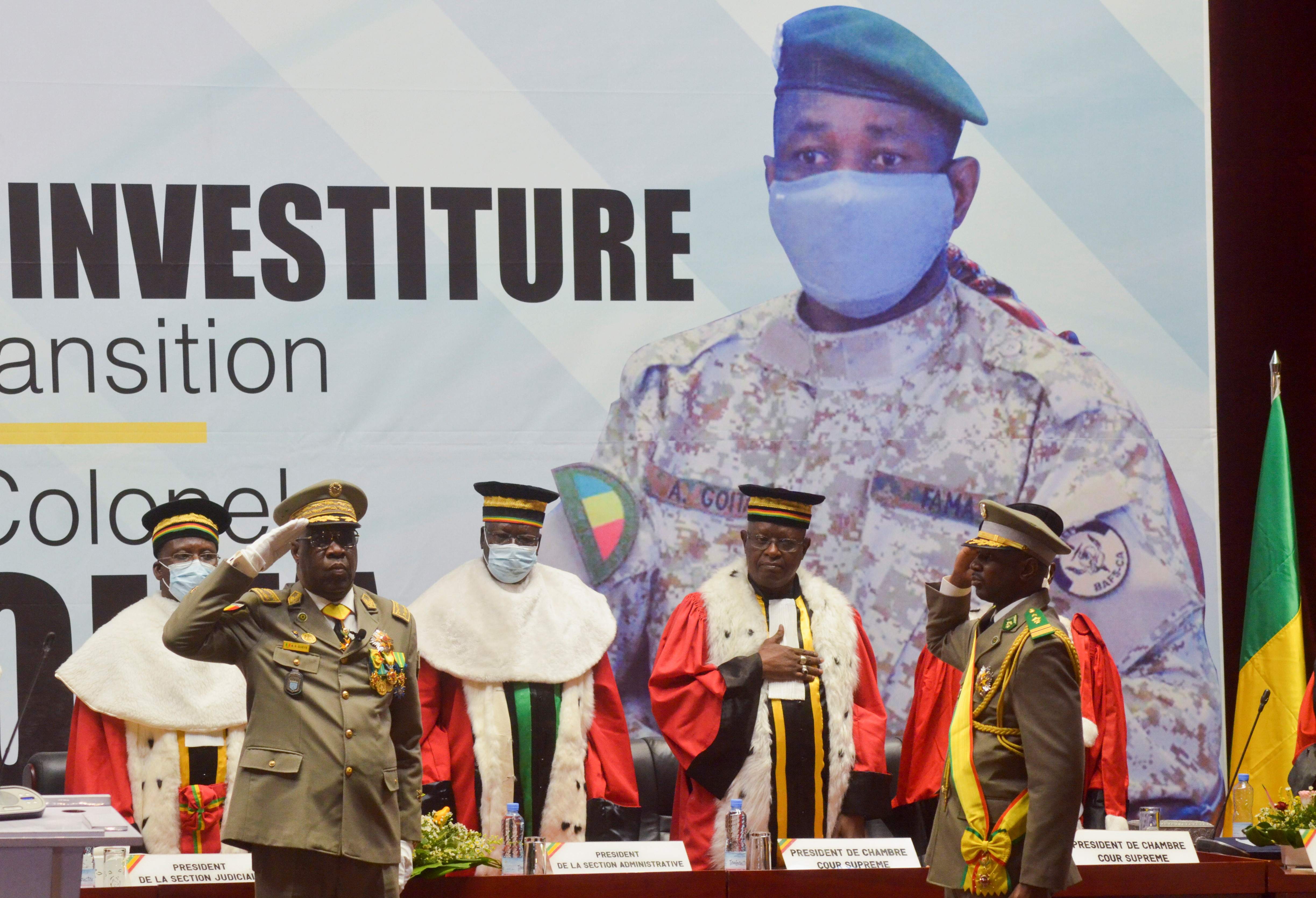
Assimi Goita, the Malian colonel who has overthrown two presidents in the past nine months, said he would oversee a transition toward democratic elections as he was sworn in as interim president on Monday.


Goita, a 38-year-old special forces commander, had already been declared president by the constitutional court last month after ousting Bah Ndaw, but was formally sworn in on Monday during a ceremony in the capital Bamako.

Within hours, he appointed opposition leader and former minister Choguel Maiga as prime minister, according to a decree read on state television.

It was not immediately clear to what extent Maiga’s appointment would satisfy calls from Mali’s neighbours and military allies like France and the United States for a civilian-led government.

Those countries, fearful the political upheaval could undermine a fight against Islamist insurgents across the Sahel region,have also been pressing to ensure elections go ahead next February as scheduled. Goita’s advisers have suggested those might be delayed.

“The situation offers us the opportunity to put the process of transition back in the direction desired by the people,” Goita, who had traded his camouflage fatigues for a dark gray officer’s uniform and a yellow sash, said at his inauguration.

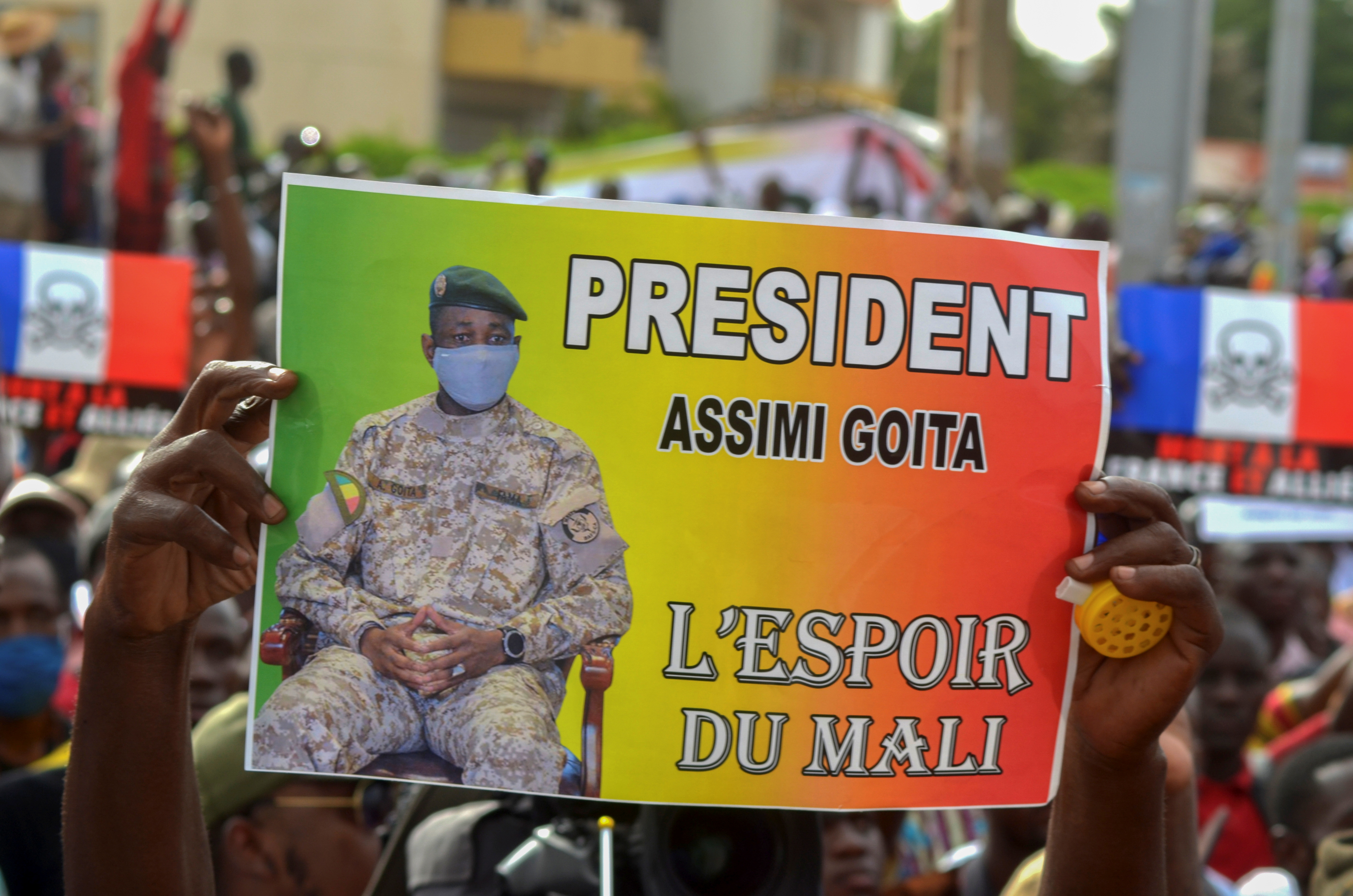
A supporter of Mali’s M5-RFP opposition coalition, holds a poster of the colonel Assimi Goita during a rally to mark a year since the start of protest marches that contributed to the ouster of former President Ibrahim Boubakar Keita at the Independence Square in Bamako, Mali June 4, 2021. The poster reads “President Assimi Goita – the hope of Mali”. REUTERS/Amadou Keita

He said he was committed to implementing “the actions necessary for the success of the transition, notably the organisation of credible, fair and transparent elections that are held as scheduled.”

Goita was one of several colonels who overthrew President Ibrahim Boubacar Keita last August.

A transitional government that would oversee an 18-month transition to democratic elections was then put in place with Ndaw as president and Goita as his vice.

Goita last month ordered the arrests of both Ndaw and the prime minister for not informing him about the details of a cabinet reshuffle, which he alleged violated the transitional charter. Both later resigned while in custody.

West African regional bloc ECOWAS and the African Union last week suspended Mali from their organisations, although they declined to impose further sanctions. The World Bank said on Friday it had temporarily paused payments to the country.

Former colonial power France, which maintains more than 5,000 troops in Mali to combat Islamist militants, said it would temporarily suspend joint military operations with Malian troops but would continue to operate in the country separately.

………………………………………………………………

World Teachers’ Day 2026 - Dia Mundial dos Professores 2026

Standing with teachers: 60 years of protecting the profession, advancing its status and shaping our futures     On 5 October, we observed Wo...