Translate

Monday, 7 June 2021

Another COVID side effect: Many kids head to summer school


With her three teenagers vaccinated against COVID-19, Aja Purnell-Mitchell left it up to them to decide whether to go back to school during summer break.

Global African Family Meeting

The decision was unanimous: summer school.

“Getting them back into it, helping them socialize back with their friends, maybe meet some new people, and, of course, pick up the things that they lacked on Zoom,” the Durham County, North Carolina, mother said, ticking off her hopes for the session ahead, which will be the first time her children have been in the classroom since the outbreak took hold in the spring of 2020.

Across the U.S., more children than ever before could be in classrooms for summer school this year to make up for lost learning during the outbreak, which caused monumental disruptions in education. School districts nationwide are expanding their summer programs and offering bonuses to get teachers to take part.

Under the most recent federal pandemic relief package, the Biden administration is requiring states to devote some of the billions of dollars to summer programs.

The U.S. Education Department said it is too early to know how many students will sign up. But the number is all but certain to exceed the estimated 3.3 million who went to mandatory or optional summer school in 2019, before the pandemic.

In Montgomery, Alabama, for example, more than 12,000 of the school system’s 28,000 students signed up before the June 1 deadline. Typically about 2,500 go to summer school. Philadelphia had enrolled 14,700 by Friday and was expecting more for the mostly in-person programs, up from the 9,300 students in last summer’s all-virtual sessions.

“It’s an understatement to say the needs are greater this year,” said Kalman Hettleman, an education policy analyst in Maryland.

Hettleman worries most about the reading skills of disadvantaged younger students who were falling behind even before COVID-19 closed schools and were likely to encounter technological hurdles afterward.

“It’s not realistic to think that summer school, no matter how good and intense, will close all the gaps because many of these kids had gaps before the pandemic,” said Hettleman, who wants to see sessions mandatory for low-performing students in Baltimore. “But it will help, and it will at least give them a fighting chance if there are intense interventions during the regular school year.”

Las Vegas high school freshman Taylor Dennington never thought she would be in summer school, but there she was starting this past week — along with plenty of friends — after a year of remote learning.

“This year was such an unmotivating school year,” she said.

“It got to the point where I wasn’t doing ANY work, I was just going to class,” Dennington, who is taking biology and math, said in a text exchange. “I learn better in school than online. Being in a classroom where a teacher is present is so much better than waiting hours for an email back from your teacher.”

In North Carolina, Purnell-Mitchell’s children will have access to five or six weeks of full-day programs that include academics and activities like sports or music. Districts also will provide transportation and meals, thanks to the influx of federal spending.

Under a unanimously passed North Carolina law, the nearly 1 in 4 students deemed to be in danger of falling behind — about 200,000 students statewide — are being given priority for summer school, with extra slots open to others who want them. Some districts are inviting all of their students.

………………………………………………………………

Burkina Faso attack: More than 130 killed in village raid


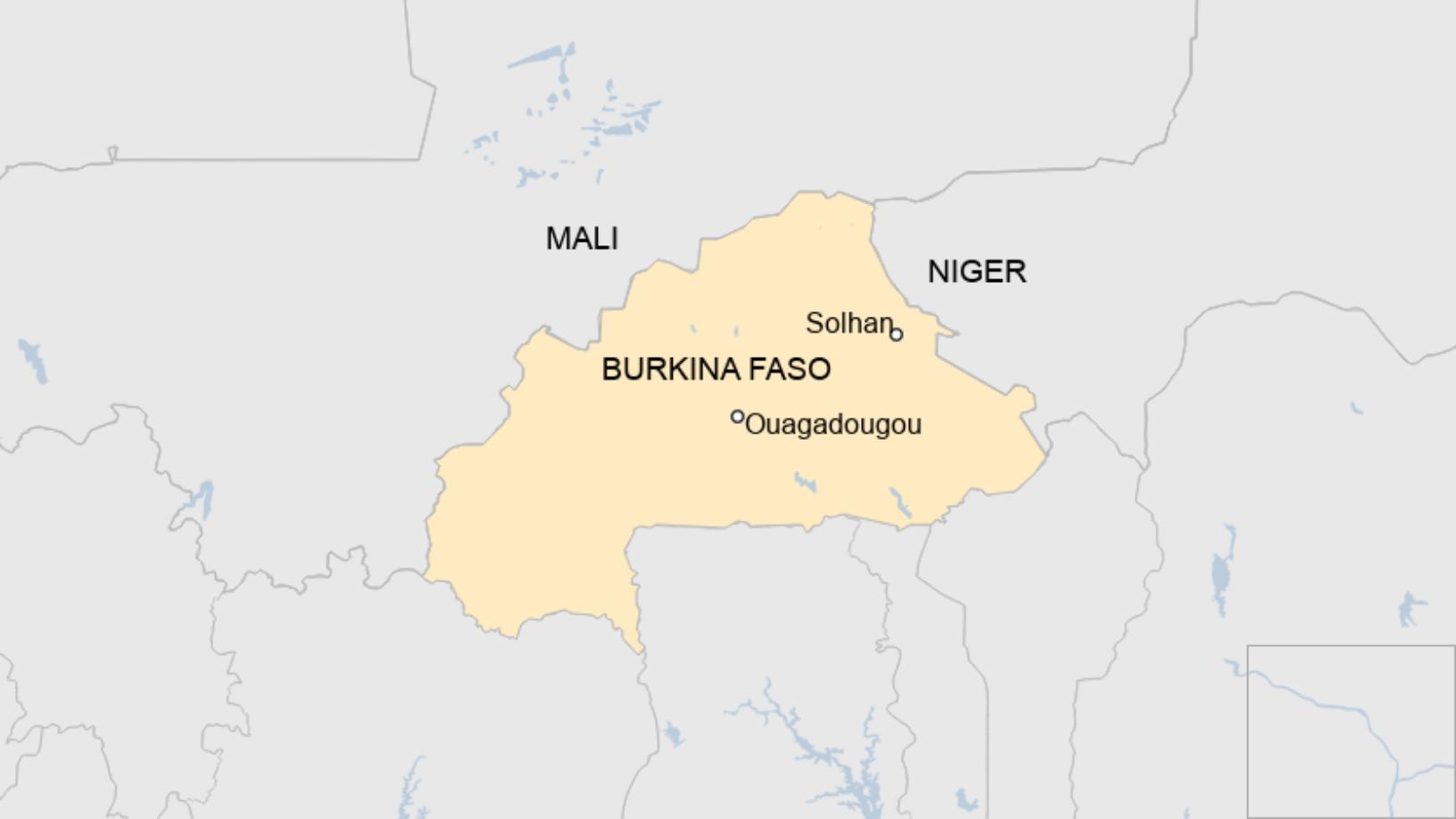
Armed men have killed over 132 people in an attack on a village in northern Burkina Faso, the country’s worst attack in recent years, the government says.

Homes and the local market were burned during the overnight raid on Solhan.

No group has said it was behind the violence, but Islamist attacks are increasingly common in the country, especially in border regions.

The UN chief said he was “outraged” by the incident.

António Guterres “strongly condemns the heinous attack and underscores the urgent need for the international community to redouble support to member states in the fight against violent extremism and its unacceptable human toll,” his spokesperson said.

The Burkinabe President Roch Kabore declared three days of national mourning saying, in a tweet, that “we must stand united against the forces of evil”.

The security forces are currently looking for the perpetrators, he added.

In another attack on Friday night, 14 people were reported to have been killed in the village of Tadaryat, about 150km (93 miles) to the north of Solhan.

Last month, 30 people died in an attack in the east of Burkina Faso.

The country is facing a deepening security crisis, like many of its neighbours, as armed groups carry out raids and kidnappings across much of the region.

Map
1px transparent line

In May, the Burkinabe army launched a large-scale operation in response to a resurgence of militant attacks. Despite this, the security forces are struggling to prevent the violence that has forced more than a million people from their homes over the past two years.

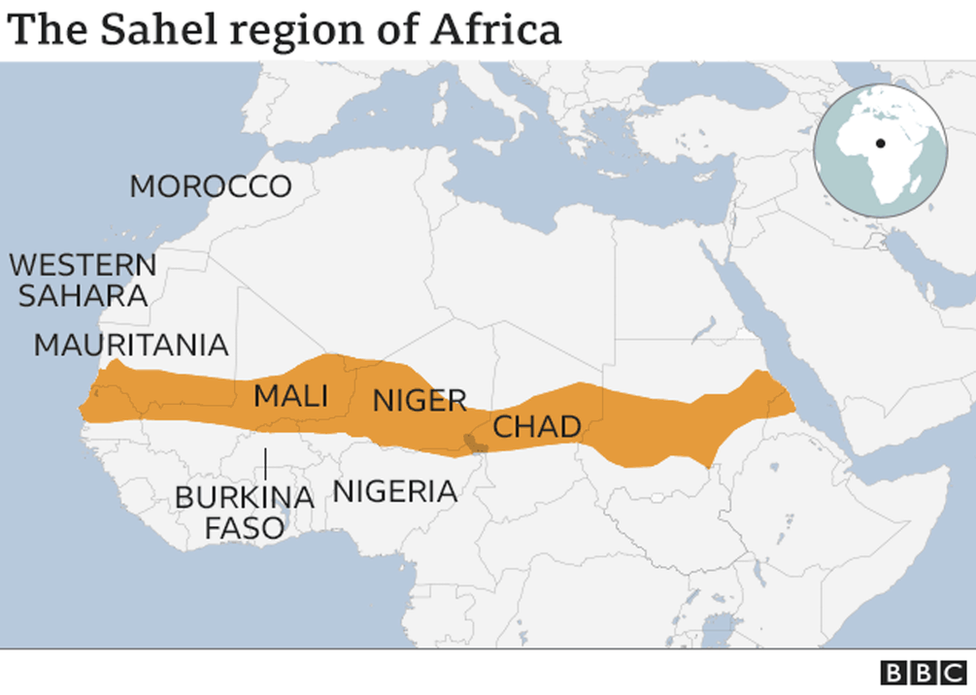
Africa’s semi-arid Sahel region has been hit by an insurgency since militants captured large parts of northern Mali in 2012 and 2013.

French forces have been supporting troops from Mali, Chad, Mauritania, Niger and Burkina Faso to fight the militants.

But this week France halted cooperation with Mali over the recent coup there.

Map

………………………………………………………………

Sunday, 6 June 2021

ANGOLA’S COMMITMENT TO PRESERVATION OF SEAS HIGHLIGHTED


Lisbon – Angolan minister of Higher Education, Science, Technology and Innovation Maria do Rosário Sambo Saturday reiterated the country’s commitment to the execution of actions for the scientific development of techniques of defence of the seas to ensure the planet sustainability.

The minister was speaking at Ministerial High-Level Conference with theme Atlantic Cooperation in Research and Innovation for a sustainable ocean.

The event took place under the Portuguese Presidency of the Council of the European Union, in Ponta Delgada Island, in Portugal.


The minister said that Angola has a large maritime zone of the Atlantic coast, one of the key elements for the wellbeing, profitability and security of the current and future generations.


Maria do Rosário Sambo defended the conservation and the sustainable of the oceans, seas and maritime resources, as laid down in the African Union Agenda 2063.


She said Angola is part of the Atlantic International Research Centre, a platform of scientific cooperation for production and knowledge and data sharing on space, atmosphere, the oceans and climate changes.


The minister spoke of the country’s availability to join the international partnerships, aimed at developing the specific scientific programmes to safeguard the Atlantic and its sustainability.


Accompanied by the Angola Ambassador to Portugal, Carlos Alberto da Fonseca, the minister attended the event as special guest of her Portuguese counterpart, Manuel Heitor.


The conference, which gathered specialists from various countries, discussed the role of the oceans in regulating the climate.


The participants also discuss blue economy, the bottom of the sea, the fisheries, the biodiversity, among others topics.

TRANSFORMATION OF SADC-PF INTO REGIONAL PARLIAMENT PRIORITY


Luanda - The development of SADC Parliamentary Forum (SADC-PF) into a regional parliament is a priority agenda, according to the Executive Meeting of the regional body, held via videoconference from Kinshasa, Democratic Republic of the Congo (RDC).

Speaking at the event, started last Friday, the Angolan Parliament Speaker, Fernando da Piedade Dias dos Santos, reiterated the country’s support for the transformation of SADC-PF into a regional parliament.

The Angolan MP, Amália Alexandre, called for the urgent need to launch the transformation process, in view of the 41st Summit of the heads of State and Government of SADC, scheduled for August in Malawi.


“We would like to have this agenda as part of this Summit”, said the MP.


The next meeting of SADC-PF Executive Commission will take place in Botswana.


Southern African Development Community (SADC) Parliamentary Forum is a regional inter-parliamentary body created in 1997.

The aim of this Forum is to provide a platform to support and improve regional integration through parliamentary involvement, and promote best practices in the role of parliaments in regional integration and cooperation.

SADC comprises Angola, South Africa, Botswana, Comoros, Eswatini, Lesotho, Madagascar, Malawi, Mauritius, Mozambique, Namibia, Democratic Republic of Congo, Seychelles, Tanzania, Zambia and Zimbabwe.

OIL BLOCK AWARD DEADLINE DEFERRED


Luanda – Angola’s oil company “ Sonangol” announced that it has postponed to 14 June the date to launch the partial award process of its assets in the oil concessions, Angop learnt on Saturday.

In a press release, the State-run company does not clarify its decision that led to the delay of the date, initially scheduled for 11 June.

According to the source, as soon as the event takes place the company will comply with the strategy of management, maintenance and sustainability of its portfolio of assets of the oil exploration and production detained by the Exploration and Production Unity (UNEP), in several oil concessions.


However, the company announced that it will officially open the process on 14 June, occasion that it will publicise the procedures of the tender, the blocks, respective award participating interests and data.


The event will take place in Talatona Conference Center in Luanda and will also be held via online.

CONFLICT RESOLUTION CENTRE UNVEILED IN LUANDA

Luanda- A complementary service to the Angolan justice system is available, as of today, Friday, at the Integrated Centre for Studies and Conflict Resolution named "Harmonia" (Harmony), located in Talatona municipality, in Luanda.

Inaugurated today, the private institution is internally composed of three sub-centres, the first responsible for the promotion and training in alternative methods, the second for negotiation, mediation and reconciliation, and the third for national and international arbitration.

The services provided by the Harmonia Centre will be in the areas of banking and insurance, property and investment, oil and other natural resources, construction, real estate, labour and tax.

The President of the Board of Directors of the Harmonia Centre, José António Semedo, explained to the press that the extrajudicial justice does not intend to compete with the state justice, but to participate in order to reduce the excess of processes that exist, leaving the processes of greater social impact to the judicial courts.

The Minister of Justice and Human Rights, Francisco Queiroz, who presided over the act, considered that the gesture contributes to the diversification of the means to do justice in Angola, an action enshrined in the Constitution of the Republic that allows the creation of Dispute Resolution Centres in its various forms.

ANGOLA AT AFRICA-EUROPE SPACE EARTH OBSERVATION FORUM


Luanda - The minister of Higher Education, Science, Technology and Innovation, Maria do Rosário Sambo, is participating, on the 10th and 11th June, in Lisbon (Portugal), in the High Level Forum "Africa-Europe Space Earth Observation".

According to a note received by ANGOP, the forum aims, among other objectives, to encourage the cooperation between the two continents in the Earth Observation (EO) sector and its applications, promoting the development of advanced systems and a greater involvement of the public and private sectors in non-space areas, thus contributing to the creation of qualified employment and sustainable economic development.

Maria do Rosário Sambo, who is already in Portugal, took part in the high-level ministerial and partner conference "All Atlantic 2021" from the 2nd to the 4th June.

This conference aims to generate a new dynamic in the existing dialogue and cooperation within the All-Atlantic Ocean Research Alliance initiative and brought together high-level representatives and partners from the marine environment, from the various latitudes of the Atlantic Ocean, a significant step in cooperation in research and innovation for a sustainable Atlantic Ocean.

When Telecommunications Collapse: What Angola's Mobile Network Crisis Teaches Us About Governance, Justice, and National Security

  The recent disruption of Angola's mobile networks has affected banking, digital payments, businesses, emergency communications, and mi...