Translate

Thursday, 27 May 2021

Taiwan struggles with testing backlog amid largest outbreak


TAIPEI, Taiwan (AP) — Facing Taiwan’s largest outbreak of the pandemic and looking for rapid virus test kits, the mayor of the island’s capital did what anyone might do: He Googled it.


“If you don’t know, and you try to know something, please check Google,” Taipei Mayor Ko Wen-je quipped.

Praised for its success at keeping the virus away for more than a year, Taiwan had until May recorded just 1,128 cases and 12 deaths. But the number of locally transmitted cases started growing this month and it soon became clear that the central government was ill prepared not only to contain the virus, but to even detect it on a large scale due to a lack of investment in rapid testing.

That left officials like Ko scrambling to catch up as the number of new infections climbed to some 300 a day. Ko’s search put him in contact with six local companies who make rapid tests and his government was soon able to set up four rapid testing sites in a district that had emerged as a virus hotspot.

ADVERTISEMENT

Rapid tests, experts say, are a critical tool in catching the virus in its early days. The alternative that Taiwan has been relying on — tests that have to be sent out to a lab for processing — has led to backlogs that may be obscuring the true extent of the outbreak.

“You want to identify those infected cases as soon as possible,” to contain the spread, said Ruby Huang, a professor in the medical college at National Taiwan University. “And then you’re basically running against time.”

With so few cases, Taiwan had been a bubble of normalcy for most of the pandemic. Schools stayed open, people went to bars and restaurants, and the island’s economy was among the few globally that saw positive growth.

Its success was built largely on strict border controls that primarily allowed in only citizens and long-term residents, who then faced mandatory two-week quarantines.

From time to time it found small clusters of infections and stamped them out through contact tracing and quarantines. Last month authorities found a cluster involving pilots from the state-owned China Airlines.

Stopping the virus this time would prove difficult, in part because under government policy pilots were only required to quarantine for three-days and did not need a negative test to get out of quarantine. Soon employees at a quarantine hotel where China Airlines flight crew stayed started getting sick — and so did their family members.

The virus had escaped quarantine and was spreading locally, mostly in Taipei and surrounding areas.

The government in Taiwan — where only about 1% of the population have been vaccinated — responded by ordering a lockdown, closing schools and switching offices to remote work or rotating shifts. Contact tracers identified 600,000 people that needed to quarantine themselves.

The biggest roadblock has been testing.

Government policy throughout the pandemic has been to rely on polymerase chain reaction, or PCR, tests, which are seen as the gold standard for diagnosis but must be processed using special machines in a lab. The government has not encouraged rapid tests, which are quicker and cheaper but potentially less accurate.

In and around Taipei, labs have been working overtime in recent weeks but are still struggling to process all the samples.

Tim Tsai said on just a single day last week his lab in New Taipei city received 400 samples from hospitals to test. He said his lab was only able to process about 120 samples a day.

“Our medical technicians, they were leaving work at midnight,” he said.

The government’s Central Epidemic Command Center said in a statement that all 141 government-designated labs have the capacity to process 30,000 PCR tests a day. However, it declined to provide the actual number of tests being processed.

It said it was “continuing to work with relevant labs to research ways to accelerate and expand our capacity, without impacting accuracy.”

Throughout the pandemic the government has maintained there are few benefits to mass testing, with the health minister saying last year that public funds and medical resources could better be used elsewhere.

The government instead has emphasized a strategy of contact tracing and isolation and only testing those with symptoms and direct contact with someone infected.

“This is more efficient, effective and accurate,” said Chen Chien-jen, the island’s former vice president, who led the pandemic response last year before retiring.

Experts say such a strategy may have been appropriate when case numbers were low, but needed to change as infections spread.

“You should have a two-pronged approach. You do the quarantine, but you should do massive widespread testing,” said K. Arnold Chan, an expert on drug and medical products regulation at National Taiwan University. “For whatever reason the government is completely unprepared.”

Taiwanese companies developed rapid tests for COVID-19 early last year, but the majority of their sales have been overseas.

“Back then the CDC didn’t support rapid tests, and there was no epidemic,” said Edward Ting, a spokesperson for Panion and BF Biotech, which has had its own test since March 2020. “We tried to sell, but it wasn’t possible.”

The central government finally appears to be coming around, with the health minister last week asking local governments to set up rapid testing sites. Ting said his company has since had calls from governments across the island asking about its tests.

The central government also is now offering subsidies for labs to buy new machines to process PCR tests.

Aaron Chen, whose company developed a machine that can process up to 2,000 PCR test samples every four hours, said he has diverted two machines bound for export to be used locally instead.

Ko, the mayor of Taipei, said his city has purchased 250,000 rapid test kits. Though the city is still relying on PCR tests to confirm actual cases, Ko said the rapid tests better allow him to monitor the situation on the ground.

Ko, a former surgeon, said it was important to be open to change.

“There’s a phrase in Chinese: One thrives in times of calamity and perishes in soft times. Because when you’re very successful you are not forced to improve. Only when you fail, then are you forced to improve,” said Ko. “We were too successful in the past year.”

………………………………………………………………

I love my color


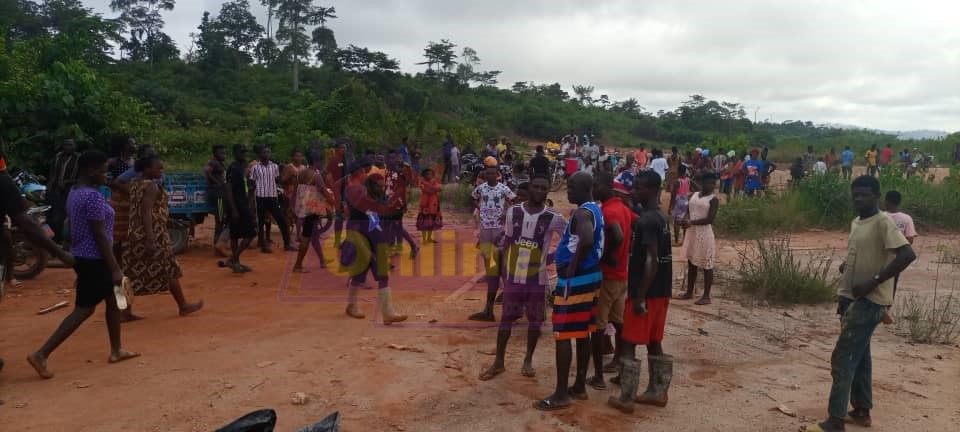
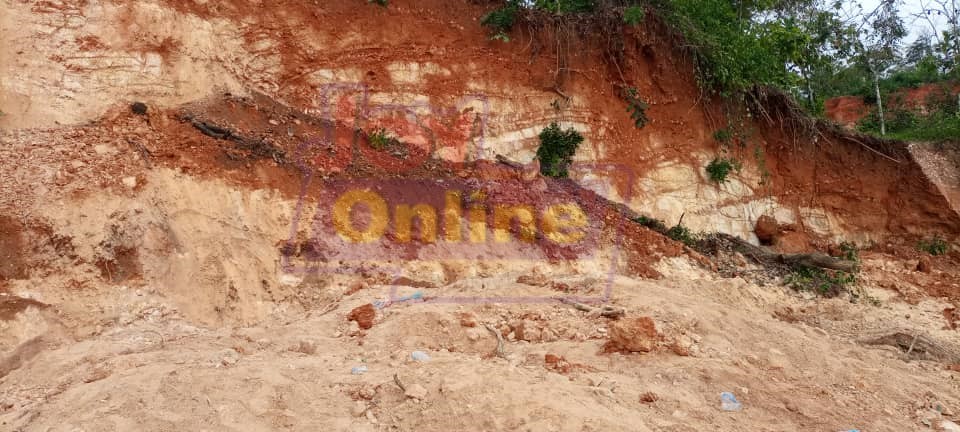
3 persons dead, 40 more trapped in collapsed galamsey pit at Breman- Ghana


Speaking to a local FM station, the Director of Upper Denkyira West National Disaster Management Organisation (NADMO), Isaac Gyasi said the incident happened in the wee hours of Wednesday, May 26.


3 persons dead, 40 more trapped in collapsed galamsey pit at Breman
The ‘galamsey’ site

He said the miners were trapped in a galamsey pit popularly known in the area as, Breman lockmu, at the outskirts of the community.

Illegal Mining
Residents at the scene of the incident

Mr Gyasi further revealed that his outfit is working earnestly to find those who have been trapped and save as many lives as possible.

Illegal Mining
The ‘galamsey’ site

Meanwhile, the bodies of the deceased have been deposited at the Dunkwa-On-Offin Government Hospital for preservation, identification, and autopsy.

………………………………………………………………

Goita strikes again in Mali – removes and replaces Bah Ndaw as transition president


(DNT Bamako) Officially the transition president of Mali Bah Ndaw resigned today. But every Malian know that Goita has struck again with his signature coup d’etat where he captures the existing leader, and the latter mysteriously resigns.

Colonel Assimi Goita captured transition president Bah Ndaw and his prime minister Mocktar Mouane on Monday prompting global protests for their release.

Also arrested was the defense minister who was taken along with the president and prime minister to Kati Military Camp from where the first uprising that removed President Keita began.

That initial uprising ushered in a protracted negotiations process with ECOWAS which was represented by former Nigerian President Goodluck Jonathan.

At the end of that process a transition government was formed with Bah Ndaw as president, uprising leader Colonel Assimi Goita as vice president, and Mocktar Mouane as prime minister.

The ECOWAS negotiated agreement called for the transition team to feature two ministers from the military. But recently those two were removed from the transition government, and that is what angered Goita to arrest transition president Ndaw.

Insiders believe Ndaw’s resignation was not forced, but was done out of frustration. Ndaw is said to be angered about the audacity of his vice to arrest him.

Meanwhile France has refuted Goita’s claim that this was not a coup d’etat. The resemblance between the Keita and Ndaw removals are too striking.

Now the youth is reported to be preparing the grounds for a march to Kati Military camp to release their transition president.

They believe Goita is setting the stage to remain as the country’s leader well beyond the 18 months when elections would be held to choose the next president of Mali.

The ECOWAS agreement with the military which ushered in the transition government bars the president of the transition government from participating in the elections.

DNT News with correspondent reports from Bamako.

………………………………………………………………

Volcano aftershocks rock east DRC, raise fears of fresh eruption

 Death toll increases to 32 as lava lake in Mount Nyiragongo’s crater appears to have refilled, prompting fears of new fissures or another eruption.


Powerful aftershocks from the Mount Nyiragongo volcano have rocked the eastern Democratic Republic of the Congo (DRC) as the death toll from a recent eruption that left hundreds of families displaced rose to 32.


Three days after Africa’s most active volcano roared back into life, tremors were shaking the region every 10 to 15 minutes on Tuesday morning. Cracks several centimetres (more than an inch) wide appeared in the ground and on roads in several areas, including near the main hospital in Goma, a city of some two million people which lies about 12 kilometres (seven miles) from Mount Nyiragongo.


“The situation in the city is confused. People don’t know which way to go,” a resident told AFP news agency.

“Some are coming back, some are leaving, people are still afraid.”


Tens of thousands of residents fled in panic, many of them to neighbouring Rwanda, when the volcano began erupting on Saturday evening.


Two rivers of molten rock flowed from the volcano at a height of 1,800 metres (5,900 feet). One headed towards Goma, stopping at the very outskirts of the city.


It engulfed homes in its path, smothering the surrounding area with suffocating gas and cutting off the road between Goma and Butembo, the main highway in North Kivu province.


“Thirty-two people died in incidents linked to the eruption, including seven people killed by lava and five asphyxiated by gases,” the UN’s refugee agency (UNHCR) said in a statement, raising an earlier toll – drawn from NGOs and other sources – of 20 dead.


“The lava flow stopped on Sunday, but there have been repeated earthquakes since the eruption and the lava lake in the volcano’s crater appears to have refilled, prompting fears of new fissures opening or another eruption,” it added, noting that a significant effort was under way to reunite several hundred children who were separated from their families as they fled.


Five people died from suffocation on Monday after they tried to cross the cooling lava some 13km (eight miles) north of Goma, civil society leader Mambo Kawaya told AFP.


Several strong aftershocks were also felt in Rwanda on Monday, including a magnitude 5.1 earthquake under Lake Kivu, the Rwanda Seismic Monitor said.


A so-called stratovolcano nearly early 3,500-metres (11,500 feet) high, Nyiragongo straddles a notorious rupture called the East African Rift. Its last major eruption, in 2002, claimed dozens of lives.


DRC authorities have urged the population to be vigilant and to avoid walking on the lava.


“People who gather at the lava rocks without being certain that it is already solid, risk suddenly sinking inside,” Joseph Makundi, head of civil protection in North Kivu province, said.


Raphael Tenaud, deputy head of the International Committee of the Red Cross (ICRC) delegation in Goma, said lava had destroyed four large villages and damaged 12 others.


Humanitarian groups estimate that between 900 and 2,500 dwellings were destroyed, he said, adding that this meant at least 5,000 people were without a home.


On the evening of the eruption, and on Sunday, 25,000 people fled, Tenaud said.


“Many of these displaced people have started to return to Goma, some have even come back to the site of the disaster, near the lava flow,” he told AFP news agency.


“Some are still displaced as they are afraid to come back, others have been able or are able to go back to their homes, and there are others who no longer have a home.”


Damage to a reservoir has potentially affected water supplies for around half a million people, said Tenaud.


“The main problem will be a problem of access to potable water, and all the consequences that may stem from that,” he added, referring to the risk of disease.


The ICRC will start up a disused pumping station to draw water, and water will also be distributed by tanker truck, Tenaud said.


Most of the hospitals in the east of the city have been closed, although four hospitals in the west are functioning, he added.


SOURCE: AL JAZEERA AND NEWS AGENCIES

………………………………………………………………

Mali’s coup leader dismisses president and prime minister


BAMAKO, Mali (AP) — Mali’s former coup leader Assimi Goita took control of the country again Tuesday after firing the president and prime minister of the transitional government after they announced a cabinet reshuffle without his permission.


Global African Family Meeting

While Goita pledged to go ahead with holding new elections in 2022 as promised, his display of force casts doubt on whether the vote will go ahead without significant interference by the junta that overthrew the last democratically elected president.


The move came a day after President Bah N’Daw and Prime Minister Moctar Ouane were arrested by soldiers and brought to the military headquarters in Kati, about 15 kilometers (9 miles) outside the capital. Both men remained in detention Tuesday.


Their arrests prompted an outcry by the international community, which put out a strongly worded joint statement warning Mali’s military leaders that their actions could undermine global support for the transitional government.


………………………………………………………………

UN says 20,000 homeless, 40 missing in DR Congo volcano aftermath

More than 200 earthquakes since Saturday’s eruption have damaged buildings and streets in Goma, causing.


More than 20,000 people are homeless and 40 are still missing in the aftermath of a volcanic eruption in the eastern Democratic Republic of the Congo that killed dozens and continues to cause strong earthquakes in the nearby city of Goma, the United Nations has said.

Saturday’s eruption sent rivers of lava streaming down the hillside from Mount Nyiragongo, destroying hundreds of homes and forcing thousands to flee, but stopped 300 metres (984 feet) short of Goma airport, the main hub for aid operations in the east of DRC.

The lakeshore city of 1.5 million people lies about 12km (8 miles) from the volcano.

The ash cloud caused by the eruption has closed down airports in Goma and Bukavu, and is likely to cause respiratory diseases, the UN Office for Coordination of Humanitarian Affairs (OCHA) said in a statement on Wednesday.

People who fled their homes have lost valuable possessions including motorcycles that were either consumed by the lava flow or looted, OCHA said.

The death toll from the eruption rose to 32 on Tuesday.

More than 200 small and medium earthquakes have since caused cracks in buildings and streets in Goma.

The cracks, almost 60cm (2 feet) wide in some places, have caused panic among residents unsure if the danger has passed.

Congolese riders are seen near a crack on the road caused by earthquakes near Goma, in the DRC [Djaffar al-Katanty/Reuters]
“Yesterday it was very small, here it is just opposite my house, but today it has widened,” Susanne Bigakura, 65, told Reuters news agency. “It’s scary. We fear it can collapse and our children can fall in.”“It scares me because those who saw the 2002 eruption told us that where a crack passes, it will be catastrophic. Now, when we see a fissure after a recent eruption, I’m worried that we are in danger,” said Valentin Kikuni, a welder.

Some of the fissures opened up on roads, hindering traffic.

Fearful of their homes collapsing, many people slept outside on mattresses, the luckier ones under mosquito nets.

Residents felt the tremors at regular intervals throughout the night, with two powerful shocks from Africa’s most active volcano triggering a widespread alarm and causing terrified people to run out of their homes.

The seismic monitoring agency RSM in neighbouring Rwanda, whose border runs close to Goma, said it had detected a 5.1 magnitude earthquake at 5:46am (3:46 GMT), followed by a 4.1 magnitude quake at 6:12am.

Authorities shut down the market, shops and several building sites as a precaution.

On Tuesday, at least four buildings partially collapsed in Goma, including a three-storey structure in which eight people were seriously injured, emergency workers said.

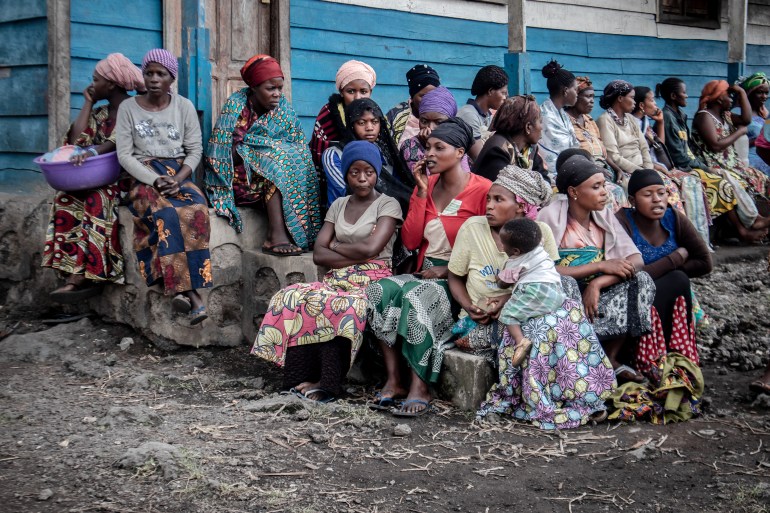
Residents displaced by the Mount Nyiragongo volcanic eruption wait to register to receive some aid distributed by a local politician and businessman in Goma [Guerchom Ndebo/AFP]

Local volcanologists have recorded hundreds of aftershocks since Nyiragongo roared back into life, including 119 on Monday alone, but say there is hope that the much-feared volcano will calm down.Government officials who visited Goma on Monday announced several relief measures including paying for victims’ funerals, supplying roofing material, food and medicines, as well as psychological counselling and emergency repairs of damaged infrastructure.

But residents remain jittery. Hundreds are sheltering in a Rwandan refugee camp, and many are continuing to flee there, according to the Rwandan emergency situations ministry.

Boats are ferrying hundreds of people from Goma to Bukavu, about 70km (43.5 miles) down the shore of Lake Kivu.

A 1.7km (1 mile) long river of lava that blocked the main road north from Goma is still too hot to be removed, OCHA said, preventing trade and aid deliveries to one of the most food-insecure places in Africa.

However, some work has begun on restoring the road, according to images on the government’s Twitter feed.

A so-called strato-volcano nearly 3,500 metres (11,500 feet) high, Nyiragongo straddles the East African Rift tectonic divide.

Its last major eruption, in 2002, killed nearly 100 people.

SOURCE: NEWS AGENCIES

………………………………………………………………

When Telecommunications Collapse: What Angola's Mobile Network Crisis Teaches Us About Governance, Justice, and National Security

  The recent disruption of Angola's mobile networks has affected banking, digital payments, businesses, emergency communications, and mi...