Monday, 12 April 2021
Latest Newsletter: Opportunity for Africans
𝐈𝐧𝐭𝐞𝐫𝐧𝐚𝐭𝐢𝐨𝐧𝐚𝐥 𝐃𝐚𝐲 𝐨𝐟 𝐇𝐮𝐦𝐚𝐧 𝐒𝐩𝐚𝐜𝐞 𝐅𝐥𝐢𝐠𝐡𝐭-𝐓𝐡𝐞 𝐛𝐞𝐠𝐢𝐧𝐧𝐢𝐧𝐠 𝐨𝐟 𝐭𝐡𝐞 𝐬𝐩𝐚𝐜𝐞 𝐞𝐫𝐚 𝐟𝐨𝐫 𝐦𝐚𝐧𝐤𝐢𝐧𝐝
The UN General Assembly, in its resolution A/RES/65/271 of 7 April 2011, declared 12 April as the International Day of Human Space Flight “to celebrate each year at the international, reaffirming the important contribution of space science and technology in achieving sustainable development goals and increasing the well-being of States and peoples, as well as ensuring the realization of their aspiration to maintain outer space for peaceful purposes.”
12 April 1961 was the date of the first human space flight, carried out by Yuri Gagarin, a Soviet citizen. This historic event opened the way for space exploration for the benefit of all humanity.
The General Assembly and Global Peace Chain expresses its deep conviction of the common interest of mankind in promoting and expanding the exploration and use of outer space, as the province of all mankind, for peaceful purposes and in continuing efforts to extend to all States the benefits derived there from.
The beginning of the space era for mankind
The General Assembly, in its resolution A/RES/65/271 of 7 April 2011, declared 12 April as the International Day of Human Space Flight “to celebrate each year at the international level the beginning of the space era for mankind, reaffirming the important contribution of space science and technology in achieving sustainable development goals and increasing the well-being of States and peoples, as well as ensuring the realization of their aspiration to maintain outer space for peaceful purposes.”
12 April 1961 was the date of the first human space flight, carried out by Yuri Gagarin, a Soviet citizen. This historic event opened the way for space exploration for the benefit of all humanity.
The General Assembly expressed its deep conviction of the common interest of mankind in promoting and expanding the exploration and use of outer space, as the province of all mankind, for peaceful purposes and in continuing efforts to extend to all States the benefits derived there from.
The Voyager Golden Record: A reminder that we are all connected
The Voyager Golden Record shot into space in 1977 with a message from humanity to the cosmos – and decades later, it stands as a reminder that we are all connected. The United Nations displays a replica of the Golden Record at its Headquarters, and shares a deep connection to the process of creating it. A NASA committee asked the UN to provide materials to include on the playlist, and the first words on the Record itself are those of the then-UN Secretary-General expressing hope for peace and friendship with whoever discovers and plays it. Bill Nye “The Science Guy,” CEO of the Planetary Society, walks viewers through how to decipher the Golden Record, its significance today, and how reverence for the universe can inspire action for our planet. This aligns with the ongoing work of the United Nations to promote international cooperation in the peaceful use and exploration of space. The Director of the UN Office for Outer Space Affairs, Simonetta Di Pippo, explains the significance of the Golden Record in our world now. “The undertaking of the Voyager project reminds us of who we are, where we came from, and that we should treat each other with care.”
Background
On 4 October 1957 the first human-made Earth satellite Sputnik I was launched into outer space, thus opening the way for space exploration. On 12 April 1961, Yuri Gagarin became the first human to orbit the Earth, opening a new chapter of human endeavour in outer space.
The Declaration further recalls “the amazing history of human presence in outer space and the remarkable achievements since the first human spaceflight, in particular Valentina Tereshkova becoming the first woman to orbit the Earth on 16 June 1963, Neil Armstrong becoming the first human to set foot upon the surface of the Moon on 20 July 1969, and the docking of the Apollo and Soyuz spacecrafts on 17 July 1975, being the first international human mission in space, and recall that for the past decade humanity has maintained a multinational permanent human presence in outer space aboard the International Space Station.”
UN and Space
From the very beginning of the Space Age, the United Nations recognized that outer space added a new dimension to humanity's existence. The United Nations family strives continuously to utilize the unique benefits of outer space for the betterment of all humankind.
Recognizing the common interest of humankind in outer space and seeking to answer questions on how outer space can help benefit the people's of Earth, the General Asssembly adopted its first resolution related to outer space, resolution 1348 (XIII) entitled "Question of the Peaceful Use of Outer Space".
On 10 October 1967, the "Magna Carta of Space", also known as the Treaty on Principles Governing the Activities of States in the Exploration and Use of Outer Space, including the Moon and Other Celestial Bodies entered into force.
Today, the United Nations Office for Outer Space Affairs (UNOOSA) is the United Nations office responsible for promoting international cooperation in the peaceful uses of outer space. UNOOSA serves as the secretariat for the General Assembly's only committee dealing exclusively with international cooperation in the peaceful uses of outer space: the United Nations Committee on the Peaceful Uses of Outer Space(COPUOS).
UNOOSA is also responsible for implementing the Secretary-General's responsibilities under international space law and maintaining the United Nations Register of Objects Launched into Outer Space.
COVID-19: ANGOLA REPORTS 168 RECOVERIES, 126 NEW INFECTIONS
According to the clinical bulletin, of those recovered, 142 live in Luanda, 18 in Benguela, 3 in Huíla, 2 in Cunene, 2 in Zaire and 1 in Cuanza Sul.
In relation to new cases, the data shows that 125 have been diagnosed in Luanda and one in Cuanza Sul.
Among the new cases, whose ages range from 4 to 87, 60 are men and 66 women.
In the last 24 hours, laboratory technicians have processed 2,506 samples.
The country has 23,457 positive cases, with 553 deaths, 22,058 recovered and 846 active. Of the active cases, two are critical, eight serious, 45 moderate, 30 light and 761 asymptomatic.
In institutional quarantine are 38 citizens, while 98 people are hospitalised in treatment centres.
The authorities are keeping 1,133 contacts of positive cases under epidemiological surveillance.
Chad presidential election: Idriss Déby seeks sixth term amid boycott
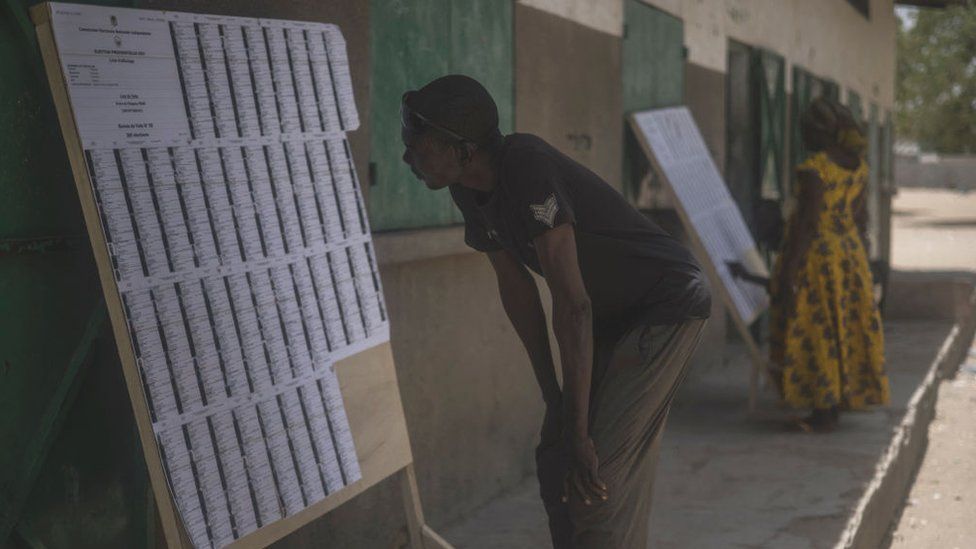
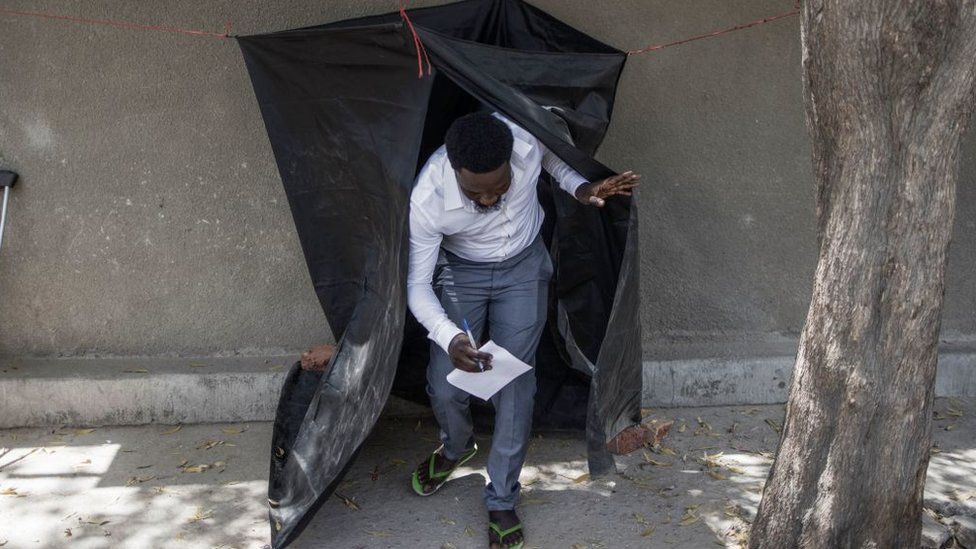
People in Chad have been voting in a presidential election that is expected to give one of Africa’s longest-serving leaders a sixth term.
President Idriss Déby, who seized power in a military coup in 1990, has been accused of stifling dissent in the lead-up to the vote.
Most prominent opposition leaders withdrew from the race, alleging attacks by the security forces.
They urged supporters to boycott the election and to protest.
What happened on election day?
The authorities appeared to have braced themselves for violence.
IMAGE COPYRIGHTGETTY IMAGESSoldiers were out on the streets in force across the capital N’Djamena on Sunday morning and the previous day municipal workers collected car tyres that protesters could set on fire, reports Reuters news agency.
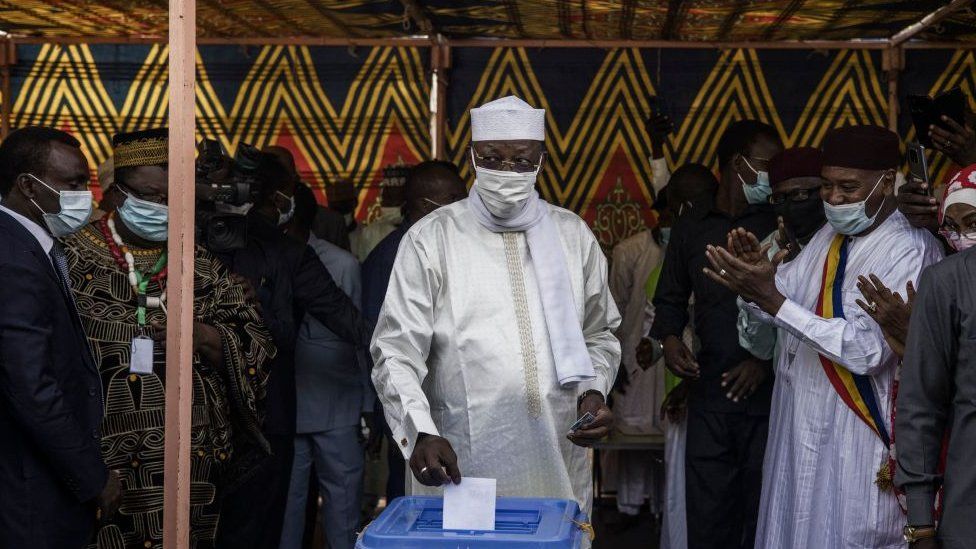
Elite troops from the Republican Guard were deployed to the central polling station where President Deby himself voted, AFP news agency says.
President Déby was first to cast his ballot at that central polling station.
“I’m calling on all Chadians to come out and vote for the candidate of their choice who will have to tackle the major challenges facing our country over the next six years,” he said to journalists after voting.
How bad was the violence before the election?
Human Rights Watch has described a ruthless crackdown on key opponents and protesters.
It says recent anti-government demonstrations have been met with brutal force.
Every Saturday for several months opposition campaigners have defied a ban on protests and the authorities have violently broken up even relatively small gatherings.
Police and troops have surrounded party headquarters and the homes of their leaders.
In February security forces attempted to arrest opposition candidate Yaya Dillo and left five members of his family dead, according to his party, although the government says three people were killed.
The weekly anti-government protest marches were demanding a peaceful transfer of power.
Who is running in the election?
President Idriss Déby is considered the main contender.
He has been in power for three decades and is running for a sixth term and has promised peace and security.
IMAGE COPYRIGHTGETTY IMAGESSix people are running against him including his former Prime Minister, Albert Pahimi Padacké, and the official leader of the opposition, Félix Nialbe Romadoumngar.
This election also marks the first time a woman has run for president in Chad. Lydie Beassemda is a former agriculture minister and has pitched her campaign on breaking down ethnic rivalries and improving women’s rights.
Who has pulled out of the race?
Challengers shrank from 16 to six after candidates were barred or quit.
Most notably, the president’s main opponent and runner-up in the 2016 presidential poll, Saleh Kebzabo, quit in protest over violence by the security forces.
What are observers looking out for on election day?
Observers expect Mr Déby to win so the big question mark is over how many people come out to vote.
Opposition candidates who have pulled out are urging their supporters to boycott the poll.
IMAGE COPYRIGHTGETTY IMAGESSource: BBC.com
………………………………………………………………
US police officer accused of assaulting Black Army officer fired
Haiti: Seven Catholic clergy kidnapped, held for ransom
Take part in the Global Online Survey: COVID-19 Impacts on Education – Needs for Distance Education and Digital Solution
Dear AU members state,
This is a kind reminder to take part in the Global Online Survey: COVID-19 Impacts on Education – Needs for Distance Education and Digital Solution.
The Survey is available in the different AU languages as below.
· English : https://survey.su.se/Survey/
· French : https://survey.su.se/Survey/
· Portuguese : https://survey.su.se/Survey/
· Spanish: https://
For the success of the survey, we hope to reach 400/500 participants in each AU member state. Please that the survey will take at least 3 minutes of your time. Thanking you once more for sharing the email & links with members of your network.
Regards
AU/CIEFFA
Cher Alumni,
Prière de voir cet email comme un aimable rappel pour participer à l'enquête mondiale en ligne sous le thème: Impacts du COVID-19 sur l'éducation - Besoins en matière d'enseignement à distance et de solutions numériques.
Les liens pour répondre à l'enquête sont disponibles dans les différentes langues de l'UA suivantes:
- L’Anglais : https://survey.su.se/Survey/
- Le Français : https://survey.su.se/Survey/
- Le Portugais : https://survey.su.se/Survey/
- L’Espagnol : https://survey.su.se/Survey/
En vue de la réussite de l'enquête, nous espérons pouvoir atteindre 400/500 participants dans chacun des États membres africains. L'enquête ne demande qu’un minimum 3 minutes de votre temps.
Nous vous remercions par avance de partager l’email et ses liens respectives avec les membres de votre réseau pour garantir la représentation du continent africain.
Cordialement
UA/CIEFFA
AFRICAN YOUTH DAY | 1 NOVEMBER 2026
20 YEARS OF THE AFRICAN YOUTH CHARTER AFRICAN YOUTH: IDENTITY, PARTICIPATION AND TRANSFORMATION 420 MILLION+ YOUNG PEOPLE | AGED 15–35 A...
-
Angolan President of Republic João Lourenço marked Saturday (26) the third year of his five-year in office, marked by the strong negative ...
-
Since the July 26 coup, Niger has become the latest hotbed of disinformation in the troubled Sahel region as West African powers grapple wit...
-
From Volunteering to Innovation — A Journey of Impact Ladies and gentlemen, Football is more than a game. It is the world’s language — a for...