Translate

Sunday, 3 January 2021

Fast roll out of virus vaccine trials reveals tribal distrust

 FLAGSTAFF, Ariz. (AP) - The news came during a hopeful time on the largest Native American reservation.

Fast roll out of virus vaccine trials reveals tribal distrust

Daily coronavirus cases were in the single digits, down from a springtime peak of 238 that made the Navajo Nation to a U.S. hot spot. The tribe, wanting to ensure a COVID-19 vaccine would be effective for its people, said it would welcome Pfizer clinical trials on its reservation spanning Arizona, New Mexico and Utah.


Right away, tribal members accused their government of allowing them to be guinea pigs, pointing to painful times in the past when Native Americans didn’t consent to medical testing or weren’t fully informed about procedures.


A Navajo Nation review board gave the study quicker approval than normal after researchers with Johns Hopkins University’s Center for American Indian Health made the case for diversity. Without Native volunteers, how would they know if tribal members responded to vaccines the same as others?


“Unfortunately, Native Americans have effectively been denied the opportunity to participate in these clinical trials because almost all of the study sites are in large, urban areas that have not done effective outreach to Native Americans,” said Dr. Laura Hammitt of Johns Hopkins.


About 460 Native Americans participated in the trials for the vaccine by Pfizer and its German partner BioNTech, including Navajos. The enrollment reflects a growing understanding of the role that people of color play in vaccine development and the push to rapidly deploy it to curb infections among populations that have been disproportionately affected by the virus.


Yet, few of the country’s 574 federally recognized tribes have signed on for the studies, a hesitation often rooted in suspicion and distrust. Many tribes also require several layers of approval for clinical trials, a challenge researchers aren’t always willing to overcome and don’t face in the states.


While vaccines from Pfizer and Moderna Inc. roll out across Indian Country, others are being studied.


In the Pacific Northwest, the Lummi Nation and the Nooksack Indian Tribe plan to participate in a vaccine trial from another company, Novavax Inc. A Cheyenne River Sioux researcher plans to enroll Native Americans and others in South Dakota in the Novavax trial and another by Sanofi and GlaxoSmithKline.


On the Navajo Nation, Arvena Peshlakai, her husband, Melvin, and their daughter Quortnii volunteered for the Pfizer trials.


Arvena Peshlakai said the rumors were rampant: Navajos would be injected with the virus, and researchers would use plasma from people who got COVID-19.


She was assured that it wasn’t happening and let the words of her parents and grandparents guide her: Don’t let our struggles be your struggles, begin with our triumphs.


“What else am I supposed to do? Just sit back and say, ‘No, I don’t trust them’ and not try something new to see if we can find a breakthrough? ” Peshlakai said. “We have to do something, we can’t just sit by and wait and hope and pray.”


She overcame her fear of needles to get the doses and keeps track of her well-being daily on an app. As trial participants, the family can get the vaccine if they initially received a placebo.


The Pfizer trials among the Navajo and White Mountain Apache tribes enrolled 275 people, about 80% of the Native American, Hammitt said. It wasn’t as many as researchers had hoped for, but she said it’s enough to compare immune and antibody responses in Native patients to others.


Vaccine trials nationwide have been moving quickly, which doesn’t always align with tribal guidelines on considering research proposals.


"It must be done with respect for tribal sovereignty and knowing that each individual has truly been given informed consent," said Abigail Echo-Hawk, director of the Urban Indian Health Institute in Seattle.


It helped that Johns Hopkins has a decades-long history with the Navajos and Apaches, including other clinical trials. Hammitt said the Navajo Human Research Review Board was receptive to a quick review of the vaccine trials because of the devastating impact of the pandemic.


In South Dakota, the Cheyenne River Sioux tribal health committee initially pushed back on Dr. Jeffrey Henderson’s proposal for trials of the Novavax vaccine. Henderson, a tribal member, was sent into the community to gauge support.


He expects to get approval from a newly seated tribal council but for now, he plans to set up a mobile unit outside the reservation.


“We refuse to do this type of research or any research within the boundaries of a tribe without having explicit approval from the tribe,” Henderson said.

In Washington state, the Nooksack tribe is set to begin enrolling volunteers in the Novavax trials Monday, said Dr. Frank James, the tribe’s health officer.


“I expect a slow start to it, and we have to get a few brave people who are comfortable with it and then people to follow,” he said.


The nearby Lummi Nation is moving forward with a three-part review and approval process for the Novavax trials.


Initial hesitation among the tribe stemmed from a researcher who took photos of Lummi children years ago to develop a tool to diagnose fetal alcohol syndrome but didn’t offer any ways to address it, said Dr. Dakotah Lane, executive medical director of the Lummi Tribal Health Clinic.

“I had already known and was aware of certainly some distrust with any kind of research within our community,” Lane said. “But I also knew the only way out of this pandemic was with access to vaccines.”

Other stories about the sterilization of Native American women, noted in a 1976 federal report, and military testing of radioactive iodine on Alaska Natives have bred distrust.

The Havasupai Tribe also settled a lawsuit a decade ago that accused Arizona State University scientists of misusing blood samples meant for diabetes research to study schizophrenia, inbreeding, and ancient population migration without the tribe’s permission.

That case came to mind when Annette Brown, a Navajo woman, heard about her tribe’s willingness to participate in COVID-19 vaccine trials.

“There’s this historical distrust when it comes to any type of experimenting,” she said. “It’s just experienced, I don’t know that there are many families out there who haven’t been touched by some sort of experimentation (or) biological attacks on tribal communities.”

Brown has mixed feelings because she previously participated in a vaccine trial with Johns Hopkins.

It was related to research that determined the first generation of vaccines for bacterial meningitis was less effective among Navajo and Apache children 6 months and younger, Hammitt said. The rate of the disease used to be five to 10 times higher among those children than the general population.

Researchers and doctors in Native American communities also have found that standard doses for medications like blood thinners weren’t always the best fit for tribal members.

For Marcia O’Leary, helping with a study that indirectly discovered HPV vaccines don’t protect against a strain that’s a leading cause of cancer among Native American women in the Great Plains shows the importance of having more Native researchers and being involved in clinical trials.

“We can’t wait for this to trickle down,” said O’Leary, director of Missouri Breaks, a small Native American-owned research group on the Cheyenne River Sioux reservation. “It seems like in Indian Country, we keep chasing the ball of health and we never get ahead of it.”

PRODESI EXPORTS YIELD USD 37 MILLION

 The total value of exports of products listed by the Program of Support to Local Production, Exports Diversification and Imports Replacement (Prodesi), carried out until last December 21, reached $ 37 million.

Novas notas de valor facial


Thirty-seven million dollars (AKZ 24 billion) is the total value resulting from exports of the products listed by Prodesi. Of the most exported products ten stand out, of which clinker, beer and sugar lead the top three, making up a third of the total value of exports (USD 37 million).

In addition to those goods, the "Top 10" are disposable diapers, soft drinks, Portland cement, Banana, glass packaging, wheat flour, napkins, toilet paper and kitchen paper rolls are included.

Regarding the main export destinations of Angola, the list is led by African countries. The Democratic Republic of the Congo (DRC) comes ahead of Congo Brazzaville and Cameroon, with a volume of purchases valued at 20.1 million dollars (AKZ 13.1 billion), 54% of the total value of exports.

São Tomé and Príncipe, Portugal, Brazil, Namibia, Spain, China and South Africa are others that are part of a list of 10 countries that imported most of Prodesi's t goods in 2020.

In the year that just ended, Prodesi - which was created in 2018 - financed 661 projects (55.1%) valued at 727 billion kwanzas ($ 1.1billion Equivalent), out of a total of 1,199. Of the total projects submitted to banking institutions 191 are in negotiations, allowing the creation of 5,4241 jobs and the registration of 4000 products.

With Prodesi, according to the Ministry of Economy and Planning - the department that runs the program - imports have reduced and there was an increase in products such as potatoes, corn, cereals, roots and tubers, vegetables, eggs, among other.

Prodesi is an Angolan Executive program that aims to accelerate the diversification of national production and generate wealth.


Saturday, 2 January 2021

Africa Educates Her Campaign - Angola. Season 3. Don't Miss Out! Webisode 16

 INTERVIEW WITH PRE-SCHOOL CHILDREN

At least 40 million children worldwide have missed out on early childhood education in their critical pre-school year as COVID-19 shuttered childcare and early education facilities.

Today we are talking to kids. We invited Iracelma and Augusta to share their academic experience during the time of Covid-19 pandemic.

Interview with Iracelma


Hello, how are you?

Hi, I'm fine

What is your name?

My name is Iracelma

How old are you?

I am 5 years old

Iracelma do you study?

Yes, I am a preschool student

Why aren't you going to school anymore?

I no longer go to school because of the covid-19

What is covid-19?

Is to wash hands with soap and use alcohol gel.

Do you want to go back to study?

Yes


Interview with Augusta


Hello, how are you?

Yes I'm fine, thanks

What is your name?

My name is Augusta

Augusta do you study?

Yes, I am a preschool student

Why aren't you going to school anymore?

I am not going to school because of covid-19

What is covid-19?

It is a disease

What are the preventive measures against coronavirus?

To wash hands, use mask and keep the social distance of one meter.

Where is your mask?

I forgot it at home


“Education disruptions caused by the COVID-19 pandemic are preventing children from getting their education off to the best possible start.”

“Childcare and early childhood education build a foundation upon which every aspect of children’s development relies. The pandemic is putting that foundation under serious threat.”

Click here to watch free full webisodes: https://she-leads.blogspot.com/

We launched this campaign to ensure that every girl is able to learn while schools are closed and return to the classroom when schools safely reopen. Everyone can play a role in supporting girls ’education - whether you’re a teacher, parent, student, journalist, policymaker, or simply a concerned citizen.

Don't miss this opportunity to bring girls back to school. Tell us your story!

Do you have a personal experience with the coronavirus would you like to share? Or a tip on how your town or community is handling the poverty among women?

FIND SOMEONE TO SPONSOR TODAY

Your sponsorship will help the most vulnerable girls and women to take the first step out of poverty.

Corona Voice - Angola. The tok show with Sofonie Dala. Don't miss it! Day 30

 People discovering new talents while staying at home during pandemic.

Our today's guest is Pedro, he will share with us his non-fiction story during the time of covid-19 pandemic.

Greetings!

My name is Pedro Rosario, I'm here to talk a little bit about Covid-19. About the benefits and anomalies that this has caused.

Well, in a general context, Covid-19 has negatively affected even the major countries of the world. This affected the lives of young people and much more in the area of finance and jobs.

But on my side the Covid-19 brought great benefits.

I was unemployed and when we were confined in that quarantine I started discovering new talents. If it weren't for covid-19, today I wouldn't be a music producer. We were awakening great talents and today I got a job, I'm a producer and I'm working thanks to Covid-19.


Like most people, you may have discovered a new talent while being cooped up in the home during the pandemic coronavirus. Having a job at all is a privilege in normal times, and more so during this global emergency when mass layoffs and pay cuts have become the norm, something that music producer "Pedro" certainly appreciates.

Click here to watch free full webisodes: https://coronavoice-angola.blogspot.com/ 

This is the first and the only Coronavirus show in Angola where the most ordinary citizens show their brilliant talents.

The heroes of the program are the most ordinary citizens - they share with the audience their songs, poems and real stories of how the Coronavirus pandemic affected their lives.

We launched the “Corona Voice show” campaign to provide a space for young women and men around Angola to share their views, experiences and initiatives.

FIND SOMEONE TO SPONSOR TODAY

Your sponsorship will help the most affected people by covid-19 to take the first step out of poverty.


After months of COVID delays, African free trade bloc launches

 After months of delays caused by the COVID-19 pandemic, the African Continental Free Trade Area launches, but full implementation of the historic pact may take years.

After months of COVID delays, African free trade bloc launches

African countries began officially trading under a new continent-wide free trade area on Friday, after months of delays caused by the global coronavirus pandemic.

But experts view the New Year’s Day launch as largely symbolic with full implementation of the deal expected to take years.

The African Continental Free Trade Area (AfCFTA) aims to bring together 1.3 billion people in a $3.4 trillion economic bloc that will be the largest free trade area since the establishment of the World Trade Organization.

Backers say it will boost trade among African neighbours while allowing the continent to develop its own value chains. The World Bank estimates it could lift tens of millions out of poverty by 2035.

“There is a new Africa emerging with a sense of urgency and purpose and an aspiration to become self-reliant,” Ghana’s President Nana Akufo-Addo said during an online launch ceremony.

But obstacles – ranging from ubiquitous red tape and poor infrastructure to the entrenched protectionism of some of its members – must be overcome if the bloc is to reach its full potential.

Trade under the AfCFTA was meant to be launched on July 1, 2020, but was pushed back after COVID-19 made in-person negotiations impossible.

However, the pandemic also gave the process added impetus, said Wamkele Mene, secretary-general of the AfCFTA secretariat.

“COVID-19 has demonstrated that Africa is overly reliant on the export of primary commodities, overly reliant on global supply chains,” he said. “When the global supply chains are disrupted, we know that Africa suffers.”

Every African country except Eritrea has signed on to the AfCFTA framework agreement, and 34 have ratified it. But observers such as W Gyude Moore – a former Liberian minister who is now a senior fellow at the Center for Global Development – say the real work begins now.

“I would be surprised if they can have everything set up within 24 months,” he told Reuters news agency. “For long-term success, I think we’ll need to look at how long it took Europe. This is a multi-decade process.”

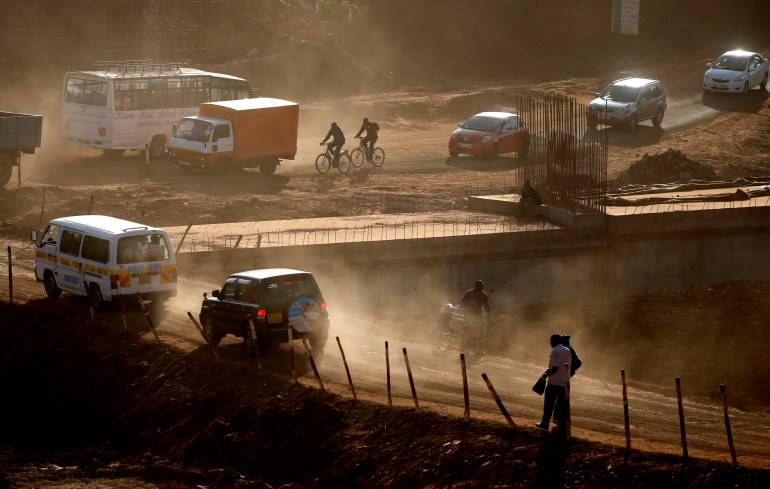
Obstacles – ranging from ubiquitous red tape and poor infrastructure to the entrenched protectionism of some of its members – must be overcome if the AfCFTA is to reach its full potential [File: Goran Tomasevic/Reuters]

‘We must start somewhere’

Historic challenges including Africa’s poor road and rail links, political unrest, excessive border bureaucracy and petty corruption will not disappear overnight.

And an annexe to the deal outlining the rules of origin – an essential step for determining which products can be subject to tariffs and duties – has not been completed yet.

Meanwhile, 41 of the zone’s 54 member states have submitted tariff reduction schedules.

Members must phase out 90 percent of tariff lines – over five years for more advanced economies or 10 years for less developed nations. Another 7 percent considered sensitive will get more time, while 3 percent will be allowed to be placed on an exclusion list.

Finalizing those schedules and communicating them to businesses must be done quickly, said Ziad Hamoui of Borderless Alliance, a group that campaigns for easier cross-border trade.

But efforts to implement the deal will also likely face resistance from countries’ domestic interest groups. Fears of losing out to more competitive neighbours initially made some countries, including West African giant Nigeria, skeptical of the pan-African project.

Still, proponents of the zone are confident that initial steps towards its implementation will already allow member states to quickly boost intra-African trade.

“Economic integration is not an event. It’s a process,” said Silver Ojakol, chief of staff at the AfCFTA secretariat. “We must start somewhere.”

SOURCE : REUTERS

COVID-19: NUMBER OF INFECTIONS RISES TO 17, 553

 Luanda - Angolan authorities reported 120 new positive cases of Covid-19 and 185 recoveries in the last 24 hours, bringing the total number to 17, 553.

Ilustração do Covid-19

The authorities also said that 6, 104, of the total cases recorded between March and December 2020 in the country, are active patients, 11,044 recoveries and 405 deaths.

According to the Epidemiological Bulletin, three patients are in critical condition, seven severe, 74 moderate, 78 mild and 5, 944 asymptomatic.

In the last 24 hours, the new cases were recorded in the provinces of Luanda, with 52, Bié (16), Cuanza Sul (15), Huambo (12), Uige (12), Lunda Norte (9), Huíla (3 ) and Cuando Cubango with a positive case, but no death has been reported.


COVID-19: ANGOLA WITHOUT A DEATH IN TWO DAYS

 With 17,568 positive cases of Covid-19 recorded since the first infection was detected in the country in March 2020, Angola is two days without reporting a single death, the authorities said.

Field hospital


According to the Covid-19 Multisector Commission, of the whole Angola’s Covid-19 positive cases, 6,017 are active patients, 11,146 recoveries and 405 deaths.

The active cases include one in critical condition, seven in severe state, 74 in moderate condition, 74 with light symptoms and 5,861 asymptomatic.

The Commission also informed that 15 new cases of Covid-19 have been reported in the last 24 hours, of which 11 in the capital, Luanda, three in northern Cabinda province and one in central Bié, with ages ranging from four to 76 years, four males and 11 females.

The source explained that the low number of infections in the last 24 hours was owed to the yearend celebrations that reduced the testing.

In the period in respect, 102 patients recovered from Covid-19, of which 99 in Luanda and three in Bié, with ages from two to 66 years.

376 RT-PCR tests were conducted since the last update in the country, resulting in 15 infections, the authorities also said.

From March to December last year, 311,308 specimens were processed, resulting in 17,568 infections and 293,740 negative cases, representing an accumulated positive rate of 5.6 percent.


AFRICAN YOUTH DAY | 1 NOVEMBER 2026

    20 YEARS OF THE AFRICAN YOUTH CHARTER AFRICAN YOUTH: IDENTITY, PARTICIPATION AND TRANSFORMATION 420 MILLION+ YOUNG PEOPLE | AGED 15–35 A...