Translate

Friday, 4 September 2020

Chevening UK Government Scholarship Awards 2021/2022 for Study in the United Kingdom (Fully Funded)

 Application Deadline: 3 November 2020 https://bit.ly/2DrjGKV

Chevening Scholarships enable outstanding emerging leaders from all over the world to pursue one-year master’s degrees in the UK. Whilst there is no ‘typical’ Chevening Scholar, we are looking for the kind of people who have the passion, ideas, and influence to provide the solutions and leadership needed to create a better future.


Because these scholarships are fully-funded (flights, accommodation, and course fees are all included), you are free to focus on achieving your professional goals and maximising the experience of a lifetime. You will live and study in the UK for a year, during which time you will develop professionally and academically, network extensively, experience UK culture, and build lasting positive relationships with the UK. On completing your studies, you will leave the UK equipped with the knowledge and networks necessary to bring your own ideas to life.

Requirements

Be a citizen of a Chevening-eligible country or territory.
Return to your country of citizenship for a minimum of two years after your award has ended.
Have completed all components of an undergraduate degree that will enable you to gain entry onto a postgraduate programme at a UK university by the time you submit your application. This is typically equivalent to an upper second-class 2:1 honours degree in the UK but may be different depending on your course and university choice.
Have at least two years (equivalent to 2,800 hours) of work experience.
Apply to three different eligible UK university courses and have received an unconditional offer from one of these choices by 15 July 2021

Angola wants to increase cooperation with India

 Angola's minister of Foreign Affairs Téte António Thursday in Luanda expressed the country's wish to intensify cooperation with India, in order to turn economic opportunities into a strong and win-win partnership.

Embassy of India, Luanda, Angola

Speaking at the opening of the Virtual Conference on “Business Opportunities between Angola and India”, the minister announced the holding of the first meeting of the Angola-India Joint Commission on the 7th of this month (September), aimed to strengthen relations.

He defended the need for greater interaction between the trade associations of the two countries, with emphasis on national and international financial institutions, in order to facilitate the granting of credit lines, for structuring projects.
 

These credit lines, according to the minister, will serve to promote productive and commercial activities, taking into account the Angolan Executive's objective of reducing imports and increasing exports.

"Despite the countless challenges experienced due to the current international economic and financial context, we believe that the need to transform the notion of crisis into opportunities is paramount, which also entails greater interaction between the trade associations of the two countries," he said.

India, he added, is an important player in the world economy and international politics, as it is necessary to be closer to that country, which can bring many comparative advantages in several sectors, with emphasis on the technological field

The event was attended by the director of Credit Lines for Eximbank India, Saroj Khuntia, the secretary general of the Chamber of Commerce Angola-India.

Also attended the meeting were the president of the Industrial Association of Angola and representatives of the sectors of banking, investment, industry, trade.


Angola stock exchange business drops in August

 Angola’s debt and Security Stock Exchange (Bodiva) closed the month of August with a value of AKz 87.7 billion, a decrease of AKz 19.7 billion compared to July.

What should a business on the world's first stock exchange focused  exclusively on impact investment look like? - AI Global Media Ltd

The turnover of July stood at 107.5 billion kwanzas, according to the institution’s data available in its website reached Angop.

The source quoted Banco de Fomento Angola (BFA), with over 60 percent of operations completed, as standing out at the business.

Banco Angolano de Investimentos (BAI) comes second, followed by  Millennium Atlântico and Standard Bank.

The bonds of 2021 were the most sought-after, followed by those in 2022, while those in 2024 were in relative demand.

In June this year, BODIVA reported a monthly record in business in the second public debt market a value of 150.4 billion kwanzas.

The increase in turnover reflected the consolidation of financial literacy on saving alternatives, the confidence of the Angolan companies and families in the financial instruments available for transactions at BODIVA.

Covid-19: Angola reports 28 new infections, one death, 29 recoveries

 Twenty-eight new positive cases of covid-19, one death and 29 recoveries have been reported in Angola in the last 24 hours.

The information was released Thursday evening in Luanda by the secretary of State for Public Health, Franco Mufinda, during the daily covid-19 update briefing with journalists.

According to the official, of the new patients with ages ranging from seven to 77 years of age, four are located in northern Zaire province, two in northern Cabinda and 22 in Luanda. 19 are males and nine females.

Mufinda said that the dead is a 65-year old physician and those recovered include three from northern Bengo province.
The official added that with the new data, Angola’s covid-19 statistics show 2.805 positive cases, 113 deaths, 1,144 recoveries and 1,548 active patients.

Thursday, 3 September 2020

Covid-19: Africa Educates Her Campaign with Sofonie Dala. Day 5

Africa Educates Her Campaign is live in Angola.

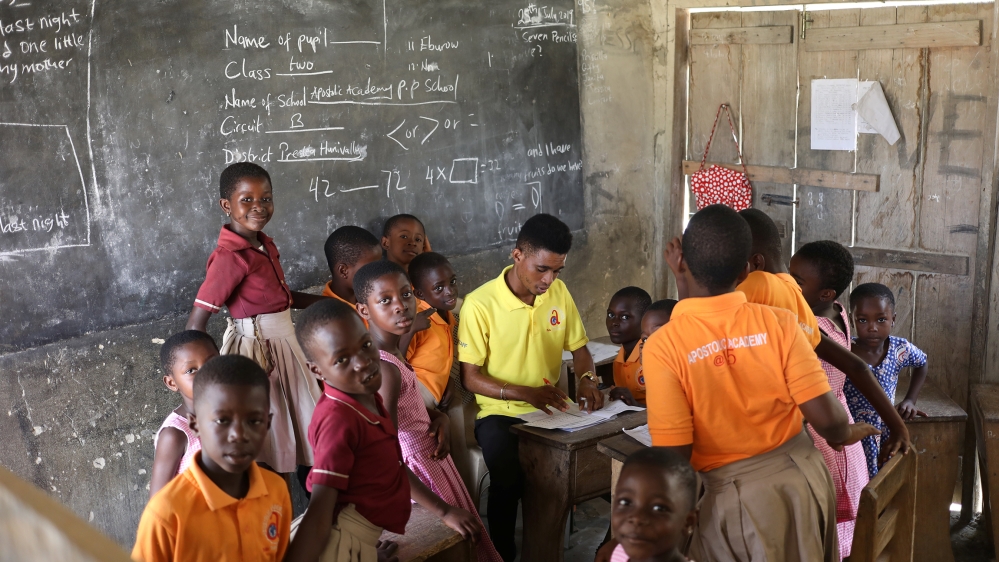
Life during the COVID-19 pandemic is difficult for parents and children alike. The return to school is an important and hopefully welcome step.

We are slowly seeing an increasing number of children return to the classroom. More than 1 billion students are still out of school due to nationwide school closures.

Today we are doing something different. We want to know what our boys are thinking about this issue. We invited Cândido to share his challenges during covid-19 pandemic.


What precautions should the school be taking to prevent COVID-19 virus from spreading?

School reopenings should be consistent with each country’s overall COVID-19 health response to help protect students, staff, teachers and their families. Some of the practical measures that schools can take include:


1. Staggering the start and close of the school day;
2. Staggering mealtimes;
2. Moving classes to temporary; spaces or outdoors;
3. Holding school in shifts, to reduce class size;

Water and hygiene facilities will be a crucial part of schools reopening safely. Administrators should look at opportunities to improve hygiene measures, including handwashing, respiratory etiquette (i.e. coughing and sneezing into the elbow), physical distancing measures, cleaning procedures for facilities and safe food preparation practices. Administrative staff and teachers should also be trained on physical distancing and school hygiene practices.

Sub-Saharan Africa has the highest rate of education exclusion globally.

 Over one-fifth of children between the ages of 6 and 11 are out of school, followed by one-third of youth between the ages of 12 and 14.

What COVID-19 reveals about educational inequality in Ghana | Ghana | Al  Jazeera

In addition, nearly 60% of youth between the ages of 15 and 17 are not in school. The World Bank stated that 87% of children in sub-Saharan Africa are ‘learning poor’ and lack foundational skills they need for the 21st century and a dynamic labor market.

Girls have even more challenges ahead of them: Across the region, 9 million 6- to 11-year-old girls will be denied the opportunity to go to school, compared to 6 million boys, according to UNESCO data.

Their disadvantage starts early: 23% of girls are out of primary school compared to 19% of boys. By the time they become adolescents, the education exclusion rate for girls is 36% compared to 32% for boys.

Today, due to the COVID-19 pandemic, over 250 million primary and secondary children are out of school in Africa. The education sector is heavily affected, with the closure of learning institutions in many African countries likely to negatively impact education quality.

The poor, particularly girls, in rural communities are most affected.

In order to obtain a comprehensive view of learning outcomes during this period, and to better support countries in the immediate, short and long term, the Association for the Development of Education in Africa (ADEA) engaged some of the most affected African countries in March 2020 to map the national situation in the education sector.

African governments and key education stakeholders have instituted measures to promote the continuity of education from home (e.g. online dissemination of virtual recorded course modules, use of mobile and smartphones, televisions and radios, etc.).

These strategies have been successful in some ways, but challenges remain as the poor marginalized children who neither have access to mobile phones or TV, or even radios for that matter, are excluded.

If these challenges are not addressed immediately, they can seriously affect the academic career of our students and in the long term, bring about serious social and economic implications.

TORNEIRA SEM ÁGUA


O sector das águas executou apenas, nos últimos cinco anos, 18 por cento dos projectos que submeteu a concurso no país, sendo que a maioria destes sistemas de abastecimento de água à população foram suportados por linhas de financiamentos externas, afirma o secretário de Estado das Águas, Lucrécio Costa. E assim vai o reino.

Apesar de o país ter disponibilidade hídrica, a fraca capacidade de investimento por falta de financiamento, constitui o maior constrangimento para a execução dos concursos e empreitadas no país, justificou o Lucrécio Costa no espaço a Grande Entrevista da Televisão Pública de Angola (TPA).

Dos projectos executados, constam a construção de um sistema de abastecimento de água na cidade do Huambo, com uma capacidade de 30 mil ligações domiciliárias, a instalação, de igual modo, de um projecto nas províncias do Cunene e Namibe, sendo o último sistema interligado que aumentou cinco vezes o seu sistema de abastecimento de água.

Dos projectos executados no país, consta igualmente a instalação do novo sistema de abastecimento na província do Bié, que aumentou quatro vezes a oferta de água na cidade do Cuito, o projecto de Lucapa já em fase final, em Mbanza Congo a iniciativa permitiu efectuar 10 mil ligações e em Ndalatando o plano de abastecimento está em curso.

Lucrécio Costa apontou também que o crescimento da população em 2,5 a 3 por cento/ano, sendo desproporcional à capacidade de investimento, constitui outro constrangimento no fornecimento de água à população da rede pública. A única vantagem do crescimento demográfico é, na óptica do MPLA, que cada angolano que nasce é mais um militante que o partido ganha…

Neste período da Covid-19, explicou o governante, são distribuídos 3,5 milhões de litros de água/dia em todo o país, quando a necessidade seria de seis milhões para serem distribuídos nos principais centros urbanos.

Mais de 10% da população mundial não tem acesso a água potável. É um drama? É sim senhor. Então imaginemos o que acontece em Angola onde esse valor sobe para mais de 50%. Moçambique e Guiné Equatorial não estão melhor. No nosso caso é o que dá viver num país com 20 milhões de pobres. O regime do MPLA, no poder desde a independência, em 1975, está de parabéns.

A organização WWC, que junta mais de 300 entidades de 50 países, referia em 2017 que mais de 923 milhões de pessoas não têm acesso a água potável, das quais 319 milhões na África subsaariana (32% da população da região), 554 milhões na Ásia (12,5%) e 50 milhões na América do Sul (8%), situação responsável pela morte de 4.500 crianças por dia.

E por falar em crianças (é só para lembrar), Angola é um país que tem um dos mais elevados índices de mortalidade infantil.

“Entre estas regiões, a Papua Nova Guiné tem a menor disponibilidade, com apenas 40% da população a ter acesso a água potável”, seguindo-se “a Guiné Equatorial com 48%, Angola com 49%, Chade e Moçambique com 51%, a República Democrática do Congo e Madagáscar com 52% e Afeganistão com 55%”, refere um comunicado divulgado pelo WWC.

O WWC alertou todos os governos para a urgência de resolver este problema e realçou que “o custo total da insegurança da água para a economia global é avaliado em 500 mil milhões de dólares”.

Mas, se for incluído o impacto ambiental, aquele valor pode aumentar para 1% do Produto Interno Bruto (PIB) global.

Além do custo económico, a falta de água potável está relacionada com diversas doenças e epidemias que causam 3,5 milhões de mortes por ano, mais do que aquelas causadas por acidentes de viação e pela SIDA, em conjunto, segundo as contas da organização.

Pode também contribuir para a fome, guerras e migrações “irregulares e descontroladas”, havendo uma “absoluta necessidade” de aumentar a segurança da água para ultrapassar os desafios colocados pelas alterações climáticas e pelas efeitos da actividade humana.

Reafirma a organização que o acesso das pessoas ao saneamento e a água potável “são prioridades fundamentais para os governos locais e regionais”, a fim de alcançar um dos objectivos do Desenvolvimento Sustentável das Nações Unidas, e só pode ser alcançado “com um bom governo local, gestão sustentável dos recursos naturais e urbanização eficaz”.

Assim, “encoraja os governos e os cidadãos a aumentar a segurança hídrica nos seus países, assim como prestar auxílio às nações com maiores dificuldades, nomeadamente na África subsaariana e Ásia”.

Um dos objectivos da ONU é que todas as pessoas tenham acesso a água potável e saneamento até 2030. No caso de Angola, para que tal aconteça será necessário que o MPLA se mantenha no poder aí até 2100.

Nas contas do WWC, é necessário um investimento anual de cerca de 650 mil milhões de dólares até 2030, para garantir a concretização das infra-estruturas necessárias para alcançar a segurança universal da água.

Todos os anos uma em cada cinco crianças com idade inferior a cinco anos morre prematuramente devido a doenças relacionadas com a água e quase 40% da população mundial já enfrenta problemas de escassez de água e pode aumentar para 66% em 2025, realidade a que junta cerca de 700 milhões de pessoas a viver em áreas urbanas sem instalações sanitárias seguras.

Em Setembro de 2016, o secretário de Estado das Águas de Angola, Luís Felipe da Silva, garantia que com o programa “Água para Todos”, 80% da população desfavorecida, que habitava em zonas críticas, iria ser abastecida com água potável.

A garantia, em contexto eleitoral, foi dada na abertura do Fórum de Negócios Angola-Dinamarca 2016. Luís Felipe da Silva sublinhou que o crescimento e a expansão do sector das águas e a entrada de capital privado são eixos estratégicos de longo prazo com impacto no desenvolvimento do país, no horizonte 2025.

“Acreditamos que o potencial e a experiência do Reino da Dinamarca vão conduzir-nos a melhores soluções, face às nossas necessidades”, concluiu Luís Felipe da Silva.

Por sua vez a embaixadora da Dinamarca em Angola, Trine Rask Thygesen, afirmou que Angola entrou no novo milénio com taxas de crescimento impressionantes. E ela ainda não tinha vistas a capacidade de João Lourenço e dos seus muchachos.

A diplomata, que também descobriu o “ovo de Colombo”, afirmou que a redução do preço do petróleo acentuou a necessidade de Angola diversificar a economia, desenvolver a capacidade produtiva e criar infra-estruturas para gerar um crescimento económico sustentável.

“A resposta do Executivo angolano tem sido, entre outras, o foco em fazer crescer a economia em recursos naturais e ambientais”, disse.

“Com este foco na água e na energia, o Fórum será um excelente catalisador para fortalecer os nossos laços políticos e económicos, forjando novas parcerias para o futuro”, ressaltou.

Mais de metade dos cerca de seis milhões de agregados familiares de Angola, um país que é um dos maiores produtores africanos de petróleo e que tem como Presidente da República o mais promissor discípulo de José Eduardo dos Santos, não têm acesso a água “apropriada” para beber e 31,6% têm nas lanternas a forma de iluminação. Iluminação igualmente “potável”, dirá o MPLA.

A Ciência e a Inteligência Artificial estão a dar vida às memórias!

A Inteligência Artificial já consegue transformar fotografias antigas em experiências visuais surpreendentes Hoje, testemunhamos como a ciên...