Translate

Friday, 7 August 2020

Covid-19: Angolan Engineer creates ultraviolet device to eliminate bacteria

 The Angolan engineer Rui Santos on Wednesday said he has created an ultraviolet ray-based equipment that eliminates microorganisms

 Angolano cria dispositivo ultravioleta para eliminação de microrganismos –  O Guardião

The equipment, based on ultraviolet rays, has already been used by the drinking water producer company Gota Pura since 2012 for water treatment in Angola.

According to Rui Santos, who was speaking to the Angolan Public Television (TPA), the equipment will also serve to combat the new coronavirus.

"The goal is not only to serve the domestic market. The market is global, and our limit will be the limit of demand," he said.

Covid-19: Over 2,000 rapid reactive tests conducted in Angola

 At least 2,527 people from a total of 40,484 screened had contact with the Sars-Cov-2 virus in Angola (reactive cases), according to National Director for Public Healt.


Speaking at usual covid-19 data update press conference on Thursday, Helga Freitas said 6.2 out of 100 individuals are exposed to Covid-19 in the country.

She said that the samples of the reactive cases are being forwarded to the laboratories to be confirmed or ruled out through the RT-PCR method.

The results from the rapid tests are provisional and should be confirmed or discarded by the RT-PCR molecular biology exam which is the most indicated to diagnosis the Covid-19,  according to the health official.

The rapid testing campaign under way since last July is intended to assess the real situation of the virus circulation into the communities, mainly in Luanda province, which records the bulk of those infected.

In addition to the rapid test, the molecular biology laboratories, through the RT-PCR method, have processed a total of 27,297 samples, from which 1,483 were positive and 25,814 negatives.

However, with the confirmation of the new recorded cases of 88 infected, 14 recovered and two deaths reported in the latest 24 hours, the country has  a total of 1,483 positive cases, 64 deaths, 520 recovered and 899 actives.

From the total of actives, two of them are in critical condition, 18 in serious condition, 25 in modest condition and four with mild symptoms and 850 asymptomatic.

Thursday, 6 August 2020

Breaking News: Protests erupt in Cote d’Ivoire against Outtarra’s “illegal” 3rd presidential run

Breaking News Report from DNT Correspondent Julius Ouya

Ivorians hit the street today to protest at the offices of the Electoral Commission against President Allassane Outtarra’s intention to run for president after already serving the constitutionally allowed two terms.

While Outtarra has yet to formally declare his intention to run for a third term, the opposition received a tip that he intended to use his planned address to the nation this evening at 8pm on the even of the former French colony’s Independence tomorrow to make the announcement.

Indeed, the stage has been building up for some months now for Outtarra to run for a third term.

His handpicked successor Prime Minister Gon Cuilibaly, a fellow northerner, died under mysterious circumstances two months ago following his collapse at a cabinet meeting and after treatment in France.

Experts expected that the next person in line within the RDR party would be Patrick Ichie who was Vice President at the time. But Ichie, a southerner, resigned when it became obvious to him that he had been placed at that position not to advance to the presidency but to serve as a window dressing to win southern votes. Outtarra refused to support his candidacy for president within the party.

The next official whom many expected to be considered for the successor status is cabinet minister Ahmed Bakayoko. However, although a fellow northerner, his flashy lifestyle and relative youthfulness was a source of discomfort to Outtarra according to some in his inner circle.

Sensing a leadership vacuum after an Outtarra exit, and a potential loss of power to the opposition party in October election, the leadership of the RDR party proposed to Outtarra to run for another term with the excuse that the 2016 constitution essentially nullified his first term and that this would be his second and final term.

Outtarra asked for time while he thinks about the proposal, but an Ivorian official who spoke to DT on condition of anonymity indicated that Outtarra would have formally announced his candidacy this evening in his pre-independence address to the nation.

On this tip off, the opposition leaked the information to the public and the citizens hit the street. The police was dispatched and tear gas was used to disperse the crowd that refused to back down.

Outtarra is largely seen in Cote d’Ivoire to be a puppet of French president Emmanuel Macron, and would not provid the needed sovereign leadership that Ivorians need today in light of the convection of the citizenry to rid the country completely from French influence.

With Mali in political turmoil, Outtarra’s insistence on forcing in a third term in Cote d’Ivoire could be a recipe for disaster that can potentially reintroduce political instability in west Africa.

How to overcame the current youth challenges globally

 Today, the world faces daunting challenges, from persistent poverty to entrenched inequalities. Yet one key solution is just over the horizon, if countries and leaders take action now.

Do not miss this very important discussion. Join us today!

1/ what are the problems of oil and gas production in Angola, and the continent?

2/ why is there an absence of information in Angola / consequences?

3/how can research centers address these issues, and find solutions? 

4/ talk to me about the implementation of e- learning for out of school women and girls in Angola?

5/ what is the solution of youth employment in Africa? 

6/ How can agreements like the free trade area help youth to grow? 

7/what is the way to use the internet with COVID -19 to enter the digital world?

A imagem pode conter: 2 pessoas, texto que diz "u Directions WITH MARY APOLLO HoW to overcame the youth challenges globally JOIN ME facebook. VS YouTube Tube SOFONIE DALA MINING ENGINE EXECUTIVE TI- MEDIA August 06, 2020, PM EST/ PM GMT"

How to become a social activist

Who is an activist: is every person who has a passion for social change. They organize communities, mobilize, came up with solutions and bring social change.

 Some advocates use there skills creativity, storytelling, digital media, and lastly social media platform to work in their concern issues.  

With the global technology movement and rise of youth for change, to make a world a better place, more advocates are coming worldwide to highlight different issues. COVID -19 some advocates are working on some issues to mobilize their platforms, communities , and the world. 

The guest are: Miss New York Earth Skylee Lawton Olumide Idowu - co-founder of ICCDI Africa.

Click to watch the discussion: 


Unexpected Facts about Doing Business in Angola

 Angola is one of the world’s fastest-growing economies. McKinsey is helping deliver critical infrastructure, reform institutions, and accelerate business development.

Angola – Wikipédia, a enciclopédia livre

Have you ever thought about doing business in Angola? Angola is a high-risk  high-opportunity market, so not for the faint-hearted, but with huge potential for you if you are up for a challenge.

The licensing issue for import and exporters have become very restrictive recently and the Chinese are now bringing their products right into Luanda themselves twice a year during huge trade shows.

During many years Angola was regarded as Africa’s 3rd largest economy and like in Nigeria, much of that revenue is made through oil trades. Angola has topped most African countries in terms of growth rates with two digit figures. Unfortunately, Kenya surpassed Angola as sub-Saharan Africa's third-largest economy in dollar terms, according to International Monetary Fund estimates.

Angola may become, until 2050, the fourth largest economy in Africa, according to projections from the Institute for Studies and Security (ISS), based in Pretoria, South Africa.

How can we disregard such a powerful dynamic market?! Well we can’t and we shouldn’t, so, this post is all about sharing some surprising facts with you about doing business in Angola.

1. Big opportunities in the social sectors

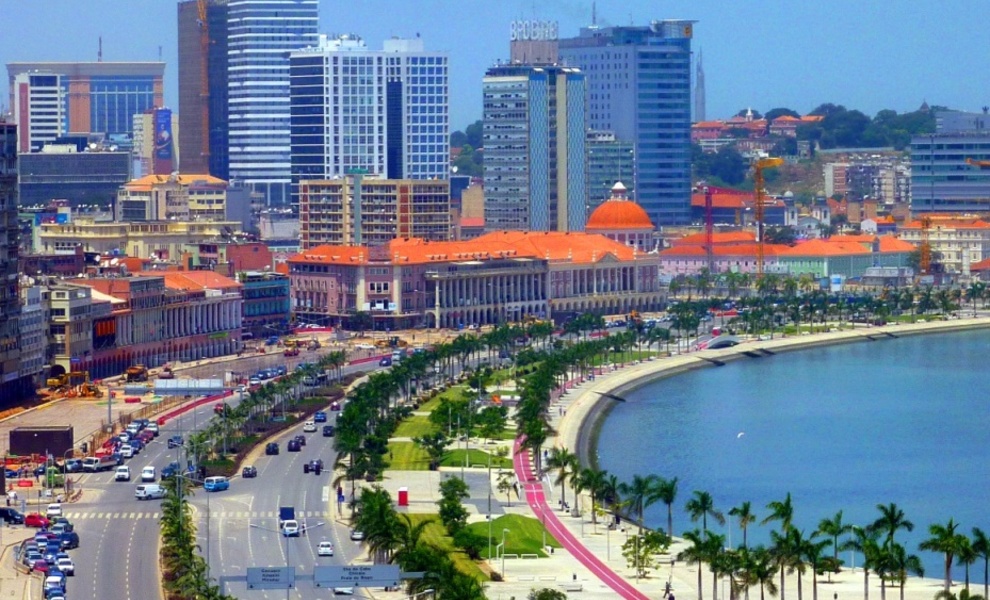
Luanda - AngolaWho would have thought that businesses would thrive in these sectors in Angola! After years of neglect, the government is making significant efforts to rebuild the country’s infrastructure and drive forward development. In 2012 for example, a staggering 30% of the 2012 budget was earmarked for priority social sectors: education, health and housing. Up to know, education & training, construction, and affordable housing tops the government’s agenda; there is a pressing requirement to bring about significant reductions in the huge housing deficit the country currently experiences, so it is a great area for your business or investment. 

TIP: But you do not need to think about building a school, a hospital, or apartments that require big capital, instead look at providing valuable training, set up an agency in one of those sectors, a property agency for example, or even cheaper and more convenient: do it mostly online. 

2. Agribusiness is top on the agenda

Like Nigeria, Angola wants to diversify production away from oil, and agricultural production is its top choice to achieve that. Before the start of the civil war, Angola used to be a dynamic producer of bananas, coffee and sisal, of which production is now almost nonexistent. Due to the civil war agricultural production was drastically reduced. The country has depended on international help and on food imports since the middle of 1980’s. In fact, Angola was at one point the world’s fourth largest coffee producer and the government suggests that there are ample opportunities for interested investors to get coffee production started !  Cattle breeding was another important part of the Angolan economy, but animal husbandry is hardly visible now. So, here you go, you have a population of 20 Million inside the country who need to eat every single day and Angola has a lot of fertile land available for production, but not enough is happening in this regard.

The government supports the production and processing of cereals, roots and tubercles, beans, fruits, vegetables, oil seeds, and specialty products such as green products, small ruminants, cattle breeding and meat processing, pig farming and the rearing of poultry and other birds.

TIP: The simplest food products such as eggs, chicken meat, and juice for example get imported into Angola and are worth millions of Dollars. The poultry sector holds clearly the biggest opportunity for you. Can you imagine, according to the National Private Investment Agency, Angola produces currently less than a tenth of its poultry and egg consumption, although it is really such an easy production line to set up! Once you pass Angolan bureaucracy, the opportunities with such very simple agricultural and food processing concepts are amazingly profitable and there are many , many more.  

The US is keen to build non-oil market links with Angola, and if you are in the Diaspora, this may be an interesting area to support new US-Angola business links through the facilitation of market and export insights for US SMEs and companies, market entry in Angola or the US, matchmaking, relocation services, or special business events for example among other. Angola is a US AGOA partner, and as such you will also be tapping into US interests. There may even be funds available at the US end to establish a company in Angola for export purposes.

4. Angola’s capital Luanda rated most expensive city in Africa….sorry, and in the world!

luanda

In 2014, Luanda was voted the world’s most expensive city adding another constraint to all those who want to do business in Angola. Having said that, the returns are potentially very high and will soon cover your expenses. But you will need considerable starting capital, including for your daily subsistence costs, such as accommodation, food, and travel.

Tip: To save cost, find cheaper accommodation through local partners and insiders, or stay at another small location outside of Luanda while you wait for certain permits to clear or goods to arrive.

5. Get goods out of the market instead of into the market

To import into Angola is a very challenging and very complex exercise, in particular for newcomers, and it is important that you do thorough research and find reliable partners on the ground. According to the UK government, there are a few main product distributors in Angola. A possible solution during the early stages could involve establishing a partnership and then perhaps finding ways of identifying new effective distribution methods and start operating through these. However, a much better strategy may be to invest in production inside Angola instead targeting the Angolan market and possibly exporting your products. The Angolan government is keen to support exports. Agricultural production or value addition through simple local manufacturing is without a doubt one of your best bets in this regard.

TIP: Exports of fish, fruits, or coffee is something you could start with. Angola has a strong fish sector: 41,000 tons of seafood as well as over 1.4 million litres of fish oil were exported throughout the year 2014. Fish oil can go a long way in the Western health and wellness industry!

Doing Business in Angola is not straightforward. In fact, the country is one of the bottom performers regarding the ‘ease of doing business’ in Africa according to the World Bank. If you wish to do business in Angola, the complexity and bureaucratic nature of the business environment requires careful guidance – you have to get reliable local partners on board! On the upside: you will have to deal with less competition in most sectors, simply because entry is so much more difficult and the space for intervention at your part is huge. If you are adventurous, patient, and risk-resilient, go for it, and be ready to reap enormous profits.

Here is an excellent resource on doing business in Angola by the National Private Investment Agency. It is a must-read if you want to find out more. Now, what do you think or know about doing business in Angola? Please share your thoughts with us!

Wednesday, 5 August 2020

Credit Suisse International Wealth Management Associate Program 2021 for young Africans

Good news! 
Credit Suisse International Wealth Management Associate Program 2021 for young Africans


Application Deadline: Ongoing https://bit.ly/3k3Ib1n

Credit Suisse is a leading global wealth manager with strong investment banking capabilities. Headquartered in Zurich, Switzerland, we have a global reach with operations in about 50 countries and employ more than 45,000 people from over 150 different nations. 

The Full-time Associate program allows you to:
- Join a structured 3-year program designed to develop highly talented individuals into successful Relationship Managers
- Become certified as a Relationship Manager in the first 6 months and build up your own client book
- Start with an intensive one-week global Bootcamp at our headquarters in Zurich
- Participate in a fast track curriculum consisting of Private Banking modules and business development training
- Integrate the fundamentals of our business model that allows us to provide the most comprehensive advisory services to our (ultra) high-net-worth clients
- Network with senior management and former Associates from different markets all over the world
- Receive advice from senior managers who will provide guidance and track your development along clearly defined milestones

Requirements
- MBA/ Master candidates at a leading school
- A consistent track record in relationship management, new business development, client acquisition and revenue generation with at least 3 years of business experience
- Experience in or a strong affinity to the financial services industry with at least 2 years work experience
- Entrepreneurial spirit, endurance and a sales/service driven attitude
- Experience in establishing and developing a sustainable client network in the target market with at least 2 years work experience
- Proven network of HNWI/UHNWI in South Africa, Nigeria, Kenya, Ghana, Tanzania, Botswana or Zambia with at least 2 years work experience

When Telecommunications Collapse: What Angola's Mobile Network Crisis Teaches Us About Governance, Justice, and National Security

  The recent disruption of Angola's mobile networks has affected banking, digital payments, businesses, emergency communications, and mi...