Translate

Thursday, 6 January 2022

Dame Maureen Lipman questions casting Dame Helen Mirren for Jewish role


Dame Maureen Lipman has questioned the casting of Dame Helen Mirren as the former Israel Prime Minister Golda Meir in an upcoming film about her life.

Dame Helen, who is not Jewish, will portray the politician – Israel’s first female PM – in the movie, titled Golda.

Dame Maureen, who is Jewish, believes the part should have been played by a Jewish actress.

The BBC has asked Dame Helen’s representatives for comment.

“The Jewishness of the character is so integral,” Dame Maureen told The Jewish Chronicle. earlier this week.

“I’m sure she [Dame Helen] will be marvellous, but it would never be allowed for Ben Kingsley to play Nelson Mandela. You just couldn’t even go there.”
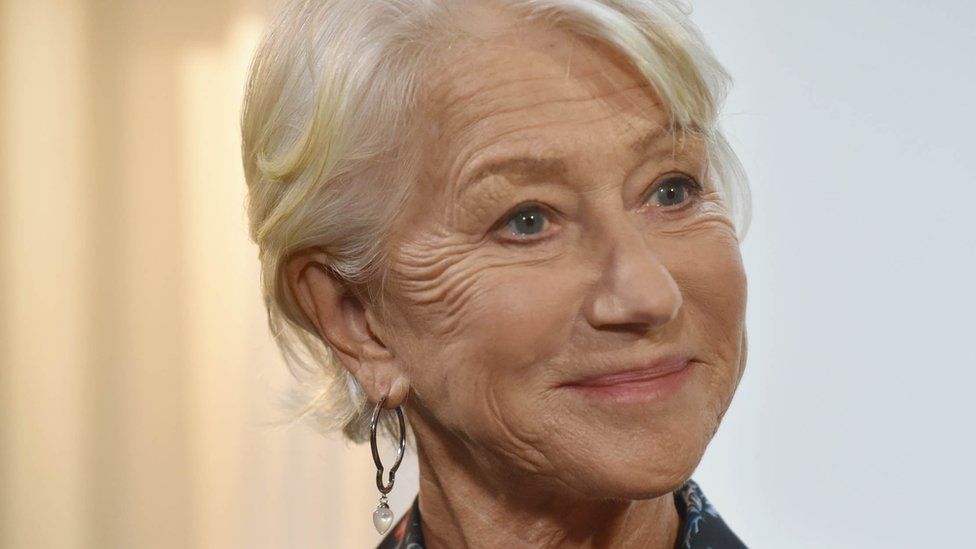
Dame Helen Mirren
Image caption,

Dame Helen Mirren won the best actress Oscar for her portrayal of Her Majesty, The Queen

In 1969, Golda Meir, known as “the grand old woman of Israeli politics”, became the country’s first female prime minister.

Meir’s story has been the subject of many fictionalised portrayals, on stage and on both the big and small screen.

Lioness, a separate Barbara Streisand-directed TV mini-series, set to star Israili actress Shira Haas as Meir, is also currently in the works.

Dame Helen recently took on the role while filming Guy Nattiv’s upcoming eponymous biopic.

After a first image of the British actress as the late politician was shared in November, she said it was a “great challenge to portray her at the most difficult moment of her extraordinary life.”

“I only hope I do her justice,” she added.

The BBC is not responsible for the content of external sites.View original tweet on Twitter

The Oscar-winner has previously played Jewish characters, appearing as a Mossad agent in the 2010 film The Debt, and as Jewish refugee Maria Altmann in the 2015’s Woman In Gold.

Dame Maureen, meanwhile, played the titular character’s mother in Roman Polanski’s 2002 holocaust and war memoir film, The Pianist.

Her criticism of Dame Helen’s involvement in the upcoming Golda film follows a series of similar comments by actors questioning what they believe to be inauthentic casting decisions.

Tamsin Greig, a practising Christian of Jewish descent, last month told The Daily Telegraph she “probably shouldn’t” have played a Jewish mother in the Channel 4 sitcom Friday Night Dinner.

Elsewhere, US comedian and actor Sarah Silverman recently called out actress Kathryn Hahn for being chosen to play Joan Rivers in a planned biopic – labelling the casting as “Jewface”.
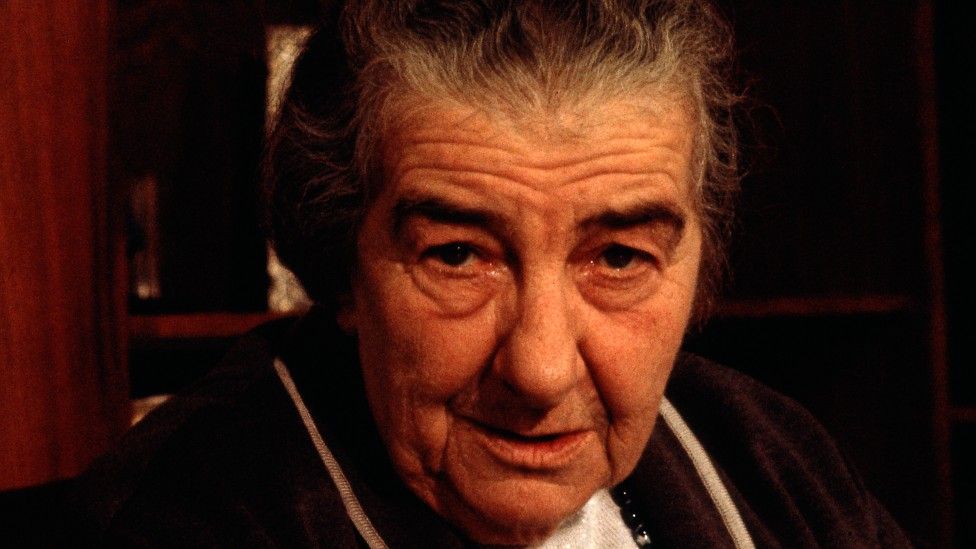
Golda MeirIMAGE SOURCE,BETTMANN/GETTY
Image caption,

Golda Meir became Israel’s first female PM in 1969

In the latest instance, however, Stephen Pollard, editor-at-large of the Jewish Chronicle tweeted in defence of Dame Helen. “I adore Maureen Lipman but she couldn’t be more wrong on this,” he wrote.

“The logic of her position is that the only character any actor can play is themselves.”

There has been lively debate about authentic casting in Hollywood for several years.

For example, some believe that gay, trans or disabled characters should only be played by gay, trans or disabled actors respectively, but others argue that the whole point of acting is portraying somebody you are not.

Dame Maureen made the news in December, when she told the BBC that comedy is in danger of being “wiped out” due to fears over being cancelled.

She told the corporation’s Culture Editor Katie Razzall she believes comedians are now so worried about offending, “a revolution” is taking place.

……………………………………………………………

Afcon 2021: Everything you need to know about tournament in Cameroon


The first major football tournament of 2022 kicks off on Sunday, with the Africa Cup of Nations taking centre stage.


A host of Premier League and European stars will descend on Cameroon, with the hosts facing Burkina Faso in the opening game.

First scheduled to start in June 2021 but subsequently brought forward to January last year to avoid Cameroon’s rainy season, the tournament has been delayed to 2022 because of the coronavirus pandemic.

The Confederation of African Football (Caf) has faced criticism over the timing of its continental showpiece, and last month had to face down rumours the tournament would be further delayed or moved following the emergence of the Omicron variant of Covid-19.

Former Arsenal and England striker Ian Wright said some of the negative media coverage has been “disrespectful” and “tinged with racism”.

What’s the format and when are the games?

For the second successive tournament, the Nations Cup will have 24 participants.

That means six groups of four, with the top two qualifying for the last 16 alongside the four best-ranked third-placed sides.

Games will be held at 13:00, 16:00 and 19:00 (all times GMT) during the group stages, with the two latter kick-off times being used in the knock-out stages from Sunday, 23 January.

The BBC will broadcast 10 games including the final in Yaounde’s Olembe Stadium on Sunday, 6 February. The first game to be shown will be the heavyweight clash between Nigeria and Egypt on Tuesday

The ball being used is the Umbro Toghu, named after a multi-coloured and finely embroidered outfit initially designed for royalty but now popular throughout Cameroon.

Who are the main contenders?

It is hard to look past holders Algeria, who are on a 34-match unbeaten run and led by Manchester City winger Riyad Mahrez.

Sadio Mane’s Senegal, Africa’s top-ranked side for the past three years, were runners-up in 2019 and are among the main challengers, while record seven-time champions Egypt boast arguably the best player in the world right now in Mohamed Salah, who has shone for Liverpool this season.

Ghana and Nigeria are among the continent’s most successful countries but had unconvincing 2022 World Cup qualification campaigns, while Cameroon – chasing their sixth Nations Cup title – will fancy their chances on home soil.

Mali could be a surprise package after reaching the World Cup play-offs by going unbeaten despite being stripped of home advantage.

Ivory Coast, Morocco and Tunisia are among the other former champions present and, at the other end of the spectrum, Comoros and The Gambia are first-time qualifiers.

What about the timing?

There have been grumbles from some European clubs about releasing their players mid-season for the tournament.

Premier League club Watford, for instance, were accused of “baring fangs” by Nigeria in a dispute over the availability of Emmanuel Dennis, a battle the Hornets eventually won.

However, the climate in Cameroon and being forced to shift the biennial tournament into a World Cup year has left Caf with limited options over its timing.

The 2023 edition is scheduled to take place in June and July next year in Ivory Coast.

Gianni Infantino, president of world governing body Fifa, has proposed moving future Nations Cups to between September and November in a revised international calendar.

What about off-field issues, like coronavirus?

The pandemic has obviously had an impact on the tournament, with Caf capping attendances at 60% of capacity for the majority of matches.

Games involving hosts Cameroon will be permitted to have 80% capacity, and only those who have been double-vaccinated and have a negative test can attend matches.

With just 2% of the country fully jabbed according to figures from Our World in Data, it will be interesting to see how those restrictions impact on attendances at the 52 matches spread across the six stadia.

Several countries reported cases in the build-up to the tournament, with Cape Verde struck by an outbreak in their training camp and debutants The Gambia forced to call off two friendlies, with over half their squad unavailable.

Cameroon is set to host the much-delayed competition – but what shape is the country in?

Infrastructure in Cameroon and their readiness to host have been questioned, given they were due to stage the 2019 tournament which had to be moved to Egypt.

There are security concerns over Limbe, a city in the south-west region affected by conflict in recent years by local militants pursuing a separatist agenda.

Since 2017, armed groups – who argue that the Anglophone regions of Cameroon have been marginalised by the primarily French-speaking government – have tried to form a breakaway state called Ambazonia.

In a bid to maintain order, armoured vehicles and checkpoints have been deployed this week across Limbe, where a car bomb exploded on the eve of Cameroon’s hosting of the African Nations Championship in January 2021, with further explosions having also taken place in the area in recent months.

Local officials have said the security measures taken mean there will be no disruption to Afcon, with Limbe set to host eight matches, including two knock-out games.

How to follow the tournament

The BBC will broadcast 10 games during the tournament, including two quarter-finals, both semis and the final. Sky Sports will show every match in Cameroon, with beIN SPORT, Canal+ and SuperSport among those offering coverage across Africa.

The BBC Sport website will also keep you up to date during the tournament, encompassing news and daily round-ups of matches, with live text coverage from the quarter-finals.

……………………………………………………………

China to appoint special envoy to Horn of Africa


China will appoint a special envoy for the Horn of Africa to help tackle security challenges in the region.


Chinese Foreign Minister Wang Yi made the announcement on Thursday during a press conference in the Kenyan city of Mombasa.

“We will continue to play even a bigger role for peace and stability in the region,” Mr Wang said.

The minister is on a tour of three countries in eastern Africa which began in Eritrea and concludes in the Indian Ocean island of Comoros.

On Wednesday, he condemned sanctions imposed on Eritrea, which has long been regarded as a pariah by Western powers. The US imposed sanctions on Eritrea last year over its involvement in the Ethiopia conflict.

The Chinese minister’s tour to the region coincides with the visit by US special envoy to the Horn of Africa, Jeffrey Feltman, who is due to arrive in Ethiopia on Thursday to discuss the 14-month civil war in the northern part of the country.

……………………………………………………………


Afcon 2021: Nigeria’s Odion Ighalo not released by Al Shabab


Nigeria look set to be without striker Odion Ighalo at the Africa Cup of Nations after his Saudi Arabian club Al Shabab refused to release him for the tournament in Cameroon, which starts on Sunday.


The 32-year-old, top scorer at the last Nations Cup in 2019, was initially given a deadline of Tuesday to confirm his availability by interim Super Eagles coach Augustine Eguavoen.

However, Ighalo was not part of the squad that landed in Garoua late on Wednesday after Al Shabab objected to their top scorer’s involvement and reiterated that the Nigeria Football Federation (NFF) missed the official deadline to call up the player.

The Riyad club official Majid Al-Marzouki told Al Arabiya’s In the Goal TV program that Ighalo’s letter of invitation did not reach the club within the period specified by world governing body Fifa for receiving players’ call-up letters.

“The Fifa Player Status Regulations stipulates that the federation must notify the player and his club in writing of his summons 15 days before the start of the tournament, and it is advised to send a copy to the local federation of the club as well, which did not happen,” Al-Marzouki said.

“Accordingly the coach [Pericles Chamusca] told us that the player will stay with us and will not join the Nigerian team.

“There are no negotiations between us and the Nigerian federation, and the player is committed to the decision. The situation is settled.”

Nigeria team officials have now informed BBC Sport Africa that they might not be able to call up a replacement for Ighalo in line with Nations Cup regulations.

Article 72.2 of the Confederation of African Football’s tournament regulations state: “A player on the final list cannot be replaced unless seriously injured at the latest 24 hours at least before the beginning of the first match of his team.”

Recalled from international retirement in November by former coach Gernot Rohr, Ighalo’s 16 international goals rank the former Watford and Manchester United man among the country’s top six scorers.

Nigeria were hoping Ighalo, currently the leading goalscorer in the Saudi Pro League season with 11 goals for Al Shabab, could reproduce his club form at the continental showpiece football event.

Attacking problems mount for Super Eagles

This is the latest club versus country row involving Nigeria, following last month’s decision by Premier League club Watford to prevent their top scorer Emmanuel Dennis from playing in Cameroon, claiming the NFF missed the deadline to request his release.

Nigeria suggested Watford were “baring fangs” over the issues and the player has since been replaced.

The Super Eagles are also without Victor Osimhen, their top scorer in qualifying, after the Napoli man was ruled out following a positive Covid-19 test and is still recovering from facial fractures.

Genk’s Paul Onuachu, who has netted 12 league goals this season, will also miss the tournament through injury.

Europe-based Jamilu Collins and Tyronne Ebuehi, who did not travel from Abuja to Garoua, are expected to link up with the rest of the squad in Cameroon ahead of the opening game against Egypt on Tuesday, 11 January.

The three-time African champions, who have appointed Portuguese Jose Peseiro as their permanent coach, are in Group D along with the Pharaohs, Guinea-Bissau and Sudan.

…………………………………………………………

Wednesday, 5 January 2022

France’s Bogdanoff TV twins die of Covid six days apart


Grichka and Igor Bogdanoff became France’s most famous twins, hosting a TV science and science-fiction show in the 1980s on a spaceship set.

They died of coronavirus within days of each other in hospital, Grichka on 28 December and his brother on Monday.

Aged 72, the brothers had not been vaccinated against Covid-19.

Their friends said they were convinced their healthy lifestyle would protect them and they were admitted to hospital in mid-December.

Although their families did not specify the cause of their deaths, their lawyer Edouard de Lamaze confirmed they had both contracted the virus.

Family friend Pierre-Jean Chalençon said they had left it too late to seek hospital treatment, deciding it was similar to flu. “People have said they were anti-vaxxers but they absolutely weren’t,” he told BFMTV. “Several friends told them to get themselves vaccinated but they felt because of their lifestyle and their [lack of] comorbidity, they weren’t at risk of Covid.”

The Bogdanoff brothers were a pair of eccentrics, descended from Austrian nobility.

Feted for their initial Saturday afternoon TV programme Temps X which ran from 1979, they were synonymous for years with popular science and were part of public life for the rest of their lives.

Their programme on TF1 was for years seen in some ways as highlighting cutting-edge technology, according to Le Monde, which described them as icons from a kitsch period of culture. Temps X showcased other TV shows such as Doctor Who, The Prisoner and Star Trek, with guests including electronic music pioneer Jean-Michel Jarre.


IMAGE SOURCE,GETTY IMAGES

Image caption,

The twins presented their hit TV series from 1979-1987

However, when the TV channel went private in 1987, they were dropped.

During the 1990s their facial features changed dramatically, leaving them with odd-looking chins, lips and cheek-bones. “We are proud of having faces like extra-terrestrials,” they once said.

Grichka Boganoff was adamant that they had never had “what people call cosmetic surgery”, insisting that he and his brother were experimental by nature and had tried out very advanced technology.

That was contradicted by their friend, former education ministry Luc Ferry, who said they had both had Botox injections.

The brothers later tried their hands at academic work, writing doctoral theses in mathematics and theoretical physics which were both panned by their peers.

Ridiculed by sections of French media, they won a 2014 court case for defamation before losing a lawsuit against the French National Centre for Scientific Research.

Asked why they had chosen not to have the Covid vaccines if they were not themselves anti-vaxxers, Luc Ferry said on Monday: “Like Igor, Grichka,wasn’t antivax, he was just antivax for himself.”

“They were both athletic, with not an inch of fat, and they thought the vaccine was more dangerous than the virus.”

In a statement on Monday, Igor Bogdanoff’s family said he had “gone towards the light”, surrounded by his children and family.

………………………………………………………

New Covid-19 variant ‘IHU’ discovered in France, has more mutations than Omicron


The B.1.640.2 has not been spotted in other countries or labelled a variant under investigation by the World Health Organization (WHO).


People wait in line outside a community vaccination centre administering the BioNTech Covid-19 vaccine in Hong Kong, on Tuesday.(Bloomberg Photo)

 Written by Amit Chaturvedi, Hindustan Times, New Delhi

Scientists in France have identified a new strain of coronavirus with more mutations than the Omicron variant. The emergence of the new variant, which probably originated in Cameroon, as per the study, harbours both substitutions N501Y and E484K in the spike protein. At least 12 cases of the new variant have been reported near Marseilles, and has been linked to travel to the African country Cameroon.

“The mutation set and phylogenetic position of the genomes obtained here indicate based on our previous definition a new variant we named IHU,” the authors of the study said.

“These data are another example of the unpredictability of the emergence of SARS-CoV-2 variants, and of their introduction in a given geographical area from abroad,” they added.

The B.1.640.2 has not been spotted in other countries or labelled a variant under investigation by the World Health Organization (WHO).

According to a paper posted on medRxiv, the genomes were obtained by next-generation sequencing with Oxford Nanopore Technologies on GridION instruments.

“Fourteen amino acid substitutions, including N501Y and E484K, and 9 deletions are located in the spike protein. This genotype pattern led to create a new Pangolin lineage named B.1.640.2, which is a phylogenetic sister group to the old B.1.640 lineage renamed B.1.640.1,” the research paper said.

……………………………………………………………

DUP MLA Diane Dodds condemns ‘callous’ dead son tweet


Democratic Unionist Party (DUP) assembly member Diane Dodds has described online abuse mocking her late son as “callous and malicious”.

The Upper Bann representative’s son Andrew was born with spina bifida and died in 1998, aged eight.

Police are investigating after she was targeted by an anonymous account, which has been removed, on New Year’s Eve.

“In politics you expect the rough and tumble, but you probably don’t expect that level of brutality,” she said.

Speaking on BBC Radio Ulster’s Nolan Show, Mrs Dodds said online trolling could be both harmful and dangerous, adding that those involved set out to “strike the core of your very being”.

She said she had received messages of support from members of the public and other politicians following the incident.

“People are shell-shocked that there can be this much cruelty and callousness,” she said.

DUP leader condemns online abuse against Dodds

Mrs Dodds said the anonymous Twitter account involved has also been trolling victims of terrorism on the platform.

Police Service of Northern Ireland (PSNI) officers attended her constituency office on Tuesday.


Image caption,

Police officers visited Diane Dodds at her constituency office on Tuesday

The former economy minister welcomed Westminster’s plans to introduce an online harm bill but she said what is being proposed won’t be effective enough.

“People in the public eye seem to be seen as fair game,” Mrs Dodds said.

“I don’t see anything in the new bill that will actually deal with this feature that people on social media can hide behind a cloak of anonymity.

………………………………………………………………

When Telecommunications Collapse: What Angola's Mobile Network Crisis Teaches Us About Governance, Justice, and National Security

  The recent disruption of Angola's mobile networks has affected banking, digital payments, businesses, emergency communications, and mi...