Translate

Friday, 3 December 2021

Ex-nurse gets 10 years in prison for raping incapacitated patient

 An Arizona man has been sentenced to 10 years in prison for sexually assaulting an incapacitated woman who gave birth at a clinic where she was under his care.


Ex-nurse Nathan Sutherland was accused of raping the victim, who has with severe disabilities, at the Hacienda HealthCare facility in Phoenix.

He was arrested in 2018 after his DNA matched a sample from the newborn.

Sutherland pleaded guilty to abuse of a vulnerable adult in September.

The victim, who was 29 years old at the time of the baby’s birth, had reportedly been in the care of the clinic since she was a toddler.

In addition to his prison sentence, Sutherland will be placed on probation for the rest of his life and will be required to register as a sex offender after his release.

In a statement quoted by US media, Maricopa County Attorney Allister Adel said that the sentence was the maximum allowable under Sutherland’s plea agreement.

She added that the sentence “took into consideration numerous aggravating and mitigating factors, including the vulnerability of the victim and the position of trust by the defendant”.

The BBC has reached out to both the Maricopa County Attorney’s office and to Sutherland’s attorney for comment.

Recordings of 911 calls released to the media show that, at the time the victim gave birth, the Hacienda HealthCare facility was unaware that she was pregnant.

“One of the patients just had a baby, and we had no idea she was pregnant,” a nurse can be heard saying on the call. “We were not prepared for this.”

In May 2019, the victim’s family filed a lawsuit against Hacienda HealthCare.

The lawsuit noted that a medical examination revealed that the woman had been “violated repeatedly” and may have been pregnant before the incident that led to Sutherland’s arrest.

In June, an Arizona judge approved a $15m (£11.3m) settlement agreed between the victim’s family and the estate of a doctor – who died last December – who cared for her at the facility.

The state of Arizona previously settled with the family for $7.5m.

…………………………………………………………

Thursday, 2 December 2021

Ladies without plastic - Green Menstruation. Environmental challenge by Sofonie Dala, Angola. Day 10

 Women without plastic - Key to reduce our carbon footprints ðŸ‘£ 


Good afternoon ladies and gentlemen, 

Welcome to tenth day of our environmental challenge Women Without Plastic - Key to reduce our carbon footprints! 


Amenorrhea is when a girl’s menstrual bleeding (period) doesn’t occur. Primary amenorrhea is when the first menstrual bleeding at puberty doesn’t occur by age 15. Delayed puberty in girls occurs when breasts don't develop by age 13 or menstrual periods do not begin by age 16.

Although most girls get their first period when they're around 12, our today's guests have already reached 14 years of age and are still not menstruating.~


 Interview with Georgina


Good afternoon young lady!
Good afternoon.
What is your name?
My name is Georgina.
How old are you?
I'm 14 years old.
Which of these pads do you use?
None of them.
Why?
Because I'm not menstruating yet.
Oh, haven't you started menstruating yet?
Not yet.
Is this normal to happen in your family?
Yes.
How old do girls start menstruating in your family?
With 16 years of age.
Who started menstruating at the age of 16 in your family?
My mother and my sisters.
Is this natural to happen in your family? Have you ever consulted a doctor to find out why you have late menstruation?
No, we didn't consult the doctor.


If your mom didn’t get their period until they were 15 or older, chances are that being a late bloomer runs in your family. That may especially be true if your aunts, grandmothers, and cousins also started menstruating only after they were well into high school. 

 Girls usually start their periods between 10 and 16 years of age. Most girls get their first period when they're around 12. It’s a sign that your body is maturing, so that one day, if you want to, you should be able to have a baby.


Interview with Vilcya
~
Hey, good afternoon!
Good afternoon!
What is your name?
My name is Vilcya.
Vicya how old are you?
I'm 14 years old.
Okay, can you tell us which of these pads you use?
Well, I don't use any.
Why?
Because I haven't started menstruating yet.
oh, 14 years old, and still not menstruating?
Yes it's true.
Are these cases common in your family?
Yes.
At what age do women usually start menstruating in your family?
Women in my family start menstruating at the age of 17.
Seriously?
Yes Yes,
OK thanks.


How does climate affect your menstrual cycle?

While climate change does not directly affect your period, it results in a lot of other changes that can throw your cycle off-balance: changes in your food habits, differences in your exercise patterns, increased levels of stress. Moreover, many factors that affect the timing menarche in girls could be affected by climate change.


Research from climatology was incorporated to describe how climate change events, including increased hurricanes, avalanches/mudslides/landslides, and extreme weather events could alter the age of menarche by disrupting food availability or via increased toxin/pollutant release. These perturbations in the timing of menarche are likely to increase the disease burden for women in four key areas: mental health, fertility-related conditions, cardiovascular disease, and bone health. In summary, the climate does have the potential to impact women’s health through perturbation in the timing of menarche and this, in turn, will affect women’s risk of disease in future.


Nigeria boat capsize: At least 29 die in Kano state

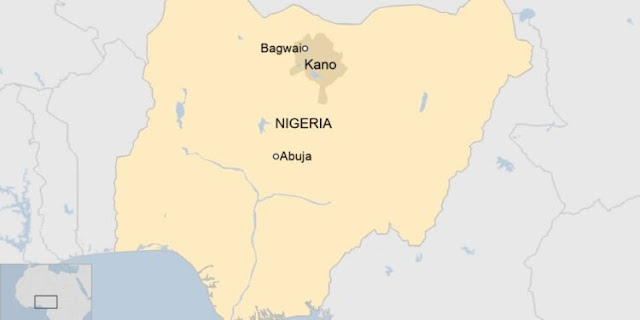
 At least 29 people, including schoolchildren, have died in northern Nigeria after a boat capsized in a river in Nigeria’s northern Kano state.


Most of the victims were Islamic school pupils aged between six and 12 who were travelling to a religious event.

Police say seven survivors have been taken to a hospital as search and rescue operations continue.

The cause of the capsize is unclear, but previous accidents have been blamed on overloading and poor maintenance.

There is also a lack of proper regulations to ensure the safety of passengers.

The vessel was carrying more than 50 people from the village of Badau to the town of Bagwig when it capsized.

Just two weeks ago, at least seven girls drowned when a boat overturned in neighboring Jigawa state, while in May more than 100 people died in Kebbi state in a similar accident.

……………………………………………………………

SA president chides African states for Covid travel bans

 South African President Cyril Ramaphosa has lashed out at African countries that have followed western countries in restricting travel to and from southern African states.


He said it was unfortunate, and that he would have preferred if they did not react like their former colonisers over the discovery of the new coronavirus variant Omicron.

“I am concerned and of course out of respect to them, I mean they have their reasons. But we would like to have a discussion with them in a way where we would prefer that they do not react like our former colonisers, who are very quick to close Africa down,” he told journalists ahead of his visit to West Africa.

Rwanda, The Seychelles, Mauritius, Egypt and Angola are some of the African countries that closed their borders soon after the discovery of the new variant.

The Omicron variant was first reported to the World Health Organization from South Africa on 24 November, and has since been identified in other countries.

South Africa has been condemning travel bans imposed against it and neighbouring countries as unjustified and not based on science.

…………………………………………………………

Munich WW2 bomb blows up near station, wounding three

 Three people were hurt, one seriously, when a World War Two bomb blew up on a railway construction site in the German city of Munich.


The fire brigade says it happened during drilling work near Donnersberger Bridge, close to the main station.

As a result rail traffic in much of Munich has come to a standstill.

Unexploded wartime bombs are frequently found in Germany and prompt big evacuations, but most are defused by experts without exploding.

Local reports described a loud bang followed by a column of smoke. An excavator was overturned by the force of the blast.

Emergency services rushed to the area and bomb disposal experts were quickly at the scene examining the remains of the bomb.

Rail operator Deutsche Bahn suspended travel to and from the central station.

It is not unknown for entire towns to be evacuated in response to the discovery of old World War Two bombs, usually dropped by British and US forces.

Seventy thousand people had to leave their homes in Frankfurt in 2017 when a 1.4 tonne British “blockbuster” bomb was discovered.

…………………………………………………………

Tel Aviv named as world’s most expensive city to live in

 Tel Aviv has been named as the most expensive city in the world to live in, as soaring inflation and supply-chain problems push up prices globally.


The Israeli city came top for the first time in a survey by the Economist Intelligence Unit (EIU), climbing from fifth place last year and pushing Paris down to joint second with Singapore.

Damascus, in war-torn Syria, retained its place as the cheapest in the world.

The survey compares costs in US dollars for goods and services in 173 cities.

The EIU said the data it collected in August and September showed that on average prices had risen 3.5% in local currency terms – the fastest inflation rate recorded over the past five years.

Transport has seen the biggest price increases, with the cost of a litre of petrol up by 21% on average in the cities studied.

Tel Aviv’s climb to the top of the EIU’s World Cost of Living rankings mainly reflected the soaring value of Israel’s currency, the shekel, against the dollar. The local prices of around 10% of goods also increased significantly, especially for groceries.

The survey found Tel Aviv was the second most expensive city for alcohol and transport, fifth for personal care items, and sixth for recreation.

Tel Aviv’s mayor, Ron Huldai, warned in an interview with the Haaretz newspaper that rising property prices – not included in the EIU’s calculations – meant the city was heading towards an “explosion”.

“Tel Aviv will become increasingly more expensive, just as the entire country is becoming more expensive,” he said.

“The fundamental problem is that in Israel there is no alternative metropolitan centre. In the United States, there is New York, Chicago, Miami and so on. In Britain, there’s Greater London, Manchester and Liverpool. There you can move to another city if the cost of living is too onerous.”

You may also be interested in:

How a supply chain shortage hurts local businesses

Last year, Paris, Zurich and Hong Kong shared joint first place in the EIU’s survey. Zurich and Hong Kong were fourth and fifth this year, followed by New York, Geneva, Copenhagen, Los Angeles and Osaka.

Tehran climbed the most in the rankings, jumping from 79th to 29th, as US economic sanctions continued to cause shortages of goods and rising import prices in Iran.

The EIU said the rankings continued to be sensitive to shifts brought about by the coronavirus pandemic.

“Although most economies are now recovering as Covid-19 vaccines are rolled out, the world’s major cities still experience frequent surges in cases, prompting renewed social restrictions. In many cities this has disrupted the supply of goods, leading to shortages and higher prices.”

It added: “Fluctuating consumer demand has also influenced purchasing habits, while investor confidence has affected currencies, further fuelling price rises.”

The EIU said it expected price rises to moderate over the coming year as central banks cautiously increased interest rates to stem inflation.

The five most expensive cities

  • 1 Tel Aviv
  • 2 Paris and Singapore in joint place
  • 3 Zurich
  • 4 Hong Kong

The five cheapest cities

  • 1 Damascus
  • 2 Tripoli
  • 3 Tashkent
  • 4 Tunis
  • 5 Almaty

……………………………………………………………

Kenya’s president gets sums wrong in national address

 Kenyans online have been pointing out errors made by President Uhuru Kenyatta during a national address on Tuesday, outlining what he said he’d achieved during his eight years in office.


He praised the army for helping revive the previously loss-making state-run Kenya Meat Commission (KMC), but got his sums wrong in the process.

He said under the army, the KMC had collected one million Kenyan shillings ($8,900; £6,700) each day at one of its new retail outlets.

“This one million translates to 30 million every month, and 3.6 billion Kenyan shillings annually in just one outlet,” he said.

But that doesn’t added up. With 12 months in a year, the correct figure should be 360 million Kenyan shillings – not 3.6 billion.

President Kenyatta also appears to have got it wrong when talking about Kenya’s expansion in power-generating capacity during his term.

He said when he took over in 2013, capacity was at 1,300 megawatts, and that the figure had doubled to 2,600 megawatts.

“This translates to 325 megawatts installed every year under my administration,” he said.

Again, that seems to be an error because an increase of 1,300 megawatts over eight years equals around 162 megawatts a year – not 325 megawatts.

………………………………………………………

The 2026 AFRICA EDUCATES HER CAMPAIGN REPORT - ANGOLA 6th Anniversary | 2020–2026

  Meet who's behind this cause     Support us:  https://donate-sofonie.netlify.app/           AFRICA EDUCATES HER CAMPAIGN REPORT — ANGO...