A Sekondi High Court has sentenced to death, the two accused persons behind the kidnapping and subsequent murder of the 4 Takoradi girls.
However, the Judge has given a 30 day window for the accused to appeal, if need be.
Samuel Udoetuk Wills and John Oji, second accused, both Nigerians, were facing trial in connection with the kidnapping and murder of four girls; Ruth Quayson, 18; Priscilla Blessing Bentum, 21; Priscilla Koranchie, 15; and Ruth Abekah, 18, who got missing between August 2018 and January 2019.
The two pleaded not guilty to eight counts of conspiracy and murder.
After months of fruitless search for the ladies, on January 4, 2019, relatives, friends and some residents staged a demonstration demanding justice for the girls.
This compelled the Western Regional Police Commander, DCOP Benson Redeemer Dedzo hold a first and official press conference during which he gave details on how the kidnappings happened.
The kidnapping of the girls became a national issue dominating discussions in the media.
Luanda - The Angolan health authorities on Thursday announced the report of 58 new infections, 44 recovered patients and one death, in the last 24 hours.
According to the secretary of State for Public Health, Franco Mufinda, who was speaking at the usual Covid-19 update session in the country, 38 new cases were diagnosed in Luanda, 11 in Huíla, eight in Uíge and one in Cabinda.
The list of new patients, whose ages range from one month to 76 years old, includes 29 men and the same number of women.
He said that of those recovered, 38 were from Huambo, three from Luanda and one each from the provinces of Bié, Cuando Cubango and Uíge, aged between seven months and 57 years old.
In relation to the death, Mr. Mufinda said that it was of an Angolan citizen aged 73, resident in Luanda.
Angola has a record of 20,981 cases, with 511 deaths, 19,553 recovered and 917 active.
Of the active cases, one is in critical condition with invasive mechanical ventilation, 11 are severe, 24 moderate, 20 with mild symptoms and 861 asymptomatic.
National laboratories have processed in the last 24 hours 1,322 samples, and the cumulative, to date, is 399,228 samples processed.
Luanda – President João Lourenço Friday in Luanda said the just sworn in Audit Court judges are professionally fit to successfully perform their new duties.
The Head of State was speaking at the ceremony of swearing in of the newly appointed judges for the Audit Court.
“Their being the top best in the tender, gives us the guarantee that they are the ones in the best position to perform this duty,” said President Lourenço.
The President swore in as Audit Cut judges Fausto Tavares de Carvalho Simões, Manuel José Domingos, Olinda Maria França and Arlete Maria Bolonhês da Conceição, following an indication by the Higher Council of the Judiciary.
The Audit Court is entrusted to control the legality of the financial and administrative management of the State and other public and private institutions in terms of the law, seeking to secure the right use of the public resources to the benefit of the people of Angola.
Enel Foundation announced the call for applications for the Open Africa Power 2021 program, which this year will begin in May.
Open Africa Power is an education venture initiated by Enel Foundation in 2018, in partnership with top Academic institutions such as Strathmore University and University of Nairobi in Kenya, University of Addis Ababa in Ethiopia, University of Cape Town in South Africa, and Italian institutions such as Politecnico di Torino, Politecnico di Milano, Bocconi University, Florence School of Regulation, and Venice International University.
After receiving more than 750 applications last year, Open Africa Power is welcoming candidates who want to acquire a holistic know-how of the electricity sector, enhancing their technical, regulatory and business skills required to work in the private and public sector towards the electrification of Africa. African Nationals currently living abroad, but wanting to relocate back to Africa, will also be admitted, as one of the program’s aims is to contribute to talent retention in the continent.
Requirements
To be eligible, candidates must meet the following criteria:
• Be between the ages of 24 and 35 by May 3rd, 2021;
• Be a citizen of an African country;
• Currently resident in an African country or planning to relocate in Africa within the end of 2021;
• Be eligible to travel to Italy. All candidates are invited to check well in advance the procedure applicable to their specific case;
• Having graduated from or being a student (having an admission letter is also acceptable) of a PhD, MSc, LLM, MPP or MBA degree.
Undergraduate students or people who are not at least enrolled in a master’s degree are not eligible for this program. One of the two degrees (Bachelor or Masters) must be from an African University;
Chance to win a Fully-Funded trip to Dubai and prizes worth $1000
Dear Wellbeing and Peace enthusiasts,
We are pleased to inform you that the Reimagining Society has come up with an unparalleled opportunity, i.e., our Virtual Summit Programme. Virtual Summit Programme offers us (Reimagining Society) to provide you and others with an opportunity to interact, share and discuss ideas for a better world in Reimagining Society's Global Wellbeing and Leadership Campaign. With a remarkable buffet of exciting events and competitions, the Virtual Summit Programme is all set to make a splash in the waters of wellbeing and development, with international participants from all walks of life!
The Virtual Summit of the Reimagining Society calls upon extraordinary, young at heart, diligent and enthusiastic Peace and Wellbeing enthusiasts. The annual Virtual Summit Programme convenes the brightest talent from 100+ countries and an array of sectors, working to accelerate social impact. Delegates from 100+ countries are counselled by influential political, business, and humanitarian leaders such as Dr. Saamdu Chetri (Founder, Gross National Happiness Center, Bhutan), Mr. Joseph Cataan (Prime-Time journalist, CNN the Philippines), Mr. Karan Shah (Digital Marketing expert, Harvard Graduate), Ms. Oluwaseun Ayodeji (Nigeria Hero Award Winner 2020 and Commonwealth Young person of the year 2019), and many more.
Intriguing and Skill enhancing competitions, workshops and sessions added with a selected panel of keynote speakers lined up for different sessions, just acts as an icing on the cake!
Some lucrative benefits include 'A fully-funded trip to Dubai' to the best performing delegate and prizes worth USD 1000+ for various competitions.
So what are you waiting for? Apply now, Limited Seats available.
We can learn important lessons from the Bible. The book of Acts records a very serious lesson that the earliest Christians learned about telling lies.
The happenings in the early church teach very important lessons for us today. Whether these events are good and pleasing, or tragic and depressing, all of it brings to us insight and learning that will refine us and make us ready for the return of the Lord Jesus.
Story Overview:
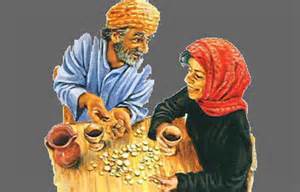
Because so many Jewish Christians stayed in Jerusalem after Pentecost, some Christians sold property and gave the money to the church so those in need could have enough. Ananias and his wife, Sapphira, sold some of their property and then decided to give part of the money to the church. They proceeded to lie and say that they had given it all. Peter confronted Ananias in front of the church and told him that by doing this he had lied to God. Ananias fell down dead. Unaware of what had happened to her husband, Sapphira came before the church and lied again about the money. She too fell down dead. The whole church was afraid.
One such event that teaches us very important lessons is the tragic death of a couple, Ananias and Sapphira. Their deaths, recorded in Acts 5: 1-11, did not come as a result of persecution or trouble. They died because of something else: they lied to God.
The event of Ananias and Sapphira is set against the backdrop of life in the early church. The church was on fire and growing rapidly every day. Passages such as Acts 2: 44-47 and Acts 4: 32-37 describe the unity of the early church and of selling their possessions and sharing with those in need.
We understand that Ananias and Sapphira also sold something that they possessed so that they could give. The problem here is not that they didn't give; the problem is they decided to lie.
During His ministry Jesus had encouraged his followers to not hold to any material attachments in this world, knowing that they would one day have to literally leave everything behind, whether due to persecution or the pending destruction of Jerusalem, or to the call of God. Jesus also taught the importance of caring for those in need through His words and example. With these teachings in mind it is not surprising that the early church radically embraced these ideals in selling their property and sharing their profits.
Ananias and Sapphira agreed to sell their property, but they lied about the current selling price. In their greed, and apparent stinginess, they gave a false amount so they could keep some money.
Of course, they owned the possession they sold; it was theirs. When they sold it, they still had control over what to do with the proceeds.They didn't have to lie - they could've just said they will give "a part of the proceeds," and it would be OK. But no, they lied.
They lied to God, and they died. And their deaths caused people to fear the LORD even more (see Acts 5:11).
So what can we learn from them? Here are a few things:
1) God sees everything, even what we keep in secret
Ananias and Sapphira tried to lie to Peter and the apostles, but they could not lie to God. He knows what we hide in our secret places.
We can never hide from God; why hide anyway?
2) Greed will always cause us to commit sin
The Bible did say that the love of money is the root of all evil (see 1 Timothy 6:10). Greed will always cause man to commit all sorts of sin.
In this couple's case, it was lying to the Holy Spirit and faking an image of generosity. In other cases, it could be anything from stealing, manipulation, lying, coercion, robbery, and the like.
3) When we lie, we lie to God and not to men
We must realize that when we Christians lie, we don't just lie to man; we lie to God.
We have to realize that everything we do, we do unto the Lord. If we lie to man, we lie as His ambassadors. If we steal from man, we steal as His children. Everything we do affects our relationship with Him.
4. Fear is a part of worship.
Unsurprisingly, these dramatic deaths caused a great deal of fear (Acts 5: 5, 11). But we may be shocked to see that even in light of this, “more and more people believed in the Lord” (Acts 5:14). Fear is an integral part of worship.
For those of us familiar with the idea of an infinitely loving God, this is a jarring realization. But God ’s love only makes sense when we know the magnificence of his glory and the might of his power. That is why John Newton wrote, “Tis grace that taught my heart to fear.” As the fear of God increases, so does the sense of his love of him, because we understand more fully what we have been saved from.
My favorite definition of the fear of God is awe mixed with intimacy. We are invited into the closest possible relationship with God, but this intimacy must never overshadow the majesty of who God is.
5. Sin is a deadly serious matter to God.
If we’re honest, many of us find God’s actions here offensive — but that merely reveals our ignorance of our sin and God’s holiness. We shouldn’t ask the question, “Why did they die?” Instead we should wonder, “Why do we remain alive?”
Yes, God is patient with us and slow to anger. But as R.C. Sproul says, we forget that God’s patience is designed to lead us to repentance, not to become bolder in our sin. If Jesus really went through the tormenting hell of the cross to redeem us, and we neglect that in pursuit of our sin, what will it be like to stand before God? "How shall we escape if we neglect such a great salvation?" (Hebrews 2: 3).
When teaching this story with the background in mind, it could be useful to explain why God takes dishonesty so seriously. Dishonesty can destroy marriages, families, churches, relationships and our witness. It hurts us. It hurts others. It hurts God. If we are honest, even when we make a mistake, things can be made better.
Satan will attack God’s church from both without and within. The incident of Ananias and Sapphira was the first noted internal spiritual attack in church history.God needed to protect the purity and the witness of the church. Should that lie have been overlooked or allowed to stand as it was, it would have allowed for further dishonesty, corruption and hypocrisy and thus could have destroyed the fledgling church. Ananias and Sapphira were killed both as an example and as an an act of protection.
No matter how much we try, nothing can be kept secret from God.
Pope Francis urged Iraqis on Friday to treat their Christian brothers as a precious resource to protect, not an “obstacle” to eliminate as he opened the first-ever papal visit to Iraq with a plea for tolerance and fraternity among Christians and Muslims.
Francis brushed aside the coronavirus pandemic and security concerns to resume his globe-trotting papacy after a yearlong hiatus spent under COVID-19 lockdown in Vatican City. His primary aim of him over the weekend is to encourage Iraq ’s dwindling number of Christians, who were violently persecuted by the Islamic State group and still face discrimination by the Shiite majority, to stay and help rebuild the country devastated by wars and strife.
“Only if we learn to look beyond our differences and see each other as members of the same human family will we be able to begin an effective process of rebuilding and leave to future generations a better, more just and more humane world,” Francis told Iraqi authorities in his welcoming address.
The 84-year-old pope donned a facemask during the flight from Rome and throughout all his protocol visits, as did his hosts. But the masks came off when the leaders sat down to talk, and social distancing and other health measures appeared lax at the airport and on the streets of Baghdad, despite the country’s worsening COVID-19 outbreak.
Francis, who relishes plunging into crowds and likes to travel in an open-sided popemobile, was transported around Baghdad in what Iraqi security officials said was an armored black BMWi750, flanked by rows of police on siren-blaring motorcycles. It was believed to be the first time Francis had used a bullet-proof car.
Iraqis seemed keen to welcome Francis and the global attention his visit he was bringing, with some lining the road to cheer his motorcade and banners and posters hanging high in central Baghdad depicting Francis with the slogan “We are all Brothers.” In central Tahrir Square, a mock tree was erected emblazoned with the Vatican emblem, while Iraqi and Vatican flags lined empty streets.
The government is eager to show off the relative security it has achieved after years of wars and its defeat of the IS insurgency.
“This visit is really important to us and provides a good perspective of Iraq because the whole world will be watching,” Tahsin al-Khafaji, spokesman for Iraq’s joint operations, said in explaining the increased security.
At Baghdad international airport, Prime Minister Mustafa al-Kadhimi greeted Francis as he descended from the Alitalia charter that landed shortly before 2 p.m. (1100GMT). Francis was visibly limping in a sign his sciatica of his, which has flared and forced him to cancel events recently, was possibly bothering him.
He told reporters aboard the papal plane that he was happy to be resuming his travels again.
“This is an emblematic journey,” he said. "It is also a duty to a land tormented for many years."
Francis ’first main event was a pomp-filled courtesy visit with President Barham Salih at the Baghdad palace inside the heavily fortified Green Zone. Afterward, Francis told Salih and other Iraqi authorities that Christians and other minorities shouldn’t be considered second-class citizens in Iraq but deserve to have the same rights and protections as the Shiite Muslim majority.
“The religious, cultural and ethnic diversity that has been a hallmark of Iraqi society for millennia is a precious resource on which to draw, not an obstacle to eliminate,” he said. “Iraq today is called to show everyone, especially in the Middle East, that diversity, instead of giving rise to conflict, should lead to harmonious cooperation in the life of society.”
That’s a tough sell even for Christians, given the few Christians who remain in Iraq harbor a lingering mistrust of their Muslim neighbors and face discrimination that long predated IS.
Salih echoed his call from him and praised Francis for coming to make it in person in Iraq despite the pandemic and security concerns.
“The East cannot be imagined without Christians,” Salih said. “The continued migration of Christians from the countries of the east will have dire consequences for the ability of the people from the same region to live together.”
Christians once constituted a sizeable minority in Iraq, estimated at around 1.4 million. But their numbers began to fall after the 2003 U.S.-led invasion that ousted Saddam Hussein opened a wave of instability in which militants repeatedly targeted Christians.
They received a further blow when IS militants in 2014 swept through northern Iraq, including traditionally Christian towns across the Nineveh plains, some of which date from the time of Christ. Their extremist version of Islam forced residents to flee to the neighboring Kurdish region or further afield.
Few have returned - estimates suggest there are fewer than 300,000 Christians still in Iraq and many of those remain displaced from their homes. Those who did go back to their towns found homes and churches destroyed. Many feel intimidated by Shiite militias controlling some areas.
There are practical struggles, as well. Many Iraqi Christians cannot find work and blame discriminatory practices in the public sector, Iraq’s largest employer. Since 2003, public jobs have been mostly controlled by majority Shiite political elites, leaving Christians feeling marginalized.
Francis called for Iraqi authorities to grant all religious communities “recognition, respect, rights and protection,” including the right to participate in public life “as citizens with full rights, freedoms and responsibilities.”
For the pope, who has often traveled to places where Christians are a persecuted minority, Iraq’s beleaguered Christians are the epitome of the “martyred church” that he has admired ever since he was a young Jesuit seeking to be a missionary in Asia.