Translate

Tuesday, 17 November 2020

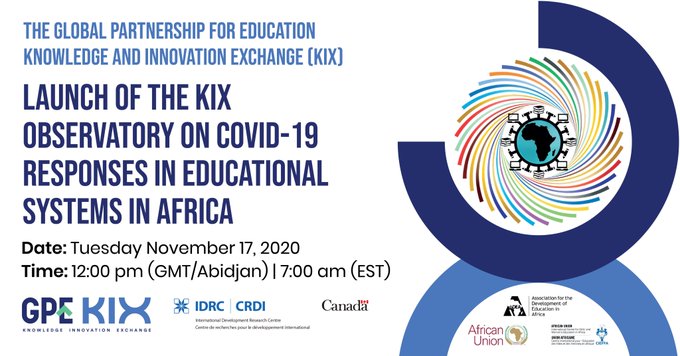
Knowledge and Innovation Exchange (KIX) Observatory on COVID-19 Responses in Africa’s Educational Systems starts TODAY

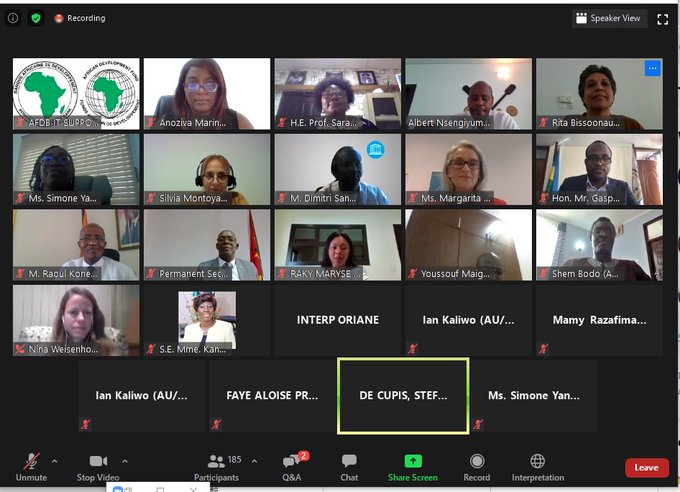
 "Knowledge and Innovation Exchange (KIX) Observatory on COVID-19 Responses in Africa’s Educational Systems" was launched today.

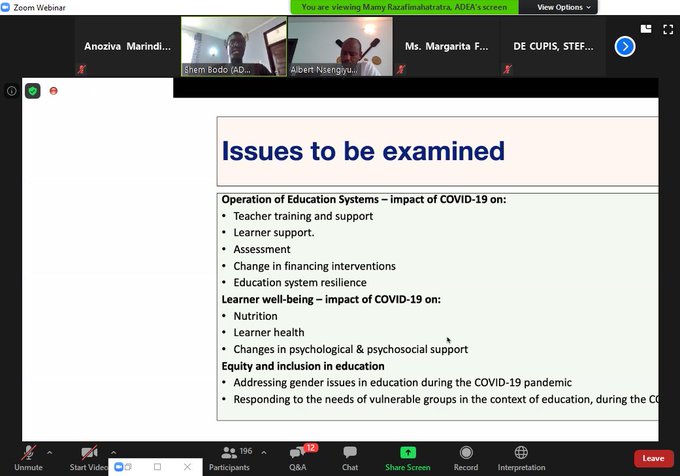
The #GPEKIX Observatory will examine the operation of education systems, learner well-being & equity & inclusion focusing on the impact of #COVID19. It will enhance already existing KIX Hubs. "We call on countries to give support to the research that will be happening."

Image


Image

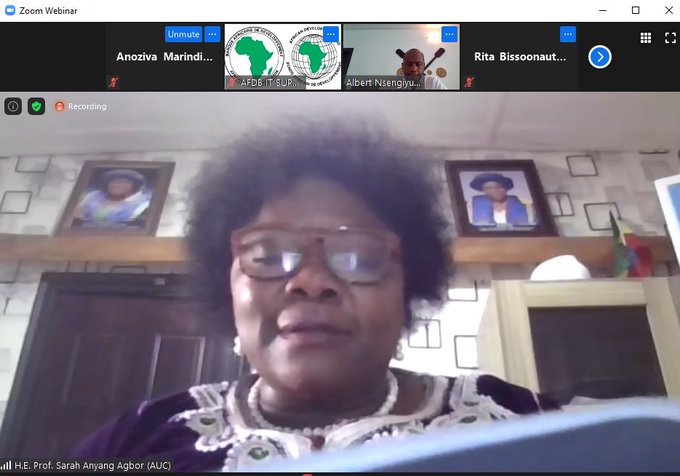
"The question we might ask ourselves today is whether our African countries will escape this second wave of the COVID-19? If so, what are the strategies and actions, we need to put in place? And how do we effectively deal with this crisis?"

Image

'We must provide specific support to girls...particularly attention will be given to the reintegration of pregnant girls, young mothers.."

Image

The #GPEKIX Observatory will focus on collecting & synthesizing information/evidence about #COVID19 responses in primary & secondary #education to inform policy/practice in 41 GPE partner countries in #Africa.Image


Earth globe europe-africa

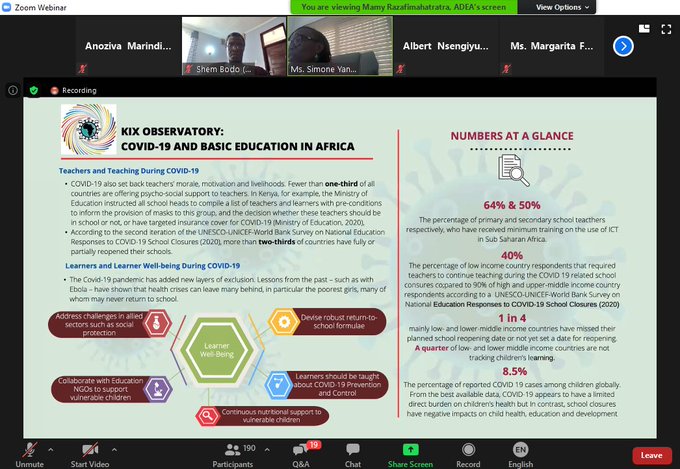
64% of primary & 50% of secondary school teachers respectively have received minimum training on ICT & were not prepared to continue teaching during the #COVID19 related school closure in Sub-Saharan Africa.

Image

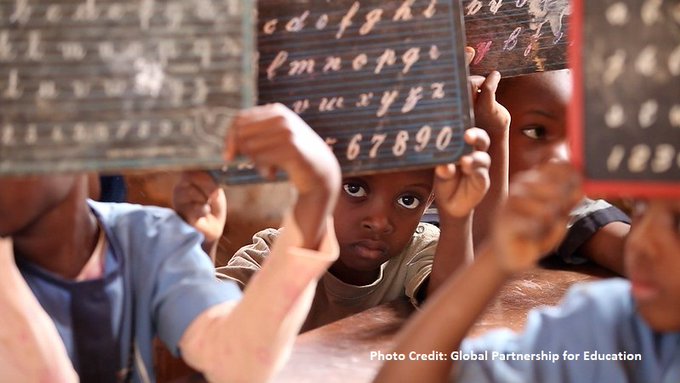
97 million adolescents and youth in sub-Saharan Africa were already out of school prior to COVID 19 & an additional 1 million girls more might not return to school due to the impacts of #covid19.

Image

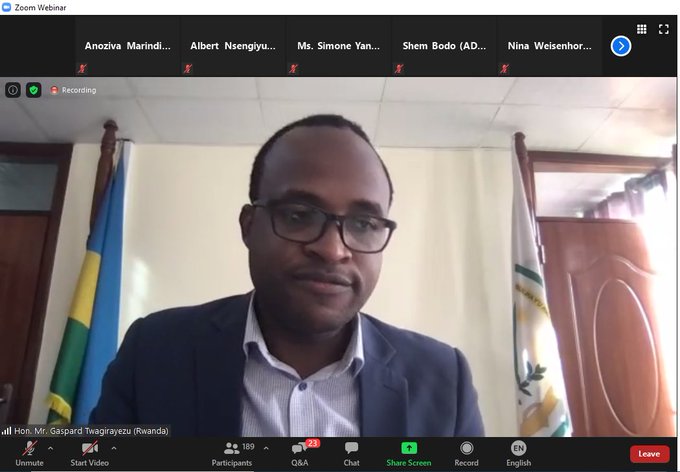
Hon. Gaspard Twagirayezu the Min. of State in charge of Primary and Secondary Education in Rwanda is sharing his country's experiences/perspectives on school reopening related to teachers & learners' well-being with a gender, equity, & inclusive lens.

Image

13 mil more girls could be forced into early marriages & an additional 2 mil cases of FGM/C are predicted in Africa due to the impacts of #COVID19 than would have occurred over the next decade if action isn't taken now.

Image

Ivorian football star, Drogba, calls for peace in his country following unrest over President Ouattara’s re-election

 Ivorian football star Didier Drogba has called for peace in his country following unrest around the re-election of President Alassane Ouattara to a third term.

Ivorian football star, Drogba, calls for peace in his country following unrest over President Ouattara’s re-election

His call comes after at least 85 people have died so far from the recent post-electoral violence in the country.

“On this day of the celebration of peace in our dear country, I join in all the steps and wishes in this direction. My compatriots in general and the youth in particular to whom I address myself regularly, fundamental pillar of our companies are at the heart of the matter, “writes the retired striker on his Facebook and Twitter accounts.

Drogba also expressed “his condolences to all of Côte d’Ivoire for the recent loss of life”.

Peace, peace, nothing but peace, concludes the former captain of the Elephants, aged 42.

Drogba did not cite any of the political actors in the middle of what is yet another brewing post-electoral crisis enveloping the west Africa nation.

The former chelsea star striker was one of the three candidates for the presidency of the Ivorian Football Federation (FIF) whose election gave rise to a crisis which notably saw the suspension of the body by FIFA

____

Source: africanews

GIPC debuts Diàspora Business Breakfast in Ghana

 The first ever Diàspora Business Breakfast took off this morning at the Accra Marriot to focus of the business and investment component of the Beyond the Return initiative that the government of Ghana has set up to sustain Diàspora interest in Ghana.

GIPC debuts Diàspora Business Breakfast in Ghana

The breakfast organized by the Ghana Investment Promotion Center (GIPC) is themed on the importance of creating connections.

The event is a collaborative effort with the Ministry of Foreign Affairs and Regional Integration bringing several government agencies such as Ghana Tourism Authority and Diàspora Affairs Office of the President.

In attendance we’re Minister of Finance Hon. Ken Ofori-Attah, Minister of Foreign Affairs Hon. Shirley Ayokor Botchway, and GIPC boss Yofi Grant. Others include Akwasi Agyemang, CEO of GTA, Kwasi Awuah Ababio, Director of Diàspora Affairs Office if the President, and Kwame Boateng, Co-chair of the Beyond the Return Committee.

In unison these public officials were resolute in their belief that while Ghana has been exemplary in reaching out to her Diàspora, the time has come to double down and train a sharper focus on what it takes to attract more investments from Ghanaians abroad.

In a panel discussion younger Ghanaians from the Diàspora joined in with perspectives that attract little attention such as developing Ghanaians in the Diàspora who are yet to take the plunge to return home.

According to Kofi Tonto, Head of Communication at the Ghana Embassy in the United States, not all Ghanaians in the Diàspora necessarily need to physically return in order to contribute.

Kissinger warns Biden of US-China catastrophe on scale of WWI

 Former US  Secretary of State Henry Kissinger said the incoming Biden administration should move quickly to restore lines of communication with China that frayed during the Trump years or risk a crisis that could escalate into military conflict.

Kissinger warns Biden of US-China catastrophe on scale of WWI

“Unless there is some basis for some cooperative action, the world will slide into a catastrophe comparable to World War I,” Kissinger said during the opening session of the Bloomberg New Economy Forum. He said military technologies available today would make such a crisis “even more difficult to control” than those of earlier eras.

“America and China are now drifting increasingly toward confrontation, and they’re conducting their diplomacy in a confrontational way,” the 97-year-old Kissinger said in an interview with Bloomberg News Editor-in-Chief John Micklethwait. “The danger is that some crisis will occur that will go beyond rhetoric into actual military conflict.”

The diplomat who paved the way for President Richard Nixon’s historic 1972 trip to China said he hoped that the shared threat of the Covid-19 pandemic would provide an opening for political discussions between the two countries when Biden takes office on Jan. 20.

“If you can look at Covid as a warning, in the sense that in practice it is dealt with by each country largely autonomously, but its long-term solution has to be on some global basis,” Kissinger said, “it should be dealt with as a lesson.”

US-China relations are at their lowest in decades, despite the two sides reaching a “phase one” trade deal at the start of the year. Since then, the virus outbreak that began in Wuhan, China, has gone global, killing more than 1.3 million people and crushing economies around the world.

As President Donald Trump stepped up his criticism of China, blaming it for the spread of the virus and the death toll in the U.S., each side also has ramped up moves the other sees as hostile.

Last week, China’s crackdown on Hong Kong’s autonomy continued, as officials there disqualified lawmakers viewed as insufficiently loyal to Beijing. U.S. officials have decried the death of the “one country, two systems” policy that has helped Beijing navigate its ties with the West for a generation.

The US followed up on its criticism by imposing new sanctions, banning investments in 31 Chinese firms it says are controlled by the country’s People’s Liberation Army.

“Trump has a more confrontational method of negotiation than you can apply indefinitely,” Kissinger said. Early in Trump’s term, “it was important for him to emphasize the deep concerns Americans have about the evolution of the world economy that is not balanced. I think that was important to emphasize. But since then, I would have preferred a more differentiated approach.”

Swift Erosion

The swift erosion in ties this year means China and the U.S. are edging toward a new Cold War, Kissinger said, adding that the two sides should “agree that whatever other conflict they have, they will not resort to military conflict.”

To achieve that, the U.S. and China should jointly create “an institutional system by which some leader that our president trusts and some Chinese leader that President Xi trusts are designated to remain in contact with each other on behalf of their presidents,” he said.

Relations with China may dominate the foreign policy agenda of President-elect Joe Biden’s administration. He’s expected to seek ways to defuse tensions in areas including the future of 5G technology, China’s expansionism in the South China Sea and Hong Kong’s fading autonomy.

While Biden has decades of experience in dealing with China, his tone took a harsher turn during the presidential primaries. He frequently criticized China’s assertive policies in its region as well as Beijing’s human rights record, even branding President Xi Jinping a “thug” during a debate in February.

“Of course, there are differences on the issue of human rights,” Kissinger said when asked what more China could do to improve relations. “It is important for each side to understand the sensitivities of the other, and not necessarily to solve the problem, but to alleviate it to a point where further progress is possible.”

Xi used a speech last week to call for countries to strengthen cooperation and avoid conflict, even as his policies set China on a collision course with the U.S. And China last week congratulated Biden and Vice President-elect Kamala Harris on their election victory.

“The United States and China have never faced countries of a magnitude that is roughly equal with the other,” Kissinger said. “This is the first experience. And we must avoid its turning into conflict, and hopefully lead to some cooperative endeavors.”

Reviewing some of Biden’s proposals for addressing China, Kissinger urged caution when asked about the idea of building a coalition of democracies to take on Beijing.

History of Crisis

“I think democracies should cooperate wherever their convictions allow it or dictate it,” he added. “I think a coalition aimed at a particular country is unwise, but a coalition to prevent dangers is necessary where the occasion requires.”

Ultimately, Kissinger said, the two nations’ leaders need to recognize that they see the same issues very differently, and that colors their approach to talks.

“Americans have had a history of relatively uninterrupted success,” he said. “The Chinese have had a very long history of repeated crises. America has had the good fortune of being free of immediate dangers. Chinese have usually been surrounded by countries that have had designs on their unity.”

Europe will increasingly find itself caught in a tug-of-war between the U.S. and Eurasia, Kissinger added.

“Europe has been an anchor of American foreign policy in the entire post-World War II period,” he said. “The question for them now is whether, in the evolution of relations with other parts of the world, they will attempt to play a totally autonomous role.”

____

Source: indianexpress

CARLOS FEIJÓ HIGHLIGHTS IMPORTANCE OF INTEGRATING COSTUME AS A SOURCE OF LAW

 The constitutionalist Carlos Feijó highlighted Monday in central Huambo province the importance of integrating the costume as a source of law, thus, overcoming the legalistic centralism that considered the legislation as the main and only source of law.

Carlos Feijó was speaking at presentation ceremony of the work “The institutionalisation of Traditional Power in Angola” by the university professor and dean of the Faculty of Law of the José Eduardo dos Santos University (UJES), João Valeriano.

Feijó said that the previous matrix contrasts the reality of the facts, as the customary law stems from traditions, interactions and cultural experiences.

The professor said that the work reinforces the legal pluralism of the Angolan judicial system, within the framework of the consolidation of democracy in Angola, where the author portrays the institutionalisation of local power in Angola, in a technical-legal narrative, in the light of article 7 of the Constitution of the Republic of Angola.

The 397-page book, whose presentation session gathered several individuals, addresses the topic from a historical perspective, from its structure, cohabitation with other local bodies, among others.

Speaking to the press, the author said that work is part of his doctoral thesis presented and defended this year at the Faculty of Law of the University of Lisbon, Portugal.

In his view, the recognition of custom as one of the sources of law, alongside the law, was a harbinger of a Democratic State of Law, as an end to the State's monopoly of creating legal norms, allowing the creation of conditions for that more interstate entities operate in this matter.

“Democracy has a price that consists in the State admitting that other institutions have the right and the legitimacy to create legal norms to regulate social coexistence, always taking into account the obedience to universal and democratic principles that may conflict with dignity human personnel, ”he said.

However, he said that he tried to approach the topic taking into account the principles of irreversibility of the fundamental rights of citizens, harmony, practical agreement and legality.

ANGOLA AMONG AFRICA’S BEST GOVERNED COUNTRIES

 Luanda - Angola joins the list of the eight African countries with improvements in terms of governance between 2010 and 2019, according to Ibrahim Index of African Governance (IIAG) 2020.

The report says that since 2010, the year of 2019 was the first one that showed a decline compared to the previous year (2018).

The document records the performance of the 54 African countries, stating that eight countries have moved from the deterioration in the quality of governance.

They are Angola, Chad, Ethiopia, Cote d'Ivoire, Madagascar, Seychelles, Sudan and Togo.

The IIAG is supported by the analysis of its specialists in four determining categories, with stress to the participation of civil society in decisions; rights and inclusion; and the rule of law and human development.

The eight countries have managed to improve in all these aspects.

This document also carries some elements of analysis that were not in evidence in the previous ones, such as the environmental issue and equality, the result of an improvement in the availability of data by countries.

It also highlights the opportunities that communities have to be heard by those in power.

The question of the civil voices that are heard is an element that tends, according to analysts, to impose itself as an element of positive differentiation in governance, in view of what until now have been the privileged categories, such as economic improvements and human development.

Mo Ibrahim Foundation believes that, for the future, countries will have better governance, the more the political power listens to the voices coming from civil society and the less it represses its manifestations.

COVID-19: ANGOLAN COMMISSION ADMITS SHORTAGE OF BIOSECURITY MEANS

 The Provincial Intersectoral Commission for the Prevention and Combat of Covid-19 in Bié Monday admitted that there were insufficient biosecurity means, mainly to support the technicians treating patients hospitalized in the health units.

MSF opens coronavirus COVID-19 centre in Venezuela

In taking stock of Covid-19's usual situation, in a meeting with members of the Government, the Spokesman for the commission, João Campos, clarified that such health units are the sentinels for active surveillance, since many citizens show up with respiratory syndromes.

According to him, it is intended that technicians work more safely in these units, also calling for the intensification of awareness campaigns to combat the disease.

He announced the likely reception from Luanda on Tuesday of a thousand rapid serological tests and an equal number of other tests, the latter for the sentinel units, which will be used to test suspected cases.

When the Camera Becomes a Threat: Protecting Citizen and Community Journalists in Africa

When the Camera Becomes a Threat: Protecting Citizen and Community Journalists in Africa By Sofonie Dala Angolan Citizen Journalist, Communi...