Translate

Thursday, 2 July 2020

Exclusive opportunity: West Africa Fellows Program 2021 for emerging Leaders in West Africa (Fully Funded)

Acumen West Africa Fellows Program 2021 for emerging Leaders in West Africa (Fully Funded)


Application Deadline: August 6th 2020 https://bit.ly/2NMqBjn

Applications Open: Entrepreneurs, intrapreneurs and organization-builders from both public and private sectors model a new type of leadership grounded in hope and dignity. The next Acumen West Africa Fellowship runs from January 2021 to December 2021.

Benefits

Acumen covers all program-related expenses during the fellowship year. This includes all costs associated with the seminars including lodging, food, transportation and visas.

ENTREPRENEUR

Founding or leading a for-profit or nonprofit organization that
provides critical goods or services to the underserved.

ORGANIZATIONAL BUILDER

Creating innovative solutions to tackle poverty or injustice from within an existing institution by shifting its culture and building new
collaborations.

Call for application: Scholarships for African writers (£18,000 in Scholarships)

Do not miss it!

Miles Morland Foundation 2020 Morland Writing Scholarships for African writers (£18,000 in Scholarships)


Application Deadline: 18th September 2020 https://bit.ly/38kPNXA

It can be difficult for writers, before they become established, to write while simultaneously earning a living. To help meet this need the MMF annually awards a small number of Morland Writing Scholarships, with the aim being to allow each Scholar the time to produce the first draft of a completed book. The Scholarships are open to anyone writing in the English language who was born in Africa, or both of whose parents were born in Africa.​

Grants

Scholars writing fiction will receive a grant of £18,000, paid monthly over the course of twelve months. At the discretion of the Foundation, Scholars writing non-fiction, who require additional research time, could receive an additional grant, paid over a period of up to eighteen months.​

Qualification


To qualify for the Scholarship a candidate must submit an excerpt from a piece of work of between 2,000 – 5,000 words, written in English that has been published and offered for sale,. This will be evaluated by a panel of readers and judges set up by the MMF. The work submitted will be judged purely on literary merit. It is not the purpose of the Scholarships to support academic or scientific research, or works of special interest such as religious or political writings. Submissions or proposals of this nature do not qualify.

Scholarship Requirements

The only condition imposed on the Scholars during the year of their Scholarship is that they must write. They will be asked to submit by email at least 10,000 new words every month until they have finished their book, or their Scholarship term has ended. If the first draft of the book is completed before the year is up, payments will continue while the Scholar edits and refines their work.

OPPORTUNITY FOR AFRICANS: AFS Global Citizen Prize 2020 for young Leaders ($USD 10,000 cash prize)

This annual AFS Prize will recognize one extraordinary young person for their commitment to improving the global community with a US$10,000 cash prize, participation at the AFS Global Conference, international recognition and membership in the AFS community of young and active global citizens.

Apply now: https://bit.ly/3iuisOX

Requirements

Is no older than 30 years old by October 22, 2020.
Is in charge of a project that is currently running or has been completed between January 2018 and January 2020. Both must have already demonstrated success in achieving their stated goals.

Demonstrates how their project is successfully addressing a pressing global issue, tackling one or more of the challenges outlined by the United Nations Sustainable Development Goals, and what this translates into in real-life impacts.
Shows how their project successfully engages others outside their own community/culture and how this aspect is crucial to advancing their work. Projects must rely on intercultural understanding and global competence.

Articulates how their initiative has significant potential to be scaled up and extended.

Wednesday, 1 July 2020

Addressing the impacts of COVID-19 pandemic on girls and women's education in Africa

Kindly find attached the report of  AU/CIEFFA webinar held on 7th & 20th May 2020 on addressing the impacts of COVID-19 pandemic on girls and women's education.

Home | African Union

I. Background 

The World Health Organization has declared the COVID-19 as a global pandemic. This situation has forced most of the globe, including Africa to adopt new numerous social protection measures such as school closures. Preoccupied by the increasing vulnerability of girls in Africa, the AU/CIEFFA has organized multi-stakeholder Webinars on “Addressing impacts of COVID-19 Pandemic on Girls and Women’s Education”. 

II. Participation 

Experts from African Union (AU) Education and Gender Ministries as well as representatives of RECs, CSOs, Traditional and Religious Leaders, AU/CIEFFA focal points, Youth/AU/CIEFFA’s Alumni network, Researchers and Development partners attended the webinar series. Broken down into two-parts, the first webinar held on May 7th, invited the Anglophone community with Dr Rita Bissoonauth as moderator. The second, targeting the Francophone community took place on May 19th with Mrs Simone Yankey-Ouattara as moderator. 

III. African Union Members States’ response on the impacts on Girls’ Education 
a. Strategies developed and implemented by Member States

The pandemic has widened existing inequalities in the education systems. Prior to COVID-19, girls in particular, recorded the lowest enrolment rates and remain the most vulnerable under the current crisis. Some of these girls were already affected by continued conflicts and poverty, lack of adaptability with ICTs in education, inadequate infrastructure and ineffective gender sensitive policies. Schools represent a refuge and symbolize a safe space for girls, and because of school closures, many learners now resort to bartering in the informal sector, farming for livelihoods and domestic chores. Other learners risk exposure to harmful practices such as early and forced marriage, physical and sexual assaults, early pregnancy, female genital mutilations and resort to transactional sex and prostitution. 

The crisis has equally discouraged girls, dimming their hopes of succeeding through school. Parents with few means of livelihoods, alternatively pressure their girls into looking for more. If left unchecked, this situation will increase dropout rates of girls from schools. 

AU Member States and respective Ministries of Education shed light on their key approaches in order to restrain COVID-19 related impacts on educational systems. Such approaches include:

Establishing key response structures: 
A High -Level Task Force and an Emergency Committee established in collaboration with development partners, ministries of health and donors. These structures strive to avoid duplication and ensure coordination of action and programmes of stakeholders to best address issues faced by the most vulnerable groups of learners especially, adolescent girls.

Gender responsiveness: 
A key framework on gender mainstreaming is established, integrating a gender dimension in all responses providing basic & preventive information and services to meet girls’ and women’ needs. In order to tackle SGBV, a male involvement strategy has been setup with a one stop Response centre against SGBV and a rape emergency call centre. 

Continuous Information & Education: 
Efforts are deployed to disseminate reliable messages on TV, radio and social media to address education & health concerns of learners, parents and guardians. The focus is preventing GBV, HIV, STI, teenage pregnancy and promoting Menstrual and Hygiene Management (MHM ) and psycho -social support amongst others. Learners without internet or radio are receiving hard copy school materials to reduce learning gaps. Radios distributed to parents and caregivers in remote areas, as teachers are actively dispensing radio learning programs to facilitate distance learning.

Framing of the response:
Furthermore, ministries of Education developed a recently harmonized Learning Framework with learning packages in core subjects/themes to support learning for learners at primary and secondary education levels. In the implementation of this Framework, local governments and parents are actively engaged with an emphasis on deriving benefits for girls and young women.

Re -opening every school: 
AU Member States’ mid to long term approaches aim for schools’ re -opening. These include tracking all learners, launching a campaign to bring back learners, providing remedial classes for slow learners and cash transfers for out -of - school girls while considering classroom congestion. More measures comprise of capacity building training for Ministries of Education and key stakeholders in the protection of learners, installing WASH & MHM facilities in schools as well as disinfecting school establishments & surroundings. Other responses emphasize on delivery of feeding programmes.

Monitoring mechanisms: 
Among other key guiding documents, the Reporting, Tracking, Response and Referral Guidelines on violence against children and commitment made to its implementation by governments will be closely followed up with accountability mechanisms. 

Specific programs: 
Some countries have launched specific programs and concepts : “Mon école à la maison”, “Ecole fermée: mon cahier ouvert”, “Digital solidarity”, “Nation apprenante”.

b. Strategy and implementation related challenges by AU Member States 

Due to the COVID-19, multiple challenges have been identified as obstacles to AU Member States’ strategy implementation responses. These are as follows: 


Evidence based-approach:
Evidence from former pandemics has shown that when many learners are not in school, they are likely to miss out on vital services such school meals, socializing and protection. Consequentially, the likelihood at this time for related effects is heightened. 

Vulnerability and marginalization: 
Girls will be at higher risk of exposure to SGBV, transactional sex, Sexually Transmissible Diseases and Infections (STDs and STIs) and HIV/AIDs as well as early pregnancy & marriage which leads to their drop-outs. Furthermore, frontline health workers and caregivers will be at higher risk of overwork, burnout and contagion, making the task of support and alleviation in affected communities more difficult. Already marginalized communities will be harder to reach especially, learners with disabilities, pastoralist & fishing communities plus parents and caregivers without internet access or radio/TV. 

Effects of lockdown restrictions:
women and girls fear accessing basic services and amenities as a result of the growing presence of security actors. These restrictions have led to limited time in school for girls and an increase of household chores & burdens. 

Internet connectivity: 
Many countries have experienced connectivity challenges due to high cost of internet and poor coverage especially in remote areas. These challenges are juxtaposed with the lack of funding, slowing down expected results of the strategy implementation.

IV. Key stakeholders contributing to the Education response with a focus on girls a. Contributions from International organisations 

  • UNESCO (United Nations Educational Scientific Cultural Organisation) highlighted its key measures, which include a virtual ministerial meeting, rallying 73 countries including 23 AU member states. An Ad-hoc Ministerial task force group has thus been established as an Education response. Furthermore, a Global Education coalition comprised of 100 member states, representatives from the private sector, CSO and UN agencies, has been developed to spearhead Flagships for a one-year period. These Flagship projects seek to address connectivity and content challenges, match learners needs with free digital solutions, whilst placing special attention on data security and privacy of learners & teachers. To better understand the gender dimensions of COVID related school closures, UNESCO runs a weekly webinar to promote knowledge and expand evidence base. On its website, national distance learning solutions and digital resources are curated. One exemplified practice is in Kenya which offers STEM education focused digital learning resources for inclusive education. 

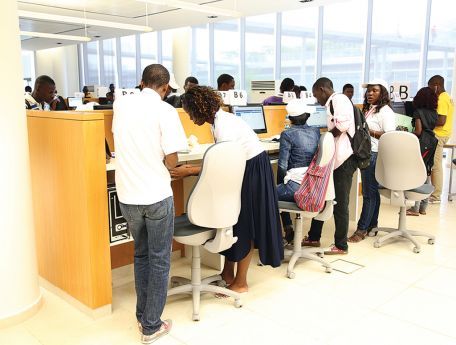
Covid-19: Angolan Private Institutions declare bankruptcy if classes do not resume on July 13

Higher education: Angolan Private Institutions declare bankruptcy if classes do not resume on July 13

COVID-19: Estudantes angolanos dizem que 10 meses letivos “estão ...

Just over 3 months later, without the tuition fees of the students, the institutions are already talking about bankruptcy. Regrettably, the government is not providing any financial assistance to the private sector in order to safeguard teachers' jobs. On the other hand,  the fault is also the poor management and the lack of vision on the part of the leaders of these same institutions, it is inadmissible that in less than a year the stock of these institutions become worthless.
How come an institution that raises more than 100 million a year, cannot survive a year without payments? Where did the money go? Is there no working capital? One thing for sure I know, if the Private Sector closes, the country will go into total chaos. 

TV news on this matter 

In recent times, higher education institutions have been announcing that engineering faculties are at risk of closing due to lack of teachers. A short time ago, Aline de Almeida the dean of the University Agostinho Neto reported that her staff has only two effective professors and 95% are collaborators who serve a universe of 200 to 300 students. Computer Engineering and Petroleum Engineering courses are the most affected. in addition, there is also a lack of teachers in mathematics and physics courses.

“There are professors already in age and length of service for retirement, but unfortunately, they are forced to remain there with them, as the university does not have the possibility of making new admissions”, she added. 
Furthermore, “there are serious problems with the infrastructures”, remembering that “the Faculty of Medicine never had its own facilities” and that “the [university] campus is yet to be concluded”.

Ensino Superior Público tem vinte e sete mil vagas | Sociedade ...

These phenomena occurring in the universities of Angola are unacceptable. Angola is one of the countries leading the world with the highest unemployment rate, there are hundreds of highly qualified teachers and  young engineers trained abroad and inside the country who could occupy the teaching staff of these institutions. many of these professionals are unemployed, others are forced to change specialties and pick another career path in order to get a job to survive in this suffering country.

Unfortunately, State Universities prefer to close their courses rather than recruit new teachers.
It should be noted that the country have more than 4 million unemployed people. Large pockets of the population live in poverty without adequate access to basic services.

The shock of the new coronavirus

Pereira Barreto tem sete casos suspeitos de coronavírus ...

“The shock of the new coronavirus puts even more pressure on public finances in 2020’’, Angola in recession will have to pay 5 billion in foreign debt amortizations, with total interest payments increasing to more than 60 percent of government revenue. 
The country is suffering the consequences of lower oil prices and the impact of measures to combat the covid-19 pandemic, which has so far caused 284 people to become infected and 13 deaths from it.

No one wants to buy Angolan oil. Now the one who pays for our oil is not the one who buys,  we are the ones  who have to pay  them to buy it, because now the storage of oil is more expensive than the value of the oil itself. Sonangol is clogged with full storage and is begging abroad to buy it in order to be able to continue producing, but the countries that consume do not really want it, because their storage depots are also full.

The coronavirus pandemic has increased illiteracy, hunger, poverty and criminality including domestic violence. For example, a 24 years old man mercilessly raped a one year old baby. This cruel event shocked the country. 


An article by: Sofonie Dala

Monday, 29 June 2020

The Vanier Canada Graduate Scholarship (Vanier CGS) Program 2020/2021 for doctoral study in Canada ($50,000 per year)

The Vanier Canada Graduate Scholarship (Vanier CGS) Program 2020/2021 for doctoral study in Canada ($50,000 per year)

Application Deadline:November 3, 2020 https://bit.ly/2BEeyBL

The Government of Canada launched the Vanier Canada Graduate Scholarships (Vanier CGS) program in 2008 to strengthen Canada's ability to attract and retain world-class doctoral students and establish Canada as a global centre of excellence in research and higher learning. Vanier Scholars demonstrate leadership skills and a high standard of scholarly achievement in graduate studies in the social sciences and humanities, natural sciences and/or engineering and health.

Eligibility
Citizenship:

Canadian citizens
Permanent residents of Canada
Foreign citizens
Areas of research:

Health research
Natural sciences and/or engineering research
Social sciences and humanities research

The Future We Want, The UN We Need – Essay Competition 2020 for young People

The Future We Want, The UN We Need – Essay Competition 2020 for young People


Application Deadline: June 29th 2020 https://bit.ly/3fU0HpY

The United Nations Secretary-General’s Envoy on Youth, the Under-Secretary-General and Special Adviser to the Secretary-General on the Commemoration of the United Nations’ 75th Anniversary and Devex, are excited to announce the launch of an Essay Competition for the best essay by a young person on the topic ‘The Future We Want, The UN We Need’.

Requirements

Participants must be between the ages of 15 and 29.
Participants must have written the essay by themselves. Only individual entries are admitted, no teams are allowed to take part in the competition. 
Essays must answer the question by making a case, analysing the situation, and building a case based on researched arguments and facts. 
Essays may be submitted in English only.
Entries must be no longer than 800 words.

The 2026 AFRICA EDUCATES HER CAMPAIGN REPORT - ANGOLA 6th Anniversary | 2020–2026

  Meet who's behind this cause     Support us:  https://donate-sofonie.netlify.app/           AFRICA EDUCATES HER CAMPAIGN REPORT — ANGO...