Translate

Friday, 8 December 2023

DAY 9 - Children's Art Challenge to drive the SDGs | SDG 9 - industry, innovation and infrastructure | Preparations for COP 28

 Goal 9: Build resilient infrastructure, promote sustainable industrialization and foster innovation
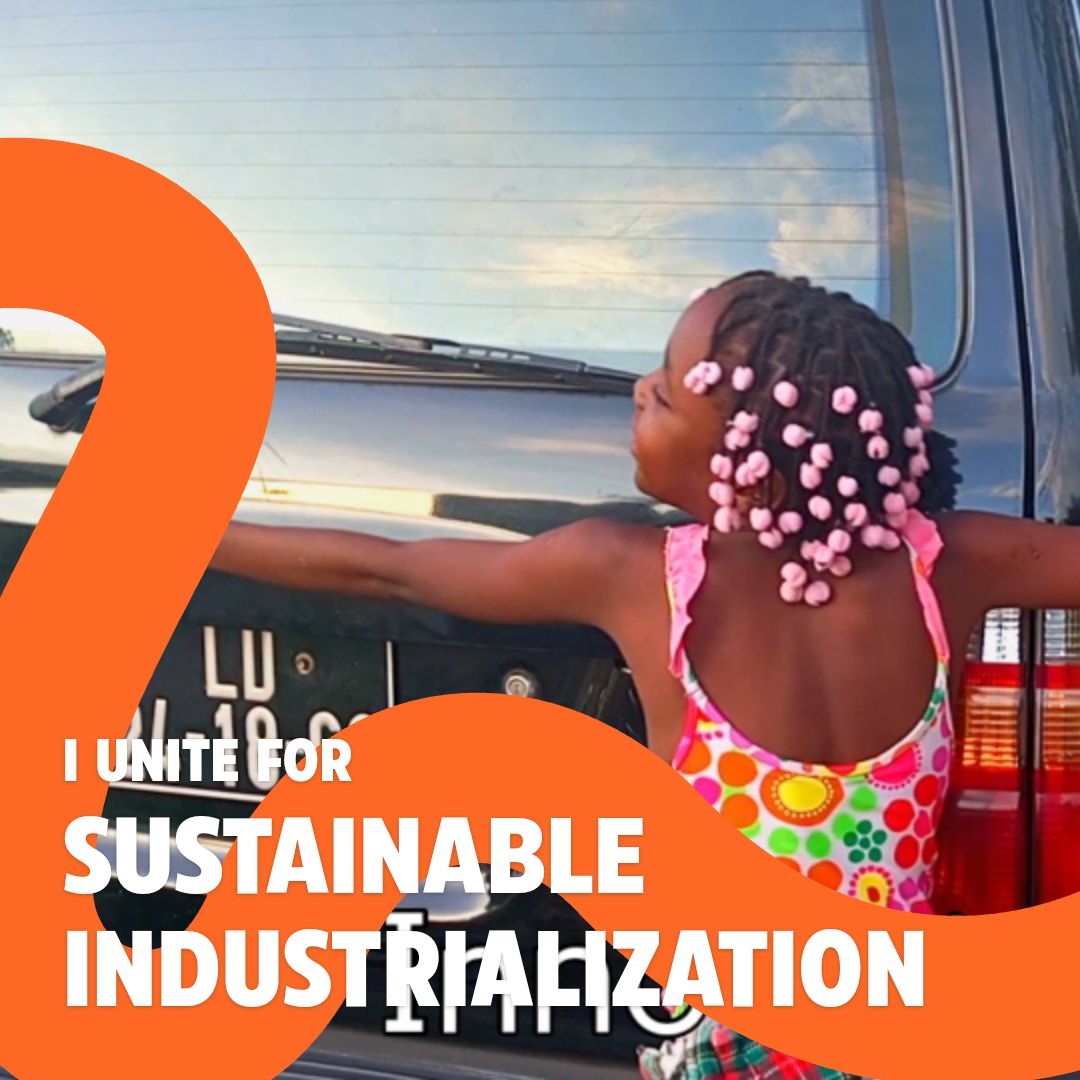


Our children's Art Challenge to accelerate the SDGs is ongoing!

Welcome to the 9th day of our challenge!


Ladies and Gentlemen, thank you for continuing with us in this challenge, you are the most special guests on this platform!

Our children are unlocking one sdg per day. They are sharing their inspirational creations about how to limit climate change.

This modern 9-year-old girl, called Jaquilcia, likes to stay up to date and well informed about the latest events and discoveries in the world.

SDG 9 - VIDEO


We invite school-aged children to unleash their creativity and envision a sustainable future through their art. Together, let's paint a brighter tomorrow for our planet.”


SDG-9 is built on three pillars, infrastructure, industry and innovation, all of which are strongly connected among themselves and share the common goal of achieving socially inclusive and environmentally sustainable economic development.

The industrial sector proves to be particularly challenging in geographical areas such as Sub-Saharan Africa, whose industrialization levels remain low or have stagnated, thus undergoing a much slower pace of progress in poverty eradication. By adopting Goal 9 in particular, the global community addresses these and other challenges by committing itself to an industrial development that is inclusive and sustainable (ISID), thus highlighting close linkages with virtually all other SDGs as regards job creation, sustainable livelihoods, SME development, better health, technology and skills development, food security, green technologies, environmental protection, building resilient cities and climate change mitigation.


Over the last decade, the mobile sector grew dynamically, with mobile-cellular subscription
penetration increasing from 41.7 per cent in 2006 to almost 100 per cent by the end of 2016. However, more than half the world’s population still remains offline, suggesting that, contrary to expectations based on mobile subscriptions or mobile coverage, a significant digital divide still persists, reflecting problems in supply, effective consumer demand and awareness.


However, Internet access is still limited and not affordable for most people in LDCs. The digital divide persists between developed and least developed countries, with an estimated 11.1 per cent of households in LDCs having access to the Internet at the end of 2016, in comparison to 83.8% in developed countries. This is also applicable to the differences between larger and smaller enterprises, and between urban and rural areas within countries. This is a critical aspect since access to the Internet by individuals and enterprises, in particular by micro and SMEs in LDCs, can improve access to services and resources that support goals and targets other than 9.c, such as ending poverty (Goal 1.4), ensuring healthy lives (Goal 3), achieving food security and adequate nutrition and shifting to sustainable agriculture (Goal 2.3), women's empowerment (Goal 5.b), innovation (Goal 8.3), financial inclusion (Goal 8.10), integrating value chains (Goal 9.3), and enabling exports (Goal 17.11).


Poor access to infrastructure – notably for transportation, electricity and energy more generally, ICTs and marketing – remains a major impediment of development, diversification, and value addition in the rural sector, including agriculture and agro-industry, in many parts of the world, notably across sub-Saharan Africa. 


One of the conclusions we can extract from the previous sections is that Internet access by micro and SMEs is a tool for "inclusive and sustainable industrial development", for Goal 9 to be successfully implemented these and other realities need to be fully considered. In this connection, in order to measure progress towards target 9.c, the 2030 Development Agenda monitoring framework tracks the indicator, "Percentage of the population covered by a mobile network, broken down by technology". 

However, the mobile penetration indicator does not monitor whether individuals are actually using those networks, the affordability aspect, nor the access and use of the Internet by the productive sector. Therefore, the SDG monitoring framework will not produce sufficient knowledge to support the implementation of target 9.c. Apart from the access and affordability, other challenges that limit Internet use in LDCs are low levels of ICT literacy, little local content, and lack of trust.


Investments in infrastructure and technologies that simultaneously reduce time burdens and drudgery, curb carbon emissions and create jobs are key to meet SDG-9. Investment in water pumps, electricity, clean cook stoves, mini-grids, publicly and collectively owned mills and grinding machinery, and transport all have the potential to support growth that is local and inclusive, and to reduce drudgery, increase the efficiency of care work, reduce time use in caring activities –particularly critical for women, both in rural and in urban areas- and free up time for other activities such as paid work, income generation, political activities, education, leisure and self-care. There are large disparities in access to infrastructure: Worldwide, over 1.1 billion people still have no access to electricity. 663 million people lack access to clean water, and 2.4 billion do not have adequate sanitation. About one third of the world’s population is not served by all-weather roads.


Goal 9: Build resilient infrastructure, promote sustainable

 industrialization and foster innovation


Inclusive and sustainable industrialization, together with innovation and infrastructure, can unleash dynamic and competitive economic forces that generate employment and income. They play a key role in introducing and promoting new technologies, facilitating international trade and enabling the efficient use of resources.

However, the world still has a long way to go to fully tap this potential. Least developed countries, in particular, need to accelerate the development of their manufacturing sector if they are to meet the 2030 target, and scale up investment in scientific research and innovation.

Global manufacturing growth has been steadily declining, even before the outbreak of the COVID-19 pandemic. The pandemic is hitting manufacturing industries hard and causing disruptions in global value chains and the supply of products.

Innovation and technological progress are key to finding lasting solutions to both economic and environmental challenges, such as increased resource and energy-efficiency. Globally, investment in research and development (R&D) as a proportion of GDP increased from 1.5 per cent in 2000 to 1.7 per cent in 2015 and remained almost unchanged in 2017, but was only less than 1 per cent  in developing regions.

In terms of communications infrastructure, more than half of the world’s population is now online and almost the entire world population lives in an area covered by a mobile network. It is estimated that in 2019, 96.5 per cent were covered by at least a 2G network.

The coronavirus pandemic has revealed the urgent need for resilient infrastructure. The Asian Development Bank notes that critical infrastructure in the region remains far from adequate in many countries, despite the rapid economic growth and development the region has experienced over the past decade. The Economic and Social Survey of Asia and the Pacific highlights that making infrastructure resilient to disasters and climate change will require an additional investment of $434 billion per year. This sum may need to be even greater in some subregions, such as the Pacific small island developing states.


Targets

  • 9.1 Develop quality, reliable, sustainable and resilient infrastructure, including regional and transborder infrastructure, to support economic development and human well-being, with a focus on affordable and equitable access for all
  • 9.2 Promote inclusive and sustainable industrialization and, by 2030, significantly raise industry’s share of employment and gross domestic product, in line with national circumstances, and double its share in least developed countries
  • 9.3 Increase the access of small-scale industrial and other enterprises, in particular in developing countries, to financial services, including affordable credit, and their integration into value chains and markets
  • 9.4 By 2030, upgrade infrastructure and retrofit industries to make them sustainable, with increased resource-use efficiency and greater adoption of clean and environmentally sound technologies and industrial processes, with all countries taking action in accordance with their respective capabilities
  • 9.5 Enhance scientific research, upgrade the technological capabilities of industrial sectors in all countries, in particular developing countries, including, by 2030, encouraging innovation and substantially increasing the number of research and development workers per 1 million people and public and private research and development spending
  • 9.A Facilitate sustainable and resilient infrastructure development in developing countries through enhanced financial, technological and technical support to African countries, least developed countries, landlocked developing countries and small island developing States 18
  • 9.B Support domestic technology development, research and innovation in developing countries, including by ensuring a conducive policy environment for, inter alia, industrial diversification and value addition to commodities
  • 9.C Significantly increase access to information and communications technology and strive to provide universal and affordable access to the Internet in least developed countries by 2020

Did you know that walking three hours per week can reduce the risk of cardiovascular disease by 16%? 

It's time to promote people powered transport for ourselves and the planet! 

According to scientists, cutting our mobility carbon footprint is one of the most effective ways to meet the 1.5°C target set by the Paris Agreement.

Transport accounts for around one-fifth of global carbon dioxide (CO2) emissions. Road travel is responsible for three-quarters of transport emissions. Most of this comes from passenger vehicles – cars and buses (45.1%) – as well as from trucks carrying freight (29.4%). Aviation accounts for 11.6%. 


Did you know? Toxic emissions from tailpipes of diesel and petrol cars have caused tens of thousands of premature deaths each year. 


A major cause of air pollution in the city is the high number of traditional motor vehicles. Such vehicles run on diesel or gasoline. As a result, they emit substances such as carbon monoxide, nitrogen oxides, hydrocarbons, and particulate matter. It is these substances that cause air pollution. Air pollution then leads to health problems like asthma, lung cancer, emphysema, heart disease, and death.


A growing number of governments are addressing air pollution by promoting the use of electric vehicles. Unlike traditional motor vehicles, electric vehicles do not run on diesel or gasoline. Electric vehicles, therefore, do not emit air pollutants. Furthermore, electric vehicles are very economical—they help motorists reduce fuel consumption.


Sustainable Menstrual Health and Hygiene: Entrepreneurs in Action


  • Access to affordable and sustainable menstrual products is key to improving menstrual health and hygiene, but millions of women around the world can't afford these products.
  • A holistic approach – one that combines education with infrastructure, products, and efforts to tackle the societal taboos and stigma surrounding the issue — is most successful in achieving good menstrual health hygiene and improving development outcomes for women and adolescent girls.


  • Social entrepreneurs around the world are creating disruptive new solutions and catalyzing change in the sector to provide affordable menstrual products and reproductive health information to women and girls.
"Ladies Without Plastic" is an eco-friendly menstrual pad model designed by entrepreneur Sofonie Dala in 2021-2022.

This reusable menstrual pad is made of cotton and cloth aiming to mobilize women to stop using plastic pads that pollute the environment causing climate change. We strongly recommend women to start using our reusable sanitary pads, which do not pollute the environment but reduce the pollution and is also much more cost effective.


This project aims to help reduce the high levels of unemployment in our country, by producing reusable products on a large scale so that more women can have access to these products, and together we can end the period of poverty.  We seek to create partnerships with governments, private organizations and other institutions in order to receive financial support.


This business model, in addition to being educational, also has a very beautiful fashion style. This style intrigues women and makes them very thoughtful. By reading Ladies Without Plastics, they will be learning that plastics pollute the environment.


Through our projects we fight against climate change and environmental pollution, empowering, mobilizing youth, women and girls with non-formal sustainable development training.


I UNITE TO ACT! What do you UNITE for? Join me and millions of others UNITING to #ACT4SDGs for a more just, equitable, peaceful, sustainable, and green future.


If you missed previous webisodes click here:


1. Webisode 1 - Preparation for COP 28| Children's Art Challenge to drive the SDGs | SDG 1 - 

https://sofoniedala.blogspot.com/2023/11/preparation-for-cop-28-childrens-art.html

2. DAY 2 - Preparation for COP 28| Children's Art Challenge to drive the SDGs | SDG 2 - Webisode 2

https://sofoniedala.blogspot.com/2023/11/day-2-preparation-for-cop-28-childrens.html

3. DAY 3-  Preparation for COP 28| Children's Art Challenge to drive the SDGs | SDG 3 

https://sofoniedala.blogspot.com/2023/12/preparation-for-cop-28-childrens-art.html

4. DAY 4 - Children's Art Challenge to drive the SDGs | SDG 4 - Preparation for COP 28

https://sofoniedala.blogspot.com/2023/12/day-4-childrens-art-challenge-to-drive.html

5. DAY 5 - Children's Art Challenge to drive the SDGs | SDG 5 - Preparation for COP 28

https://sofoniedala.blogspot.com/2023/12/day-5-childrens-art-challenge-to-drive.html

6. DAY 6 - Children's Art Challenge to drive the SDGs | SDG 6 - Preparation for COP 28

https://sofoniedala.blogspot.com/2023/12/day-6-childrens-art-challenge-to-drive.html

7. DAY 7 - Children's Art Challenge to drive the SDGs | SDG 7 - Preparation for COP 28

https://sofoniedala.blogspot.com/2023/12/day-7-childrens-art-challenge-to-drive.html

8. DAY 8 - Children's Art Challenge to drive the SDGs | SDG 8 - Preparation for COP 28

https://sofoniedala.blogspot.com/2023/12/day-8-childrens-art-challenge-to-drive.html


Our work targets children, youth and women around the world - the next generation of consumers and change-makers to show that sustainable living is easy, cool and fun!


.


Wednesday, 6 December 2023

DAY 8 - Children's Art Challenge to drive the SDGs | SDG 8 - Decent work and economic growth | Preparations for COP 28

 SDG 8: Decent work and economic growth 

Our children's Art Challenge to accelerate the SDGs is ongoing!

Welcome to the 8th day of our challenge!


Our work targets children, youth and women around the world - the next generation of consumers and change-makers to show that sustainable living is easy, cool and fun!

This nice young girl is very smart, she is only 14 years old, her name is Edna. She already foresees a prosperous future where all young people will have decent jobs and women and girls will be successful entrepreneurs.

SDG 8 - VIDEO

The unemployment rate in Africa was expected to reach seven percent in 2024. In the period under review, unemployment in the continent peaked at 7.2 percent in 2021. 

`Natural` disasters directly affect economic activities leading to very high economic losses throwing many households into poverty. Maintaining ecosystems and mitigating climate change can therefore have a great positive impact on countries` economic and employment sectors.

Goal 8: Promote inclusive and sustainable economic growth, employment and decent work for all

Sustained and inclusive economic growth can drive progress, create decent jobs for all and improve living standards.

COVID-19 has disrupted billions of lives and endangered the global economy. The International Monetary Fund (IMF) expects a global recession as bad as or worse than in 2009. As job losses escalate, the International Labor Organization estimates that nearly half of the global workforce is at risk of losing their livelihoods.

Even before the outbreak of COVID-19, one in five countries – home to billions of people living in poverty – were likely to see per capita incomes stagnate or decline in 2020. Now, the economic and financial shocks associated with COVID-19—such as disruptions to industrial production, falling commodity prices, financial market volatility, and rising insecurity—are derailing the already tepid economic growth and compounding heightened risks from other factors.

Targets

  • 8.1 Sustain per capita economic growth in accordance with national circumstances and, in particular, at least 7 per cent gross domestic product growth per annum in the least developed countries
  • 8.2 Achieve higher levels of economic productivity through diversification, technological upgrading and innovation, including through a focus on high-value added and labour-intensive sectors
  • 8.3 Promote development-oriented policies that support productive activities, decent job creation, entrepreneurship, creativity and innovation, and encourage the formalization and growth of micro-, small- and medium-sized enterprises, including through access to financial services
  • 8.4 Improve progressively, through 2030, global resource efficiency in consumption and production and endeavour to decouple economic growth from environmental degradation, in accordance with the 10-year framework of programmes on sustainable consumption and production, with developed countries taking the lead
  • 8.5 By 2030, achieve full and productive employment and decent work for all women and men, including for young people and persons with disabilities, and equal pay for work of equal value
  • 8.6 By 2020, substantially reduce the proportion of youth not in employment, education or training
  • 8.7 Take immediate and effective measures to eradicate forced labour, end modern slavery and human trafficking and secure the prohibition and elimination of the worst forms of child labour, including recruitment and use of child soldiers, and by 2025 end child labour in all its forms
  • 8.8 Protect labour rights and promote safe and secure working environments for all workers, including migrant workers, in particular women migrants, and those in precarious employment
  • 8.9 By 2030, devise and implement policies to promote sustainable tourism that creates jobs and promotes local culture and products
  • 8.10 Strengthen the capacity of domestic financial institutions to encourage and expand access to banking, insurance and financial services for all
  • 8.A Increase Aid for Trade support for developing countries, in particular least developed countries, including through the Enhanced Integrated Framework for Trade-Related Technical Assistance to Least Developed Countries
  • 8.B By 2020, develop and operationalize a global strategy for youth employment and implement the Global Jobs Pact of the International Labour Organization
Our children are sharing their inspirational creations about how to limit climate change. We invite school-aged children to unleash their creativity and envision a sustainable future through their art. Together, let's paint a brighter tomorrow for our planet.”


Preserving the environment is key to support sustainable economic growth as the natural environment plays an important role in supporting economic activities. It contributes directly, by providing resources and raw materials such as water, timber and minerals that are required as inputs for the production of goods and services; and indirectly, through services provided by ecosystems including carbon sequestration, water purification, managing flood risks, and nutrient cycling.


If you missed previous webisodes click here:


1. Webisode 1 - Preparation for COP 28| Children's Art Challenge to drive the SDGs | SDG 1 - 

https://sofoniedala.blogspot.com/2023/11/preparation-for-cop-28-childrens-art.html

2. DAY 2 - Preparation for COP 28| Children's Art Challenge to drive the SDGs | SDG 2 - Webisode 2

https://sofoniedala.blogspot.com/2023/11/day-2-preparation-for-cop-28-childrens.html

3. DAY 3-  Preparation for COP 28| Children's Art Challenge to drive the SDGs | SDG 3 

https://sofoniedala.blogspot.com/2023/12/preparation-for-cop-28-childrens-art.html

4. DAY 4 - Children's Art Challenge to drive the SDGs | SDG 4 - Preparation for COP 28

https://sofoniedala.blogspot.com/2023/12/day-4-childrens-art-challenge-to-drive.html

5. DAY 5 - Children's Art Challenge to drive the SDGs | SDG 5 - Preparation for COP 28

https://sofoniedala.blogspot.com/2023/12/day-5-childrens-art-challenge-to-drive.html

6. DAY 6 - Children's Art Challenge to drive the SDGs | SDG 6 - Preparation for COP 28

https://sofoniedala.blogspot.com/2023/12/day-6-childrens-art-challenge-to-drive.html

7. DAY 7 - Children's Art Challenge to drive the SDGs | SDG 7 - Preparation for COP 28

https://sofoniedala.blogspot.com/2023/12/day-7-childrens-art-challenge-to-drive.html

8. DAY 8 - Children's Art Challenge to drive the SDGs | SDG 8 - Preparation for COP 28

https://sofoniedala.blogspot.com/2023/12/day-8-childrens-art-challenge-to-drive.html


#LIVE COP28 | Global Climate Action Through Fostering Sustainable Finance


Anatomy of Action Challenge by Sofonie Dala - Angola. Day 10

Ethical Investing


https://sofoniedala.blogspot.com/2021/10/ethicalinvesting-divestment-and.html


Tuesday, 5 December 2023

DAY 7 - Children's Art Challenge to drive the SDGs | SDG 7 - Affordable & Clean Energy | Preparations for COP 28

An energy revolution based on renewables and energy efficiency is urgently needed not just to accelerate economic progress and development, but also to slash emissions that are rapidly warming our planet.


Our children's Art Challenge to accelerate the SDGs is ongoing!

Welcome to the 7th day of our challenge


SDG 7 - Affordable & Clean Energy


Alicia is a very energetic 10 year old girl, she painted SDG 7 and says that by 2030 she wants to have access to affordable energy.

Our children are sharing their inspirational creations about how to limit climate change. We invite school-aged children to unleash their creativity and envision a sustainable future through their art. Together, let's paint a brighter tomorrow for our planet.”

Our work targets children, youth and women around the world - the next generation of consumers and change-makers to show that sustainable living is easy, cool and fun!


SDG 7, which calls for “ensuring access to affordable, reliable, sustainable and modern energy for all” to be achieved by 2030, represents the first-ever universal goal on energy. 

 Achieving SDG 7 will catalyse action to combat climate change and attain many other SDGs, including on poverty eradication, gender equality, climate change, food security, health, education, sustainable cities and communities, clean water and sanitation, decent jobs, innovation, transport, and refugees and other situations of displacement.


Renewable energy solutions are becoming cheaper, more reliable and more efficient every day.Our current reliance on fossil fuels is unsustainable and harmful to the planet, which is why we have to change the way we produce and consume energy. Implementing these new energy solutions as fast as possible is essential to counter climate change, one of the biggest threats to our own survival.


Goal 7: Ensure access to affordable, reliable,sustainable and modern energy


The world is making progress towards Goal 7, with encouraging signs that energy is becoming more sustainable and widely available. Access to electricity in poorer countries has begun to accelerate, energy efficiency continues to improve, and renewable energy is making impressive gains in the electricity sector.

Nevertheless, more focused attention is needed to improve access to clean and safe cooking fuels and technologies for 3 billion people, to expand the use of renewable energy beyond the electricity sector, and to increase electrification in sub-Saharan Africa.

The Energy Progress Report provides global dashboard to register progress on energy access, energy efficiency and renewable energy. It assesses the progress made by each country on these three pillars and provides a snapshot of how far we are from achieving the 2030 Sustainable Development Goals targets.

Targets

  • 7.1 By 2030, ensure universal access to affordable, reliable and modern energy services
  • 7.2 By 2030, increase substantially the share of renewable energy in the global energy mix
  • 7.3 By 2030, double the global rate of improvement in energy efficiency
  • 7.A By 2030, enhance international cooperation to facilitate access to clean energy research and technology, including renewable energy, energy efficiency and advanced and cleaner fossil-fuel technology, and promote investment in energy infrastructure and clean energy technology
  • 7.B By 2030, expand infrastructure and upgrade technology for supplying modern and sustainable energy services for all in developing countries, in particular least developed countries, small island developing States, and land-locked developing countries, in accordance with their respective programmes of support
We call for higher ambition at COP28 with accelerated emissions reductions and clean energy transition!


Cop28 snapshot - day 6


ENERGY POSITIVE HOMES 

 Enhance your comfort, save energy and money by adapting your home and your habits to be more efficient

Cheerful greetings.

Welcome to the 12th day of our AOA challenge for sustainable lifestyle.

The challenge target youth around the world - the next generation of consumers and change-makers - to show that sustainable living is easy, cool and fun.


If you missed the previous webisodes click here:


1. Webisode 1 - Preparation for COP 28| Children's Art Challenge to drive the SDGs | SDG 1 - 

https://sofoniedala.blogspot.com/2023/11/preparation-for-cop-28-childrens-art.html

2. DAY 2 - Preparation for COP 28| Children's Art Challenge to drive the SDGs | SDG 2 - Webisode 2

https://sofoniedala.blogspot.com/2023/11/day-2-preparation-for-cop-28-childrens.html

3. DAY 3-  Preparation for COP 28| Children's Art Challenge to drive the SDGs | SDG 3 

https://sofoniedala.blogspot.com/2023/12/preparation-for-cop-28-childrens-art.html

4. DAY 4 - Children's Art Challenge to drive the SDGs | SDG 4 - Preparation for COP 28

https://sofoniedala.blogspot.com/2023/12/day-4-childrens-art-challenge-to-drive.html

5. DAY 5 - Children's Art Challenge to drive the SDGs | SDG 5 - Preparation for COP 28

https://sofoniedala.blogspot.com/2023/12/day-5-childrens-art-challenge-to-drive.html


6. DAY 6 - Children's Art Challenge to drive the SDGs | SDG 6 - Preparation for COP 28

https://sofoniedala.blogspot.com/2023/12/day-6-childrens-art-challenge-to-drive.html


7. DAY 7 - Children's Art Challenge to drive the SDGs | SDG 7 - Preparation for COP 28

https://sofoniedala.blogspot.com/2023/12/day-7-childrens-art-challenge-to-drive.html


Divestment - Oil and Gas Companies. Anatomy of Action Challenge by Sofonie Dala - Angola. 


Divestment 

 Actively swap your financial institutions or services to more sustainable options!

https://sofoniedala.blogspot.com/2021/10/divestment-anatomy-of-action-challenge.html


#LIVE COP28 | ENERGY AND INDUSTRY / JUST TRANSITION / INDIGENOUS PEOPLES


The 2026 AFRICA EDUCATES HER CAMPAIGN REPORT - ANGOLA 6th Anniversary | 2020–2026

  Meet who's behind this cause     Support us:  https://donate-sofonie.netlify.app/           AFRICA EDUCATES HER CAMPAIGN REPORT — ANGO...