Translate

Friday, 7 January 2022

U.S Vice President Kamala Harris delivers heartwarming speech to mark January 6 Uprising Anniversary


While marking the 1st anniversary of alleged Trump-incited mob attack on U.S. Capitol building on January 6,2021, United States Vice President Kamala Harris observed that the January 6th incident reflects the dual nature of democracy; its fragility and its strength.


She further explain in her televised address observed by DNT News that, What the attackers who breached the gates of the Capitol targeted was not only the lives of the elected leaders, stressing that “What they sought to degrade and destroy was not only a building, hallowed as it is. What they were assaulting were the institutions, the values, the ideals that generations of Americans have marched, picketed, and shed blood to establish and defend”.


The U.S Vice President said January 6, 2021 was the day Americans observed what the country would become if the extremists who sort to destroy the American democracy succeed. The lawlessness, the violence, the chaos. What was at stake then, and now, is the right to have our future decided the way the Constitution prescribes it: by we, the people — all the people, Kamala said.
Kamala Harris echoed that the strength of democracy is the rule of law. The strength of democracy is the principle that everyone should be treated equally, that elections should be free and fair, that corruption should be given no quarter. The strength of democracy is that it empowers the people. And the fragility of democracy is this: that if we are not vigilant, if we do not defend it, democracy simply will not stand; it will falter and fail.
Before bringing her anniversary speech to a conclusion, the American Veep made a strong declaration by saying “Let’s be clear: We must pass the voting rights bills that are now before the Senate, and the American people must also do something more. We cannot sit on the sidelines. We must unite in defense of our democracy in order to form a more perfect union, establish justice, ensure domestic tranquility, provide for the common defense, promote the general welfare, and secure the blessings of liberty to ourselves and to our prosperity and posterity.

See full Speech Below


Fellow Americans, good morning.

Certain dates echo throughout history, including dates that instantly remind all who have lived through them — where they were and what they were doing when our democracy came under assault. Dates that occupy not only a place on our calendars, but a place in our collective memory. December 7th, 1941. September 11th, 2001. And January 6th, 2021.

On that day, I was not only Vice President-elect, I was also a United States senator. And I was here at the Capitol that morning, at a classified hearing with fellow members of the Senate Intelligence Committee. Hours later, the gates of the Capitol were breached.

I had left. But my thoughts immediately turned not only to my colleagues, but to my staff, who had been forced to seek refuge in our office, converting filing cabinets into barricades.

What the extremists who roamed these halls targeted was not only the lives of elected leaders. What they sought to degrade and destroy was not only a building, hallowed as it is. What they were assaulting were the institutions, the values, the ideals that generations of Americans have marched, picketed, and shed blood to establish and defend.

On January 6th, we all saw what our nation would look like if the forces who seek to dismantle our democracy are successful. The lawlessness, the violence, the chaos.

What was at stake then, and now, is the right to have our future decided the way the Constitution prescribes it: by we, the people — all the people.

We cannot let our future be decided by those bent on silencing our voices, overturning our votes, and peddling lies and misinformation; by some radical faction that may be newly resurgent but whose roots run old and deep.

When I meet with young people, they often ask about the state of our democracy, about January 6th. And what I tell them is: January 6th reflects the dual nature of democracy — its fragility and its strength.

You see, the strength of democracy is the rule of law. The strength of democracy is the principle that everyone should be treated equally, that elections should be free and fair, that corruption should be given no quarter. The strength of democracy is that it empowers the people.

And the fragility of democracy is this: that if we are not vigilant, if we do not defend it, democracy simply will not stand; it will falter and fail.

The violent assault that took place here, the very fact of how close we came to an election overturned — that reflects the fragility of democracy.

Yet, the resolve I saw in our elected leaders when I returned to the Senate chamber that night — their resolve not to yield but to certify the election; their loyalty not to party or person but to the Constitution of the United States — that reflects its strength.

And so, of course, does the heroism of the Capitol Police, the D.C. Metropolitan Police Department, the National Guard, and other law enforcement officers who answered the call that day, including those who later succumbed to wounds, both visible and invisible.

Our thoughts are with all of the families who have lost a loved one.

You know, I wonder, how will January 6th come to be remembered in the years ahead?

Will it be remembered as a moment that accelerated the unraveling of the oldest, greatest democracy in the world or a moment when we decided to secure and strengthen our democracy for generations to come?

The American spirit is being tested.

The answer to whether we will meet that test resides where it always has resided in our country — with you, the people.

And the work ahead will not be easy. Here, in this very building, a decision will be made about whether we uphold the right to vote and ensure free and fair election.

Let’s be clear: We must pass the voting rights bills that are now before the Senate, and the American people must also do something more.

We cannot sit on the sidelines. We must unite in defense of our democracy in order to form a more perfect union, establish justice, ensure domestic tranquility, provide for the common defense, promote the general welfare, and secure the blessings of liberty to ourselves and to our prosperity and posterity.

That is the preamble of the Constitution that President Biden and I swore an oath to uphold and defend. And that is the enduring promise of the United States of America.

My fellow Americans, it is my honor to introduce a public servant with the character and fortitude to meet this moment, a leader whose life’s work has been moving our nation toward that more perfect union: President Joe Biden.

…………………………………………………………

Nigeria steps up its fight against bandits

 The call for criminals ­- or bandits, as locals say – to be branded terrorists has been long and loud since they graduated from stealing cattle to downing a military jet.


The government has now officially designated them as “terrorists”, after a high court in Abuja made a similar ruling about the gangs.

It is now left to be seen how much the new designation will affect the war against the criminals in Nigeria’s north-west and north-central states, but it changes how the military can fight them and what sort of weapons it can use. .

The Super Tucano jets received last year from the US could not previously be used against the bandits but now they can be.

The change in classification also makes it easier to prosecute the bandits for the myriad crimes they carry out – from the kidnapping of school children to the theft of cattle.

Suspects can simply be charged with terrorism, rather than different offences.

Communities and politicians that tacitly supported the bandits would now think twice of doing so, as they risked being linked to terror groups.

While most communities have been coerced into paying taxes to these criminals to ensure their survival, which in turn helped fund them, there is likely going to be less cooperation now.

It is also hoped that this designation would discourage people from getting into banditry in northern Nigeria.


………………………………………………………………

Thursday, 6 January 2022

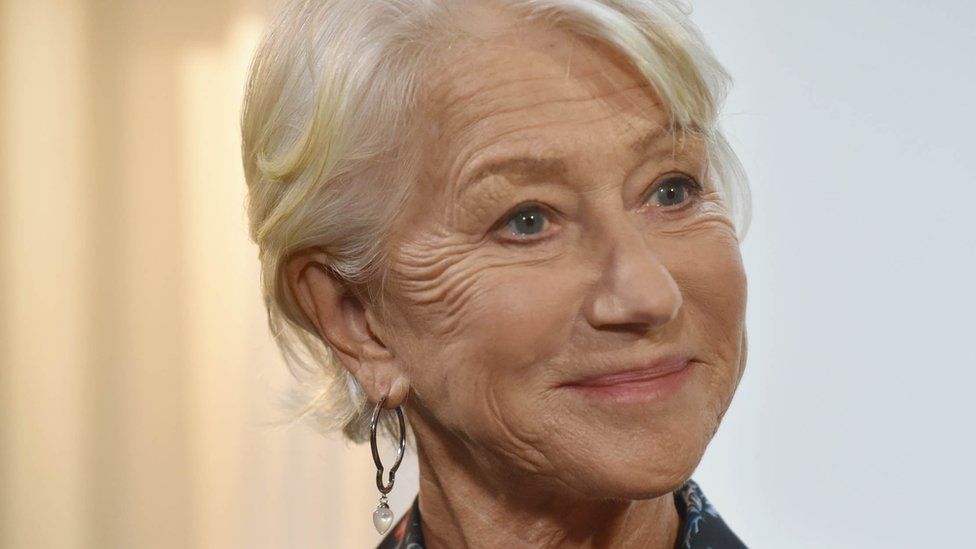
Dame Maureen Lipman questions casting Dame Helen Mirren for Jewish role


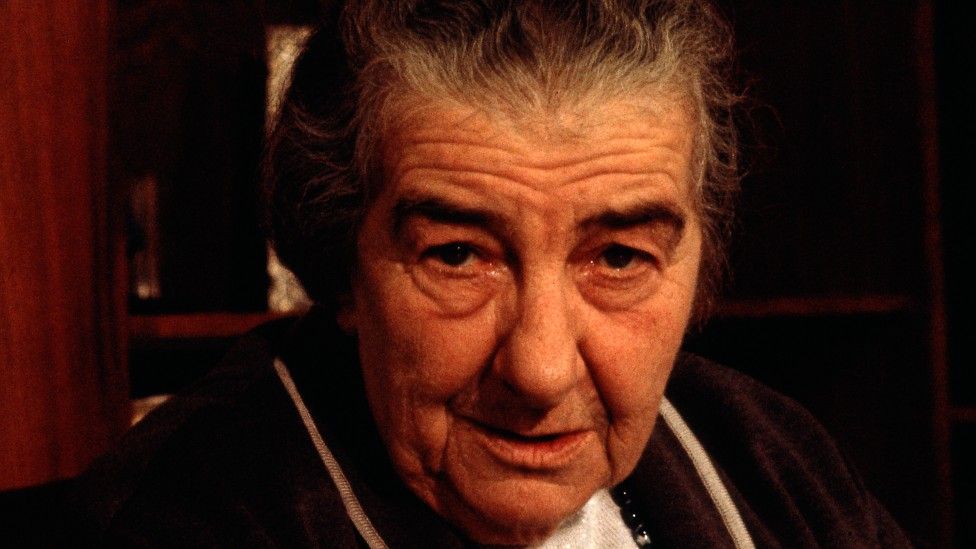
Dame Maureen Lipman has questioned the casting of Dame Helen Mirren as the former Israel Prime Minister Golda Meir in an upcoming film about her life.

Dame Helen, who is not Jewish, will portray the politician – Israel’s first female PM – in the movie, titled Golda.

Dame Maureen, who is Jewish, believes the part should have been played by a Jewish actress.

The BBC has asked Dame Helen’s representatives for comment.

“The Jewishness of the character is so integral,” Dame Maureen told The Jewish Chronicle. earlier this week.

“I’m sure she [Dame Helen] will be marvellous, but it would never be allowed for Ben Kingsley to play Nelson Mandela. You just couldn’t even go there.”

Dame Helen Mirren
Image caption,

Dame Helen Mirren won the best actress Oscar for her portrayal of Her Majesty, The Queen

In 1969, Golda Meir, known as “the grand old woman of Israeli politics”, became the country’s first female prime minister.

Meir’s story has been the subject of many fictionalised portrayals, on stage and on both the big and small screen.

Lioness, a separate Barbara Streisand-directed TV mini-series, set to star Israili actress Shira Haas as Meir, is also currently in the works.

Dame Helen recently took on the role while filming Guy Nattiv’s upcoming eponymous biopic.

After a first image of the British actress as the late politician was shared in November, she said it was a “great challenge to portray her at the most difficult moment of her extraordinary life.”

“I only hope I do her justice,” she added.

The BBC is not responsible for the content of external sites.View original tweet on Twitter

The Oscar-winner has previously played Jewish characters, appearing as a Mossad agent in the 2010 film The Debt, and as Jewish refugee Maria Altmann in the 2015’s Woman In Gold.

Dame Maureen, meanwhile, played the titular character’s mother in Roman Polanski’s 2002 holocaust and war memoir film, The Pianist.

Her criticism of Dame Helen’s involvement in the upcoming Golda film follows a series of similar comments by actors questioning what they believe to be inauthentic casting decisions.

Tamsin Greig, a practising Christian of Jewish descent, last month told The Daily Telegraph she “probably shouldn’t” have played a Jewish mother in the Channel 4 sitcom Friday Night Dinner.

Elsewhere, US comedian and actor Sarah Silverman recently called out actress Kathryn Hahn for being chosen to play Joan Rivers in a planned biopic – labelling the casting as “Jewface”.

Golda MeirIMAGE SOURCE,BETTMANN/GETTY
Image caption,

Golda Meir became Israel’s first female PM in 1969

In the latest instance, however, Stephen Pollard, editor-at-large of the Jewish Chronicle tweeted in defence of Dame Helen. “I adore Maureen Lipman but she couldn’t be more wrong on this,” he wrote.

“The logic of her position is that the only character any actor can play is themselves.”

There has been lively debate about authentic casting in Hollywood for several years.

For example, some believe that gay, trans or disabled characters should only be played by gay, trans or disabled actors respectively, but others argue that the whole point of acting is portraying somebody you are not.

Dame Maureen made the news in December, when she told the BBC that comedy is in danger of being “wiped out” due to fears over being cancelled.

She told the corporation’s Culture Editor Katie Razzall she believes comedians are now so worried about offending, “a revolution” is taking place.

……………………………………………………………

Afcon 2021: Everything you need to know about tournament in Cameroon


The first major football tournament of 2022 kicks off on Sunday, with the Africa Cup of Nations taking centre stage.


A host of Premier League and European stars will descend on Cameroon, with the hosts facing Burkina Faso in the opening game.

First scheduled to start in June 2021 but subsequently brought forward to January last year to avoid Cameroon’s rainy season, the tournament has been delayed to 2022 because of the coronavirus pandemic.

The Confederation of African Football (Caf) has faced criticism over the timing of its continental showpiece, and last month had to face down rumours the tournament would be further delayed or moved following the emergence of the Omicron variant of Covid-19.

Former Arsenal and England striker Ian Wright said some of the negative media coverage has been “disrespectful” and “tinged with racism”.

What’s the format and when are the games?

For the second successive tournament, the Nations Cup will have 24 participants.

That means six groups of four, with the top two qualifying for the last 16 alongside the four best-ranked third-placed sides.

Games will be held at 13:00, 16:00 and 19:00 (all times GMT) during the group stages, with the two latter kick-off times being used in the knock-out stages from Sunday, 23 January.

The BBC will broadcast 10 games including the final in Yaounde’s Olembe Stadium on Sunday, 6 February. The first game to be shown will be the heavyweight clash between Nigeria and Egypt on Tuesday

The ball being used is the Umbro Toghu, named after a multi-coloured and finely embroidered outfit initially designed for royalty but now popular throughout Cameroon.

Who are the main contenders?

It is hard to look past holders Algeria, who are on a 34-match unbeaten run and led by Manchester City winger Riyad Mahrez.

Sadio Mane’s Senegal, Africa’s top-ranked side for the past three years, were runners-up in 2019 and are among the main challengers, while record seven-time champions Egypt boast arguably the best player in the world right now in Mohamed Salah, who has shone for Liverpool this season.

Ghana and Nigeria are among the continent’s most successful countries but had unconvincing 2022 World Cup qualification campaigns, while Cameroon – chasing their sixth Nations Cup title – will fancy their chances on home soil.

Mali could be a surprise package after reaching the World Cup play-offs by going unbeaten despite being stripped of home advantage.

Ivory Coast, Morocco and Tunisia are among the other former champions present and, at the other end of the spectrum, Comoros and The Gambia are first-time qualifiers.

What about the timing?

There have been grumbles from some European clubs about releasing their players mid-season for the tournament.

Premier League club Watford, for instance, were accused of “baring fangs” by Nigeria in a dispute over the availability of Emmanuel Dennis, a battle the Hornets eventually won.

However, the climate in Cameroon and being forced to shift the biennial tournament into a World Cup year has left Caf with limited options over its timing.

The 2023 edition is scheduled to take place in June and July next year in Ivory Coast.

Gianni Infantino, president of world governing body Fifa, has proposed moving future Nations Cups to between September and November in a revised international calendar.

What about off-field issues, like coronavirus?

The pandemic has obviously had an impact on the tournament, with Caf capping attendances at 60% of capacity for the majority of matches.

Games involving hosts Cameroon will be permitted to have 80% capacity, and only those who have been double-vaccinated and have a negative test can attend matches.

With just 2% of the country fully jabbed according to figures from Our World in Data, it will be interesting to see how those restrictions impact on attendances at the 52 matches spread across the six stadia.

Several countries reported cases in the build-up to the tournament, with Cape Verde struck by an outbreak in their training camp and debutants The Gambia forced to call off two friendlies, with over half their squad unavailable.

Cameroon is set to host the much-delayed competition – but what shape is the country in?

Infrastructure in Cameroon and their readiness to host have been questioned, given they were due to stage the 2019 tournament which had to be moved to Egypt.

There are security concerns over Limbe, a city in the south-west region affected by conflict in recent years by local militants pursuing a separatist agenda.

Since 2017, armed groups – who argue that the Anglophone regions of Cameroon have been marginalised by the primarily French-speaking government – have tried to form a breakaway state called Ambazonia.

In a bid to maintain order, armoured vehicles and checkpoints have been deployed this week across Limbe, where a car bomb exploded on the eve of Cameroon’s hosting of the African Nations Championship in January 2021, with further explosions having also taken place in the area in recent months.

Local officials have said the security measures taken mean there will be no disruption to Afcon, with Limbe set to host eight matches, including two knock-out games.

How to follow the tournament

The BBC will broadcast 10 games during the tournament, including two quarter-finals, both semis and the final. Sky Sports will show every match in Cameroon, with beIN SPORT, Canal+ and SuperSport among those offering coverage across Africa.

The BBC Sport website will also keep you up to date during the tournament, encompassing news and daily round-ups of matches, with live text coverage from the quarter-finals.

……………………………………………………………

China to appoint special envoy to Horn of Africa


China will appoint a special envoy for the Horn of Africa to help tackle security challenges in the region.


Chinese Foreign Minister Wang Yi made the announcement on Thursday during a press conference in the Kenyan city of Mombasa.

“We will continue to play even a bigger role for peace and stability in the region,” Mr Wang said.

The minister is on a tour of three countries in eastern Africa which began in Eritrea and concludes in the Indian Ocean island of Comoros.

On Wednesday, he condemned sanctions imposed on Eritrea, which has long been regarded as a pariah by Western powers. The US imposed sanctions on Eritrea last year over its involvement in the Ethiopia conflict.

The Chinese minister’s tour to the region coincides with the visit by US special envoy to the Horn of Africa, Jeffrey Feltman, who is due to arrive in Ethiopia on Thursday to discuss the 14-month civil war in the northern part of the country.

……………………………………………………………


Afcon 2021: Nigeria’s Odion Ighalo not released by Al Shabab


Nigeria look set to be without striker Odion Ighalo at the Africa Cup of Nations after his Saudi Arabian club Al Shabab refused to release him for the tournament in Cameroon, which starts on Sunday.


The 32-year-old, top scorer at the last Nations Cup in 2019, was initially given a deadline of Tuesday to confirm his availability by interim Super Eagles coach Augustine Eguavoen.

However, Ighalo was not part of the squad that landed in Garoua late on Wednesday after Al Shabab objected to their top scorer’s involvement and reiterated that the Nigeria Football Federation (NFF) missed the official deadline to call up the player.

The Riyad club official Majid Al-Marzouki told Al Arabiya’s In the Goal TV program that Ighalo’s letter of invitation did not reach the club within the period specified by world governing body Fifa for receiving players’ call-up letters.

“The Fifa Player Status Regulations stipulates that the federation must notify the player and his club in writing of his summons 15 days before the start of the tournament, and it is advised to send a copy to the local federation of the club as well, which did not happen,” Al-Marzouki said.

“Accordingly the coach [Pericles Chamusca] told us that the player will stay with us and will not join the Nigerian team.

“There are no negotiations between us and the Nigerian federation, and the player is committed to the decision. The situation is settled.”

Nigeria team officials have now informed BBC Sport Africa that they might not be able to call up a replacement for Ighalo in line with Nations Cup regulations.

Article 72.2 of the Confederation of African Football’s tournament regulations state: “A player on the final list cannot be replaced unless seriously injured at the latest 24 hours at least before the beginning of the first match of his team.”

Recalled from international retirement in November by former coach Gernot Rohr, Ighalo’s 16 international goals rank the former Watford and Manchester United man among the country’s top six scorers.

Nigeria were hoping Ighalo, currently the leading goalscorer in the Saudi Pro League season with 11 goals for Al Shabab, could reproduce his club form at the continental showpiece football event.

Attacking problems mount for Super Eagles

This is the latest club versus country row involving Nigeria, following last month’s decision by Premier League club Watford to prevent their top scorer Emmanuel Dennis from playing in Cameroon, claiming the NFF missed the deadline to request his release.

Nigeria suggested Watford were “baring fangs” over the issues and the player has since been replaced.

The Super Eagles are also without Victor Osimhen, their top scorer in qualifying, after the Napoli man was ruled out following a positive Covid-19 test and is still recovering from facial fractures.

Genk’s Paul Onuachu, who has netted 12 league goals this season, will also miss the tournament through injury.

Europe-based Jamilu Collins and Tyronne Ebuehi, who did not travel from Abuja to Garoua, are expected to link up with the rest of the squad in Cameroon ahead of the opening game against Egypt on Tuesday, 11 January.

The three-time African champions, who have appointed Portuguese Jose Peseiro as their permanent coach, are in Group D along with the Pharaohs, Guinea-Bissau and Sudan.

…………………………………………………………

When Telecommunications Collapse: What Angola's Mobile Network Crisis Teaches Us About Governance, Justice, and National Security

  The recent disruption of Angola's mobile networks has affected banking, digital payments, businesses, emergency communications, and mi...