4 Furthermore then we beseech you, brethren, and exhort you by the Lord Jesus, that as ye have received of us how ye ought to walk and to please God, so ye would abound more and more.
2 For ye know what commandments we gave you by the Lord Jesus.
3 For this is the will of God, even your sanctification, that ye should abstain from fornication:
4 That every one of you should know how to possess his vessel in sanctification and honour;
5 Not in the lust of concupiscence, even as the Gentiles which know not God:
6 That no man go beyond and defraud his brother in any matter: because that the Lord is the avenger of all such, as we also have forewarned you and testified.
7 For God hath not called us unto uncleanness, but unto holiness.
8 He therefore that despiseth, despiseth not man, but God, who hath also given unto us his holy Spirit.
9 But as touching brotherly love ye need not that I write unto you: for ye yourselves are taught of God to love one another.
10 And indeed ye do it toward all the brethren which are in all Macedonia: but we beseech you, brethren, that ye increase more and more;
11 And that ye study to be quiet, and to do your own business, and to work with your own hands, as we commanded you;
12 That ye may walk honestly toward them that are without, and that ye may have lack of nothing.
13 But I would not have you to be ignorant, brethren, concerning them which are asleep, that ye sorrow not, even as others which have no hope.
14 For if we believe that Jesus died and rose again, even so them also which sleep in Jesus will God bring with him.
15 For this we say unto you by the word of the Lord, that we which are alive and remain unto the coming of the Lord shall not prevent them which are asleep.
16 For the Lord himself shall descend from heaven with a shout, with the voice of the archangel, and with the trump of God: and the dead in Christ shall rise first:
17 Then we which are alive and remain shall be caught up together with them in the clouds, to meet the Lord in the air: and so shall we ever be with the Lord.
18 Wherefore comfort one another with these words.
One in 15 children in school years 7 to 11 are estimated to have had coronavirus in the week up to 2 October.
Children who are 11-16 have the highest COVID-19 positivity rate for any age group, according to the latest data.
Around one in 15 youngsters in school years 7 to 11 in England are estimated to have had coronavirus in the week up to 2 October, compared with one in 20 the previous week, figures from the Office for National Statistics (ONS) show.
The COVID-19 rates have also increased for people aged 35-49 and over-70s.
Live COVID updates from the UK and around the world
In England overall, around one in 70 people in private households had COVID in the week to 2 October, up from one in 85 the previous week.
One in 70 is the equivalent to about 786,300 people.
The percentage of positive tests decreased for those in school year 12 to people aged 24 but the trend was uncertain for those aged two to school year 6, people aged 25-34 and those aged 50-69.
The ONS figures correlate with government data released on 5 October which showed that the number of children out of school with a confirmed case of COVID-19 topped 100,000 in England last week.
The Department for Education (DfE) found the number of pupils out of school for coronavirus-related reasons increased by two thirds in a fortnight.
More than 204,000 – 2.5% of all pupils – were not in class for reasons connected to COVID-19 on Thursday last week.
This is up from 122,300 children, or 1.5% of all pupils on 16 September – a 67% rise from two weeks ago.
The figures come as heads reported “a high level of disruption”, with a school leaders’ union warning that self-isolation rules are “actively contributing” to the spread of the virus in schools.
England’s COVID-19 weekly reproduction “R” number was estimated to be between 0.9 and 1.1, slightly higher than last week’s 0.8 and 1.1.
An R number between 0.9 and 1.1 means that for every 10 people infected, they will on average infect between nine and 11 other people.
The daily growth of infections also ticked up, as it was estimated to be between -1% and +2%, compared with -3% and +1% last week.
According to the ONS analysis on regional COVID-19 cases, the number of positive cases has increased in all regions, except the East of England where the trend is uncertain.
Follow the Daily podcast on Apple Podcasts, Google Podcasts, Spotify, Spreaker
Yorkshire and the Humber and the East Midlands had the highest proportion of people likely to test positive in the week to 2 October – around one in 55.
London and eastern England had the lowest at around one in 90.
In Wales, around one in 55 people are estimated to have had the virus, the highest since 23 December.
Sara Crofts, head of analytical outputs for the ONS COVID-19 infection survey, said: “There is a mixed picture of infection trends across the UK once again, with the largest increase seen in England.
“This has been largely driven by a notable increase among secondary school pupils, likely reflecting their return to school in September.”
Four of the Saudi operatives who murdered dissident journalist Jamal Khashoggi reportedly received paramilitary training in the US under a contract approved by the State Department.
The 59-year-old, who had angered Crown Prince Mohammed bin Salman with his criticism of the kingdom, was murdered in October 2018, after he entered the Saudi consulate in Istanbul. His body has never been recovered, and Western intelligence services believe it was dismembered.
The prince, commonly known as MBS, has always denied any involvement in the writer and broadcaster’s death, though earlier this year the Biden administration released an intelligence report saying he knew about and approved of the plan.
Now a report claims that four of the dozen-strong “kill team” received paramilitary training in the United States, as part of a contract approved by the State Department.
The New York Timessaid the men received the training from the Arkansas-based security company Tier 1 Group, which is owned by the private equity firm Cerberus Capital Management.
Trump says he is not satisfied with Saudi account of journalist Jamal Khasoggi’s death
The company has said the training, which included “safe marksmanship” and “countering an attack”, was intended for the protection of Saudi leaders.
It quoted Louis Bremer, a senior executive of Cerberus, the group’s parent company, as having confirmed its role last year in written answers to questions from politicians in Washington DC.
He was being questioned as part of his nomination for a senior Pentagon job during the Trump administration, a nomination that was later withdrawn.
It said that Mr Bremer provided his answers to the newspaper, and confirmed four members of the Khashoggi kill team had received Tier 1 Group training in 2017, and two of them had participated in a previous version that ran between October 2014 until January 2015.
“The training provided was unrelated to their subsequent heinous acts,” Mr Bremer said in his answers.
He said a review in 2019 review by Tier 1 Group “uncovered no wrongdoing by the company and confirmed that the established curriculum training was unrelated to the murder of Jamal Khashoggi”.
The training would have been carried out at a time when Barack Obama was president.
There was no immediate response from Cerberus to inquires from The Independent .
In a statement, State Department spokesman Ned Price said: “We are restricted under Section 126.10 of the International Traffic in Arms Regulations (ITAR) from commenting on individual companies’ licencing status or confirming related activities. As such, we can’t confirm or comment on any of the licenced defence export licensing activity alleged in media reporting.”
He added: “Saudi Arabia faces significant threats to its territory, and we are committed to working together to help Riyadh strengthen its defences. At the same time, the American people expect that US policy towards its strategic partnership with Saudi Arabia will prioritise the rule of law and respect for human rights, which are inseparable from the interests that the United States brings to that partnership.”
In March, lawyers for the fiancee of Mr Khashoggi said they had the crown prince legal complaint – allowing proceedings against the Saudi royal to proceed.
Last year, Hatice Cengiz, who was poised to marry the writer and activist, and members of a non-profit group the Saudi journalist established in Washington DC, filed a lawsuit against the prince, accusing him and others of the kidnap, drugging, torture, and assassination of the US resident.
“The ruthless torture and murder of Mr Khashoggi shocked the conscience of people throughout the world. The objective of the murder was clear – to halt Mr Khashoggi’s advocacy in the United States, principally as the executive director of Plaintiff Dawn [Democracy for the Arab World Now], for democratic reform in the Arab world,” the lawsuit said.
Actively swap your financial institutions or services to more sustainable options!
Good evening dear friends,
Welcome to our program! It's great to have you with us.
Divestment is when people move away from industries that are unsustainable and instead choose investments, banks, energy providers, and other companies that are opting for sustainable options.
We need to take action to ensure we support those that enables SDG 12 (sustainable consumption and production). Did you know that just 100 companies, all in the oil and gas industry, are responsible for 71% of global carbon emissions?
The oil and gas industry produces vast amounts of toxic air and water pollution and is the largest source of greenhouse gas emissions. Oil and gas drilling has a serious impact on our wildlands and communities. Drilling projects operate around the clock generating pollution, fueling climate change, disrupting wildlife and damaging public lands that were set aside to benefit all people.
Angola's SONANGOL Accelerates Divestment and Explores Novel Financing Solutions in Response to Energy Transition
Angola’s National Oil Company (NOC) Sonangol has responded to the changing global financial landscape by accelerating its restructuring program and exploring new financial solutions that meet the requirements of today’s international debt market. Today’s market is significantly impacted by considerations about energy transition, which has become a defining factor for most major oil and gas sector lenders.
Financing challenges are not unique to Sonangol, especially as the entire sector emerges from a post COVID-19 slump in 2020 which saw demand and oil prices reach historic lows, including dropping below USD$20/barrel in April 2020. In the U.S. for example, over 107 oil and gas companies filed for bankruptcy, requiring the courts to oversee debt restructuring totalling USD$98 billion under Chapter 11 bankruptcy rules.
As the international community seeks consensus about how to drive energy transition globally, major international banks – including many that are prominently involved in the financing of oil and gas projects – have responded by entering into several agreements, committing to solely finance projects that will attain net-zero emissions between 2030 and 2050. One such agreement is the United Nation’s backed Net-Zero Banking Alliance which represents some of the world’s largest banks from 27 countries with assets of more than US$ 37 trillion. The Net-Zero Banking Alliance requires its members to curtail lending to the oil and gas sector within the next 36 months, ultimately restricting access to finance for companies like Sonangol.
Restructuring for the future
Under the leadership of its Chairman and CEO, industry veteran Mr. Sebastião Gaspar Martins, Sonangol has accelerated its divestment program which it is hoped, will bring in billions of dollars in much needed financing through the sale of non-core assets. Revenue from the sale is expected to strengthen the balance sheet of a much leaner and focused exploration and production entity. Over 70 shareholdings held by sonangol in companies across the world, including in real estate, oil and gas services, financial services, tourism, logistics, telecommunications, aviation and some operating blocks are up for sale.
For a cleaner future, it’s critical to reduce fossil fuel drilling on public lands. We need to equitably transition to responsible renewable energy including solar and wind to fulfill our energy needs while preserving our environment and communities.
Fossil fuel divestment
Divestment is the opposite of an investment – it simply means getting rid of stocks, bonds, or investment funds that are unethical or morally ambiguous.
When you invest your money, you might buy stocks, bonds, or other investments that generate income for you. Universities and colleges, religious organizations, retirement funds, and other institutions put billions in these same kinds of investments to generate income to help them run. Fossil fuel investments are a risk for both investors and the planet, so we’re calling on institutions to divest from these companies.
Divestment is also to end to fossil fuel sponsorship. Fossil fuels companies cultivate sponsorship relationships to help create a ‘social licence to operate’. This contributes to the veneer of legitimacy that enables them to keep expanding operations at a time of climate crisis and to stifle the demands for justice of those communities who live on the frontline of their destructive, polluting operations.
Campaigners working toward freeing communities from fossil fuels. The majority of campaigns are asking institutions to:
- Immediately freeze any new investment in fossil fuel companies;
- Divest from direct ownership and any commingled funds that include fossil fuel public equities and corporate bonds within 5 years;
- End their fossil fuels sponsorship.
Fossil fuel divestment takes the fossil fuel industry to task for its culpability in the climate crisis. By naming this industry’s singularly destructive influence — and by highlighting the moral dimensions of climate change — we hope that the fossil fuel divestment movement can help break the hold that the fossil fuel industry has on our economy and our governments.
As more and more people move away from unsustainable institutions, it sends a message to companies to consider their business models and actions to support renewable energy, sustainable technologies, and more responsible products. Therefore, from your retirement fund to your banks, it is crucial to acknowledge what you are supporting inadvertently
Atlantic Fellows for Social and Economic Equity are activists, policymakers, researchers, and practitioners who believe inequality can be defeated.
Applications for the 2022-23 Atlantic Fellows for Social and Economic Equity programme are now open. The Atlantic Fellows for Social and Economic Equity programme is a transformative experience that emphasises learning, connection and reflection.
Requirements
Who live in the global South (in particular Africa, Far East, the Middle East, Latin America, Southeast Asia and the Indian subcontinent), although this factor will never be considered in isolation.
Who do not otherwise have the resources to finance their participation in activities such as these, especially people from the global South. Who have not already had significant access to fellowships or scholarships.
Benefits
Residential Fellows receive support from a dedicated LSE academic mentor, from the AFSEE Academic Lead through monthly meetings and regular check-ins, and via further opportunities for engagement offered throughout the year.
The Residential track of the Atlantic Fellows for Social and Economic Equity programme is a funded fellowship. The fellowship includes full tuition fees, an £19,o00 stipend to cover living costs while in London, any necessary travel expenses to in-person modules, and travel to and from London at the beginning and end of the active fellowship, including reimbursement of visa fees.
Modest financial support is available for Fellows who have family care responsibilities. The programme also has a Resilience Fund to which Fellows can apply in the event of emergencies.
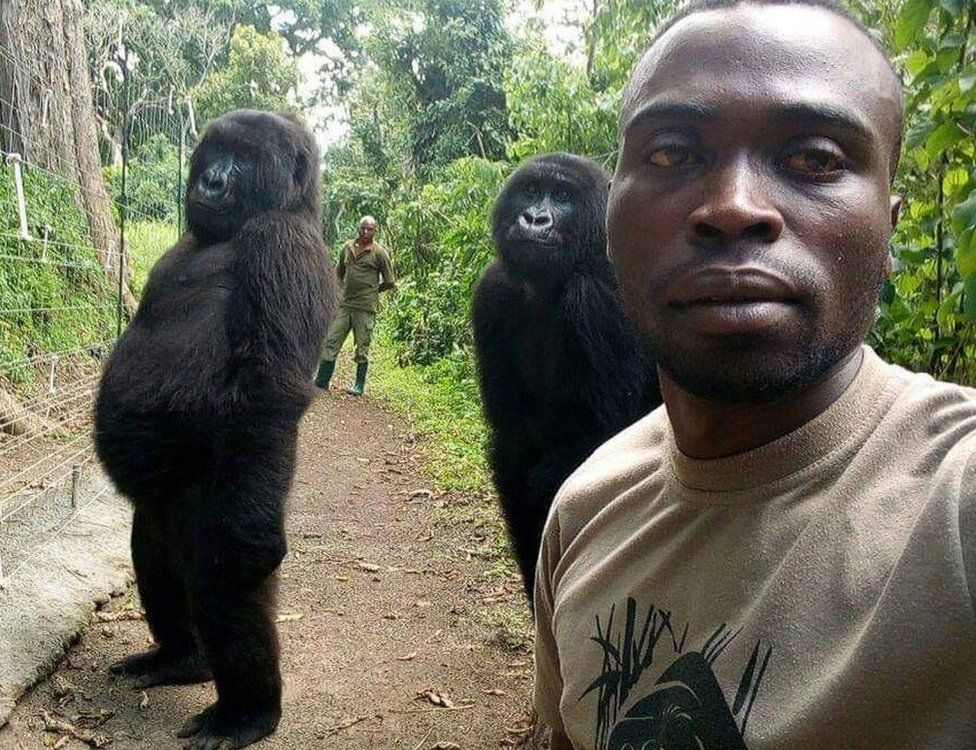
Ndakasi, a beloved mountain gorilla who went viral after posing for a relaxed selfie with rangers, has died after a long illness aged 14.
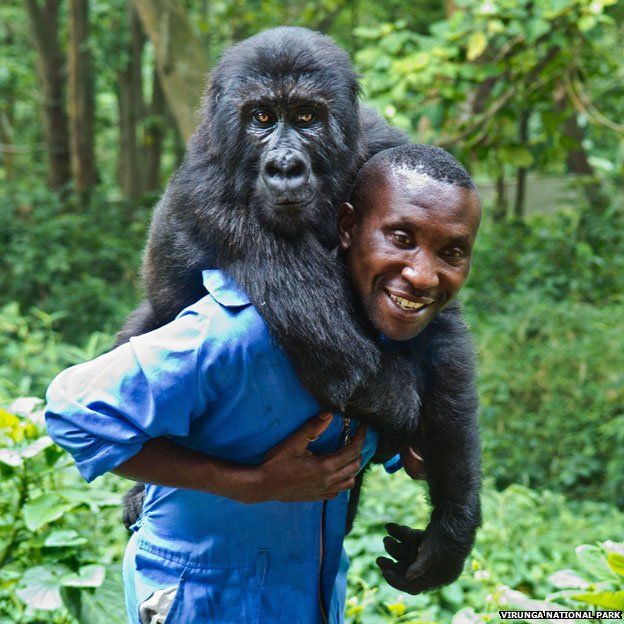
She passed away in the arms of one of the rangers who rescued her as a baby, Andre Bauma, at a gorilla orphanage at Virunga – Africa’s oldest national park – in the Democratic Republic of Congo.
Mr Bauma rescued Ndakasi as a two-month-old in 2007 after poachers killed her parents. Ndakasi was still clinging to her dead mother when they found her.
With no relatives, rangers decided it was too unsafe to let Ndakasi back out into the wild. She was raised at the orphanage, where Mr Bauma is the manager.
“We shared the same bed, I played with her, I fed her… I can say I am her mother.”
Mountain gorillas live mostly in forests in national parks in Uganda, Rwanda and Congo. But climate change, poachers and human encroachment pose threats to their survival.
Eastern DR Congo, where Virunga is located, is mired in conflict between the government and various armed groups. Some of these armed groups are based in the park, where they often poach animals.
IMAGE SOURCE,VIRUNGA NATIONAL PARK
On Thursday, Mr Bauma said that getting to know Ndakasi had “helped me to understand the connection between humans and great apes and why we should do everything in our power to protect them”.
“I loved her like a child,” he said, adding: “Her cheerful personality brought a smile to my face every time I interacted with her.”
The head of the European Union mission in Liberia says he is appalled by how “dirty” and “disgusting” the capital, Monrovia is, despite donors pouring in aid to clean it up and improve living conditions.
Laurent Delahousse told a forum organised by the Monrovia City Council that he was ”a bit surprised” by what he saw when he arrived a year ago.
“Monrovia is a disgusting city, it is a dirty city,” he said.
“Of all the capitals I have seen in my previous posts in Africa, I have not seen one that is as dirty as yours,” he added.
He went on to urge city officials to address the crisis, and to account for the money received from donors and the taxes collected from businesses.
“A clean city is an asset; it create jobs and probably that is what Liberia needs most,” he said.
The straight-talking envoy joined other speakers in telling the city council that decorating Monrovia every now and again was not enough when the issue of sanitation remained a serious problem.
The mayor of Monrovia, Jefferson Koijee, who is also the chairman of the youth wing of the governing CDC party, told the forum that waste management in the over-crowded city was a major challenge.
But with more support from donor partners like the European Union they would continue to tackle the problem, he said.
There has been huge support from the donor community for the upkeep of Monrovia over the years, but the city has remained filthy with heaps of rubbish seen all over the place and some remaining on the streets for weeks.
Getty Images Copyright: Getty Images
Monrovia is located along the coast Image caption: Monrovia is located along the coast