Translate

Wednesday, 1 September 2021

Sarah Rainsford: My last despatch before Russian expulsion

 I’m writing this in the middle of the night at my kitchen table in Moscow, looking over towards the dim red stars and golden domes of the Kremlin. But by the time you read it I’ll be on my way back to England, expelled from Russia as a national security threat.

Sarah Rainsford: My last despatch before Russian expulsion


After more than 20 years reporting from Moscow, I still can’t believe it.

I suspected I was being singled out around a year ago when the Russian foreign ministry started issuing me short-term visas. Even those would be approved at the last minute.

At one point I was told I’d been given my last-ever visa, before the official claimed she’d been mistaken.

But on 10 August I was taken aside at passport control at Moscow’s Sheremetyevo airport and told I’d been barred from Russia by the FSB security service.

The officer reading out the order had all the words, but no explanation.

“Sarah Elizabeth,” – he kept using my middle name – “You are being refused entry to the Russian Federation – indefinitely. This is for the protection of the security of Russia,” he clarified and then said I was being deported.

I told him I was a journalist: “Do I look like a threat?”

“We’re just the implementers,” the border guard repeated multiple times. “Ask the FSB.”

I’d flown into Moscow that morning from Belarus where I’d been reporting on the suppression of mass protests against Alexander Lukashenko.

Vladimir Putin’s close ally was hosting his annual giant “conversation” with the press and I’d used the chance to question how he could possibly stay on as president after the torture and imprisonment of peaceful protesters.

First, he slammed me as a Western propagandist, then his loyal supporters rounded on me, live on Belarusian television.

That night, as we edited the exchange into our report, the foreign ministry back in Russia announced new sanctions against the UK: a group of unnamed British citizens were accused of engaging in “anti-Russian activity”.

It was Moscow’s delayed response to UK sanctions over human rights abuses in Chechnya and high-level corruption. With the latest visa in my passport close to expiring, I felt nervous.

A few hours later, my colleagues cleared the border in Moscow as usual but I was stopped.

I was eventually left to wander freely in the departures hall, though without my passport, as others negotiated frantically to halt my deportation.

I was sure they’d fail: the order against me came from the powerful FSB.

That’s why I’d signed the form that said I understood I’d be breaking the law if I entered Russia ever again. I’d protested, but I had no choice.

At one point, I sat on a broken airport bench and recorded my feelings, crying into the camera.

Then suddenly, 12 hours after landing, I got a call telling me I could cross the border – just once, to pack up my life in Moscow.

My expulsion means cutting years of ties here.

Russia has been a major part of my life ever since I travelled to Moscow at 18 as the USSR fell apart.

I witnessed the chaos first hand: the endless queues and shortages, even the wars. In the mid-1990s, as a student, I lived through the gangster days in St Petersburg when the bar I worked in had men check in their guns at the door.

They were tough years for many Russians but it was a time of new and exhilarating freedoms, too.

Then came Vladimir Putin.

Ever since his election 20 years ago, I’ve been reporting from Moscow – charting the slow erosion of those freedoms, the increasing suppression of dissent as Mr Putin manoeuvres to keep power.
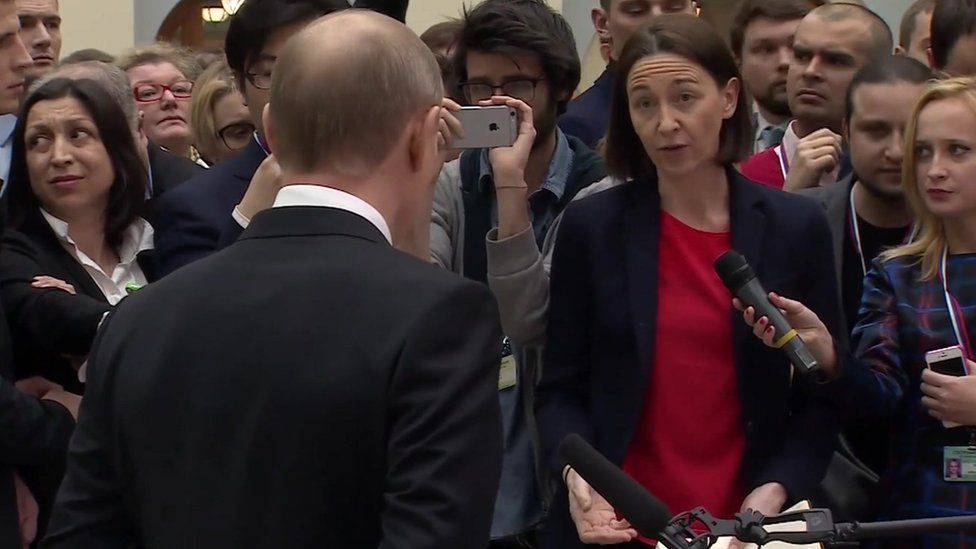
Sarah Rainsford reporting in Moscow
image caption Sarah Rainsford has charted the years of Vladimir Putin’s rule since he first came to power

The pressure on activists, critics and now journalists has intensified in the past year, since opposition politician Alexei Navalny was poisoned. In the run-up to next month’s elections to parliament, it’s increased further still.

Nervous after last year’s giant protests in Belarus over a rigged vote, the Kremlin seems set on stamping out critical voices here; all hint of real competition. Silencing the free press is central to that.

The week I found out I was being forced to leave Russia, the country’s biggest independent channel was labelled a “foreign agent”.

Dozhd TV joined a growing blacklist of media who have to declare their “hostile” status each time they publish any news, or else face crippling fines and prosecution.

“This status of foreign agent means we are enemies of the state,” Tikhon Dzyadko told me on the news set. Subscriptions went up, not down, after the designation and the editor-in-chief told me some of his team were proud of the designation as a mark of quality.

But Mr Dzyadko says the latest turn against the press is worrying.

Tikhon Dzyadko

BBC
I think there’s an understanding in the Kremlin that the pretence of being a democracy is over.
Tikhon Dzyadko
Editor-in-chief, Dozhd TV

“It’s like [they say] we don’t need these human rights activists or independent media here any more.

“It is very bad and it could become much worse – at any time.”

When I was called in to the foreign ministry in Moscow, they insisted my expulsion was nothing personal. Officially, they call it retaliation for a Tass news agency reporter denied leave to remain in the UK.

But that was two years ago and there was no fuss at all at the time.

Senior officials claim no knowledge of my status as a “threat” – even when I know they’ve seen the form I signed. They so far refuse to confirm one source who says I’ve also been included on the sanctions list.
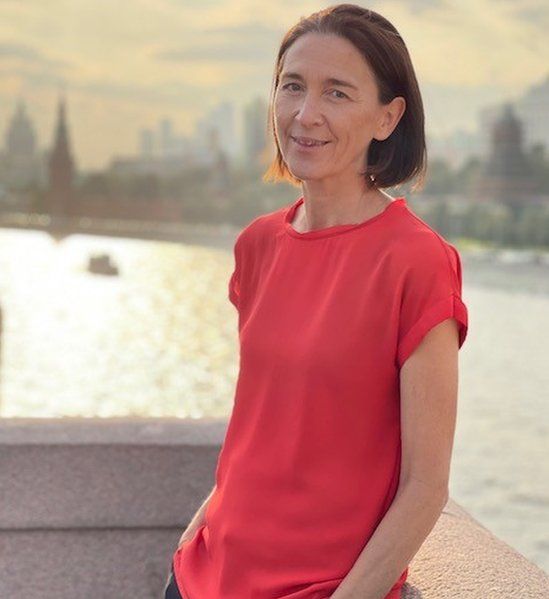
Sarah Rainsford reporting in Moscow

Many people I’ve interviewed in the past have now left Russia for safety. Others admit they have an escape plan, somewhere to run to.

I never thought for a moment that I’d be joining them on the outside.

And I’m going with the labels “anti-Russian” and “security threat” ringing in my ears.

But I’m trying to drown that noise out.

Ever since my expulsion became public, near-strangers have been stopping to apologise to me over what’s happened. Some even say they’re ashamed of their government.

It’s those Russians’ kindness and warmth that I’m thinking of, as the rain falls and it’s almost time to go. Maybe for good. But I hope not.

………………………………………………………………

What are the holiday rules for travel to green, amber and red list countries?

 Seven destinations joined the green list on Monday, as part of a review of travel restrictions.

The change to the traffic light system, which sets out the rules for arrivals, also saw two countries added to the red list.

How are the green, amber and red lists changing?

What are the holiday rules for travel to green, amber and red list countries?

Canada and Switzerland were among those added to the green list. They were joined by Denmark, Finland, Lithuania, Liechtenstein and the Azores.

Travellers arriving from these destinations no longer need to quarantine.

Other popular destinations which were already on the green list including Malta, Barbados and Germany.

Meanwhile, Thailand and Montenegro joined the red list.

People returning from red list countries will need to pay to quarantine in a government-approved hotel for 10 days.

Which tests do I need?

Going on holiday abroad means taking Covid tests:

  • Your destination may require one – each country has its own rules for arriving holidaymakers
  • In the three days before returning to the UK, you will need to take a PCR or lateral flow/antigen test. You cannot use the free NHS tests
  • Tests after you arrive in the UK – these must be PCR tests, booked before travel

Lateral flow/antigen tests can be bought in the UK to take with you, or you can buy these or PCR tests when you are away. You must make sure they are of the right quality.

The government advises passengers returning from Spain to use a PCR test.

Most private providers charge above £60 for PCR tests and £30 for lateral flow devices. The government has warned more than 80 providers over misleading prices.

Green list banner (v2)

What are the rules for green-list countries?

Nobody has to self-isolate after visiting countries on the green list.

Returning from a green-list destination, you must:

You only need to self-isolate on return from these countries if your day two test is positive, you develop symptoms or NHS Test & Trace says you’ve travelled with someone who tested positive.

Amber list banner

What are the rules for returning from an amber-list country?

The vast majority of countries are on the amber list.

Adults fully vaccinated in the UK, the US and most European countries don’t have to self-isolate upon arrival in the UK.

A Covid test is needed three days before returning from an amber country, and a PCR test two days after arriving.

Adults who are not fully vaccinated need to take an additional PCR test on or after day eight.

Under-18s do not have to self-isolate. In EnglandWales and Northern Ireland, children aged 10 and under don’t have to test before travel, but do need to take one two days after arrival. Those aged four and under don’t need any tests.

In Scotland, children over 12 have to take tests before returning home, and on day two.

Red list banner

What are the rules for red-list countries?

Red-list countries are those the UK government says present the highest Covid risk, and should not be visited “except in the most extreme of circumstances”.

Dozens of countries are on the red list, including Pakistan, Turkey, Brazil and South Africa. If you have been in one in the last 10 days, you can only enter the UK if you are a UK or Irish national, or UK resident.

Returning from a red-list country – regardless of your vaccination status – you must:

Rates are:

  • 10 days (11 nights) for one adult – £2,285
  • Additional adult (12 and over) – £1,430
  • Children aged five to 11 – £325
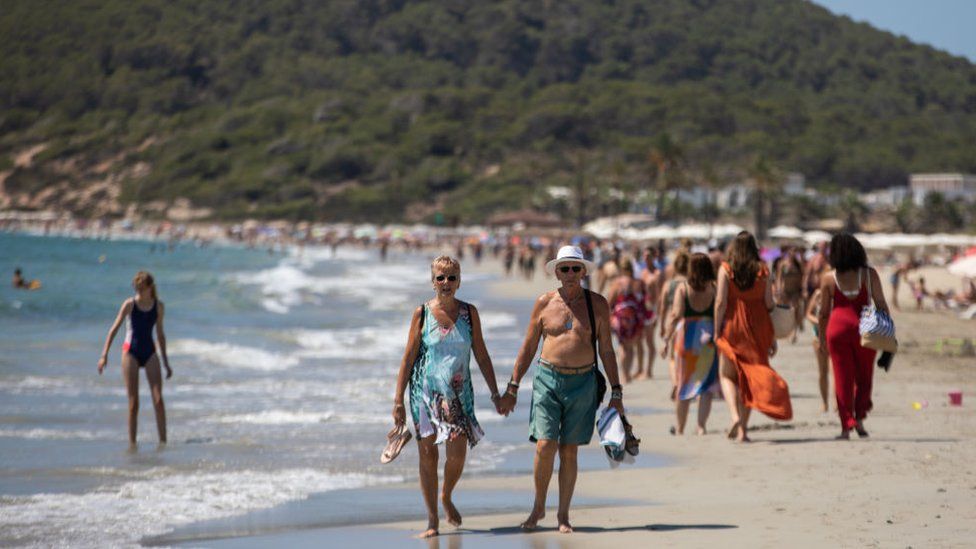
People walking along a beach in Ibiza

Who decides if a country is green, amber, or red?

All countries go on the amber list unless there is evidence to suggest they should be on the green or red lists.

Ministers base their decision on advice from the Joint Biosecurity Centre (JBC), which looks at the Covid situation in each country.

The lists are reviewed every three weeks and the system is similar for EnglandScotlandWales and Northern Ireland.

Are other countries allowing tourists?

It is your responsibility to check the entry rules for your destination, which can change at short notice. Some countries only allow fully vaccinated visitors, or insist on a quarantine period.

………………………………………………………………

Tanzania opposition leader appears in High Court

 The leader of Tanzania’s main opposition party has appeared in the country’s High Court to face terrorism charges.

Tanzania opposition leader appears in High Court

Freeman Mbowe has been detained since his arrest in July, along with other senior officials of the Chadema party, just hours before they were to hold a public forum to demand constitutional reforms.

The party says the case is politically motivated, describing it as a throwback to the increasingly authoritarian rule of the late President John Magufuli.

Mr Mbowe’s lawyer argued that the division of the High Court, known as the Corruption and Economic Crimes Division, did not have the power to hear the case, the AFP news agency reports.

The case was previously heard in a magistrate’s court.

In a separate case, Mr Mbowe went to court on Monday to argue that the manner of his arrest and the fact that he was held for five days without being charged, violated his constitutional rights, AFP says.

The United States has expressed concern about the treatment of the opposition leader.

……………………………………………………………


Ronaldo returns: Rooney, Henry, Ibrahimovic – big names who went back

 London, Aug. 31, (STATS Perform/dpa/GNA) – For a short while, it looked as though Cristiano Ronaldo – who had asked to leave Juventus – was heading to Manchester City after they missed out on the signing of Harry Kane.

Ronaldo returns: Rooney, Henry, Ibrahimovic – big names who went back
Instead, he is heading back to the red side of Manchester.

Cristiano Ronaldo – Manchester United
Ronaldo spent six years at Old Trafford during his previous spell, arriving as a lanky teenager who loved a stepover and leaving as a Ballon d’Or winner and ice-cold finisher. His then-world-record move to Real Madrid had been a long time coming and he spent nine years at the Santiago Bernabeu, becoming the club’s all-time top scorer as he continued his transition from winger to out-and-out ‘number nine’. There he won four Champions League titles before moving on to Juve, for whom he plundered 81 goals in 98 Serie A matches and picked up two Scudetti. But now he is returning to England.

Whether he can match the standards he set last time remains to be seen, with his 31-goal haul of 2007-08 only bettered once in a 38-match season, but United fans will be convinced he can fire them to a first league title since Ferguson left.

Zlatan Ibrahimovic – Milan
After a difficult spell under Pep Guardiola at Barcelona, Ibrahimovic – who had excelled at both Juventus and Inter – moved back to Italy, joining the Nerrazurri’s city rivals Milan on loan for 2010-11. He became an instant star for the Rossoneri, picking up where he left off in Italy with 21 goals, a tally he bettered in 2011-12, scoring 35 times in all competitions. Paris Saint-Germain came calling and he went on to become the Ligue 1 giants’ record goalscorer (a title now held by Edinson Cavani), before joining Manchester United and LA Galaxy.

Despite being in his late 30s, Ibrahimovic still had more to offer and rejoined Milan for the back half of the 2019-20 campaign, netting 11 goals. He carried on his form into an injury hit 2020-21, scoring a further 16 times, and he is set to be a pivotal figure at San Siro once again this season.

Didier Drogba – Chelsea
Part of the allure for Romelu Lukaku returning to Chelsea was to emulate his icon Drogba, who left Stamford Bridge after helping the Blues clinch a Champions League crown in 2012. The Ivorian went back to west London in the 2014-15 season, with Drogba explaining he could not turn down the chance to work with Jose Mourinho once again. He scored four league goals in 28 appearances to help Chelsea win the title, before heading off for a swansong in MLS with the Montreal Impact.

Thierry Henry – Arsenal
Another Premier League great, Henry rejoined Arsenal on a short-term loan deal at the start of 2012. He scored on his second debut against Leeds United in the FA Cup, converting his only attempt of the game in a 22-minute cameo from the bench. He went on to play a further six times, scoring in the Premier League against Sunderland, before he returned to the New York Red Bulls to round off a wonderful career.

Carlos Tevez – Boca Juniors
The Tevez-Boca love affair has dominated most of the striker’s complex career. After coming through their youth ranks, the feisty forward was seen as the heir to Diego Maradona. A brief stint in Brazil with Corinthians followed, but Europe had long since beckoned, even if West Ham were by no means the expected destination.

He went on to play for Manchester United and City, increasing tension between the clubs, before then going to Juventus. But throughout this time Tevez seemed to long for a return to Boca.

He went back to La Bombonera in 2015, his homecoming interrupted by a brief spell with Shanghai Shenhua in 2017 in the Chinese Super League, though even Tevez acknowledged he saw his time in China as a “holiday”. “He filled Santa’s sack with dollars and now he has returned to Boca,” was Maradona’s assessment upon the forward’s return from the CSL. His third spell with Boca ended in June 2021 and it remains to be seen if he ever plays for another club.

Wayne Rooney – Everton
With Lukaku joining United in 2017, it opened the door for Everton to bring back Rooney, who had left his boyhood club in 2004 on the back of a stellar performance at Euro 2004. Then just 18, Rooney went on to become United’s record goalscorer – and England’s, too – and he returned to Goodison Park for the 2017-18 season.

He scored on his league debut, heading in the winner against Stoke City, and though he netted 11 times in total for the Toffees, a difficult season saw Ronald Koeman sacked and replaced with Sam Allardyce, who was subsequently shuffled out of the door for Marco Silva. With Everton looking to go in a new direction, Rooney left to join MLS side DC United in 2018.

Gianluigi Buffon – Juventus/Parma
Buffon likes a comeback. Having returned for a second spell at Juventus in 2019, the goalkeeping great departed the club for a second time at the end of 2020-21. The Italy legend had not finished playing yet, though, and Parma quickly emerged as a potential destination despite their relegation to Serie B.

After a few weeks of contemplation, it was confirmed that Buffon was heading back to the club where he made his name. Now 43, the iconic stopper is wearing Gialloblu for the first time in 20 years, and he is set to remain with them until he turns 45, given he signed a two-year contract.

What happens after that is anyone’s guess, but calling it a day with his first club could be a satisfyingly romantic conclusion to a remarkable career – that or he ends up at Juve again.
GNA

…………………………………………………………

Wizkid hit becomes most Shazamed song in US

 The hit song Essence by Wizkid has become the most Shazamed song in the United States.

Wizkid hit becomes most Shazamed song in US

Shazam, the app used to identify songs, tweeted the news and its congratulations to the Nigerian Afrobeats superstar:

Social embed from twitter

The track was released last October on Wizkid’s Made in Lagos album – and also features Nigerian singer Tems.

A remix released earlier this month included Canadian pop star Justin Bieber, which has also boosted its popularity.

Essence was won critical appreciation – and was included in former US President Barack Obama’s top 30 songs of 2020:

Social embed from twitter

………………………………………………………………

Tuesday, 31 August 2021

Civicus Nelson Mandela – Graça Machel Innovation Awards 2021 for Civil Society Organizations/Activists (US$5,000 prize)


Application Deadline: 20 September, 2021. 

The 2021 Innovation Awards will recognise seven individuals, groups or organisations that stand out for their innovative work building people power in support of human rights and social justice for everyone.

The 2021 Innovation Awards will help to make the case for the importance of people power and civil society activism in creating a more just, inclusive and sustainable world. The Awards will provide an important platform for learning, sharing and building solidarity, and inspire activists, donors and other enablers who are looking for innovative approaches and solutions to supporting people power.

Requirements

The Awards are open to any individual, organisation or group who meets the following eligibility criteria:

You are 18 years or older by 1 September 2021.

You are able to submit an application in English, French or Spanish.

You are both a national and resident from the following regions: Asia, Africa, Latin America and the Caribbean, Pacific.
You work with organisations, networks, movements or change-seeking communities at the local or national level. Both formally constituted and informal organisations or groups are eligible.

You belong to the same community whose issues you are trying to address. (For example, if you work to increase youth participation in civil society, you must be a young person, or your organisation/group must be youth-led.)

You have worked to build people power in your community for at least 2-years.

For individual applicants: you belong to an organisation, network, movement or change-seeking community that would ultimately benefit from the Award.

Click here to apply:https://bit.ly/3mIunwY

When Telecommunications Collapse: What Angola's Mobile Network Crisis Teaches Us About Governance, Justice, and National Security

  The recent disruption of Angola's mobile networks has affected banking, digital payments, businesses, emergency communications, and mi...