Translate

Tuesday, 6 July 2021

Duchess of Cambridge forced to self-isolate due to Covid contact


The Duchess of Cambridge is having to self-isolate for 10 days after coming into contact with someone who later tested positive for Covid.

She had been due to spend the day with the Duke of Cambridge to mark the 73rd anniversary of the NHS.

The couple had planned to attend a St Paul’s Cathedral service, and a Buckingham Palace tea for NHS staff.

Kensington Palace said she does not have any symptoms, but is “following all relevant government guidelines”.

It said in a statement: “Last week the Duchess of Cambridge came into contact with someone who has subsequently tested positive for Covid-19.

“Her Royal Highness is not experiencing any symptoms, but is following all relevant government guidelines and is self-isolating at home.”
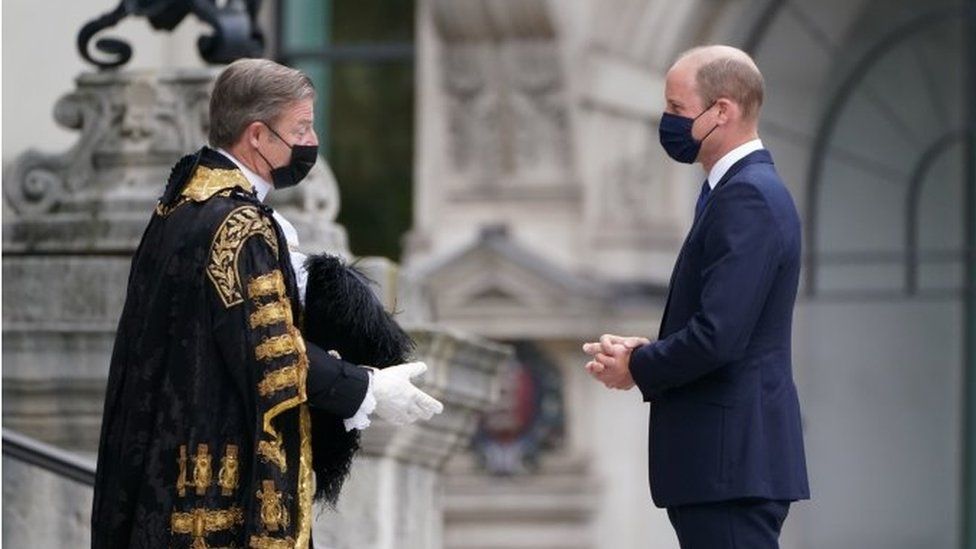
The Duke of Cambridge and William Russell, the Lord Mayor of London
image caption The Duke of Cambridge is greeted by William Russell, the Lord Mayor of London, as he arrives at St Paul’s Cathedral for a ceremony honouring the 73rd anniversary of the NHS

Catherine’s last public event was a visit to Wimbledon on Friday when she toured the venue and met staff in its museum and Centre Court kitchen.

She also sat with the Duke of Kent in the royal box on Centre Court, and with former British number one tennis player Tim Henman on Court 14 to watch Jamie Murray play in a men’s doubles match.

The duchess is patron of the All England Lawn Tennis Club and a keen tennis fan, but is now likely to miss the men’s and women’s finals at the weekend.
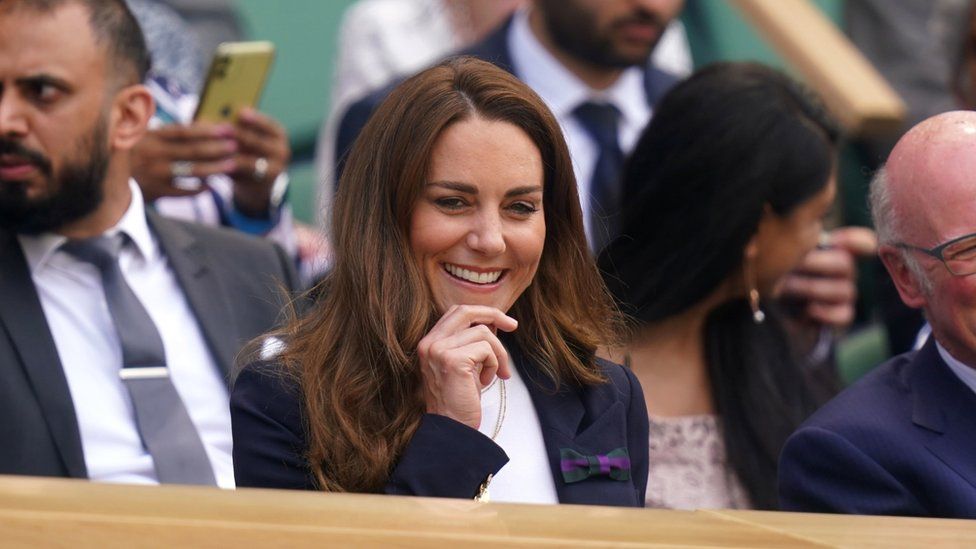
Duchess of Cambridge at Wimbledon on 2 July 2021
image caption The duchess was last seen in public at Wimbledon on Friday
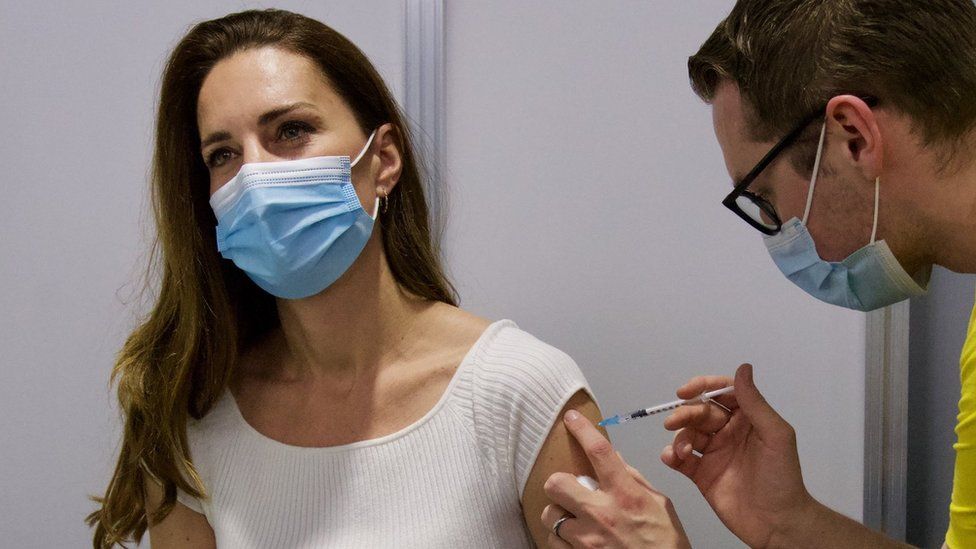
The Duchess of Cambridge getting the first dose of a coronavirus vaccine
image caption The Duchess of Cambridge has received both her Covid jabs

The duchess, who has received both her Covid jabs, began self-isolating on Friday after being alerted that afternoon.

The PA news agency says she follows the royal household testing regime by taking lateral flow tests twice a week.

It reports she additionally took lateral flow tests before visiting Wimbledon and watching England’s Euro 2020 victory against Germany last Tuesday at Wembley with Prince William and Prince George. Both results were negative.

Prince William contracted Covid last spring but was able to carry on with telephone and online engagements while being treated by royal doctors.

The Prince of Wales also caught the virus during the same period but had milder symptoms, although he did lose his sense of smell and taste for a period.

………………………………………………………………

Dropping face mask rules would be gross negligence, says Unite union


Public transport workers will face even more risk of infection if face mask rules are dropped, the Unite union has said.

Boris Johnson is expected to confirm later that the majority of Covid restrictions in England will be lifted from 19 July.

These could include making face mask wearing voluntary and the end of 1m-plus social distancing.

But the union said mask-wearing on public transport should be compulsory.

A Unite spokesman said there had been a high level of Covid deaths among bus drivers even with mandatory face mask wearing.

“To end the requirement to wear masks on public transport would be an act of gross negligence by the government,” said Unite national officer for passenger transport Bobby Morton.

“Rates of infection are continuing to increase and not only does mask wearing reduce transmissions, it helps provide reassurance to drivers and to passengers who are nervous about using public transport.

“The idea of personal responsibility and hoping that people will wear masks is absolutely ridiculous, members are already reporting there is an increase in passengers ignoring the rules on mask wearing.”

There is expected to be a rise in coronavirus infections when restrictions are eased, but the government hopes that vaccinations will limit hospitalisations and deaths.

The lifting of Covid restrictions was originally planned to be on 21 June, but this was pushed back to 19 July after a rise in infections driven by the Delta variant.

Restrictions that are currently in place in England include the “rule of six” for gatherings, pubs and restaurants having to have table service, limits on how many people can be in theatres and cinemas, and nightclubs being closed.

Scotland, Wales and Northern Ireland have their own coronavirus rules, and the Scottish government has said it could keep some basic measures, including wearing masks, at its next review in August.

………………………………………………………………

Monday, 5 July 2021

Coronavirus: When can we stop wearing face masks or coverings?


Reviews are considering how face-covering rules might change in future.

Cabinet Minister Robert Jenrick has hinted that all rules on mandatory mask-wearing could end in England on 19 July.

What are the reviews into face masks?

Reviews are assessing how and when a range of Covid measures might be lifted, including the need for face coverings.

The Social Distancing Review is one of four different UK Government studies into how Covid-19 should be handled from “summer onwards”.

Mask-use will also be considered by the other three reviews looking at:

  • the introduction of so-called vaccine passports
  • public event safety (also considering number limits at weddings and other life events)
  • non-essential international travel

The Westminster government is working with counterparts in Scotland, Wales and Northern Ireland on a UK-wide approach.

When will we know the findings?

Each review will inform ministers deciding when England’s final stage of lifting lockdown can happen.

It had been hoped remaining restrictions could be removed on 21 June, but they will remain in place until in England at least 19 July because of the Delta variant.

Are face-covering rules likely to remain?

Ministers have hinted that face-covering rules could be lifted along with other restrictions on 19 July. Whether to wear a face-covering would become our “personal responsibility”.

Communities Secretary Robert Jenrick has said “it does look as if the data is in the right place”.

The Scottish government has said there would be an “ongoing need” for masks.

Some people may opt to wear them, even if they are not compulsory.

But Chancellor Rishi Sunak and Environment Secretary George Eustice have both said they plan to stop wearing face coverings as soon as rules are relaxed.

Wearing face masks on public transport

Why should I wear a face covering?

Face coverings worn over the nose and mouth reduce the spread of coronavirus droplets from coughs, sneezes and speaking.

The main purpose is to protect others from Covid, rather than yourself. If everyone wears one, the risks drop for all.

Masks can help to reduce virus spread from people who may be contagious but have no symptoms.

There is some evidence they offer protection to wearers, but are not a replacement for social distancing and hand-washing.

Cutting virus transmission is important because many people are still not yet fully vaccinated.

Also, some new virus variants appear more transmissible than earlier Covid strains.

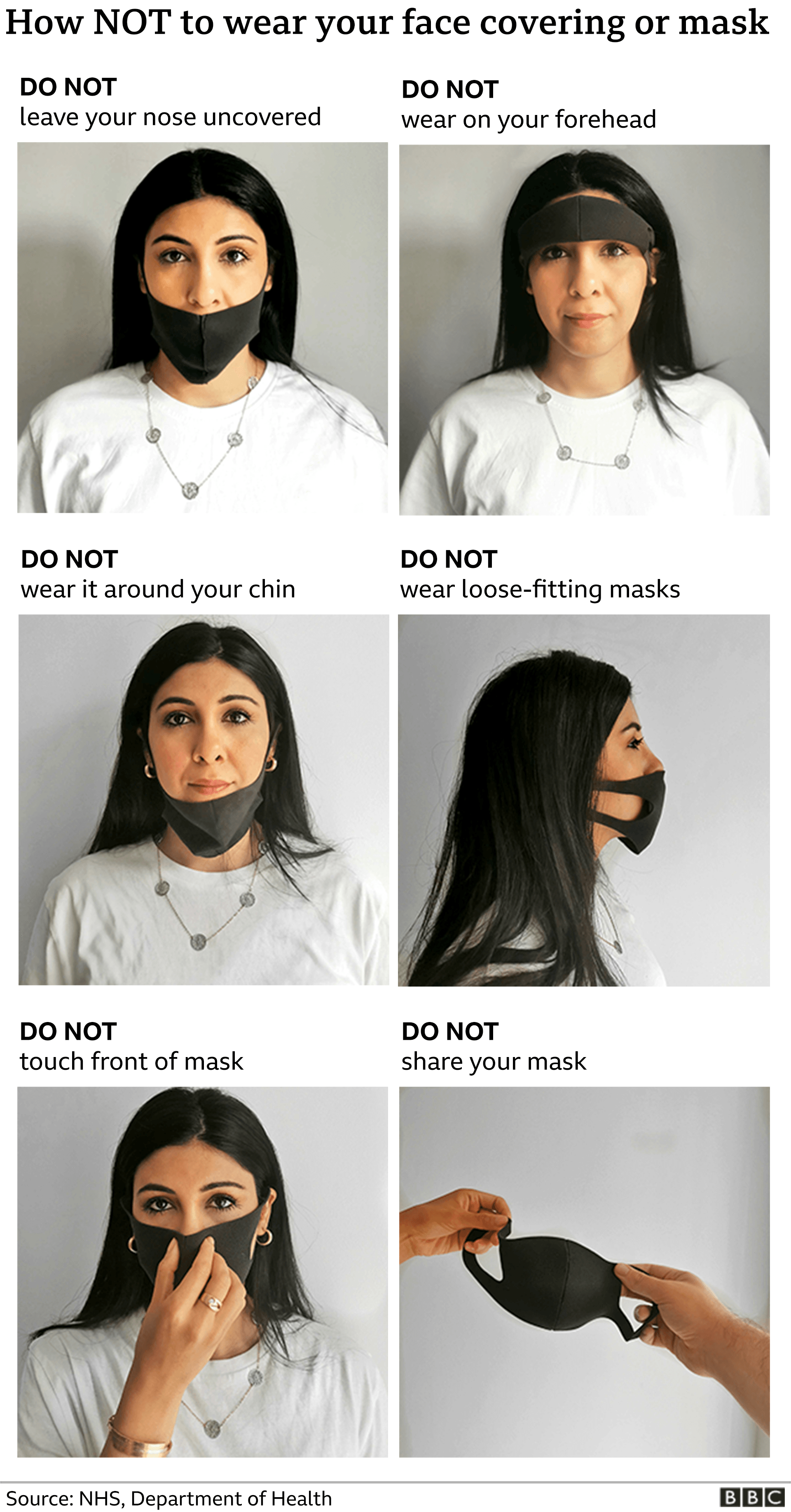
How not to war your mask: DO NOT leave your nose uncovered; DO NOT wear on your forehead; DO NOT wear it around your chin; DO NOT wear loose-fitting masks; DO NOT touch front of mask; DO NOT share your mask
Presentational white space

What sort of face covering is best?

Make sure it:

  • has a nose wire
  • has at least two/three layers of material
  • fits snugly over mouth, nose and chin (tie knots in the ear loops of surgical masks if necessary)

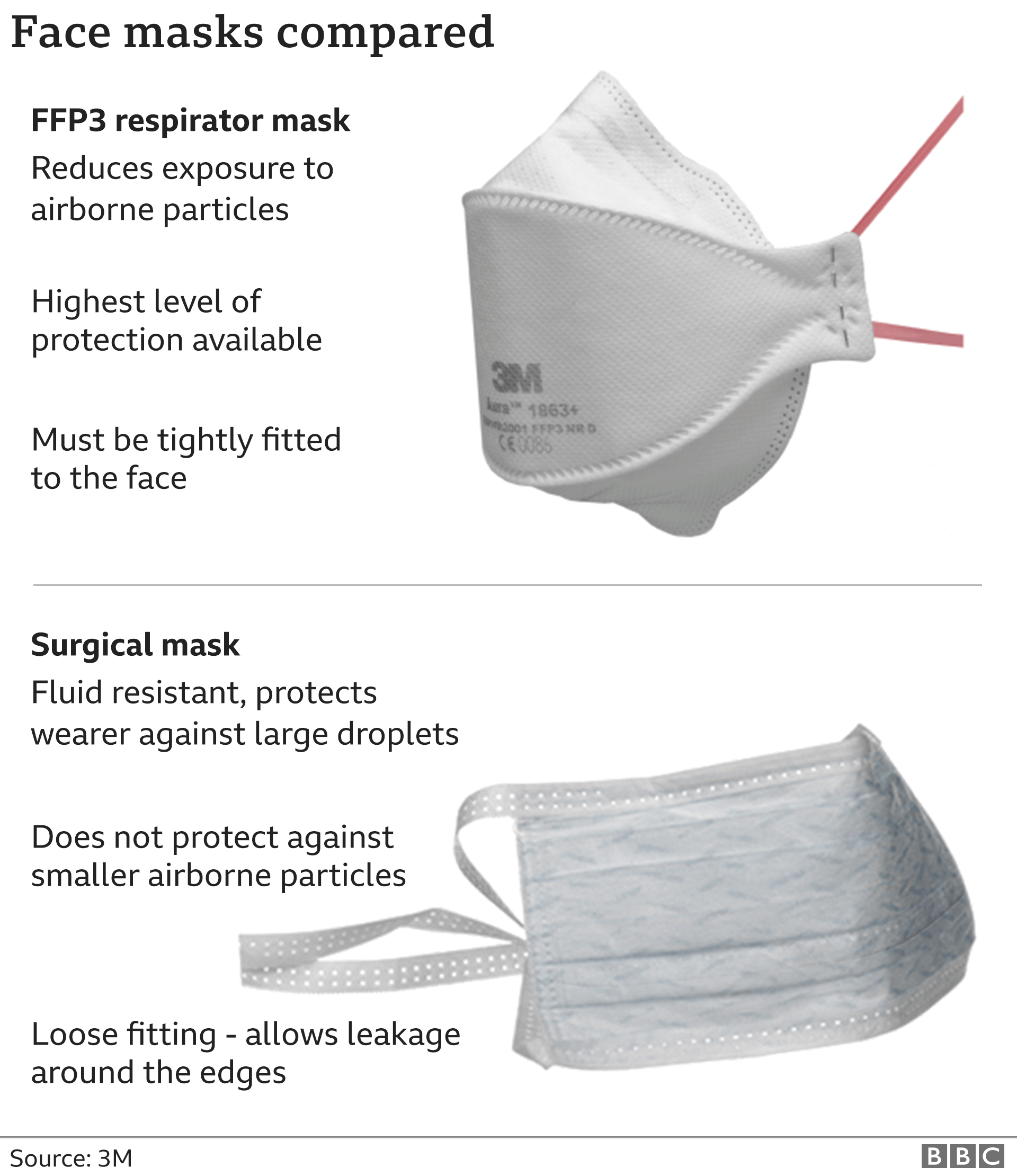
The highest level of protection is provided by FFP3 (or similar) masks worn by healthcare workers in high risk settings.

Trained staff need to fit them correctly. They are worn in conjunction with other personal protective equipment (gloves, aprons, eye protection).

A recent study by Cambridge University Hospitals NHS Foundation Trust found FFP3 masks provided up to 100% protection against Covid.

Two types of mask compared: a FFP3 respirator mask and a surgical mask

Staff wearing standard issue surgical masks, as recommended in official guidance for most situations, were much more likely to catch the virus.

Members of the public can buy FFP3 masks, but they won’t provide the highest protection unless fitted correctly.

Where do I need to wear a face covering?

You could be fined if you refuse to wear one in many public places in England, including public transport and shops.

Scotland, Wales and Northern Ireland have similar rules.

  • In England, secondary school pupils no longer have to wear face coverings, although schools may insist they do
  • In Scotland, high school staff and pupils should wear face coverings in classrooms, communal areas and corridors
  • In Wales, face coverings are recommended in secondary schools when social distancing is unlikely to be maintained
  • In Northern Ireland, face coverings must be worn in post-primary schools and on public and school transport

Police can issue £200 fines England and Northern Ireland, or £60 in Scotland and Wales.

………………………………………………………………

Remittance fees highest to Sub Saharan Africa

 It costs more to send money to Sub Saharan Africa than to anywhere in the world according to a World Bank report on Migration and Development.

Global African Family Meeting

Sending $200 to the region costs 8.2% as compared to the next highest region of East Asia and Pacific, which is 6.9%. The lowest cost of sending that same $200 is 4.9% to South Asia.

The rest are 5.6% to Latin America and the Caribbean, 6.4% to Europe and Central Asia, and 6.6% to Middle East and North Africa.

Experts believe there are two factors influencing the rates. the first one is the volume of remittances. Sub Saharan Africa receives the lowest volume of remittances at $42bilion in 2020.

In contrast, South Asia receives the highest volume of remittances at $147billion in 2020 with the lowest fees at 4.9% to send $200.

East Asia and Pacific has the next highest volume at $136billion. Yet at 6.9%, it cost the next highest fees to send $200 to that region.

Next to volume of remittances, perhaps the most influential factor is the cost of doing business in the particular region. Setting up the financial logistics costs more in developing countries due to a combination of governments’ penchant to tax these services, and what has become known in developing countries as “facilitation’ aka bribes.

Sub Sahara Africa may need to increase her volume of remittances in order to be able to mount a credible argument for lowered fees.

DNT News.

………………………………………………………………

PR EXPRESSES REGRET AT THE DEATH OF THE FORMER OMBUDSMAN

 Luanda - The Angolan Head of State, João Lourenço, expressed his regret at the death of the former Ombudsman, Carlos Alberto Ferreira Pinto, on Friday, due to illness.

“With much regret, I learned of the death of Dr. Carlos Alberto Ferreira Pinto, former Ombudsman, functions that he exercised with zeal, in the last three years, after relevant services rendered at the level of the MPLA's governing bodies”, wrote the President Republic in a note of condolence posted on its Facebook page.

João Lourenço states that, invested in his role as Ombudsman, Carlos Aberto Ferreira Pinto has contributed in a meritorious way to put justice at the service of citizens and raise their awareness of citizenship.

The President considers the death of Carlos Ferreira Pinto an irreparable loss, which leaves his family, friends and professional colleagues desolate, to whom he offered his deepest and most sincere condolences.

In the first quarter of this year, Ferreira Pinto withdrew from public life at his request. 

The 2026 AFRICA EDUCATES HER CAMPAIGN REPORT - ANGOLA 6th Anniversary | 2020–2026

  Meet who's behind this cause     Support us:  https://donate-sofonie.netlify.app/           AFRICA EDUCATES HER CAMPAIGN REPORT — ANGO...