Translate

Friday, 2 July 2021

Nobody’s winning as drought upends life in US West Basin


TULELAKE, Calif. (AP) — Ben DuVal knelt in a barren field near the California-Oregon border and scooped up a handful of parched soil as dust devils whirled around him and birds flitted between empty irrigation pipes.


DuVal’s family has farmed the land for three generations, and this summer, for the first time ever, he and hundreds of others who rely on irrigation from a depleted, federally managed lake aren’t getting any water from it at all.

As farmland goes fallow, Native American tribes along the 257-mile-long (407-kilometer) river that flows from the lake to the Pacific watch helplessly as fish that are inextricable from their diet and culture die in droves or fail to spawn in shallow water.
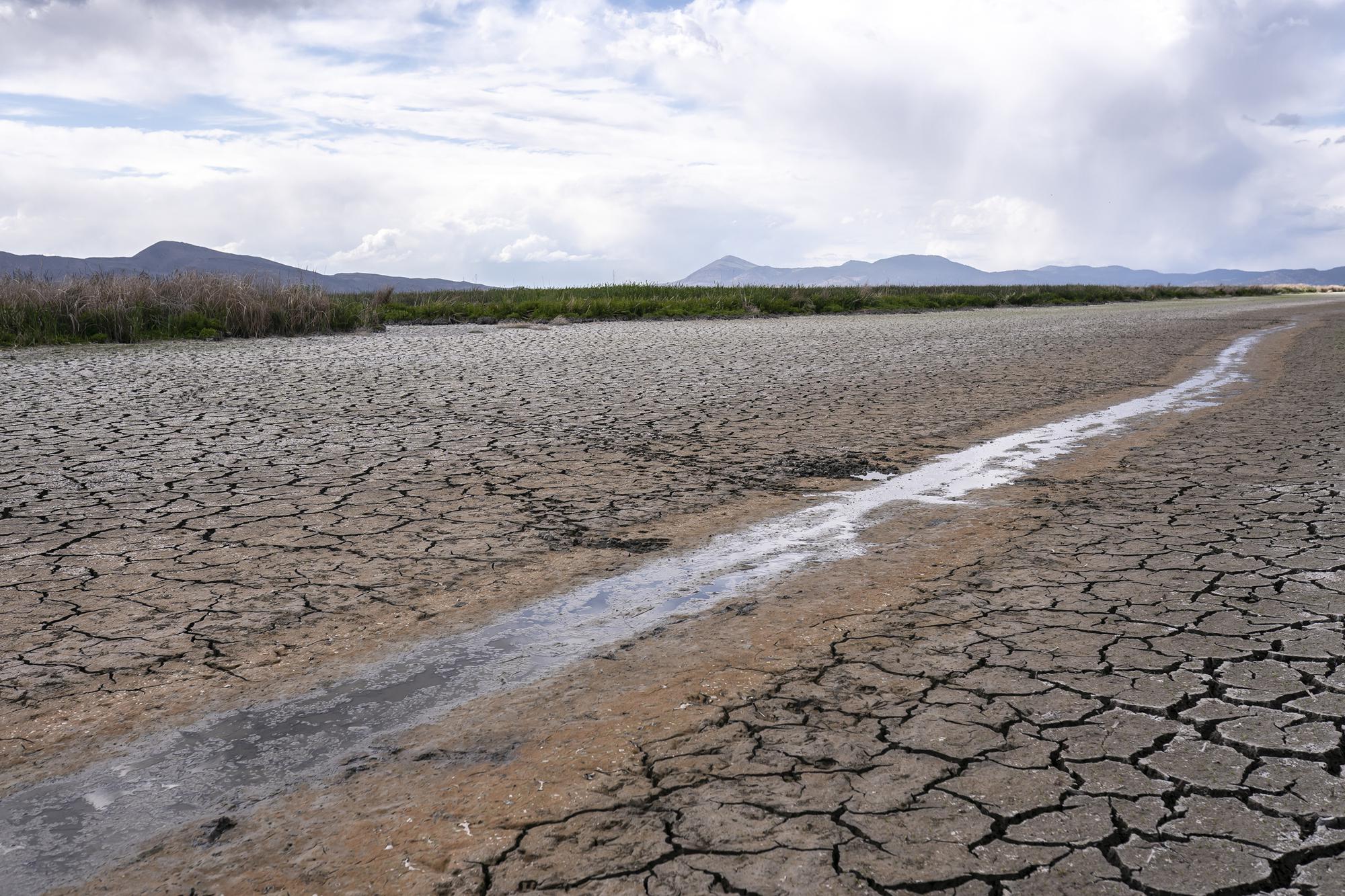
A small stream runs through the dried, cracked earth of a former wetland near Tulelake, Calif., Wednesday June 9, 2021. The area was drained in an effort to prevent an outbreak of avian botulism, which occurs when water levels become too low. (AP Photo/Nathan Howard)

A small stream runs through the dried, cracked earth of a former wetland near Tulelake, Calif., Wednesday June 9, 2021. (AP Photo/Nathan Howard)
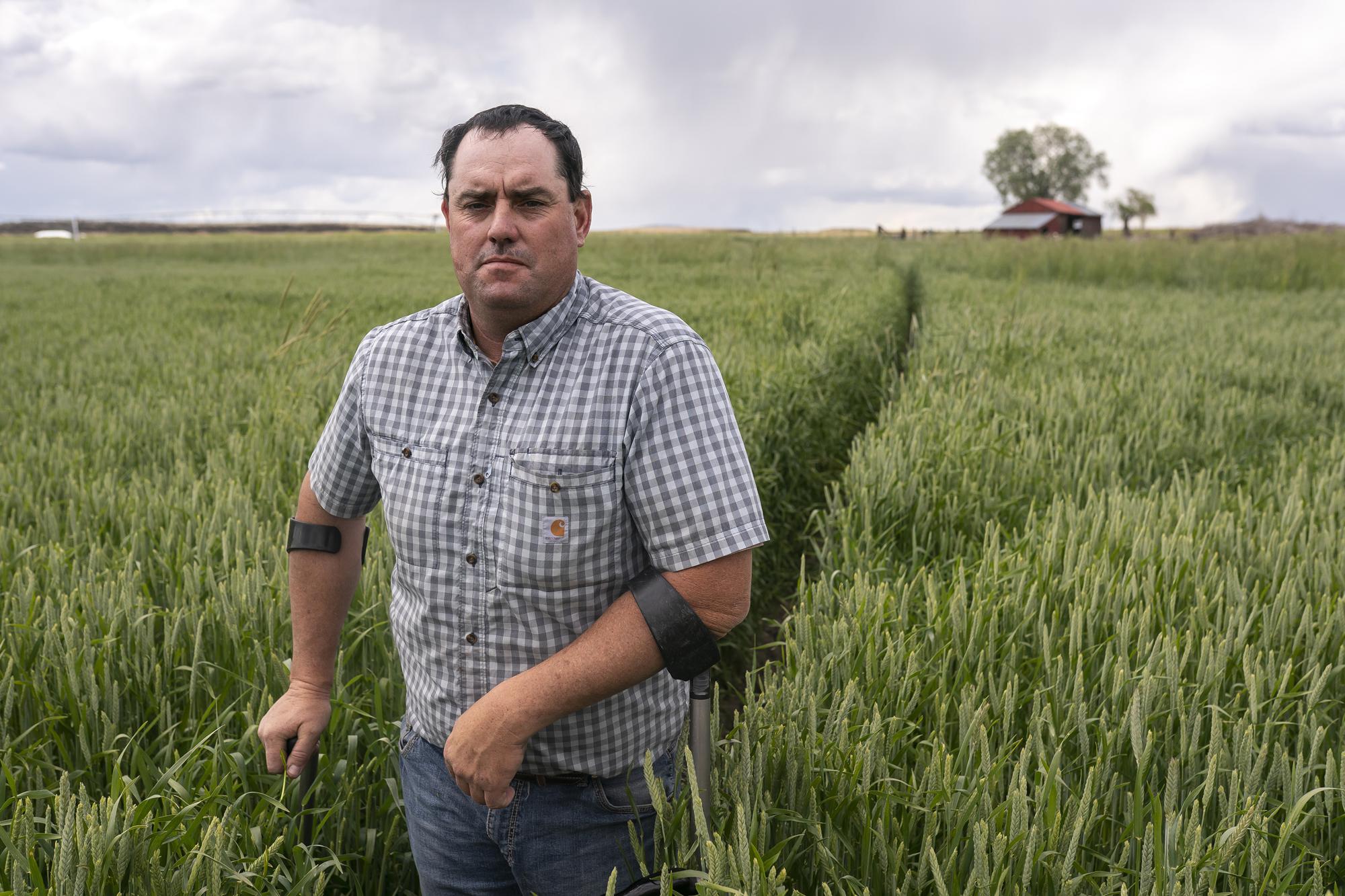
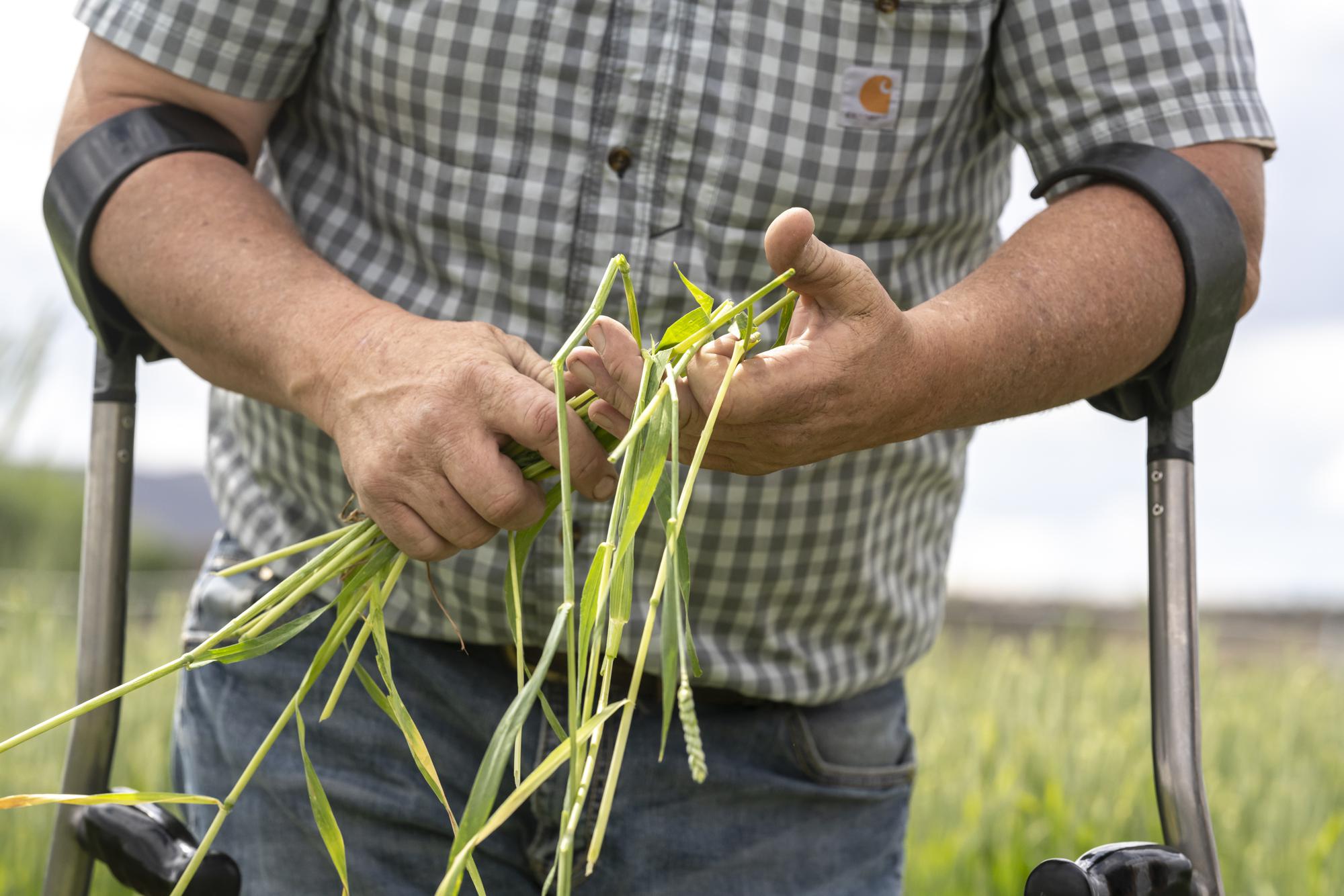
Ben DuVal stands in a field of triticale, one of the few crops his family was able to plant this year due to the water shortage, on Wednesday, June 9, 2021, in Tulelake, Calif. DuVal's family has farmed the land near the California-Oregon border for three generations, and this summer for the first time ever, he and hundreds of others who rely on irrigation from a depleted, federally managed lake aren't getting any water from it at all. (AP Photo/Nathan Howard)

Ben DuVal stands in a field of triticale, one of the few crops his family was able to plant this year due to the water shortage, on Wednesday, June 9, 2021, in Tulelake, Calif. (AP Photo/Nathan Howard)
Ben DuVal stands in a field of triticale, one of the few crops his family was able to plant this year due to the water shortage, on Wednesday, June 9, 2021, in Tulelake, Calif. DuVal's family has farmed the land near the California-Oregon border for three generations, and this summer for the first time ever, he and hundreds of others who rely on irrigation from a depleted, federally managed lake aren't getting any water from it at all. Competition over the water in the Klamath Basin has always been intense, but this summer, because of a historic drought there is not enough water for the needs of farmers, Native American tribes and wildlife refuges. (AP Photo/Nathan Howard)

Ben DuVal stands in a field of triticale, one of the few crops his family was able to plant this year due to the water shortage, on Wednesday, June 9, 2021, in Tulelake, Calif. (AP Photo/Nathan Howard)

Just a few weeks into summer, a historic drought and its on-the-ground consequences are tearing communities apart in this diverse basin filled with flat vistas of sprawling alfalfa and potato fields, teeming wetlands and steep canyons of old-growth forests.

Competition over the water from the river that snakes through it has always been intense. But this summer there is simply not enough, and the farmers, tribes and wildlife refuges that have long competed for every drop now face a bleak and uncertain future together.

“Everybody depends on the water in the Klamath River for their livelihood. That’s the blood that ties us all together. … They want to have the opportunity to teach their kids to fish for salmon just like I want to have the opportunity to teach my kids how to farm,” DuVal said of the downriver Yurok and Karuk tribes. “Nobody’s coming out ahead this year. Nobody’s winning.”

With the decadeslong conflict over water rights reaching a boiling point, those living the nightmare worry the Klamath Basin’s unprecedented drought is a harbinger as global warming accelerates.

“For me, for my family, we see this as a direct result of climate change,” said Frankie Myers, vice chairman of the Yurok Tribe, which is monitoring a massive fish kill where the river enters the ocean. “The system is crashing, not just for Yurok people … but for people up and down the Klamath Basin, and it’s heartbreaking.”

ROOTS OF A CRISIS

Twenty years ago, when water feeding the farms was drastically reduced amid another drought, the crisis became a national rallying cry for the political right, and some protesters breached a fence and opened the main irrigation canal in violation of federal orders.

But today, as reality sinks in, many irrigators reject the presence of anti-government activists who have once again set up camp. In the aftermath of the Jan. 6 insurrection at the U.S. Capitol, irrigators who are at risk of losing their farms and in need of federal assistance fear any ties to far-right activism could taint their image.

Some farmers are getting some groundwater from wells, blunting their losses, and a small number who get flows from another river will have severely reduced water for just part of the summer. Everyone is sharing what water they have.

“It’s going to be people on the ground, working together, that’s going to solve this issue,” said DuVal, president of the Klamath Water Users Association. “What can we live with, what can those parties live with, to avoid these train wrecks that seem to be happening all too frequently?”
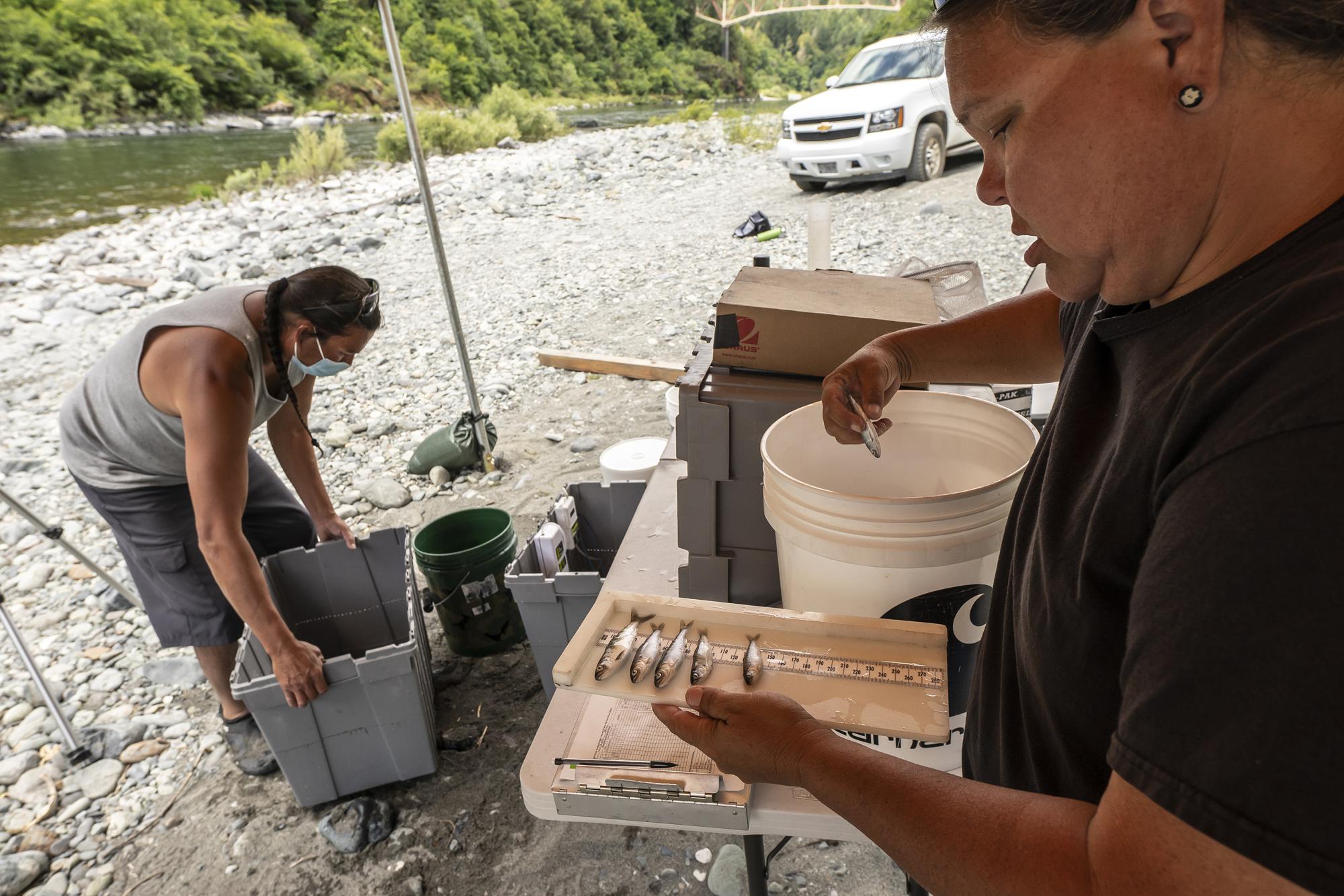
Jamie Holt, lead fisheries technician for the Yurok Tribe, right, and Gilbert Myers count dead chinook salmon pulled from a trap in the lower Klamath River on Tuesday, June 8, 2021, in Weitchpec, Calif. A historic drought and low water levels are threatening the existence of fish species along the 257-mile-long river.

Jamie Holt, lead fisheries technician for the Yurok Tribe, right, and Gilbert Myers count dead chinook salmon pulled from a trap in the lower Klamath River on Tuesday, June 8, 2021, in Weitchpec, Calif. (AP Photo/Nathan Howard)
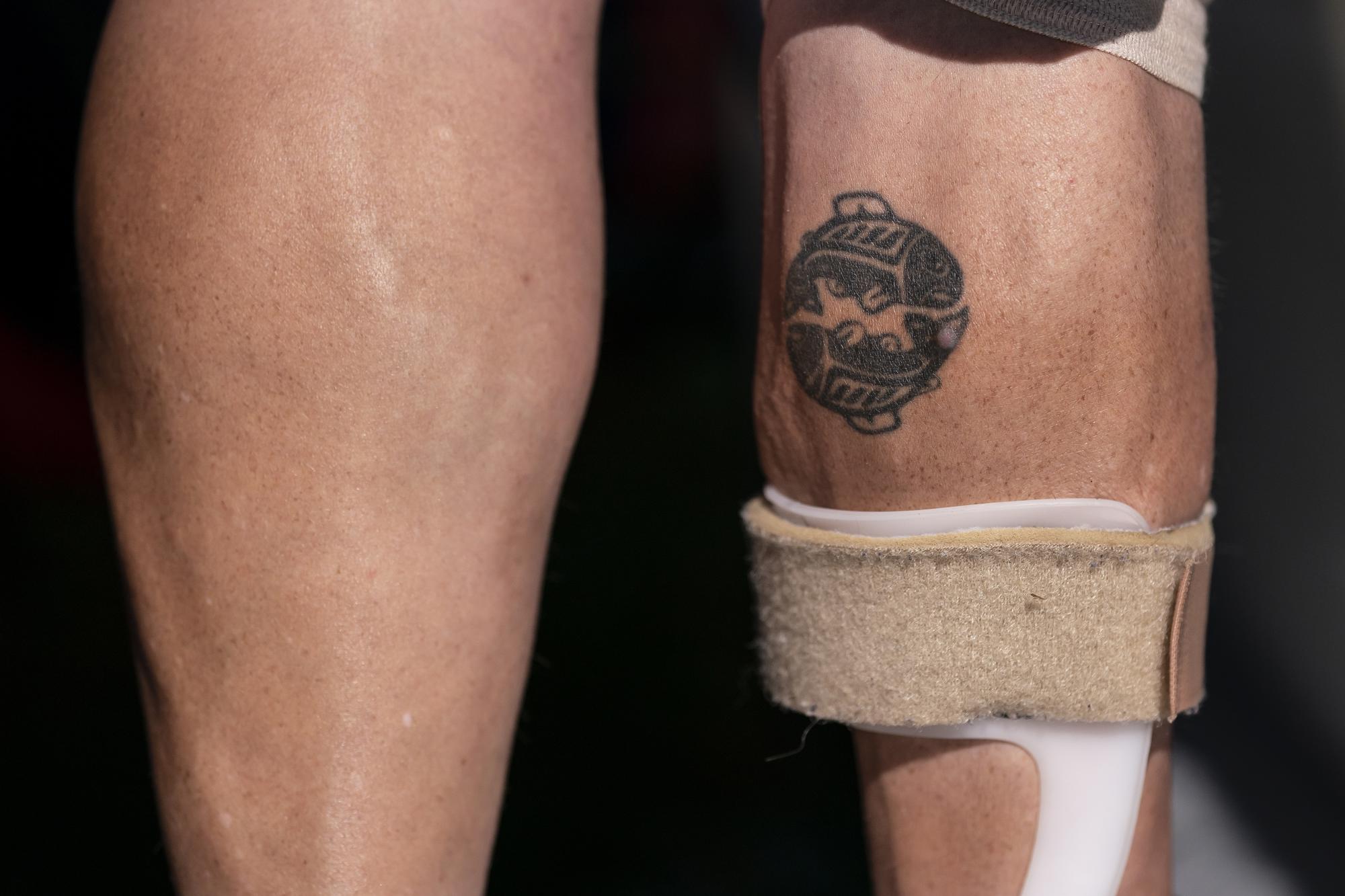
A salmon tattoo is seen on the leg of Jamie Holt, lead fisheries technician for the Yurok Tribe, while documenting chinook deaths in the lower Klamath River on Tuesday, June 8, 2021, in Weitchpec, Calif. A historic drought and low water levels are threatening the existence of fish species along the 257-mile-long river.

A salmon tattoo is seen on the leg of Jamie Holt, lead fisheries technician for the Yurok Tribe, while documenting chinook deaths in the lower Klamath River on Tuesday, June 8, 2021, in Weitchpec, Calif. (AP Photo/Nathan Howard)
Jamie Holt, lead fisheries technician for the Yurok Tribe, counts dead chinook salmon pulled from a trap in the lower Klamath River on Tuesday, June 8, 2021, in Weitchpec, Calif. A historic drought and low water levels are threatening the existence of fish species along the 257-mile-long river.

Jamie Holt, lead fisheries technician for the Yurok Tribe, counts dead chinook salmon pulled from a trap in the lower Klamath River on Tuesday, June 8, 2021, in Weitchpec, Calif. (AP Photo/Nathan Howard)
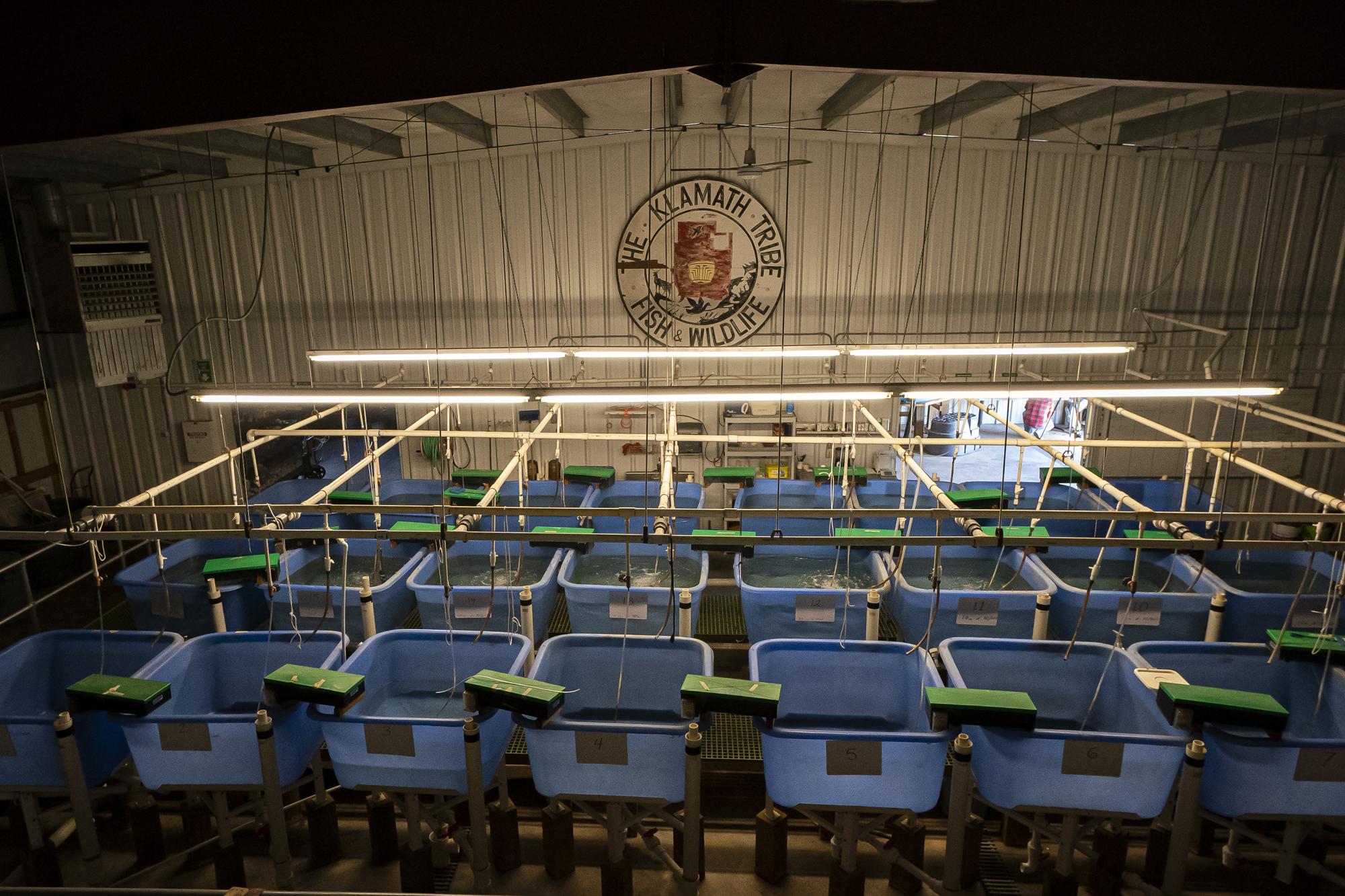
The Klamath Tribes Fish and Wildlife facility, where the health of native suckerfish is tracked, is seen here on Thursday, June 10, 2021, in Chiloquin, Ore. Toxic algae blooms in the Upper Klamath Lake threatens the habitat for the endangered species. (AP Photo/Nathan Howard)

The Klamath Tribes Fish and Wildlife facility, where the health of native suckerfish is tracked, is seen here on Thursday, June 10, 2021, in Chiloquin, Ore. (AP Photo/Nathan Howard)

Meanwhile, toxic algae is blooming in the basin’s main lake — vital habitat for endangered suckerfish — a month earlier than normal, and two national wildlife refuges that are a linchpin for migratory birds on the Pacific Flyway are drying out. Environmentalists and farmers are using pumps to combine water from two stagnant wetlands into one deeper to prevent another outbreak of avian botulism like the one that killed 50,000 ducks last summer.

The activity has exposed acres of arid, cracked landscape that likely hasn’t been above water for thousands of years.

“There’s water allocated that doesn’t even exist. This is all unprecedented. Where do you go from here? When do you start having the larger conversation of complete unsustainability?” said Jamie Holt, lead fisheries technician for the Yurok Tribe, who counts dead juvenile chinook salmon every day on the lower Klamath River.

“When I first started this job 23 years ago, extinction was never a part of the conversation,” she said of the salmon. “If we have another year like we’re seeing now, extinction is what we’re talking about.”
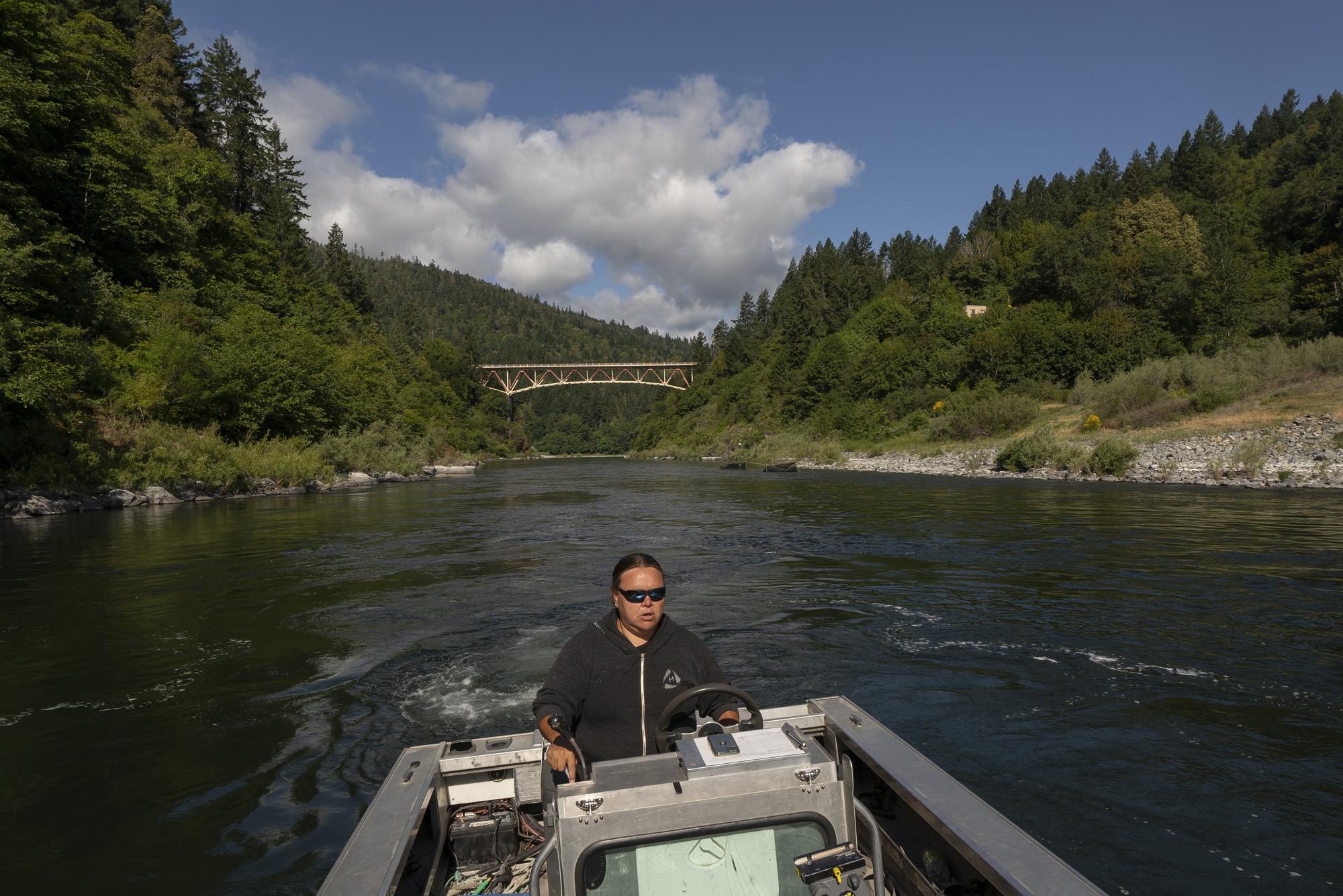
Jamie Holt, lead fisheries technician for the Yurok Tribe, maneuvers a boat near a fish trap in the lower Klamath River on Tuesday, June 8, 2021, in Weitchpec, Calif. A historic drought and low water levels are threatening the existence of fish species along the 257-mile long river.

Jamie Holt, lead fisheries technician for the Yurok Tribe, maneuvers a boat near a fish trap in the lower Klamath River on Tuesday, June 8, 2021, in Weitchpec, Calif. (AP Photo/Nathan Howard)

The extreme drought has exacerbated a water conflict that traces its roots back more than a century.

Beginning in 1906, the federal government reengineered a complex system of lakes, wetlands and rivers in the 10 million-acre (4 million-hectare) Klamath River Basin to create fertile farmland. It built dikes and dams to block and divert rivers, redirecting water away from a natural lake spanning the California-Oregon border.

Evaporation then reduced the lake to one-quarter of its former size and created thousands of arable acres in an area that had been underwater for millennia.

In 1918, the U.S. began granting homesteads on the dried-up parts of Tule Lake. Preference was given to World War I and World War II veterans, and the Klamath Reclamation Project quickly became an agricultural powerhouse. Today, farmers there grow everything from mint to alfalfa to potatoes that go to In ’N Out Burger, Frito-Lay and Kettle Foods.

Water draining off the fields flowed into national wildlife refuges that continue to provide respite each year for tens of thousands of birds. Within the altered ecosystem, the refuges comprise a picturesque wetland oasis nicknamed the Everglades of the West that teems with white pelicans, grebes, herons, bald eagles, blackbirds and terns.

Last year, amid a growing drought, the refuges got little water from the irrigation project. This summer, they will get none.

SPEAKING FOR THE FISH

While in better water years, the project provided some conservation for birds, it did not do the same for fish — or for the tribes that live along the river.

The farmers draw their water from the 96-square-mile (248-square-kilometer) Upper Klamath Lake, which is also home to suckerfish. The fish are central to the Klamath Tribes’ culture and creation stories and were for millennia a critical food source in a harsh landscape.

In 1988, two years after the tribe regained federal recognition, the U.S. Fish and Wildlife Service listed two species of suckerfish that spawn in the lake and its tributaries as endangered. The federal government must keep the extremely shallow lake at a minimum depth for spawning in the spring and to keep the fish alive in the fall when toxic algae blooms suck out oxygen.

This year, amid exceptional drought, there was not enough water to ensure those levels and supply irrigators. Even with the irrigation shutoff, the lake’s water has fallen below the mandated levels — so low that some suckerfish were unable to reproduce, said Alex Gonyaw, senior fish biologist for the Klamath Tribes.
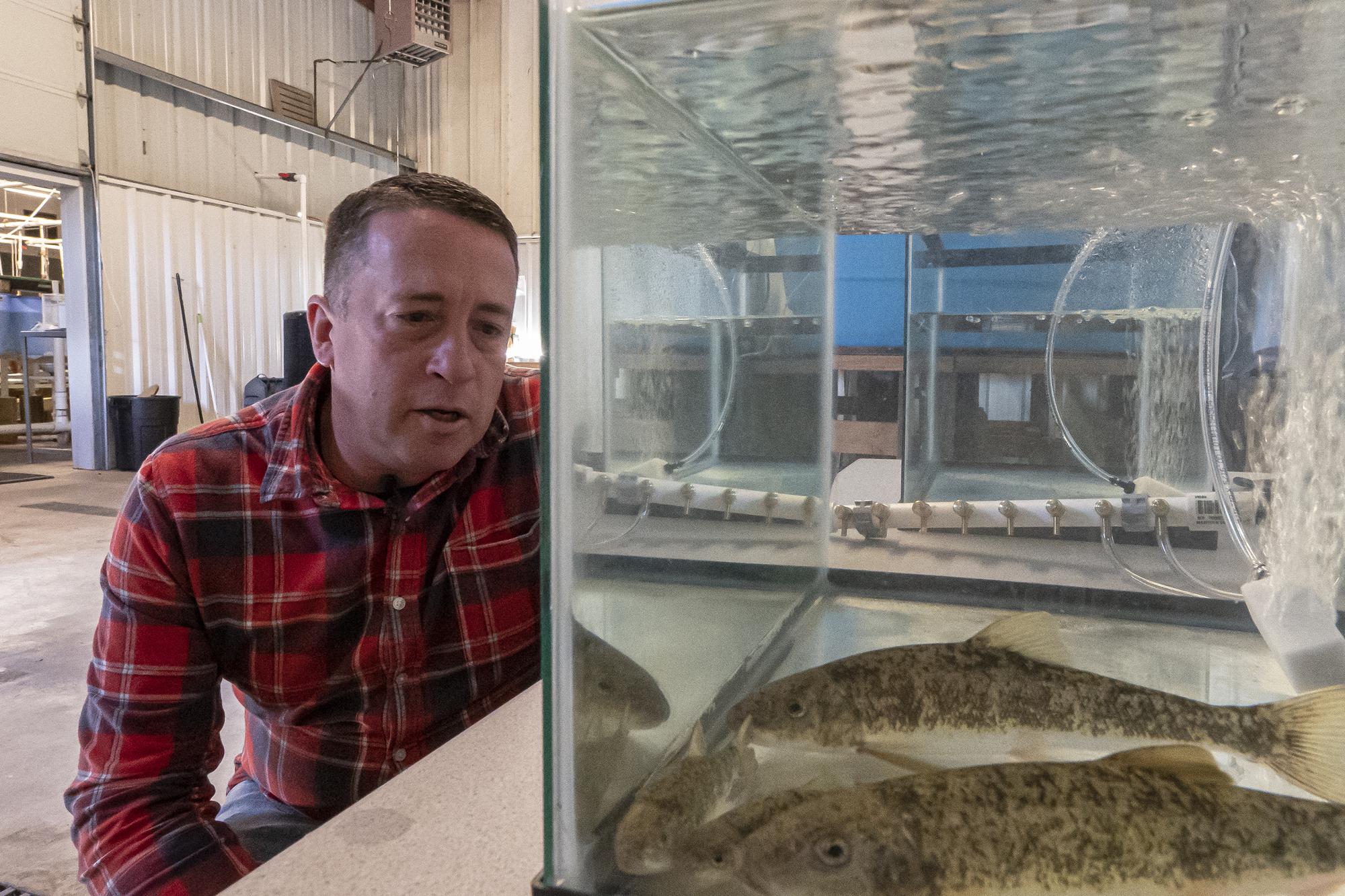
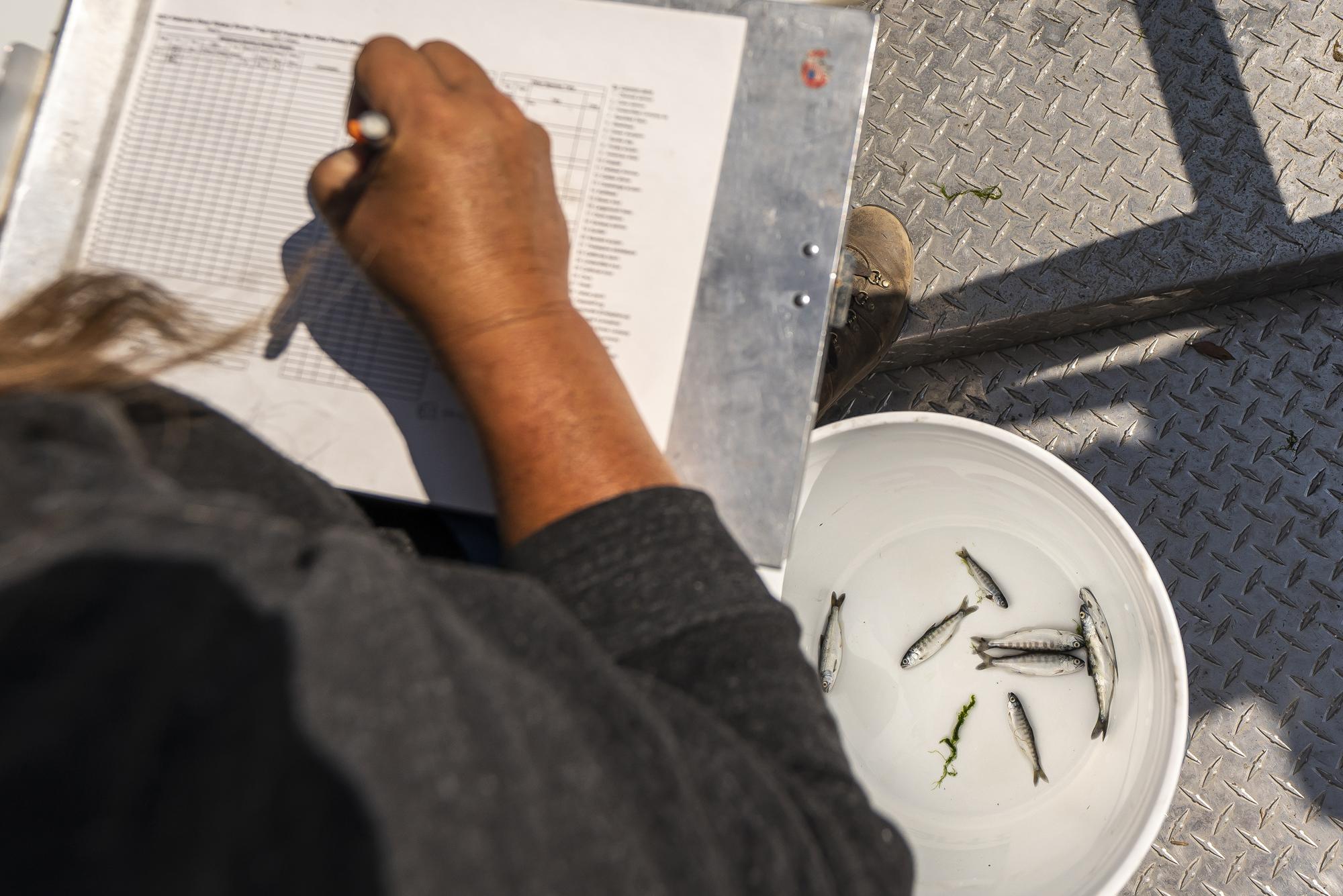
Alex Gonyaw, senior fish biologist for the Klamath Tribes, examines juvenile suckerfish at the tribe's fish and wildlife facility on Thursday, June 10, 2021, in Chiloquin, Ore. Toxic algae blooms in the Upper Klamath Lake threaten the habitat for the endangered species. (AP Photo/Nathan Howard)

Alex Gonyaw, senior fish biologist for the Klamath Tribes, examines juvenile suckerfish at the tribe’s fish and wildlife facility on Thursday, June 10, 2021, in Chiloquin, Ore. (AP Photo/Nathan Howard)

The youngest suckerfish in the lake are now nearly 30 years old, and the tribe’s projections show both species could disappear within the next few decades. It says even when the fish can spawn, the babies die because of low water levels and a lack of oxygen. The tribe is now raising them in captivity and has committed to “speak for the fish” amid the profound water shortage.

“I don’t think any of our leaders, when they signed the treaties, thought that we’d wind up in a place like this. We thought we’d have the fish forever,” said Don Gentry, Klamath Tribes chairman. “Agriculture should be based on what’s sustainable. There’s too many people after too little water.”

But with the Klamath Tribes enforcing their senior water rights to help suckerfish, there is no extra water for downriver salmon — and now tribes on different parts of the river find themselves jockeying for the precious resource.

The Karuk Tribe last month declared a state of emergency, citing climate change and the worst hydrologic conditions in the Klamath River Basin in modern history. Karuk tribal citizen Aaron Troy Hockaday Sr. used to fish for salmon at a local waterfall with a traditional dip net. But he says he hasn’t caught a fish in the river since the mid-1990s.

“I got two grandsons that are 3 and 1 years old. I’ve got a baby grandson coming this fall. I’m a fourth-generation fisherman, but if we don’t save that one fish going up the river today, I won’t be able to teach them anything about our fishing,” he said. “How can I teach them how to be fishermen if there’s no fish?”
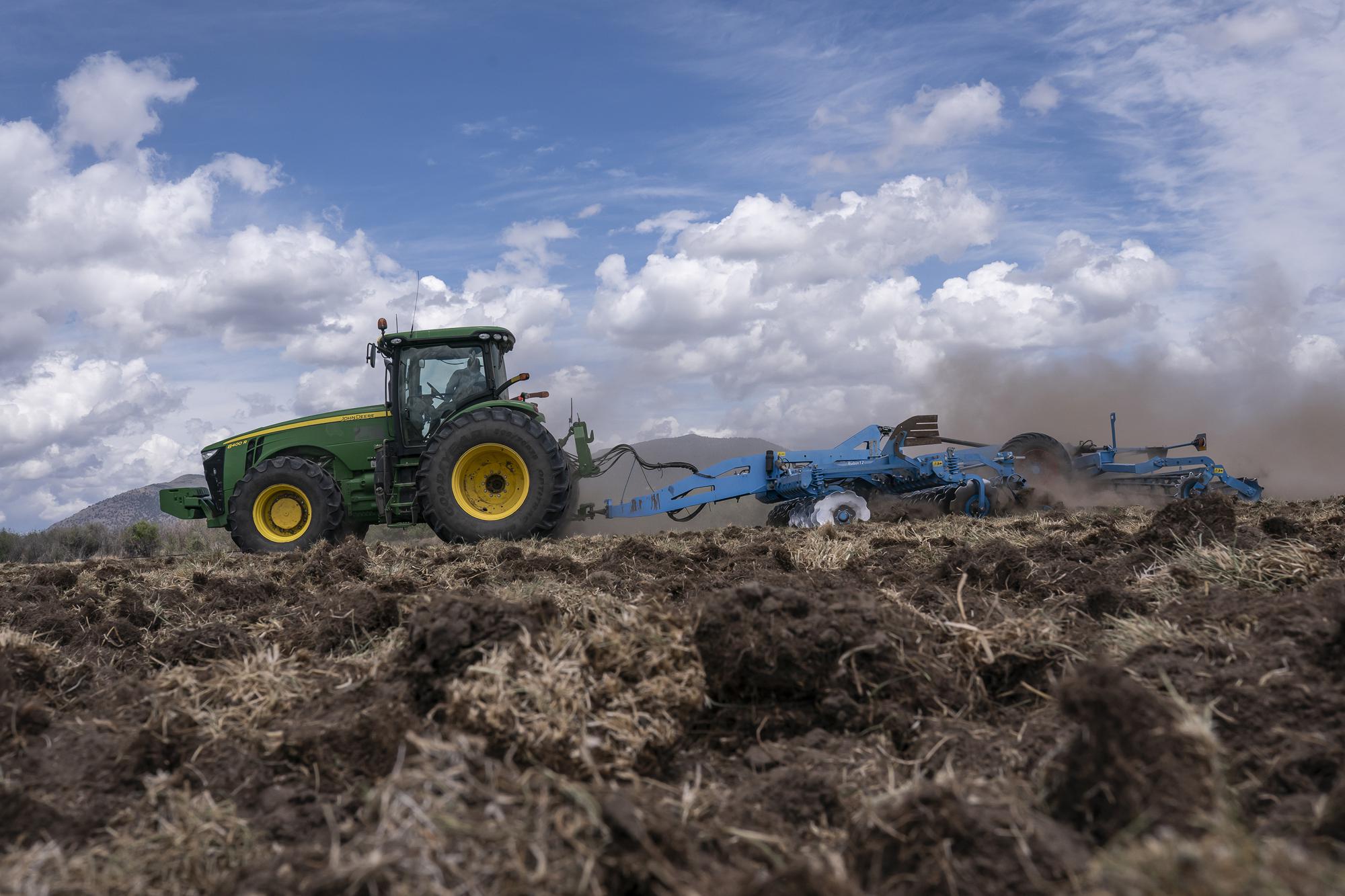
A tractor tears dried dirt on land that was unplanted this year due to the water shortage on Wednesday, June 9, 2021, in Tulelake, Calif. This summer for the first time ever, hundreds of farmers along the California-Oregon border who rely on irrigation from a depleted, federally managed lake aren't getting any water from it at all. Competition over the water in the Klamath Basin has always been intense, but this summer, because of a historic drought there is not enough water for the needs of farmers, Native American tribes and wildlife refuges. (AP Photo/Nathan Howard)

A tractor tears dried dirt on land that was unplanted this year due to the water shortage on Wednesday, June 9, 2021, in Tulelake, Calif. (AP Photo/Nathan Howard)

‘IT’S LIKE A BIG, DARK CLOUD’

The downstream tribes’ problems are compounded by hydroelectric dams, separate from the irrigation project, that block the path of migrating salmon.

In most years, the tribes 200 miles (320 kilometers) to the southwest of the farmers, where the river reaches the Pacific, ask the Bureau of Reclamation to release pulses of extra water from Upper Klamath Lake. The extra flows mitigate outbreaks of a parasitic disease that proliferates when the river is low.

This year, the federal agency refused those requests, citing the drought.

Now, the parasite is killing thousands of juvenile salmon in the lower Klamath River, where the Karuk and Yurok tribes have coexisted with them for millennia. Last month, tribal fish biologists determined 97% of juvenile spring chinook on a critical stretch of the river were infected; recently, 63% of fish caught in research traps near the river’s mouth have been dead.
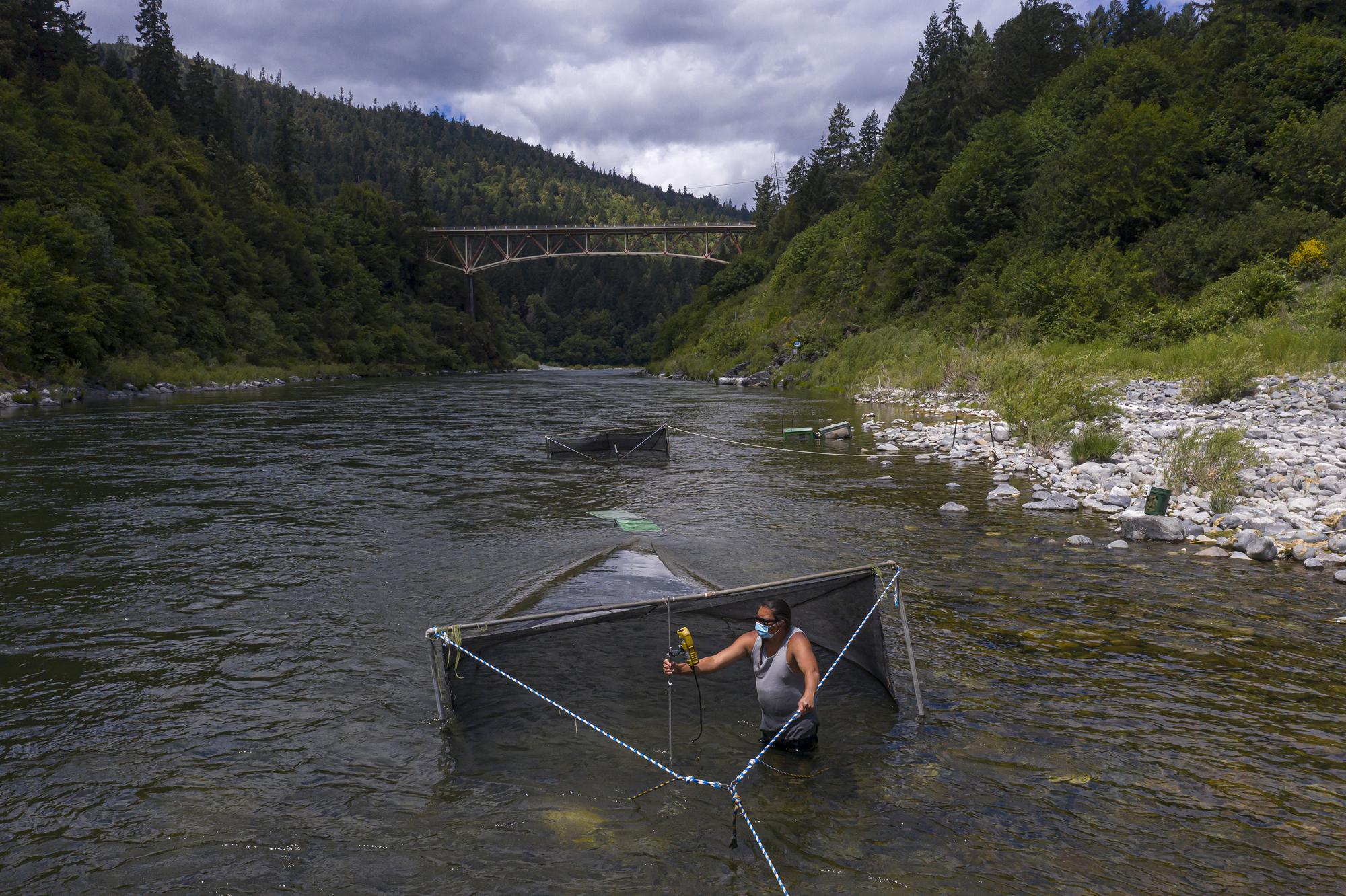
Gilbert Myers takes a water temperature reading at a chinook salmon trap in the lower Klamath River on Tuesday, June 8, 2021, in Weitchpec, Calif. Native American tribes along the 257-mile-long river are watching helplessly as fish species hover closer to extinction because of lower water levels caused by historic drought. (AP Photo/Nathan Howard)

Gilbert Myers takes a water temperature reading at a chinook salmon trap in the lower Klamath River on Tuesday, June 8, 2021, in Weitchpec, Calif. (AP Photo/Nathan Howard)
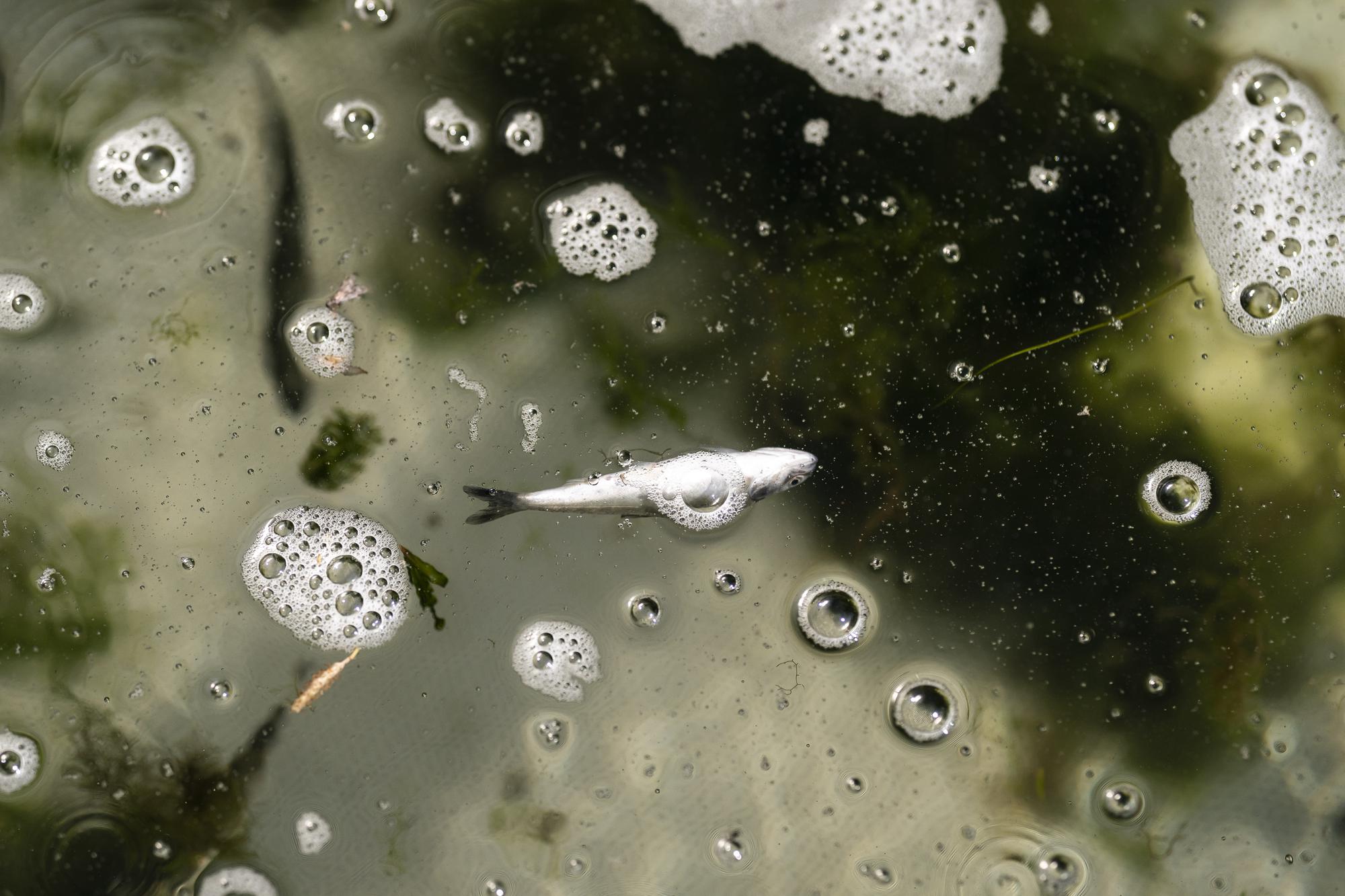
A dead chinook salmon floats in a fish trap on the lower Klamath River on Tuesday, June 8, 2021, in Weitchpec, Calif. A historic drought and low water levels on the Klamath River are threatening the existence of fish species along the 257-mile long river. (AP Photo/Nathan Howard)

A dead chinook salmon floats in a fish trap on the lower Klamath River on Tuesday, June 8, 2021, in Weitchpec, Calif. (AP Photo/Nathan Howard)

The die-off is devastating for people who believe they were created to safeguard the Klamath River’s salmon and who are taught that if the salmon disappear, their tribe is not far behind.

“Everybody’s been promised something that just does not exist anymore,” said Holt, the Yurok fisheries expert. “We are so engrained within our environment that we do see these changes, and these changes make us change our way of life. Most people in the world don’t get to see that direct correlation — climate change means less fish, less food.”

Hundreds of miles to the northeast, near the river’s source, some of the farmers who are seeing their lives upended by the same drought now say a guarantee of less water — but some water — each year would be better than the parched fields they have now. And there is concern that any problems in the river basin — even ones caused by a drought beyond their control — are blamed on a way of life they also inherited.

“I know turning off the project is easy,” said Tricia Hill, a fourth-generation farmer who returned to take over the family farm after working as an environmental lawyer.

“But sometimes the story that gets told … doesn’t represent how progressive we are here and how we do want to make things better for all species. This single-species management is not working for the fish — and it’s destroying our community and hurting our wildlife.”
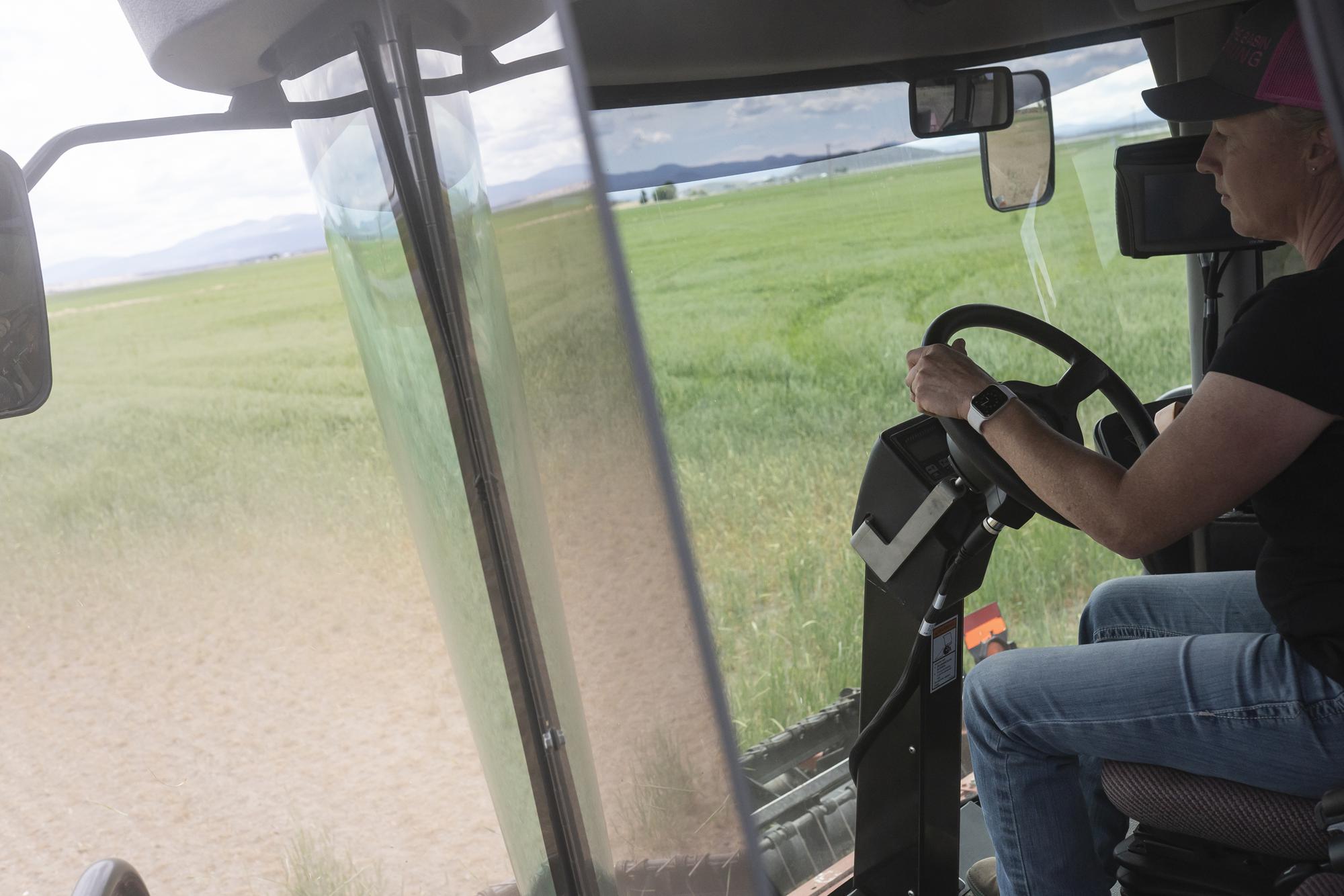
Erika DuVal drives a swather through a field of triticale, one of the few crops her family was able to plant this year due to the water shortage, on Wednesday, June 9, 2021, in Tulelake, Calif. The DuVal family has farmed the land near the California-Oregon border for three generations, and this summer for the first time ever, they and hundreds of others who rely on irrigation from a depleted, federally managed lake aren't getting any water from it at all. (AP Photo/Nathan Howard)

Erika DuVal drives a swather through a field of triticale, one of the few crops her family was able to plant this year due to the water shortage, on Wednesday, June 9, 2021, in Tulelake, Calif. (AP Photo/Nathan Howard)
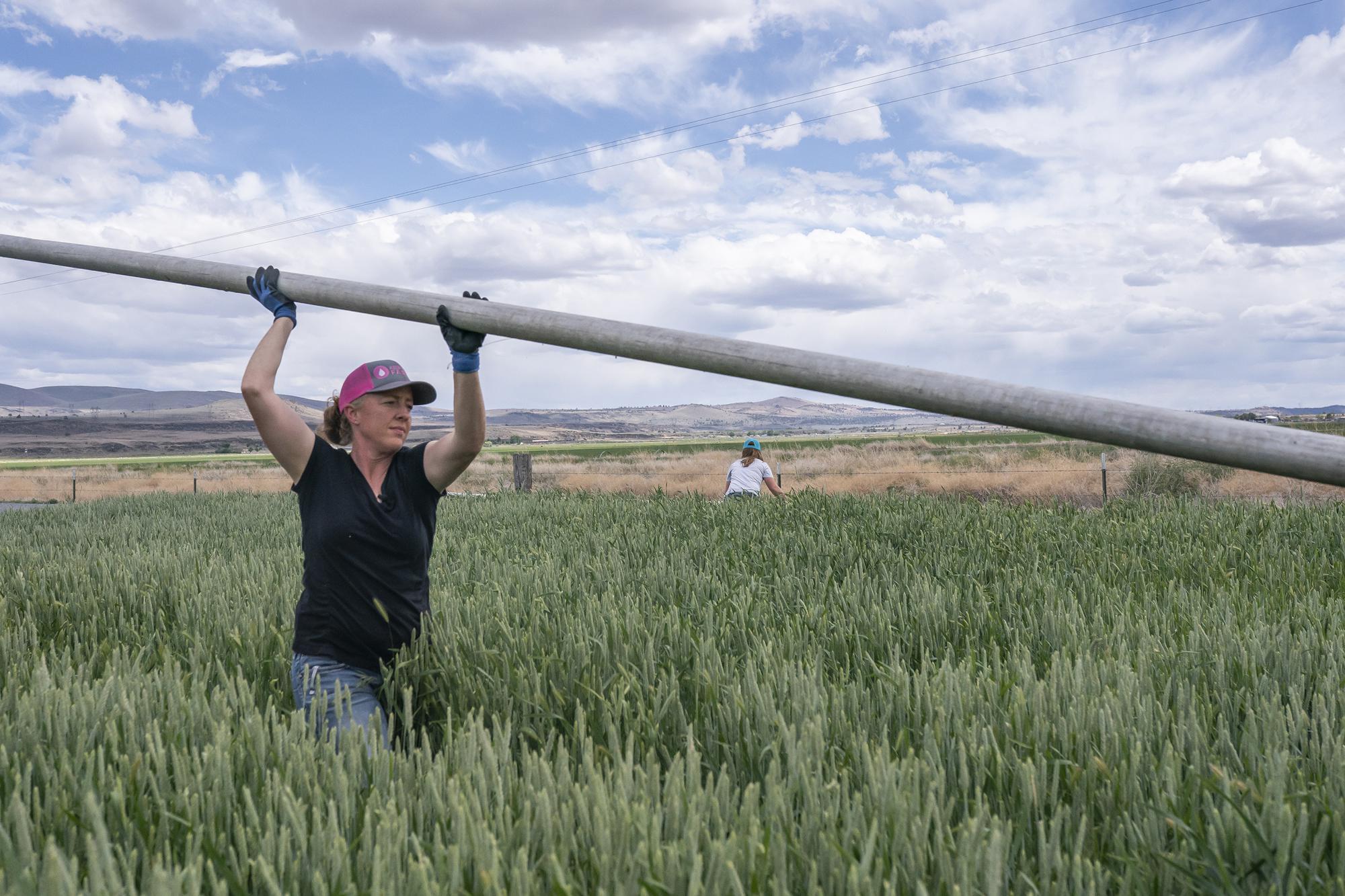
Erika DuVal moves an irrigation pipe through a field of triticale, one of the few crops her family was able to plant this year due to the water shortage, on Wednesday, June 9, 2021, in Tulelake, Calif. The DuVal family has farmed the land near the California-Oregon border for three generations, and this summer for the first time ever, they and hundreds of others who rely on irrigation from a depleted, federally managed lake aren't getting any water from it at all. (AP Photo/Nathan Howard)

Erika DuVal moves an irrigation pipe through a field of triticale, one of the few crops her family was able to plant this year due to the water shortage, on Wednesday, June 9, 2021, in Tulelake, Calif. (AP Photo/Nathan Howard)
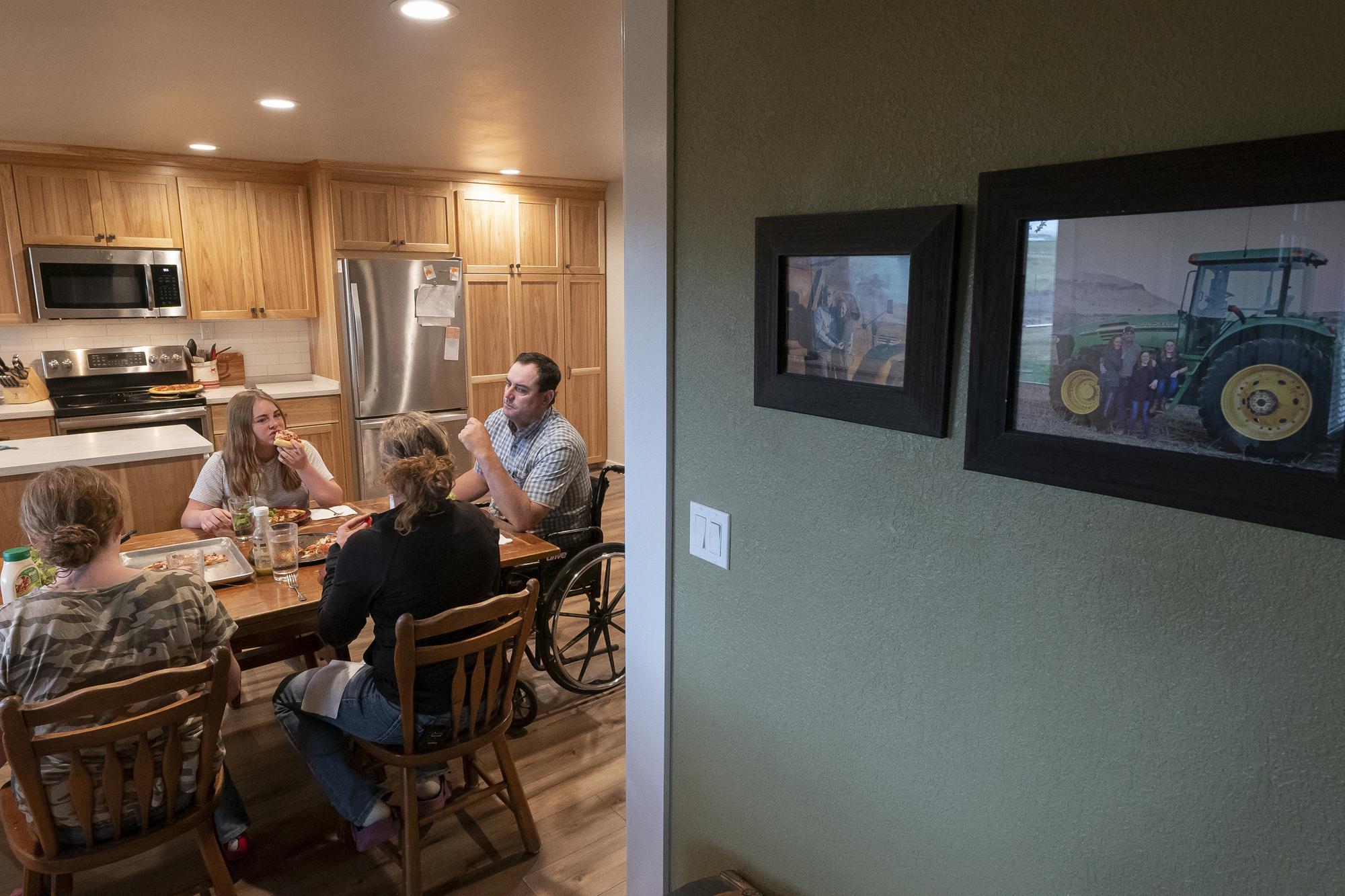
The DuVal family eats dinner together in their farmhouse on Wednesday, June 9, 2021, in Tulelake, Calif. Ben DuVal said he worries the continued water shortage will prevent him from passing on their farming way of life to his kids. DuVal's family has farmed the land near the California-Oregon border for three generations, and this summer for the first time ever, he and hundreds of others who rely on irrigation from a depleted, federally managed lake aren't getting any water from it at all. (AP Photo/Nathan Howard)

The DuVal family eats dinner together in their farmhouse on Wednesday, June 9, 2021, in Tulelake, Calif. Ben DuVal said he worries the continued water shortage will prevent him from passing on their farming way of life to his kids. (AP Photo/Nathan Howard)

DuVal’s daughter also dreams of taking over her family’s farm someday. But DuVal isn’t sure he and his wife, Erika, can hang onto it if things don’t change.

“To me it’s a like a big, dark cloud that follows me around all the time. It’s depressing knowing that we had a good business and that we had a plan on how we’re going to grow our farm and to be able to send my daughters to a good college,” said DuVal. “And that plan just unravels further and further with every bad water year.”
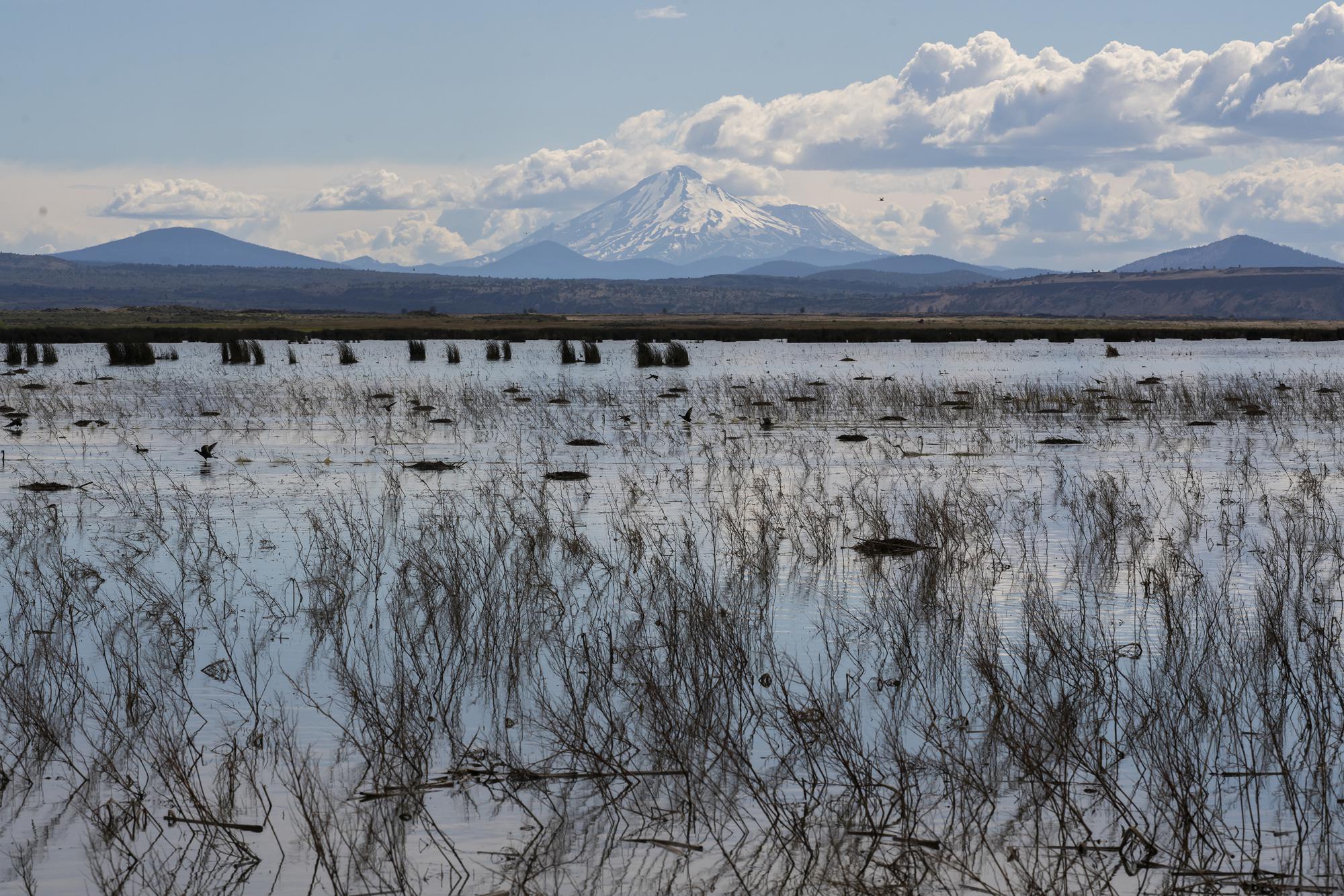
Birds and other wildlife move through a wetland in the Klamath River Basin on Wednesday, June 9, 2021, in Tulelake, Calif. Extreme drought is tearing apart communities in the massive basin, which spans the Oregon-California border. (AP Photo/Nathan Howard)

Birds and other wildlife move through a wetland in the Klamath River Basin on Wednesday, June 9, 2021, in Tulelake, Calif. Extreme drought is tearing apart communities in the massive basin, which spans the Oregon-California border. (AP Photo/Nathan Howard)

………………………………………………………

UK steel protections extended after last-ditch decision Gifty Okoampah


The UK government has made a last-ditch decision to overrule its official post-Brexit trade advisers to extend protections on certain steel products.

The protections make it more expensive for British companies to buy foreign steel above certain quantities.

Trade Secretary Liz Truss said the move would defend jobs in the UK’s steel sector amid uncertainty due to Covid.

Labour welcomed the decision, which it claimed was a U-turn on the government’s former position.

The protections, inherited by the UK after Brexit, limit the amount of steel that can be purchased without import taxes and were due to expire on Wednesday.

The EU introduced the safeguards on a total of 19 products in 2019, whilst the UK was still a member.

The bloc introduced them in response to US President Donald Trump imposing import taxes – or tariffs – on steel from China and elsewhere, which sparked fears the market would be flooded with cheap steel.

Following Brexit, the UK government has now said it will continue with the protections – originally due to end on 30 June – for 15 of the 19 products.

This is five more than recommended by its post-Brexit advisory body, the Trade Remedies Authority (TRA), after a review of trade data last month.

The authority had argued it was only justified for the UK to keep the protections in place for 10 out of the 19 products.


Separately, the 27 remaining EU countries have decided to continue with the measures for all 19 products, for a total of three years.

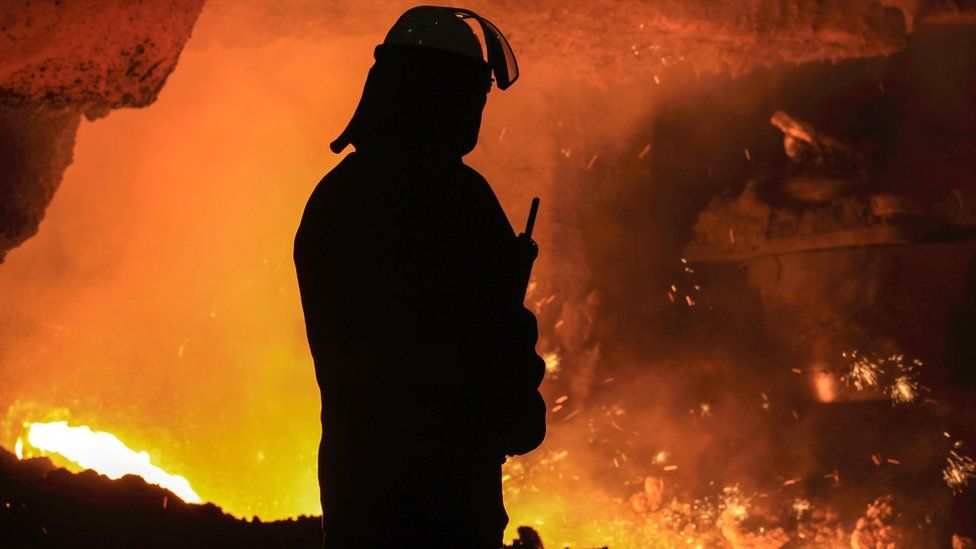
Steelworker
image caption The UK steel industry says it employs 33,000 people directly

Hours before the UK measures were due to expire on Wednesday, Ms Truss announced emergency legislation to override the TRA’s recommendations.

Under the new plans, the UK will accept the authority’s advice for a three-year extension to the measures on 10 products.

But in addition, import limits on five more products will remain for one year. Imports above these limits will be subject to a 25% tariff.

Ms Truss said the move would “further defend the UK steel industry,” with Covid and continued trade restrictions putting the sector “at an unacceptable disadvantage”.

She added it would allow the industry to “appeal” the TRA’s recommendations, with more recent data gleaned during the Covid crisis.

2px presentational grey line
Analysis box by Adam Fleming, Chief political correspondent

Brexit is turning out to be a trial and error process.

In this case, it’s around the role of the Trade Remedies Authority, which recommends measures to protect domestic industries from changes in global trade patterns.

The independent body has only been fully operational for a month, and already the government has overruled it once and ordered a review of the entire system.

Ministers discovered they could only accept or reject the authority’s recommendations in full, which limited their room for manoeuvre in politically sensitive industries like steel.

A harsh critic could say that Britain’s post-Brexit trade policy is in disarray just six months after cutting formal ties with the EU.

A more sympathetic observer would suggest the country’s on a learning curve, which means a few policy tweaks are inevitable, and that jobs are being saved in this case.

But this is a also protectionist measure which will have some free-marketeers in the Tory party wondering if the government has the stomach to turn the UK into a lean, mean trading machine.

UK Steel’s Director-General Gareth Stace welcomed the government’s move, adding that accepting the TRA’s recommendation “would have been unthinkable, and we would have certainly seen job losses”.

He told BBC Radio 4’s Today programme that data had been “inconsistent,” but the sector “had seen increases in imports” for the five products where ministers have kept protections.

“We knew there would be injury if those five categories just disappeared,” he added.

Labour’s shadow international trade secretary Emily Thornberry also welcomed the move, which she called a “U-turn from the government”.

She claimed Labour MPs representing steelmaking areas had “successfully forced their last-minute reversal” through pressure on ministers.

She also welcomed Ms Truss’s “belated acceptance” of the need to review the TRA, which she said “must be urgently reformed”.

Vaughan Gething, economy minister in the Labour-led Welsh government, also welcomed the extension, adding it had come from an “11th hour decision to listen to our concerns”.

Also speaking to Today, Business Secretary Kwasi Kwarteng said extending the protections was justified by “the need to have national resilience” in certain sectors.

“In other parts of the economy – if you look at the digital economy, if you look at companies that operate with the internet – there is much greater scope for free trade,” he added.

………………………………………………………………

Canada Lytton: Wildfire forces hottest place in heatwave to evacuate


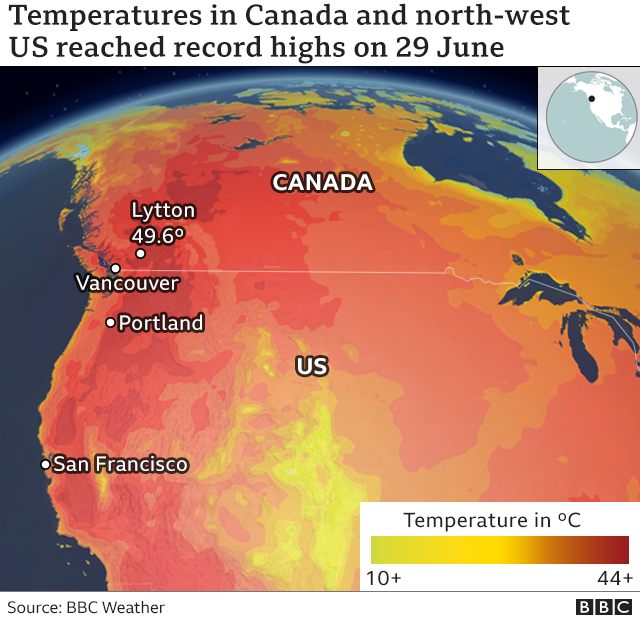
Residents of a Canadian village which recorded the country’s highest ever temperature, 49.6C (121.3F), have been forced to flee by a wildfire.

The mayor of Lytton, British Columbia, ordered people to evacuate, saying flames had spread through the village in just 15 minutes.

A heatwave has hit western Canada this week, with British Columbia recording three times its usual number of deaths.

Abnormally high temperatures have been recorded in swathes of North America.

British Columbia registered 486 deaths over five days compared with an average of 165 in normal times.

Chief Coroner Lisa Lapointe blamed the extreme weather. The western province had seen only three heat-related deaths over the past three to five years.

Many of those who died, Ms Lapointe said, had been living alone in unventilated homes.

Temperatures have been easing in coastal areas of Canada but there is not much respite for inland regions. The weather system is now moving eastwards over the Prairie provinces – Alberta and Saskatchewan and parts of Manitoba have been placed under Environment Canada heat warnings.

Climate scientists are still trying to determine to what extent climate change may have aggravated the heatwave. One scientist, Zeke Hausfather, said the unprecedented weather was almost certainly a consequence of global warming.

“Climate is sort of steroids for the weather, it’s loading the dice to make these sort of extreme events be more common,” he told AFP news agency.

What is happening in Lytton?

Residents fled on Wednesday, many without their belongings, as smoke and flame engulfed the village about 260km (162 miles) north-east of Vancouver.

“The whole town is on fire,” Mayor Jan Polderman told CBC News after signing the evacuation order at 18:00 (01:00 GMT Thursday).

In one area, he said, “the fire was a wall about three, four feet high coming up to the fence line”.

Winds of up to 71 km/h (44 mph) were pushing the fire north into the community on Wednesday evening, CBC meteorologist Johanna Wagstaffe reported. Hot, dry and windy conditions in the area could mean the fire was moving at 10 or even 20 km/h.

Map showing the hottest areas in Canada and the US north-west
1px transparent line

Residents were being directed to nearby communities where reception centres were being set up, while the British Columbia Wildfire Service was diverting crews and equipment from other areas to respond to the fire.

“You can’t even comprehend it,” Lytton evacuee Edith Loring-Kuhanga told CBC Radio. “Our entire town is gone.”

How dangerous was the heat elsewhere?

In Vancouver, British Columbia’s biggest city, heat is believed to have been a contributing factor in the deaths of 65 people since Friday.

The city has opened 25 air-conditioned cooling centres where people have been resting or working from their laptops.

“I have no air conditioning, only a fan at home – I came here just to work where it’s cool,” one woman, who gave her name only as Lou, told AFP news agency.

In the US state of Oregon, health officials tied more than 60 deaths to the extreme heat while in Washington State, 20 deaths were attributed to the weather, the Associated Press reports.

Seattle, Portland and other cities broke all-time heat records, which climbed above 46C in places.

Both Canadian Prime Minister Justin Trudeau and US President Joe Biden warned of the threat of wildfires, with Mr Biden telling governors of western US states it was as “severe as it’s ever been”.

Can the heat be linked to climate change?

Analysis box by Matt McGrath, environment correspondent

I’ve heard from scientists who say that in just a few days they’ll be able to determine just how much human driven warming has contributed to the searing temperatures seen in British Columbia.

One interesting piece of evidence is the lack of respite that night brings – recent temperatures at midnight in BC have been 2C warmer than the normal summer daytime figure.

Researchers say this combination of day and night-time heat is very dangerous for humans – a study published last year indicated that these compound events are closely linked to emissions of greenhouse gases.

Natural variability and local factors such as sea breezes can raise or limit the impacts of extreme heat. But the bigger picture is the rising thermometer of global heating is impacting all events.

“Every heatwave occurring today is made more likely and more intense by human-induced climate change,” Dr Friederike Otto from the University of Oxford told the BBC.

“Climate change is definitely one of the drivers of the intensity of this Canadian heatwave – but it is not the only one and determining how much it impacts it, is a work in progress.”

Even if they can’t directly attribute this heatwave to climate change, experts say the fingerprints of global heating are all over it.

………………………………………………………………

The 2026 AFRICA EDUCATES HER CAMPAIGN REPORT - ANGOLA 6th Anniversary | 2020–2026

  Meet who's behind this cause     Support us:  https://donate-sofonie.netlify.app/           AFRICA EDUCATES HER CAMPAIGN REPORT — ANGO...