Translate

Saturday, 13 June 2020

National Research Foundation COVID-19 Africa Rapid Grant Fund 2020

National Research Foundation COVID-19 Africa Rapid Grant Fund 2020


Deadline: June 17, 2020

Applications are invited for the National Research Foundation COVID-19 Africa Rapid Grant Fund 2020. The Rapid Grant Fund seeks to contribute to the African regional and continental response to the COVID-19 pandemic.

The Rapid Grant Fund seeks to:

  • Contribute to the African regional and continental response to the COVID-19 pandemic.
  • Support knowledge generation and translation to inform diagnostics, prevention and treatment of COVID19 on the continent.
  • Strengthen African regional and continental science engagement efforts in response to the COVID-19 pandemic.
  • Leverage existing, strong multilateral collaborations in support of Africa’s consolidated response to the COVID-19 pandemic and attract new collaborations from international partners.

Scope

The Rapid Grant Fund supports three strands in respect of research and science engagement:

  • Research
  • Science engagement: call to science and health journalists and communicators, and
  • Science engagement: call to science advisers.

Funding

  • The Rapid Grant Fund is administered by the NRF South Africa, and has initial total funding of up to USD4.75million, with scope for additional funding from international funders and some SGCs.

Eligibility

  • Researchers and science engagement practitioners from the following countries are eligible to apply: Botswana, Burkina Faso, Côte d’Ivoire, Ethiopia, Ghana, Kenya, Malawi, Mozambique, Namibia, Rwanda, Senegal, Tanzania, Uganda, Zambia, Zimbabwe, and in the context of the African Research Universities Alliance (ARUA) Nigeria and South Africa. For the research strand and applicable only to Nigeria and South Africa, only ARUA member universities will be eligible to participate. For the two strands on science engagement, practitioners across all the countries, including Nigeria and South Africa may apply.
  • Applications from women applicants, people living with disabilities and first responders to COVID-19, as principal investigators are encouraged.
  • In addition, diversity, including sex and gender differences, exist across all COVID-19 dimensions. Research and science engagement proposals must demonstrate considerations of diversity, including sex as a biological variable and gender as a socio-cultural factor in research projects and in science engagement approaches.

Project Monitoring, Evaluation and Control. MODULE 2

Project Management Fundamentals: Project Monitoring, Evaluation and Control

Learn how to collect data through the life of the project and use the data to identify any risks.


Congratulations!

You have successfully taken course 'Project Monitoring and Evaluation'. Great job!

Most African Currencies Undervalued After Covid-19.


Most African Currencies Undervalued After Covid-19.

No alternative text description for this image


The first-quarter rout in emerging-market assets has left the majority of African currencies undervalued, with three exceptions: the Egyptian pound, Nigerian naira and Kenyan shilling.

Angola’s kwanza is the most undervalued currency, followed by Zambia’s kwacha and South Africa’s rand.

Credit: Bloomberg

Project Monitoring and Evaluation programme

   Hello dear,


    Today's program consists of two core modules. You will see two media-rich, high-engagement modules for a course of project monitoring and evaluation.
Project Controlling and Project Monitoring

Module one: Project Monitoring and Control - Baselines

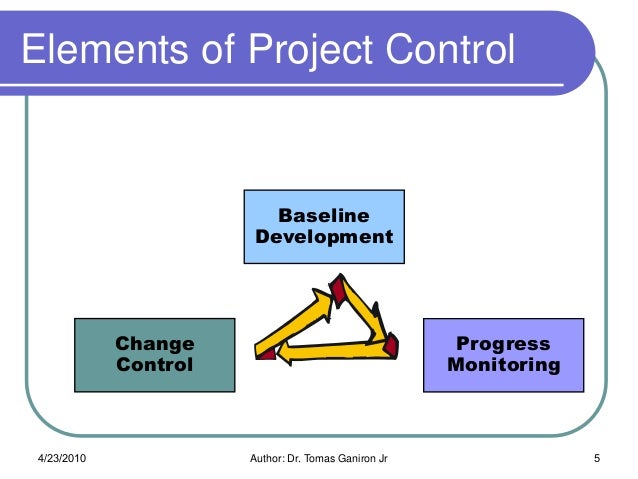
According to the Project Management Body of Knowledge (PMBOK), “the Monitoring and Control Process Group consists of those processes performed to observe project execution so that potential problems can be identified in a timely manner and corrective action can be taken, when necessary, to Control the execution of the project.

Module two: Project Management Fundamentals: Project Monitoring, Evaluation and Control

Corrective action can only be taken once you review and update your project plan. This will help bring the project back in line with project objectives and constraints and improve future execution to avoid repeating the same issues.

Project Monitoring and Control. MODULE 1

Project Monitoring and Control


According to the Project Management Body of Knowledge (PMBOK), “the Monitoring and Control Process Group consists of those processes performed to observe project execution so that potential problems can be identified in a timely manner and corrective action can be taken, when necessary, to Control the execution of the project.


Project Monitoring and Control - Baselines

One of the biggest project failures is poor communication and control measures. Learn how to monitor and control your project to understand what you are tracking, how you are tracking it, when to report and how to report as well as when to involve other stakeholders. This video by Andrew Bell takes you through the different considerations and risks.


Congratulations!

You have successfully taken course 'Project Monitoring and Evaluation'. Great job!


Friday, 12 June 2020

Paid Internship: Microsoft Interns4Afrika Program 2020 for young African Graduates

Don't miss this internship


Microsoft Interns4Afrika Program 2020 for young African Graduates (Paid Internship)

Application Deadline: Varying by Country https://bit.ly/3cTAYvL

Africa has a pool of young graduates looking to get placed in a dynamic and agile tech company within the African continent. The Interns4Afrika program seeks to offer graduates a chance to grow their careers through the virtual training and placements in Microsoft partner organisations.

Requirements

You have graduated from an undergraduate or postgraduate degree within the last 3 years
You are able to commit to completing a full-time 6 months internship.

You have a BA/BSc in a business related or IT degree
You have a right to work in the country in which you are applying in.

Benefits

All interns will be paid a salary and will be located at and employed by the partner organization for the six-month internship period.

Digital Earth Fellowship 2020/2021 for young Artists & Scholars (€13,500 in Stipend)

The Digital Earth Fellowship 2020/2021 for young Artists & Scholars (€13,500 in Stipend)


Application Deadline:17 July 2020 

Comprised of a group of artists and academic scholars, Digital Earth is inviting “8 artists and/or duos from different practices who have shown extraordinary originality and dedication in their creative pursuits, and are committed to ideas of resilient futures, equitable societies, and critical diversity, showing a marked capacity for self-direction” to join them in imagining how this digital planet might continue to evolve and how it will be for us to live together in this new world.

Requirements

The Digital Earth Fellowship welcomes 8 artists and/or duos from different practices who have shown extraordinary originality and dedication in their creative pursuits, and are committed to ideas of resilient futures, equitable societies, and critical diversity, showing a marked capacity for self-direction.

Benefits

A Fellowship spanning 9 months (September 2020 - May 2021).

Monthly Stipend, a total of €13.500 per fellow for the entire fellowship.
Consultations with acclaimed artists, curators, and scholars.
Online research groups with other fellows.

Online sessions with our faculty.
Presentation during partner events, symposia and exhibitions (online and in real life, when possible).

When Telecommunications Collapse: What Angola's Mobile Network Crisis Teaches Us About Governance, Justice, and National Security

  The recent disruption of Angola's mobile networks has affected banking, digital payments, businesses, emergency communications, and mi...